Apprenticeship or Trade School for HVACR: Which Route Costs You Less?
Tuition is the visible bill, but lost wages and training years decide which path actually pays off.
 By AnselmRoarke ·
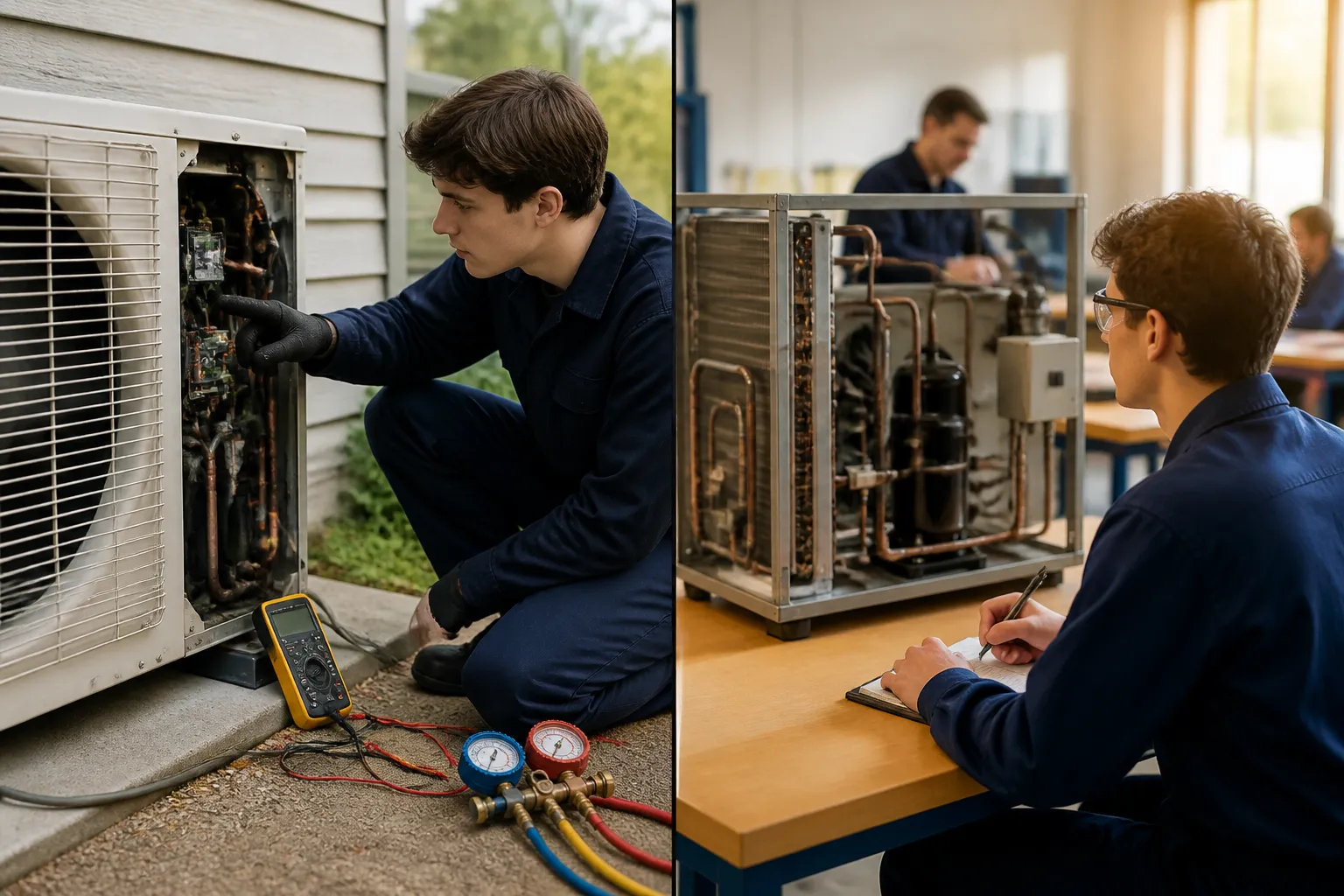
Verdict first: an apprenticeship usually costs far less out of pocket, and it pays you while you learn. Trade school gets you a credential faster, and you pay thousands for it. Neither is free. The real bill is hidden in the wages and the years. This is general information, not personal career or financial advice, so check your own situation with a licensed professional or a program adviser.
What each route costs up front
Trade-school HVACR programs are listed at roughly $8,000 to $35,000 in tuition. That range comes with no date and no state attached, so treat it as a rough fence, not a quote. On top of tuition, students typically buy books and pay for the EPA certification exam. That exam is required for anyone who buys, handles, or works with refrigerants. Programs usually run 6 months to 2 years and end in a certificate or an associate degree.
A registered apprenticeship is listed at about $0 to $2,000 out of pocket, and most of that is tools. In union JATC programs, the related classroom instruction is free to the apprentice. In merit-shop programs, the employer typically covers it. So the tuition bill mostly disappears. The question moves to the wage.
What the sources do not tell you: exact tool costs, program fees, financial aid, and the EPA and state licensing exam fees. Ask each program for a written list of what you must buy and what fees apply. If they dodge, that is an answer.
How pay compares during training
Apprentices are paid from day one. Starting pay is typically no less than 50% of the local journeyworker wage, and it climbs as you log hours. One source describes a schedule running from 50% to 85% of journeyman pay over about four years. Is every raise guaranteed? The sources do not confirm that. Ask for the wage schedule in writing.
Trade-school students usually earn nothing while enrolled, or part-time money if they can fit work around class. That lost income is a real cost, and a lot of comparison pages leave it out. Funny how a tuition-only comparison favors the people selling tuition.
Which pay number to believe
The national figures disagree. BLS data cited for May 2024 shows a median of about $59,810, with a typical range of roughly $39,130 to $91,020. An apprenticeship page cites a journeyman median of $61,010. An older salary site shows $45,910, which is dated. Check bls.gov and look up local wages. Pay varies by state and employer.
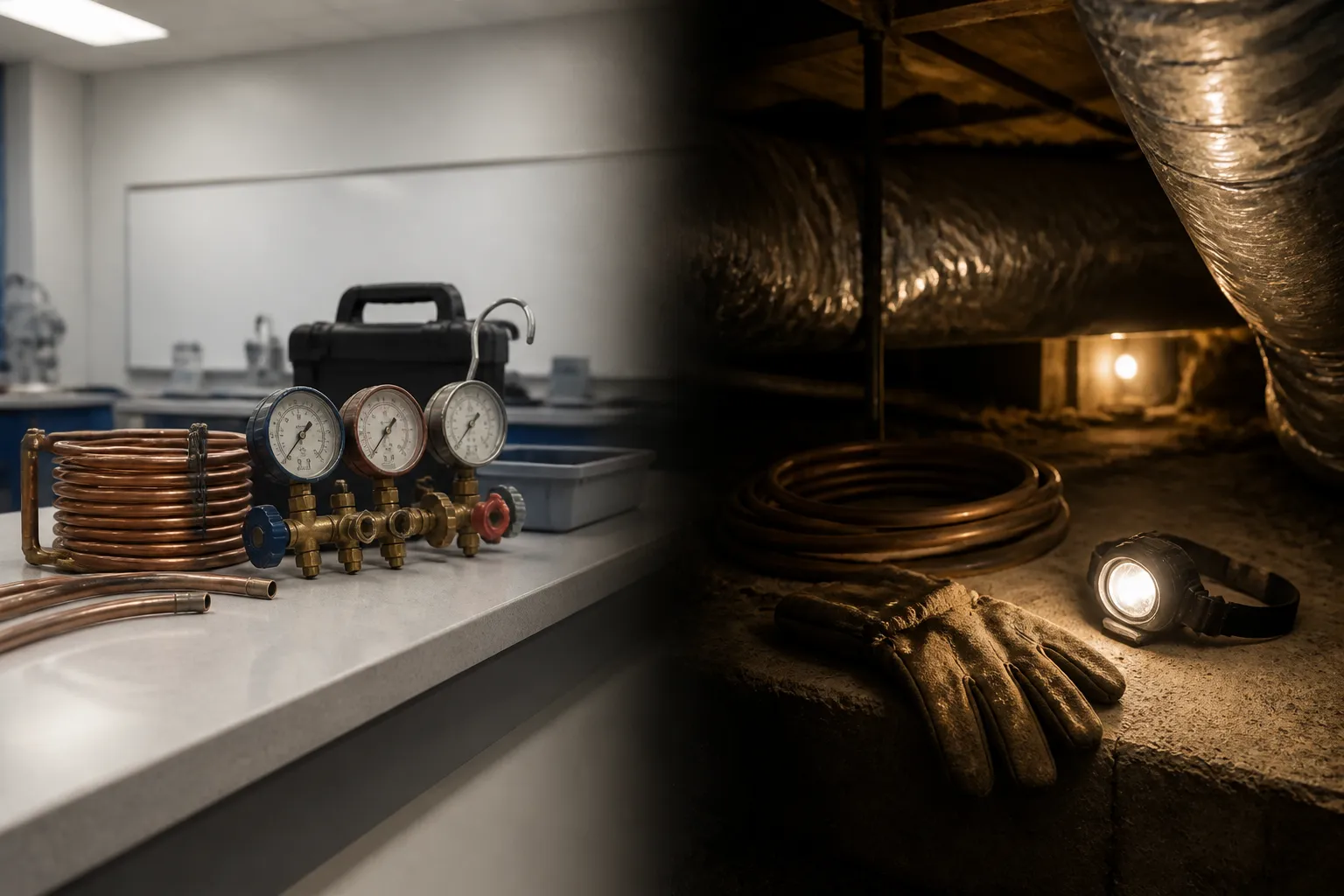
How long each route takes
Trade school wins on speed to a credential. Expect about 6 to 24 months, then a job search. Apprenticeship takes longer, commonly 3 to 5 years to journeyman status. A registered apprenticeship typically requires about 8,000 documented on-the-job hours plus 576 classroom hours.
The early work differs too. Apprentices tend to start with basics like insulating refrigerant lines or cleaning furnaces. Later they cut and solder pipe and check electrical circuits. Trade school front-loads classroom and lab time before any field work. Neither is shorter in every case. Match the timeline to how soon you need full pay.
How to choose and what to verify
Compare total cost, not tuition alone. Trade school means tuition, books, and probably months without a paycheck. Apprenticeship means wages and a tool bill. Entry-level helper jobs are a third option if you want to learn on the job before committing to anything formal.
Then verify. Confirm any apprenticeship is registered, meaning it is validated by the U.S. Department of Labor or a State Apprenticeship Agency. Registered programs lead to a portable, nationally recognized credential. Also check EPA 608 rules and your state's licensing requirements, since some states require a license exam on top of EPA certification.
- Is the program registered with DOL or a state agency?
- Is classroom instruction free, or paid by the employer?
- What is the starting wage as a share of the local journeyworker rate, and what are the raise steps?
- How many work and classroom hours are required?
- Do I need EPA 608 before applying?
- What tools do I buy, and what do they cost?
Red flags
Many comparison sites sell exam prep or school listings. Their numbers may be marketing. Be wary of tuition ranges with no date or state, and of pay figures that disagree without explanation. Check claims against the school, the program sponsor, your state apprenticeship agency, or government data. You can start at Apprenticeship.gov and the BLS handbook page. Costs and wages differ by state and situation, so use the ranges here only as a starting point.
Sources
- Heating, Air Conditioning, and Refrigeration Mechanics and Installers : Occupational Outlook Handbook: : U.S. Bureau of Labor Statistics
- How to Become an HVAC Technician — Salary, Outlook & Exam Prep
- Heating, Air Conditioning, and Refrigeration Mechanics and Installers: Salary, career path, job outlook, education and more - RaiseMe
- Apprenticeship Occupations Listings | Apprenticeship.gov
- Homepage | Apprenticeship.gov
- Career Seekers | Apprenticeship.gov
- Registered Apprenticeship Program | Apprenticeship.gov
- HVAC Apprenticeship Programs | Earn While You Learn | HVACSchoolGuide.com
Still have a question?
Related guides
-

What the PMP Actually Costs, Once You Stop Reading Only the Exam Fee
The headline price leaves out membership, the 35 required training hours, study materials, retakes, and renewal, so budget for the full cycle before you register. By Dolores Kinnane
-

Try the Free Office First: What American Job Centers Actually Offer
Before paying for resume help or career coaching, check what the public workforce network already provides at no cost, and how to confirm a provider is legitimate.By Dolores Kinnane
-

Income Share Agreements: A Loan by Any Other Name
Federal regulators classify most ISAs as private education loans, so the finance charges, repayment terms and placement claims deserve the same scrutiny you would give any loan.By Dolores Kinnane