Free Nurse Aide Training: Check State Approval Before Anything Else
A free program is worth taking only when your state has approved it and you understand who is paying and why.
 By AnselmRoarke ·

Verdict first: a free training program is worth taking only if the state has approved it and you understand who is paying for it, and why. "Free" is a pricing strategy. Sometimes it is a public benefit. Sometimes it is a hiring pipeline with a contract attached. This guide is general information, not personal legal, financial or career advice, so check specifics with your state agency or a licensed professional.
Start with state approval and the federal baseline
Before you compare anything else, ask one question: is this program approved by my state? Under federal rules, each state approves or denies nurse aide training and competency evaluation programs under its own laws. A program the state has not approved cannot count as one. Ask for the approval number or status. Then check it yourself with your state health department or nurse aide registry, not just the brochure.
The federal floor for nurse aide training is 75 clock hours, with at least 16 hours of supervised practical training on an actual person. Home health aide training has a similar reference point. Medicare-certified home health agencies must use aides trained and evaluated through state-approved programs of at least 75 hours, with 16 supervised practical hours, plus 12 hours of continuing education every 12 months.
Many states demand more. Published examples include California at 120 hours with 20 clinical, Alaska at 140 with 80, Maine at 180 with 70, Washington at 85 with 50, and New Jersey at 76 with 16. Those numbers change. Look up your state's current rule before trusting any of them, including mine.
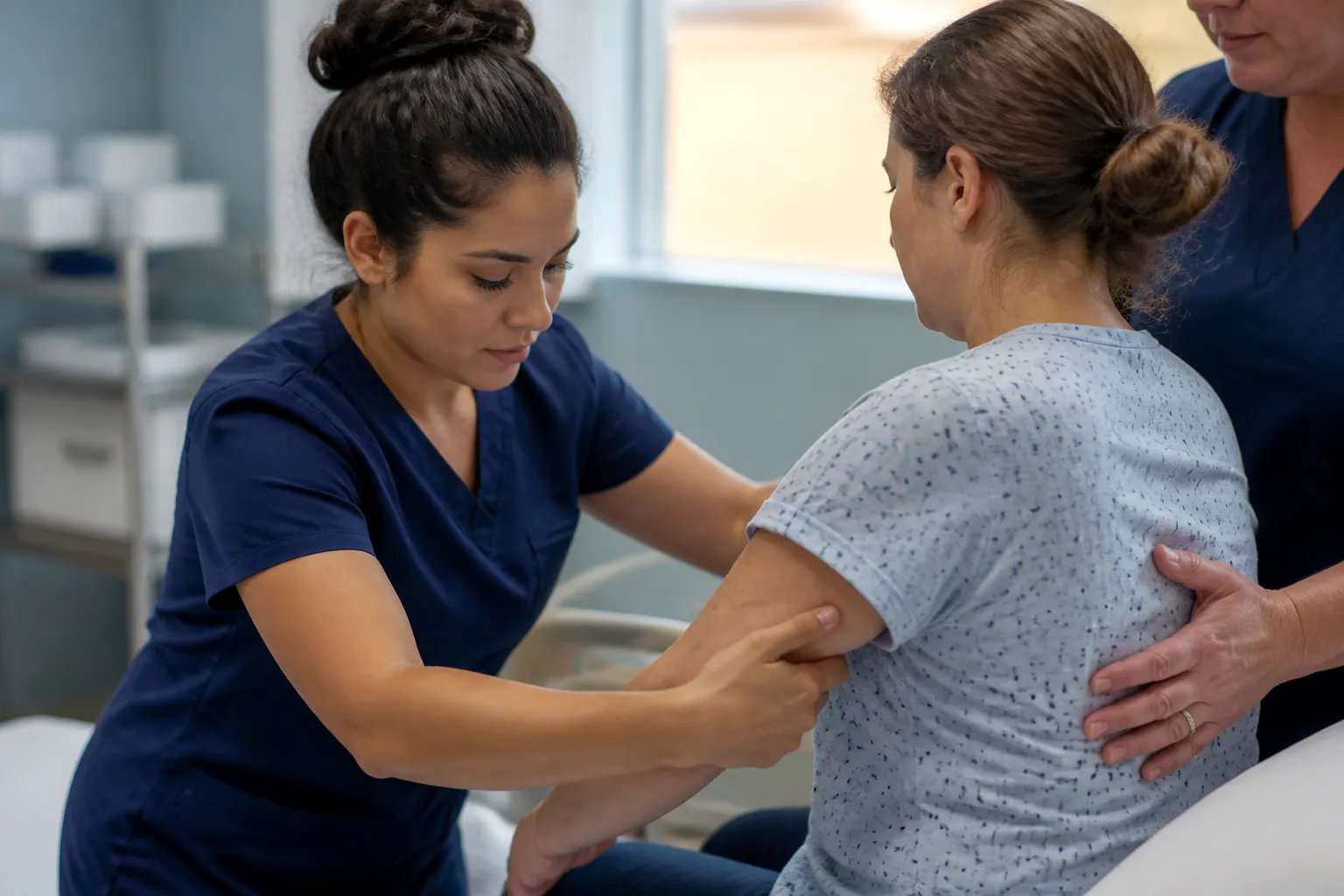
Understand the instructor and supervision requirements
Federal rules say nurse aide training must run under the general supervision of a registered nurse with at least two years of experience, one of them in long-term care. That is a fact to verify. A course is only as good as the person responsible for it.
"General supervision" is looser than it sounds. The nurse provides guidance and holds ultimate responsibility for the course. The nurse does not have to watch every session or even be in the room. So ask who holds that role, what their background is, and how often they show up for the practical portion. A vague answer is an answer.
Trainees the instructor finds proficient may practice under an RN or LPN. Ask how the program decides a student is ready, and whether that decision gets written down.
Separate free training from funded training
These are different things. Some nurse aide training is free to people who are already employed when they train, usually through a facility. Federal guidance also says aides who get a job within 12 months of finishing may be eligible for state reimbursement of training costs. So find out whether the free offer depends on your current employment, and what the reimbursement rule requires if you leave within a year.
Facility-sponsored training often comes with a written agreement. Read it before signing. Look for repayment, retention or notice terms. Ask what happens if you resign, or are let go, during or after training. If the answer is not on paper, assume it is not a promise.
Federal workforce money under WIOA is another route. It is not a loan, and nothing is repaid. It works through an Individual Training Account, a voucher the local board pays straight to an approved school. You generally never touch the cash. WIOA has three streams: Adult, Dislocated Worker, and Youth for ages 16 to 24. Which one fits depends on your situation, not the course you pick.
Understand the funding process and its limits
You prove eligibility at an American Job Center before you enroll, not after. In Massachusetts, for example, people apply in person at a career center and bring photo ID, a Social Security card, and proof of income or a layoff letter. Approval can take two to eight weeks. Your state and local board may ask for different paperwork, so call first.
WIOA is often described as a fund of last resort. Pell and other grants get applied first. And meeting the eligibility rules does not guarantee a check, because the money can run out. Ask the local office whether funds are available now for your specific program. Do not quit a job or turn down shifts on the strength of a maybe.
Also confirm the program sits on your state's Eligible Training Provider List. If it is not on the list, this route cannot pay for it, even if the state has approved the course.
Price expectations and what to verify
Paid programs vary by state, school and format. One private company's guide cites roughly $800 to $2,500 and four to twelve weeks for a typical certified nursing assistant course. The same guide puts WIOA-funded figures at $5,000 to $7,500, covering tuition, fees, books, uniforms and exams. Those are not government numbers and I could not verify them. Treat them as a prompt for questions, not a price tag. Local boards set their own limits.
Ask every program for an itemized list: tuition, books, uniforms, background check, exam. Then ask what is not on it. The state competency exam fee and registry steps may be billed separately in some states.
One line is firm. Federal guidance says no fees may be charged for listing in the state nurse aide registry. If someone asks you to pay for that, stop and call the state.
Red flags and questions to ask before you sign
The red flags are short. The program is not state-approved. A home health aide course falls below your state's hour minimum. There is a registry listing fee. Funding is promised without any eligibility review. A program that will not share its approval status, hour breakdown or instructor qualifications is telling you something.
Bring these questions:
- Is this program approved by my state, and what is its approval number or status?
- Does it meet 75 hours with 16 supervised practical hours, plus any higher state minimum?
- Who supervises, and what are their qualifications?
- Is training free only if I am employed? What happens if I leave within 12 months?
- Is the program on the state provider list for WIOA, and what documents do I need?
- For home health aides, how is continuing education tracked?
Some gaps remain. The federal material I reviewed does not explain exam steps, exam fees or competency evaluation details, and it does not say where to find your state's approved list. Ask the program, then verify with your state health department or workforce agency. If a figure or promise only exists in a sales page, it is not confirmed.
Sources
- Federal Register :: Request Access
- States Take Note: CMS Clarifies Nurse Aide Training Requirements
- CMS Issues Memo on CNA Training Flexibilities to Support Staffing in Nursing Homes
- Free CNA Training Programs: 3 Paths Compared (2026) | CNAClasses
- Does WIOA Pay for CNA Training in Massachusetts? (2026 Guide)
- Free CNA Training Through WIOA & Workforce Solutions - Dallas Free CNA Training
- Healthcare | Apprenticeship.gov
- Home Health Aide Training Requirements by State - PHI Advocacy
Still have a question?
Related guides
-

What the PMP Actually Costs, Once You Stop Reading Only the Exam Fee
The headline price leaves out membership, the 35 required training hours, study materials, retakes, and renewal, so budget for the full cycle before you register. By Dolores Kinnane
-

Try the Free Office First: What American Job Centers Actually Offer
Before paying for resume help or career coaching, check what the public workforce network already provides at no cost, and how to confirm a provider is legitimate.By Dolores Kinnane
-

Income Share Agreements: A Loan by Any Other Name
Federal regulators classify most ISAs as private education loans, so the finance charges, repayment terms and placement claims deserve the same scrutiny you would give any loan.By Dolores Kinnane