How to Pick an Exam Prep Course Without Getting Burned
Check the course against the official exam outline, pin down what the price covers, and get the refund terms in writing before you pay.
 By Imogen Tarrant ·
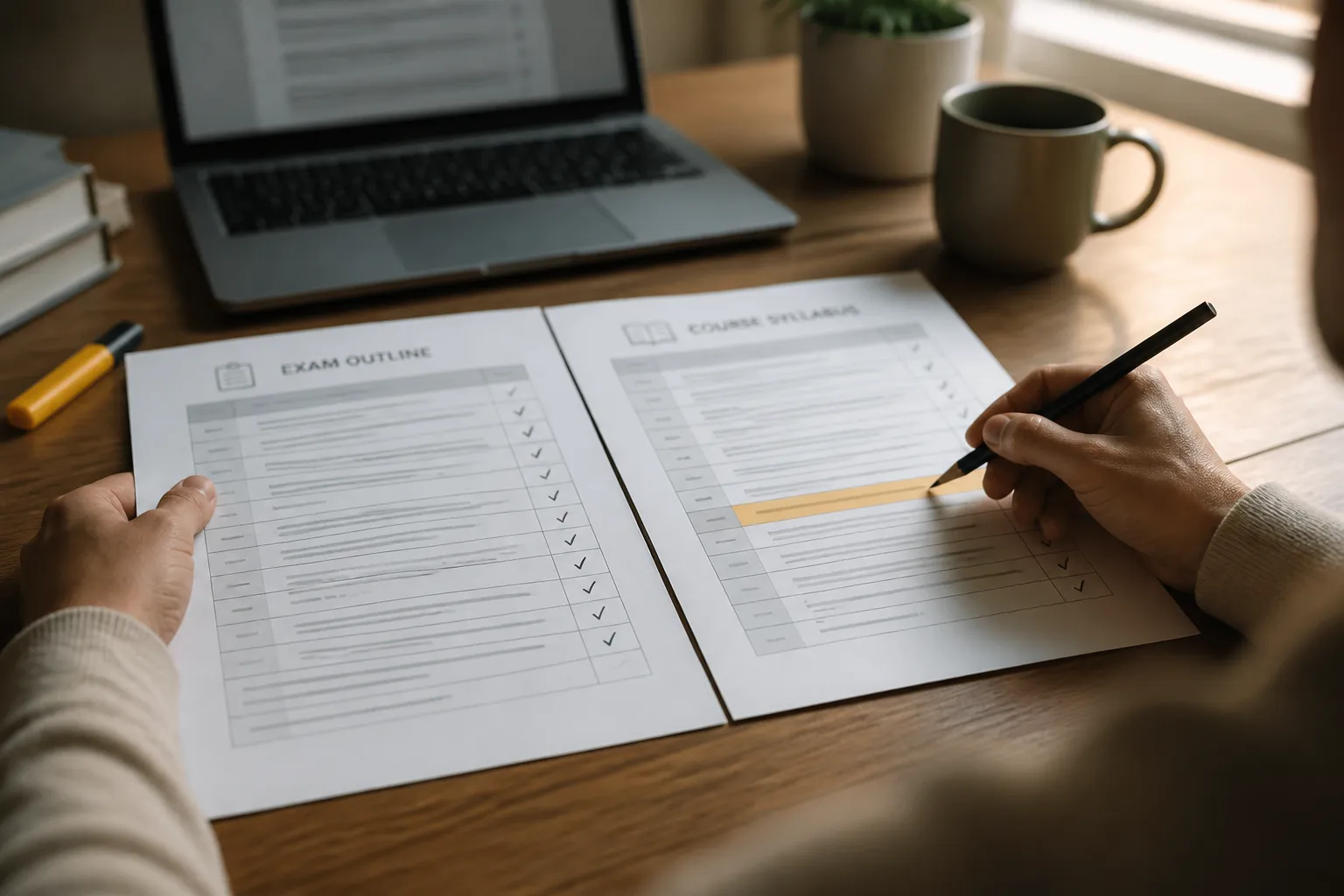
Verdict first: pick the course that maps to the official exam outline, shows you what the price includes, and puts its refund terms in writing. Skip the one that leads with a pass rate it can't explain. Everything else is decoration.
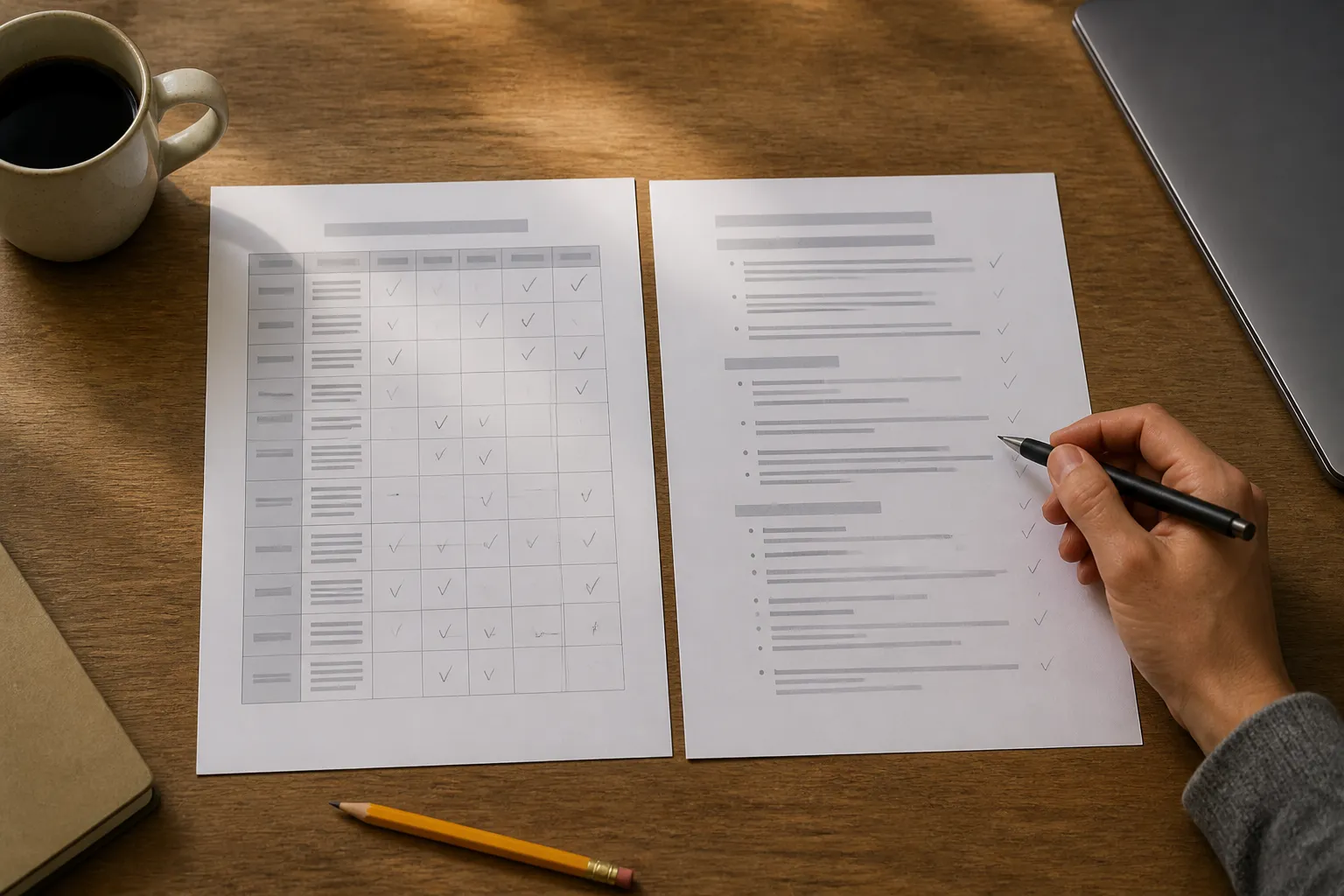
Start with the official exam outline
Before you look at a single course page, find the exam's own blueprint, test plan, or outline. Licensing bodies publish these to say what the exam measures. NCSBN publishes NCLEX Test Plans and updates them about every three years. The AICPA and CIMA publish CPA Exam Blueprints, typically once or twice a year. FINRA posts outlines for exams such as the Series 4 and Series 79. NCEES, which runs engineering and surveying exams, publishes an examinee guide.
This is your yardstick. A course that says it is "comprehensive" is making a claim. The outline lets you test it. The CPA blueprints go further and show score weighting, skill levels for each task, and reference materials. Compare that emphasis to what the course spends its hours on.
Check the publication date, too. Blueprints change. Ask any course how often it updates and which version it was built on. A course written for an old outline can burn your study time on material that no longer matters.
Compare format, materials, and what you actually get
The common split is self-paced versus live online. Self-paced suits people studying around a job or kids and who can keep themselves on schedule. Live classes give you set times and a person to ask. Neither wins across the board. Be honest about which one you will actually finish.
Then read what the price includes. Some NCLEX courses bundle computer adaptive practice tests that mimic the real exam, question banks, and content review guides. Others offer fewer questions or no full-length tests at all. Ask how many questions and full-length tests you get, and whether they last the whole access period or expire early.
Match the practice to the real format. The NCLEX uses computerized adaptive testing and includes Next Generation item types and case studies. NCSBN offers sample packs and exam previews. Use those to judge whether a course's questions look like the real thing, instead of taking the course's word for its own quality. CPA candidates can do something similar with the blueprint: each section has two multiple-choice testlets and three task-based simulation testlets, so a course with no simulations is missing a piece.
Understand costs, refunds, and repeat terms
Prices vary by profession, by state, and by format, so treat any range as a rough sketch. In one NCLEX comparison, individual courses were listed from about $159 to $525. One provider listed a self-paced course at $425 and a live online one at $525. Another listed courses from $159 to $339. Those were snapshots, not quotes. Confirm the current price with the provider and ask what it covers.
Refund language deserves a slow read. One reviewed NCLEX course offered a tuition refund or a free repeat if the student did not pass. Another offered a full refund if the student did not pass within three months of graduating from an accredited nursing school. Reassuring, until you see the conditions. Ask for the exact eligibility rules, deadlines, and paperwork. Ask whether it returns all of your money or only part.
Also budget for the exam itself. Fees set by boards and regulators are separate from any course fee, and they differ by exam and state. Check them with the relevant body.
Ask questions and recognize red flags
Put these to the provider, and get answers in writing:
- Does the course cover the current blueprint, test plan, or outline, and how often is it updated?
- Is the content aligned to current item types?
- How many practice questions and full-length tests are included?
- What are the exact refund or repeat conditions, with deadlines?
- What is the current price, and what does it include?
Now the red flags. Pass rates and testimonials that arrive with no stated source or method are marketing. One reviewed course page stacked such claims next to ratings and reviews and gave no way to check them. If a provider quotes a pass rate, ask how it was calculated, over what period, and for which students. A vague answer is an answer.
Watch for guarantees wrapped in tight time windows or enrollment conditions that are hard to meet. Watch for prices and offers that may be stale. And if the provider won't put its terms in writing, slow down. Keep a copy of whatever you agree to.
Know what official sources don't tell you
The published material covers content, format, and some registration details. It does not say whether your state board must approve or recognize a prep course, so don't assume a course is endorsed because it exists. If that matters, ask the board directly.
Eligibility, application, and retake rules differ by exam and state. For the NCLEX, NCSBN's Candidate Bulletin covers registration, candidate rules, and results processing, and it says to read it before you register. For securities exams, FINRA has a page on preparing for an online test appointment. For other exams, go to the board or regulator that runs it.
A prep course is one tool. Use the blueprint to steer, use free official samples to test where you stand, and pay for a course only where it adds practice you can't get otherwise. This is general information, not personal financial or career advice. For questions about your own licensure, talk to your licensing board or another licensed professional.
Sources
- Prepare for Your Online Test Appointment | FINRA.org
- https://vertexaisearch.cloud.google.com/grounding-api-redirect/AUZIYQGGlWmv7Qr9wU3SPdrEwL3TwCj8V9GojbtDDAti6pQbVjPQ0_8aNy9g4yqgSc3zyBNOWUIeNQaIHgI-cnJl3zHcTVe_3FwuDsqFRTMI7vkAsWMjuZdZTmJvmhuIkDkuiN60QNiXx_TcL4T4SRFodWZERe9J
- https://vertexaisearch.cloud.google.com/grounding-api-redirect/AUZIYQGYl9gtFmfDBRBDU4Mqiup4BAbac3WoTSAcqUhAkWcjz--oD-cYQygRYlyw1ZDbCDNFhF2O5NJ-iQz2zZrhO78KwJVUKhvfCn43bjkf1GpD29xmJZH3cFq8BcsvubOBup_8uE9dWjp_WLrGgZyMEVKIP-ElVQ==
- Learn what to study for the CPA Exam | Resources | AICPA & CIMA
- Prepare | NCLEX
- NCLEX Prep Courses: What Option Is Right For You? - Premiere Education | Premier Education
- Resources | NCSBN
- Examinee Guide | NCEES
Still have a question?
Related guides
-

What the PMP Actually Costs, Once You Stop Reading Only the Exam Fee
The headline price leaves out membership, the 35 required training hours, study materials, retakes, and renewal, so budget for the full cycle before you register. By Dolores Kinnane
-

Try the Free Office First: What American Job Centers Actually Offer
Before paying for resume help or career coaching, check what the public workforce network already provides at no cost, and how to confirm a provider is legitimate.By Dolores Kinnane
-

Income Share Agreements: A Loan by Any Other Name
Federal regulators classify most ISAs as private education loans, so the finance charges, repayment terms and placement claims deserve the same scrutiny you would give any loan.By Dolores Kinnane