What Forklift and Heavy Equipment Training Actually Cost, and What the Quotes Leave Out
Forklift tickets run a few hundred dollars, heavy equipment programs a few thousand, and the price depends heavily on how the training is delivered.
 By Imogen Tarrant ·
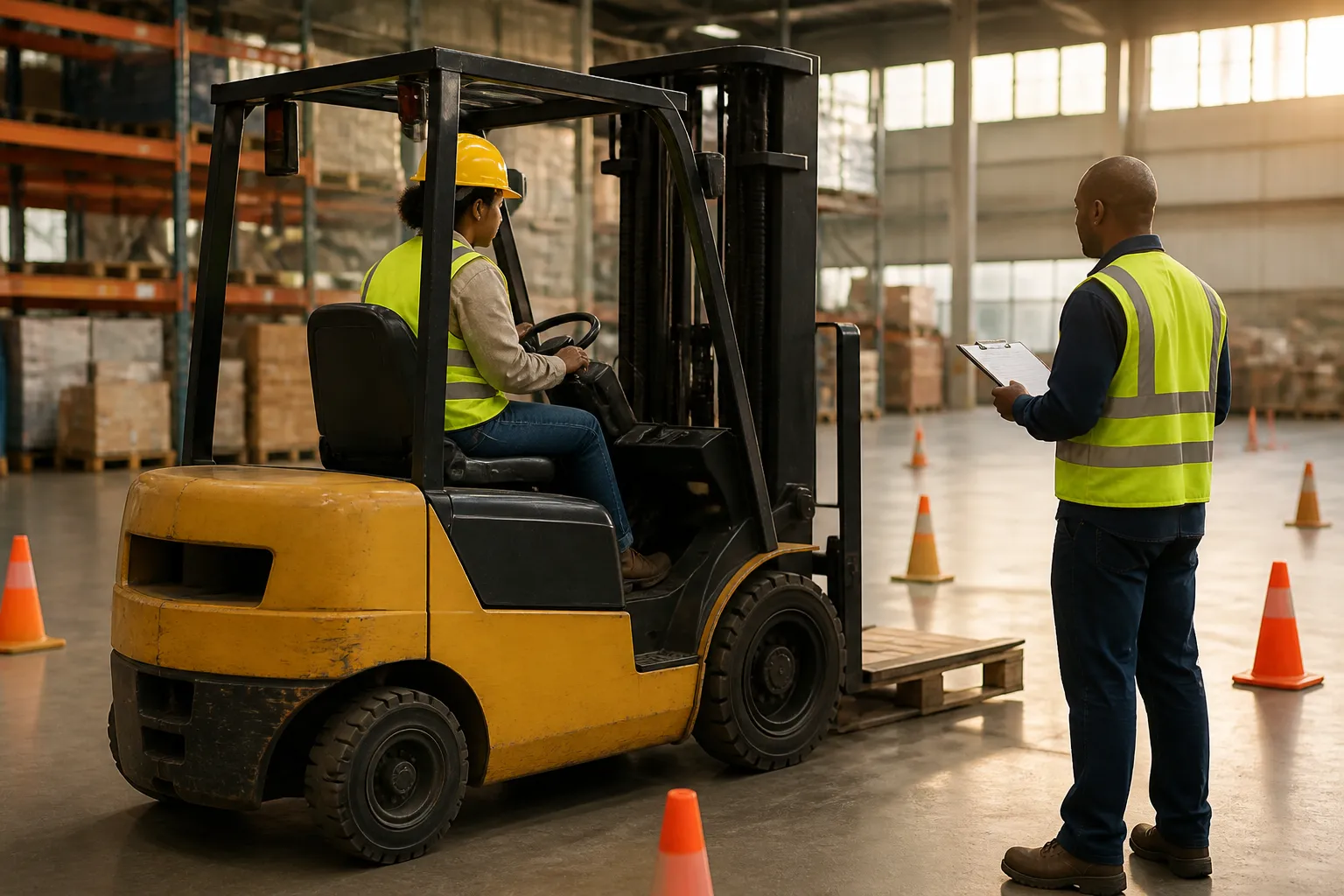
Short answer: a forklift ticket costs a few hundred dollars. A heavy equipment operator program costs a few thousand. Anyone who quotes one number for both is selling something. Prices vary by state and situation, and this is general information, not personal financial or career advice. A licensed professional or your state workforce agency can speak to your case.
What forklift training typically costs
Across the United States, forklift training generally runs $150 to $500 per operator. The spread comes from three things: how the course is delivered, what kind of truck you drive, and who does the teaching. One vendor blog is the source for these figures, so treat them as a rough guide and not a quote.
The cheapest route is online classroom theory paired with a practical session your own employer runs, about $150 to $300. An off-site class at a training center lands around $200 to $400. A third-party trainer who comes to your site, and who typically bundles classroom, hands-on work, evaluation and paperwork, runs about $300 to $500.
Training a crowd? A train-the-trainer course, commonly $500 to $1,500, lets you teach in-house afterward at roughly $50 to $100 per person for materials and trainer time. Do the math. That only pays off if you have steady turnover or a big warehouse. Specialty machines like telehandlers, order pickers and rough terrain forklifts can add 15 to 25 percent.
What heavy equipment operator programs cost
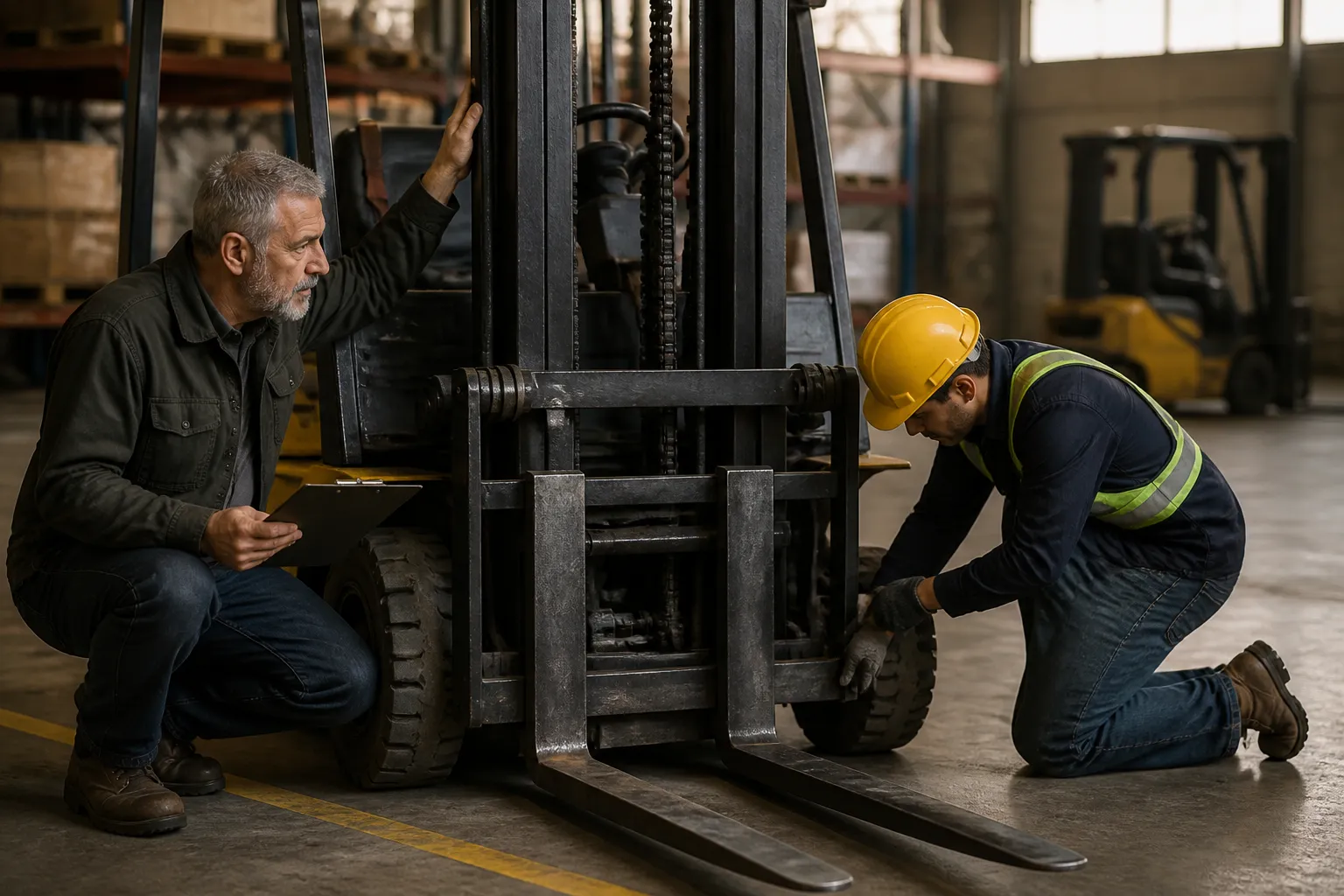
This is a different product. Think multi-week programs on excavators, dozers and loaders. No national survey turned up, so what follows is two states and a handful of listings. Do not stretch them into an average.
In Louisiana, a community college lists tuition of $6,200 for 240 clock hours: about seven weeks of instruction and one week of proficiency demonstrations. It earns NCCER Heavy Equipment Level I and II credentials, and the school says full tuition assistance may be possible for low- to moderate-income students. It also lists estimated starting pay of about $35,000 to $60,000 or more. That is the school's own estimate, so check it against local job postings.
In Delaware, a technical community college lists $4,195 tuition plus about $300 in estimated books, $4,495 total, for in-state and out-of-state students alike. It runs 198 hours over 18 weeks, uses NCCER-based curriculum, and is listed as WIOA approved. A second campus lists the same $4,495.
How the training is delivered
Delivery is the price lever. Forklift courses can be online theory plus an employer-led practical, or fully outside-provider work on site or at a center. Confirm which one you are buying before you compare prices, because a cheap quote for half the job is not cheap.
The Delaware program mixes classroom, simulator time and in-seat operation. Its coursework includes OSHA Construction Safety, OSHA-10, a Safe Forklift Operator Certificate, flagger certification, surveying and excavation. Louisiana covers maintenance theory, operating technique, workplace safety and hands-on operation, and requires applicants to be 16 with parental consent and to pass a drug screen.
Union apprenticeship is the third path. The operating engineers' union describes it as earn-while-you-learn, using classrooms, shops and simulators. The sources do not state what, if anything, an apprentice pays. Ask the local directly.
How to choose and what to ask
Decide first which product you need. A forklift certificate for a warehouse job and a heavy equipment career program are different purchases. Then compare like with like: delivery method for forklifts, and credentials, total hours and certifications such as NCCER levels or OSHA-10 for heavy equipment.
Then cross-examine the quote:
- Does the price include the practical evaluation and completion documentation, or only classroom time?
- Are books, materials and exam fees extra?
- What are the refund rules and the cancellation deadline?
- Is there a group discount for several operators?
- Is specialty equipment included or billed higher?
- Is the program state approved or WIOA eligible, and is tuition assistance available?
Aid rules differ by program and state, so get answers in writing.
Warning signs and gaps
Be wary of a quote that stays silent on whether the practical test and paperwork are included. Be wary of prices that omit books or certification fees, which some programs list separately. And if a program cannot name a recognized credential or curriculum, ask why. One Delaware listing states plainly that its curriculum is NCCER-certified. That is the kind of sentence you want to see.
Know what this guide does not cover. There is no national heavy equipment cost survey here, no union apprenticeship pricing, no state comparison beyond Delaware and Louisiana, and no usable pay data from the federal labor statistics page, whose supplied text was mostly navigation. Whether employers in your state require specific certifications is also unanswered. Verify current prices with each provider and your state workforce agency before you budget a dollar.
Sources
- Construction Equipment Operators : Occupational Outlook Handbook: : U.S. Bureau of Labor Statistics
- IUOE provides skilled, safe and efficient operating and stationary engineers to building and construction contractors and building and facility contractors and owners.
- https://vertexaisearch.cloud.google.com/grounding-api-redirect/AUZIYQG0QEFNsBOqEx7hHHyWKcXPQOVnZhh45U9YUdMULLYrxUoeuQ7n3hnTGlZwBJsPyJfRvfO7ceNL53JekDqr8mF79-3hvO_LdHBldiuuEDKzJljR3Cbmb0KDMTjNywG8SNJk64U=
- Heavy Equipment Operator | Workforce Development
- Programs Delaware Technical Community College - Middletown - Delaware JobLink
- Heavy Equipment Operator Training Program - Delaware JobLink
- How Much Does Forklift Training Cost?
Still have a question?
Related guides
-

What the PMP Actually Costs, Once You Stop Reading Only the Exam Fee
The headline price leaves out membership, the 35 required training hours, study materials, retakes, and renewal, so budget for the full cycle before you register. By Dolores Kinnane
-

Try the Free Office First: What American Job Centers Actually Offer
Before paying for resume help or career coaching, check what the public workforce network already provides at no cost, and how to confirm a provider is legitimate.By Dolores Kinnane
-

Income Share Agreements: A Loan by Any Other Name
Federal regulators classify most ISAs as private education loans, so the finance charges, repayment terms and placement claims deserve the same scrutiny you would give any loan.By Dolores Kinnane