Dentures or Implants: How to Weigh the Choice
A plain-language guide to how conventional and implant-supported dentures differ in comfort, upkeep and cost, with the questions to bring to your dentist.
 By Priya Ranganathan ·

Losing most of your teeth raises a practical question fast. Do you want a denture that rests on the gums, or one that locks onto implants in the jaw? Both can work well. They differ in cost, upkeep and how they feel day to day. This guide translates the basics so you can ask better questions at the consult.
What each option is
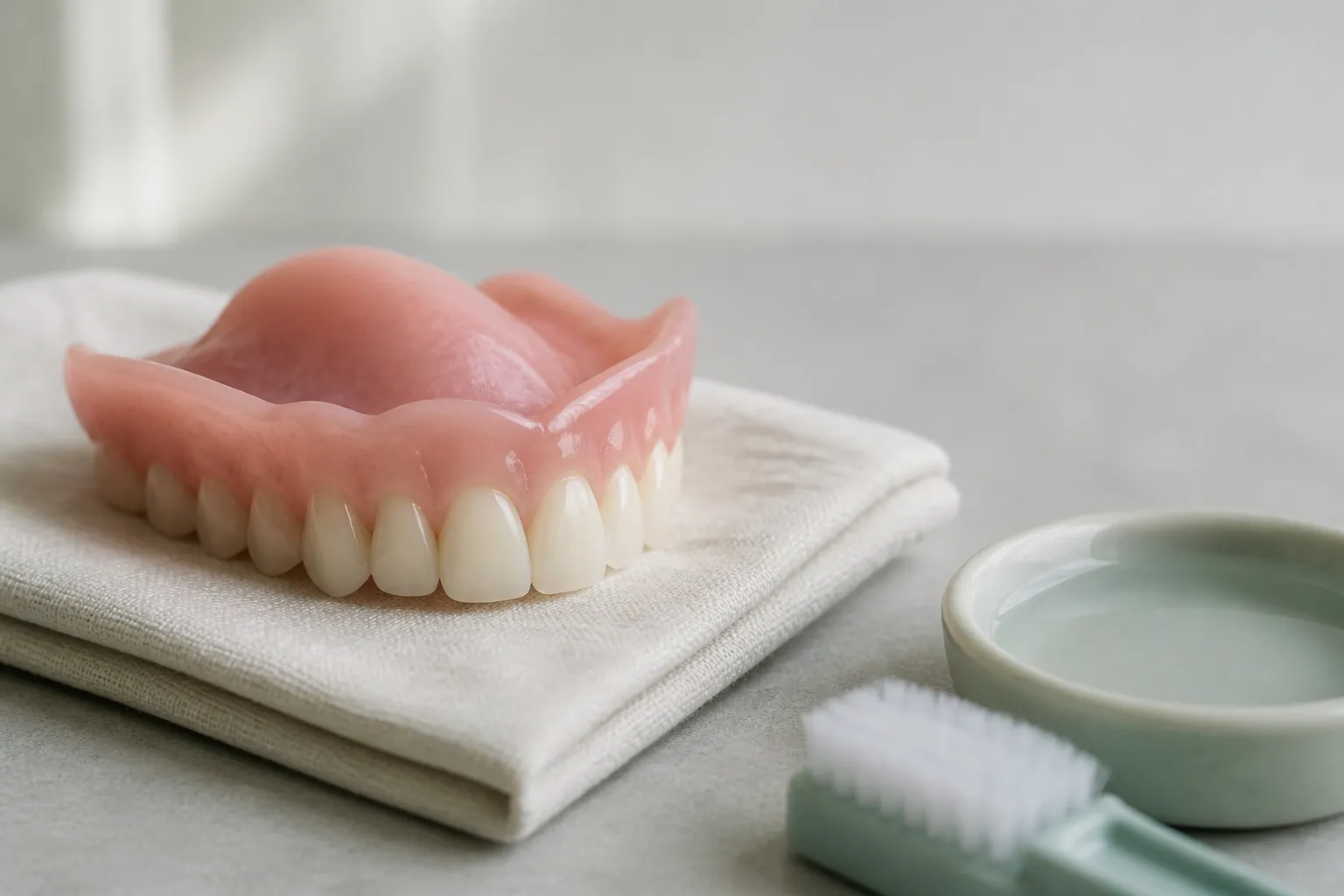
Dentures are false teeth made to replace lost teeth. A complete denture covers the whole upper or lower jaw. A partial denture replaces one or a few teeth. Either way, it is a removable plate or frame, usually plastic or a mix of metal and plastic.
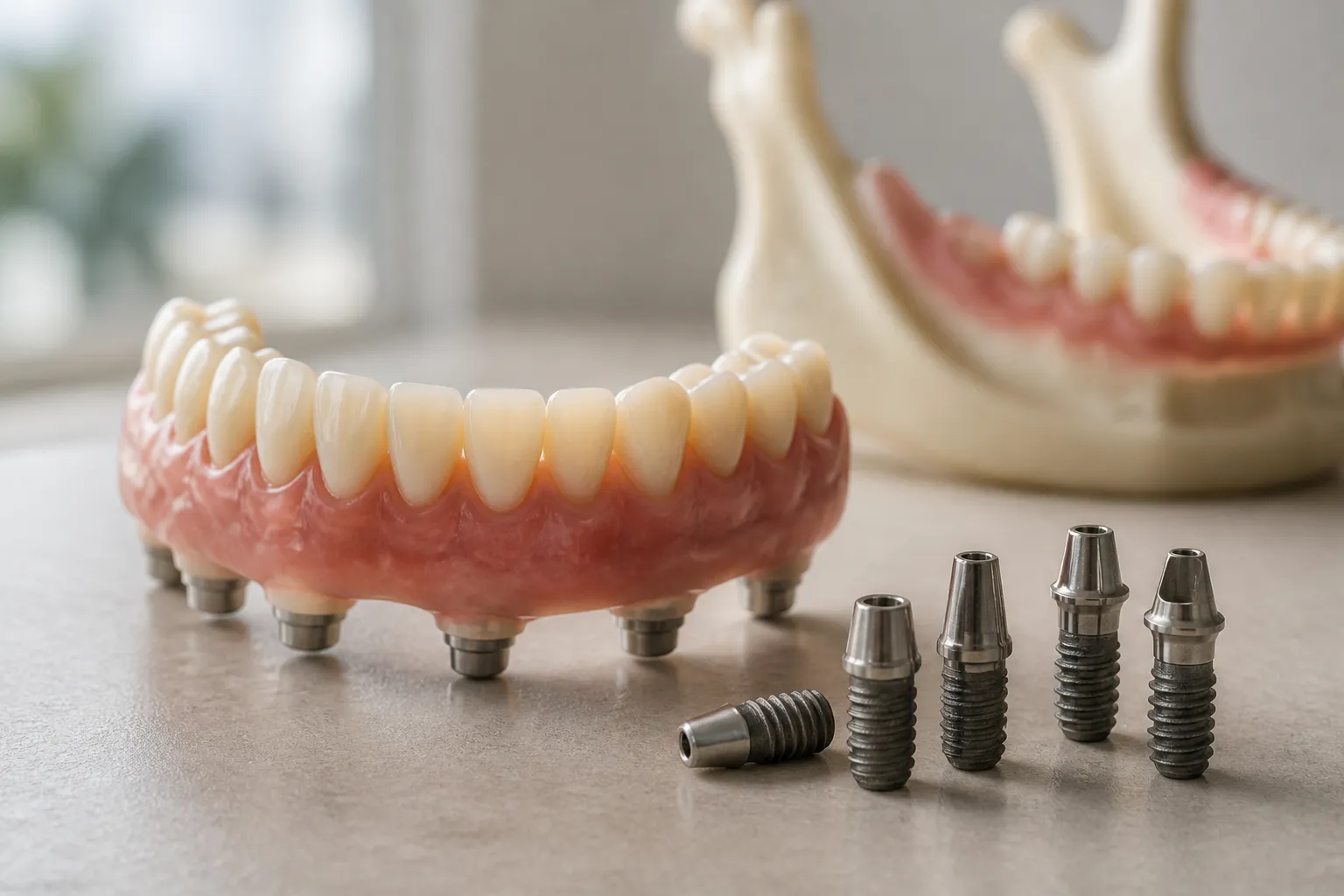
Dental implants are different. The FDA describes them as medical devices placed in the jawbone. The implant body stands in for the tooth root. An abutment extends through the gums and holds the artificial teeth, whether those are crowns, bridges or dentures. MedlinePlus calls implants permanent because they replace both roots and teeth.
An implant-supported denture sits between the two. It is still a denture, but it attaches to implants instead of resting only on the gums.
How daily life changes with each
What does a regular denture feel like? Strange at first. Speaking and eating may feel different while you adjust. Dentures can also dull your sense of hot foods and drinks, and you may not notice when you bite on a bone in your food. That last one is worth knowing before your first steak.
The mouth changes over time, so dentures may need adjusting, relining or replacing. Let the dentist do that work. Early on, expect frequent visits to check the fit. If a denture shifts too much, adhesive may help in the short term.
Implants are often recommended for dentures because they steady the denture, cut down on movement and lower the chance of sore spots. The FDA also notes that going without replacement teeth can bring rapid bone loss, speech changes and altered chewing.
Costs and what affects them
The sources behind this guide give no price figures, so treat these as rough US ranges only. They vary a lot by state, practice and how complicated your case is. Conventional complete dentures commonly run from a few hundred to a few thousand dollars per arch. Implant-supported dentures usually cost several thousand dollars or more per arch, since the price covers the implants, the surgery and the final teeth.
Insurance is the second piece. Many plans cover part of conventional dentures more readily than implants, which are often treated as elective. Check your written benefits, then ask the office for an itemized estimate.
Upkeep adds up too. Dentures need relining, adjustment or eventual replacement. Implants need checkups, and attached parts may need repair someday. The sources do not cover lifespan, so ask the provider what they typically see.
How to choose and what to ask
Start with your health. It affects whether you are a good implant candidate, how long healing takes and how long an implant may last. Smoking may slow healing. The FDA suggests talking through benefits and risks with your dental provider and asking directly whether you are a candidate.
Implants should be placed only by a well-trained dentist skilled in the procedure. Questions worth bringing:
- Am I a candidate, and what are the benefits and risks for me?
- Which brand and model of implant system will you use? Keep that in your records.
- What is the healing timeline, and what happens if an implant does not heal?
- What will the full cost be, including follow-up care?
The sources do not give failure rates or a way to verify credentials, so raise those questions yourself and consider a second opinion.
Warning signs and everyday care
Ill-fitting dentures cause sore spots. Do not try to fix the fit at home. Persistent soreness, looseness or a change in how the denture sits is a reason to book a visit. Also skip toothpaste and mouthwash for cleaning dentures, as MedlinePlus advises. Handle them gently and tell your dentist about changes in comfort, speech or chewing.
This is general information, not personal medical, dental or financial advice. A licensed dental professional can tell you which option fits your mouth, health and budget.
Quick recap
Please seek a professional. This article is general information, not medical advice. Please seek a doctor or other qualified health professional about your own situation. In an emergency, call 911 or your local emergency number.
Sources
Still have a question?
Related guides
-

Clear Aligners Without the Hype: What to Check Before You Start
Mail-order trays look simple, but the FDA says safe treatment still depends on in-person supervision by a licensed dental professional.By Priya Ranganathan
-

Save the Tooth or Pull It? A Careful Look at the Choice
Root canals and extractions differ in more than the first price you hear, so it helps to compare the full path, the recovery and the questions worth asking your dentist. By Lorraine Whitcombe
-

What a Dental Implant Estimate Really Covers
Implant prices vary widely because the word can describe very different bundles of surgery, parts, and follow-up. Know which pieces a quote includes before comparing numbers.By Lorraine Whitcombe