Apprenticeship or Trade School: Which Costs Less?
A registered apprenticeship usually spares you tuition and pays you from day one, but the early wages are low and the path runs for years.
 By Imogen Tarrant ·

Verdict first: for most people, a registered apprenticeship costs far less than a full-price trade school, because someone else usually pays for the classroom and you draw a paycheck while you learn. The catch is that you start at a fraction of full wages and wait years for the rest. Costs and rules vary by state and situation, and this is general information, not personal financial or legal advice.
Trade school sells you a head start. An apprenticeship pays you to run the marathon. Ask which one you can actually afford.
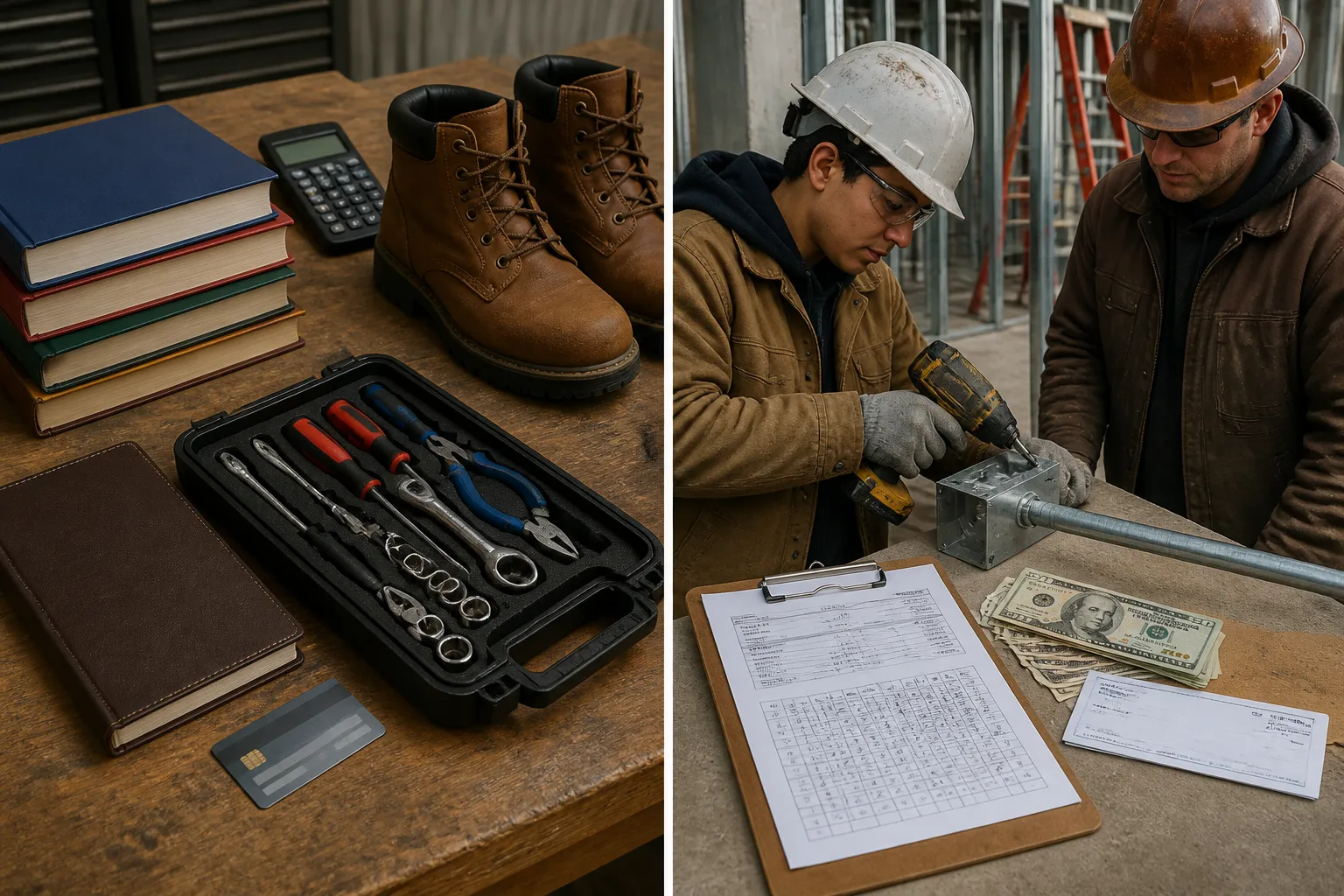
Two routes into the trade
There are two common doors. Some people start at a trade school or community college, then join an apprenticeship afterward. Others skip the school step and go straight into a registered apprenticeship, where they work for pay from week one and attend classes alongside the job.
A registered apprenticeship pairs paid work with a mentor, classroom instruction and raises as you progress. It typically ends in a nationally recognized credential. The U.S. Department of Labor or a State Apprenticeship Agency validates these programs, which you can read about at Apprenticeship.gov. That validation is the useful part. It tells you the program was checked against industry standards.
One wrinkle. Licensing is set state by state, so the same training can lead to different requirements depending on where you plan to work. Check before you pick a route, not after.
What trade school costs
Full trade school training for electricians is generally the priciest path. One guide puts it at $30,000 or more. Community college programs run two years full time, with tuition described as averaging about $3,500 a year. Those are rough figures. Your state and your school will move them.
Tuition is not the whole bill. Books, study materials and school fees stack on top. Tools can run up to about $2,500, a one-time purchase. Loans have to be repaid. Scholarships and grants generally do not. The guides I reviewed say nothing about loan interest or what you give up in wages while sitting in class, so budget for both yourself.
And here is the part the brochure skips. Finishing school does not finish the job. An electrician who goes the school route typically still needs about four more years of apprenticeship to reach journeyman status.
What an apprenticeship costs and pays
In a registered apprenticeship, the sponsor or employer usually covers classroom training. Your main cost is time. One advocacy site, Build Freedom, says sponsors cover training and there is no tuition debt. Treat that as a claim to confirm in writing with each sponsor. The site focuses on veterans and defense-industry workers, and its pay figures cannot be checked against federal data here.
Pay starts low and climbs. One listed electrician program starts at 40 to 50 percent of journeyman scale, roughly $18 to $25 an hour depending on region, over four to five years. Another description gives an average start near $18 an hour, rising to about $32 at completion. Raises often come every 6 to 12 months, but each sponsor sets its own schedule.
The workload is real. A commonly cited figure is about 2,000 hours of on-the-job training and 144 hours of classroom education per year. Hours differ by state and program.
Licensing and exam fees
Training is not the last bill. Electrician licensing exam costs are described as roughly $30 to $300 in total, with the exam fee itself often $30 to $75. It depends on certification level and state. Your state licensing board has the current numbers.
The payoff, as reported: journeyman electricians earn about $55,000 to $77,000 a year, often with evening and weekend work. That is a general range, not a promise. The sources I had did not include current federal pay data, so check the Bureau of Labor Statistics for your area.
Plumbing: what is and is not known
Be wary of anyone who says plumbing costs the same as electrical. The material behind this comparison covers electricians in detail and plumbers barely at all. No plumber-specific tuition, apprentice wages, required hours or license fees were available. Do not borrow the electrician numbers.
For plumbing, ask local unions, contractor associations and your state licensing board for actual program costs, wage schedules and requirements. The federal plumbers outlook page is a starting point for background.
How to choose and what to ask
Start with one check. Is this a registered apprenticeship validated by the Department of Labor or a State Apprenticeship Agency? If the answer is vague, move on.
Then cross-examine the sponsor:
- Who pays for classroom training, and is any tuition charged?
- What is the starting wage, the wage at completion, and how often do raises come?
- How long is the program, and how many on-the-job and classroom hours are required?
- What are the entry requirements and start dates?
Red flags are plain. If a sponsor cannot say clearly what it pays, what it requires or when it starts, the program is hard to verify. If a trade school charges far more than a community college, ask exactly what the extra money buys. A nicer logo is not an answer.
Finally, confirm your state's licensing rules and exam costs with the state agency and the program itself. A licensed professional or your state board can answer what a general guide cannot.
Sources
- Homepage | Apprenticeship.gov
- Registered Apprenticeship Program | Apprenticeship.gov
- Earn While You Learn | BuildFreedom.US
- Electricians : Occupational Outlook Handbook: : U.S. Bureau of Labor Statistics
- How Much Will It Cost to Become an Electrician? | Outsource
- Glossary : Occupational Outlook Handbook: : U.S. Bureau of Labor Statistics
- Plumbers, Pipefitters, and Steamfitters : Occupational Outlook Handbook: : U.S. Bureau of Labor Statistics
- electrical training ALLIANCE
Still have a question?
Related guides
-

How to Compare Training Vendors Without Buying the Best Slide Deck
A plain method for small-business buyers to define the need, weight a scoring rubric, and pilot a program before signing a contract.By Imogen Tarrant
-

How to Check a Nursing or Allied Health Program Before You Pay
Accreditation, exam results, and clinical placements are the three claims a program should prove, and you can verify each one yourself before you commit money. By Dolores Kinnane
-

Ask for the Math Before You Trust a School's Placement Rate
A placement percentage means nothing until the school shows how it was counted, and a federal results site gives you a way to check.By Dolores Kinnane