What Private Lessons Cost, and How to Check the Teacher Before You Pay
Prices vary by habit more than by any standard, so compare quotes on the same basis, get the cancellation terms in writing, and vet the teacher in person.
 By Dolores Kinnane ·
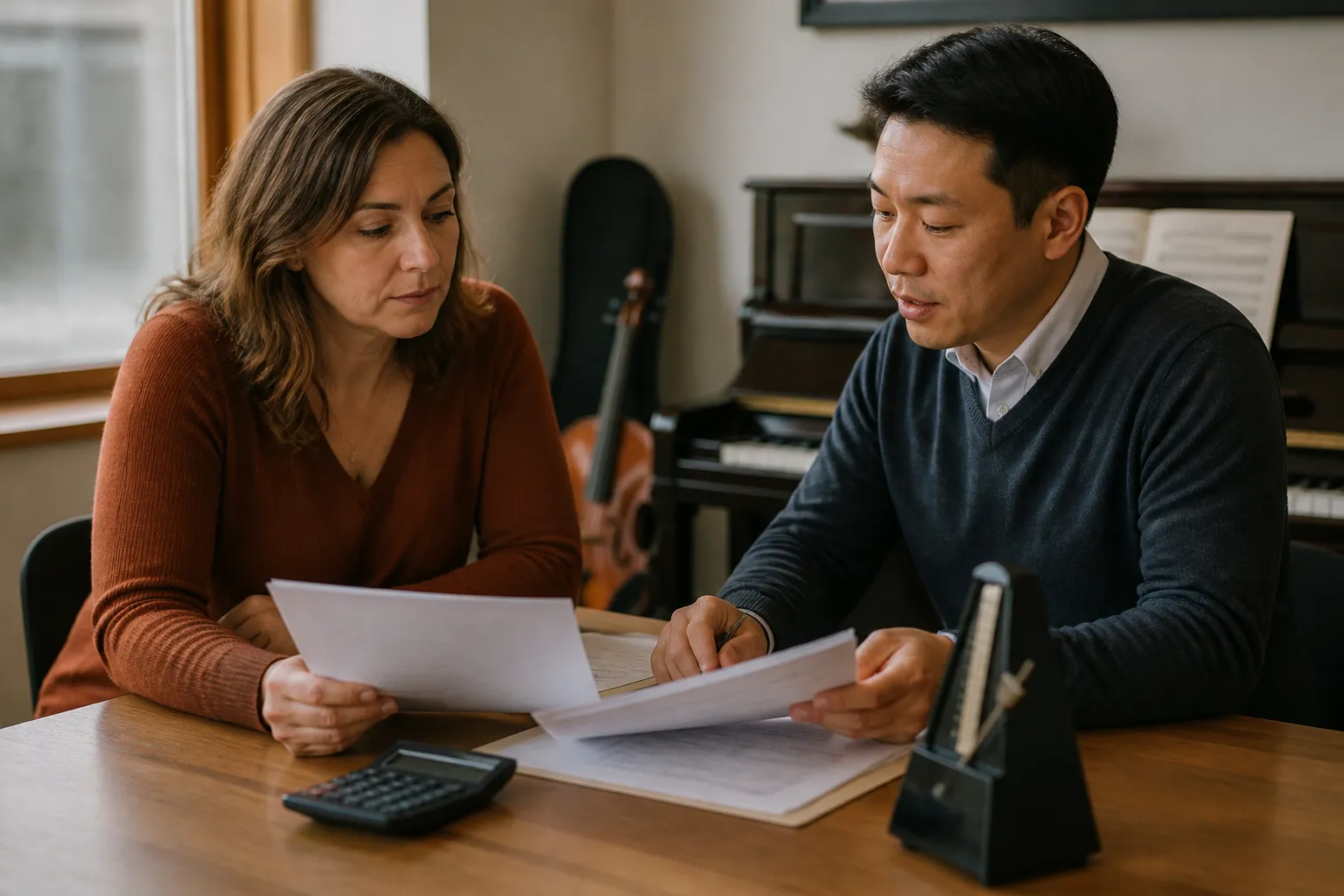
Verdict first: private lessons are priced by habit, not by any standard you can check. Expect roughly $30 to $60 for a 30-minute lesson and $50 to $100 for an hour. Those are national figures. Your state, your city and the instrument will move them, sometimes a lot. This is general information, not personal financial advice.
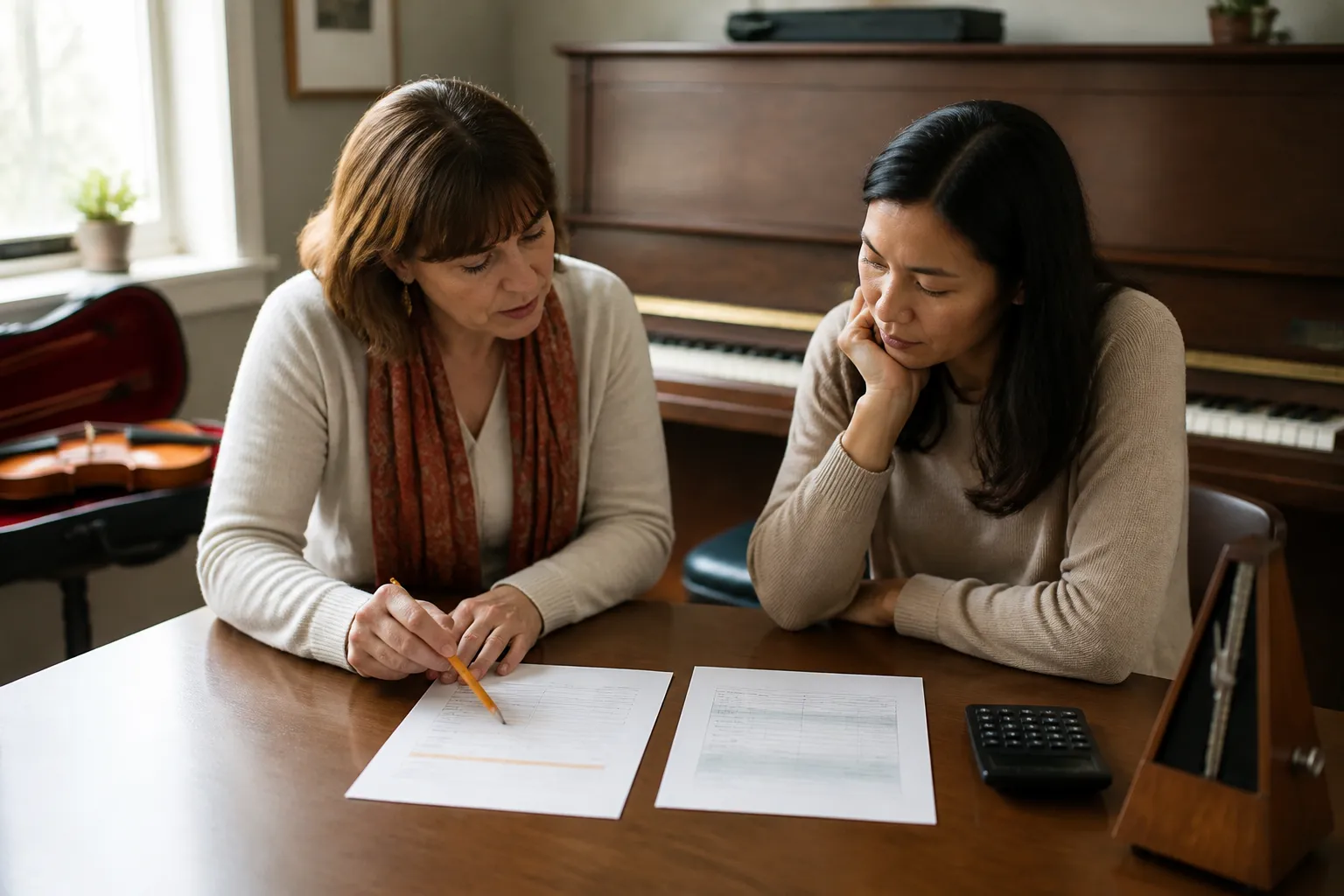
What lessons typically cost
One 2026 parent's guide puts monthly tuition at about $170 for weekly 30-minute sessions and about $320 for weekly 60-minute sessions. That is the national average, not a promise about your town. A retailer's lesson FAQ lists a 30-minute range that reads as roughly $23 to $37, plus a $30 non-refundable registration fee for new students. The page text is garbled, so treat those numbers as approximate and call to confirm.
Does a higher rate buy a better teacher? Not automatically. A very cheap teacher is often less experienced or less credentialed, which is worth knowing. But an expensive one may just have a nicer waiting room. Price is one input. It is not a verdict.
How pricing models differ
Quotes arrive per lesson, per month or per semester. Put them on the same basis before you compare, or a cheap-looking per-lesson number will beat a monthly figure that actually covers the same time.
Per-lesson pricing charges for each visit. Monthly tuition behaves more like a school-year membership. You are paying for a reserved weekly slot and for the teacher's planning time, whether or not life cooperates that week. So ask the obvious question: what happens to a missed lesson under this model?
The sources I reviewed do not explain contracts, cancellation terms, refund rules or what happens to prepaid tuition. That silence is not reassuring. Get the policy in writing, read it before you pay, and consider having a licensed professional look at anything long or complicated.
Formats and where to find a teacher
Lessons can happen at a studio, in a teacher's or your home, in a small group, or online. Each changes the price and the attention your child gets. Decide on the format first. Otherwise you will compare things that are not alike.
You can hire an independent teacher directly or go through a company that matches you with one. The company adds convenience and, usually, a layer of cost. For referrals, start with friends and family, local music teacher organizations, music stores, schools and churches. Your child's favorite school teacher is a good person to ask, too.
- In-home, one-on-one
- Small group
- Online
- Tutoring or lesson center
How to vet a teacher
Meet in person if you can. Teachers often explain their methods and goals in that first conversation, and you learn quickly whether you can stand to hear them every week.
Ask to attend a student recital. Talk to parents there. They will tell you more about a teacher's style and attitude than any brochure will.
Ask for at least three references. Ask them about results, dependability, friendliness and knowledge. Confirm the teacher knows the specific subject and has taught students your child's age.
In music, there is a credential: Nationally Certified Teacher of Music, which the Music Teachers National Association says shows professional competence. Ask whether the teacher holds it. Treat it as one data point, not a guarantee. If you are dealing with a tutoring business, check its rating, complaint history and reviews on the BBB's hiring guidance and BBB.org. Then compare credentials, education and rates across several teachers.
Questions to ask before you hire
- What is your professional and educational background in music?
- How long have you taught, and which ages?
- Have you worked with students with learning disabilities or special needs?
- Do you have a written studio policy, and will you go through it with me before I pay?
- How do you measure progress, and how much practice do you expect?
- How do you keep up with professional development? Are you nationally certified?
For tutors, add one more: do you understand what I actually want, homework help or long-term skill building? Those are different jobs at different prices.
Red flags
Anyone offering to do a student's assignments for pay is selling cheating. The BBB describes this as the opening move in extortion scams aimed at students. The pattern: you pay, they demand more for "additional research," then threaten to tell your school if you refuse or ask for a refund. Walk away at the first extra demand.
Also be wary of anyone who dodges references or will not let you interview them first. Unusually cheap rates can mean thin experience. None of these alone proves a problem. Together they should end the conversation.
What these sources do not cover
The guidance here comes from music and general tutoring. It does not address art or language lessons, language-specific credentials such as proficiency tests or teaching certificates, or how to verify certification independently. The price data is national only, with no state breakdown. Nothing I found describes state or federal licensing rules for private music, art or language teachers, so check local requirements with the relevant regulator. For art and language, borrow the vetting steps above, then ask the teacher what credentials matter in that field and how you can confirm them.
Sources
- BBB Tip: Hiring a Tutor
- BBB Scam Alert: Students hire homework help and end up in extortion con
- Self-Enrichment Teachers
- Choosing a Music Teacher - Music Teachers National Association
- How to Choose a Music Teacher
- Find a Teacher - Music Teachers National Association
- Private Music Lessons Cost: A 2026 Parent's Guide
- How much do lessons cost? | Music & Arts
Still have a question?
Related guides
-

How to Compare Training Vendors Without Buying the Best Slide Deck
A plain method for small-business buyers to define the need, weight a scoring rubric, and pilot a program before signing a contract. By Imogen Tarrant
-

How to Check a Nursing or Allied Health Program Before You Pay
Accreditation, exam results, and clinical placements are the three claims a program should prove, and you can verify each one yourself before you commit money.By Dolores Kinnane
-

Ask for the Math Before You Trust a School's Placement Rate
A placement percentage means nothing until the school shows how it was counted, and a federal results site gives you a way to check.By Dolores Kinnane