Car Insurance Quotes: Why the Cheapest Price Is Rarely the Real Deal
Compare at least three insurers on identical coverage, check each company's license and financial strength, and re-shop at renewal before you switch.
 By Teodor Valcourt ·
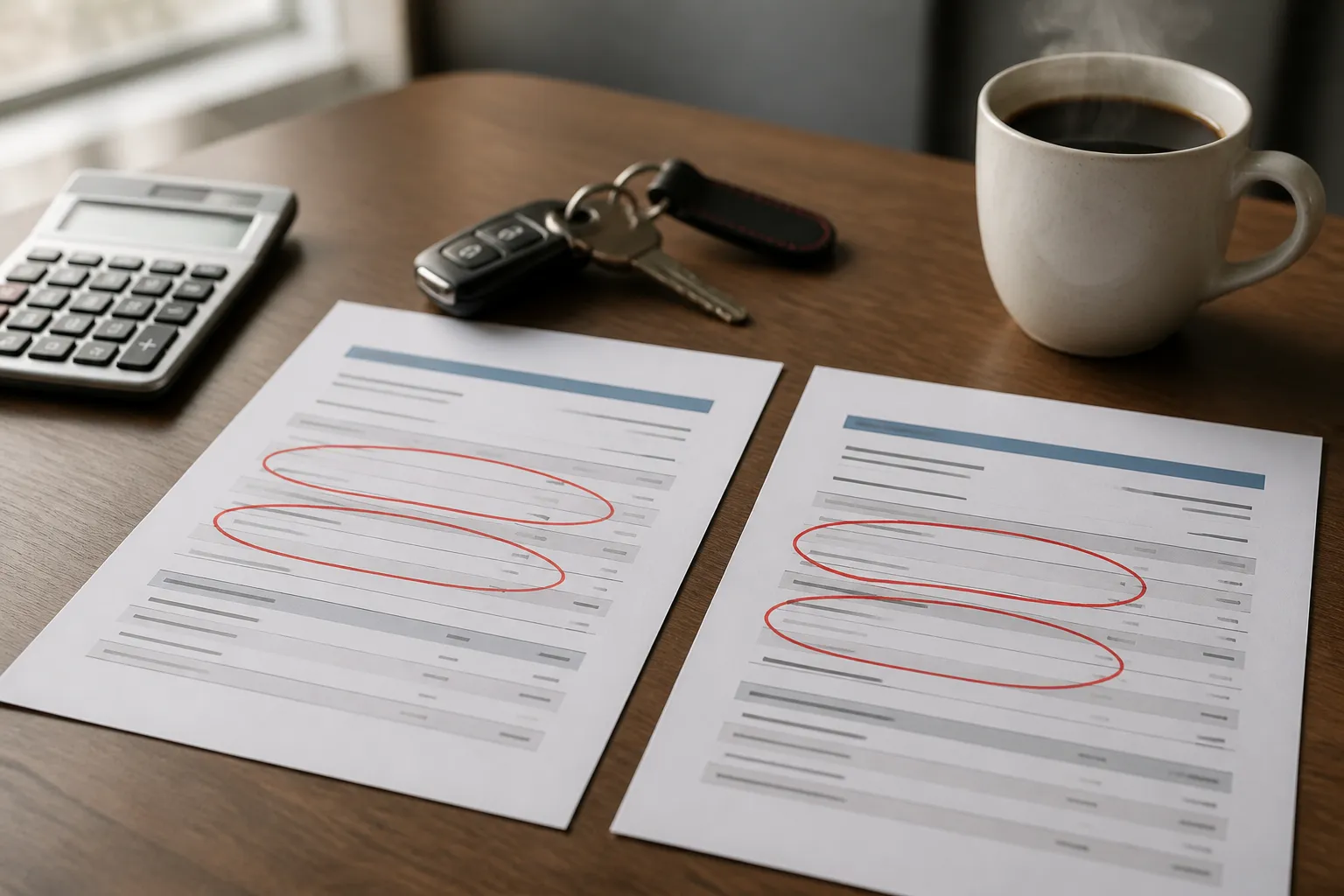
The average full coverage policy in the US runs about $1,803 a year in 2026. That is a national average, built from NAIC data and analyzed by a comparison site. Your number will differ by state, age, vehicle and driving record. It is still a useful yardstick. If a quote lands far above or below it, read the fine print before you celebrate or complain.
A cheaper quote is often just a thinner policy with a friendlier number on top.
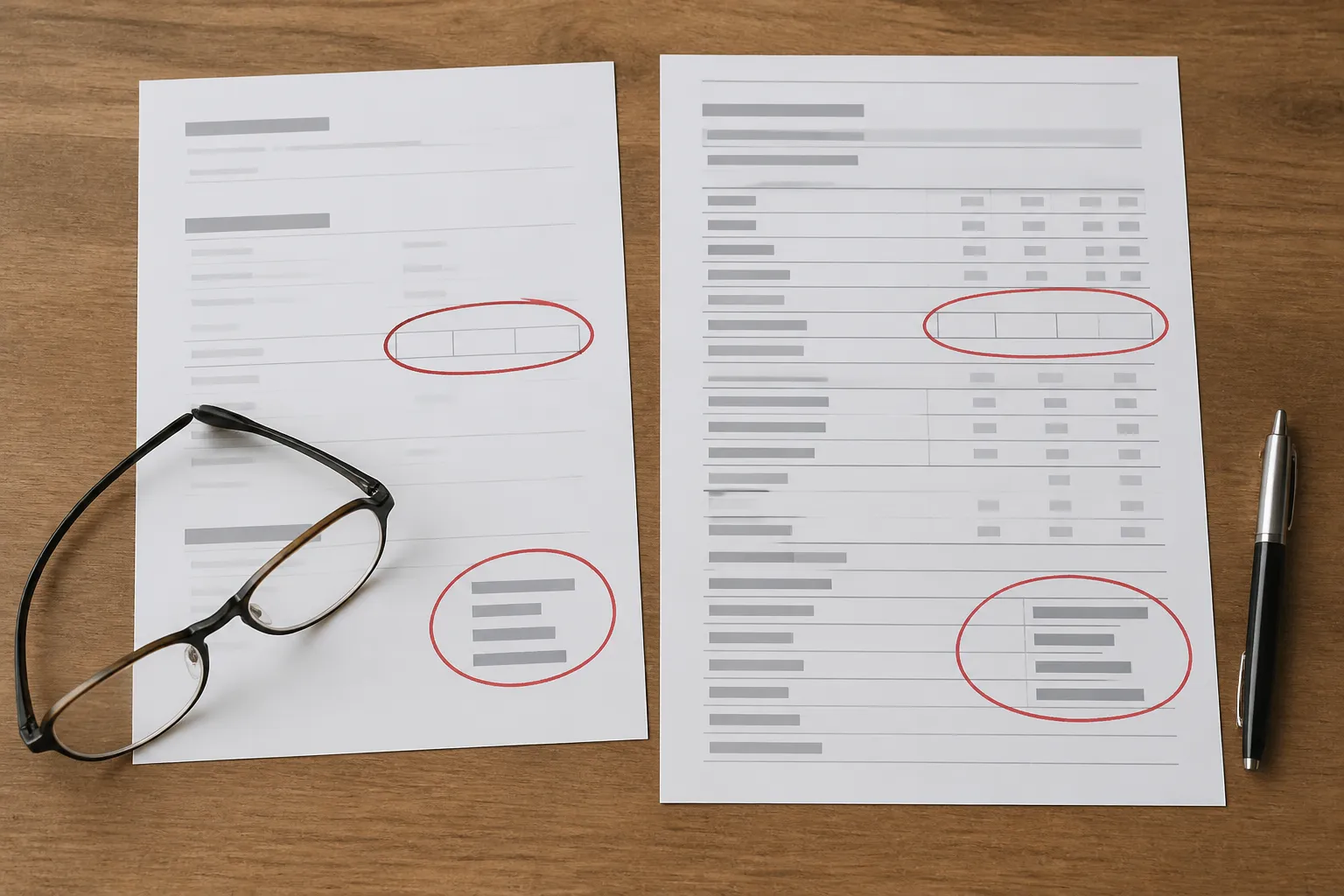
Why quotes for the same driver can differ so much
Each insurer uses its own rating formula. It draws on risk models, claims data and how much competition exists in your area. So two companies can price the same driver, same car, same coverage, hundreds of dollars apart per year. The cheapest company for your neighbor may not be cheapest for you.
That is why one quote tells you little. Generally, compare at least three insurers. Then look at the spread. A wide gap can reflect different risk weighting, not a better deal. Treat it as a reason to check the details, not as a winner.
Build a like-for-like baseline before comparing prices
The most common mistake is comparing quotes with different coverage. A low total may come from lower liability limits, a higher deductible or a missing add-on. Set the same terms on every quote first. Then compare price.
Match these items across every quote:
- Primary liability, both bodily injury and property damage
- Medical payments
- Uninsured motorist coverage
- Collision and comprehensive
- Optional extras such as glass coverage (often offered with no deductible) and rental car reimbursement
Save each quote before you change a setting. A screenshot works. You can then see how each change moves the total, and go back if things get muddled.
Understand what the coverage choices actually do
Collision pays to repair your own car after an accident. Comprehensive covers non-accident damage, such as theft, vandalism or natural disasters. Drop them and the premium falls. So does your protection. Decide what coverage you need before you shop, not after you see the price.
Nearly all states require property and bodily injury liability. New Hampshire is the exception. But the legal minimum may not cover a serious accident, and you pay what the policy does not. State minimums vary, so check yours with your state insurance department.
A higher deductible generally lowers the premium. It also raises what you pay after a claim. Pick a deductible you could actually cover tomorrow. Then hold it constant across quotes.
Check the insurer, not just the price
Confirm each company is licensed in your state. Your state insurance division can show that. It can also show consumer complaint records, which say something about how claims and disputes get handled.
Look up financial strength ratings from recognized rating agencies. A low price from a company that struggles to pay claims is a poor trade. Reputation and stability belong next to the premium.
Ask about payment terms too. Does paying monthly add a fee? Does paying the full year up front earn a discount? Two identical premiums can cost different amounts over twelve months.
Re-check your policy and avoid common traps
About 54% of drivers do not shop at renewal. That habit can cost money. A Consumer Reports survey of 40,566 policyholders found that drivers who compared and switched saved a median of $461 a year. Results vary, and your savings could be higher, lower or zero.
Re-quote after a move, a job change, a new driver or a different vehicle. Rates also shift with the market. The BLS price index for motor vehicle insurance rose 17.4% in 2023 and 17.8% in 2024, then slowed to about +0.16% over 12 months by early 2026. Calm now does not mean calm later.
Ask every company the same questions:
- Do all quotes use the same limits, deductibles and optional coverages?
- Is the insurer licensed in my state, and what do complaint records show?
- What is its financial rating?
- Is there a monthly payment fee or an annual-pay discount?
- Is glass coverage or rental reimbursement included, and at what cost?
This is general information, not personal insurance, legal or financial advice. For decisions about your own limits and coverage, talk with a licensed insurance professional in your state.
Please seek a professional. This article is general information, not financial, tax or insurance advice. Please seek a licensed financial, tax or insurance professional about your own situation.
Sources
- Insur Qio - Quote Hack Culture: The New Way People Are Hunting Down Insurance Deals
- https://vertexaisearch.cloud.google.com/grounding-api-redirect/AUZIYQHI_SRxwgEKIsSn4QpECFjpMinTMANtH76L8v_U-3oFwbUz4avfQKoD8GreHlkuDzpYVIfE2xrRBIXefZueEw-v12J7n6uE10jpien1R6-OzcBiAWuab8rHLJKioXbzWe4p7XYYJLkFDxCtgvSReaYEcFHAg_pFGV92PpCdnipuww1aQs6XNnZN4c6YVf3vonzWJM9vI5pzJcd699CyM8J16nsi5Q==
- Compare Car Insurance Quotes Online: A Step-by-Step Guide
- Compare Car Insurance Quotes From Top Companies (2026) | LendingTree
- How to find the right auto insurance - Triple-I®
- Triple-I®
- How to Choose Car Insurance in 4 Steps | Travelers Insurance
Still have a question?
Related guides
-

Hiring Help for an IRS Notice: What Is Settled and What Is Not
Enrolled agents, CPAs and tax attorneys can all respond to an IRS letter, but our sources back only part of the comparison. Here is what holds up and what you must verify. By Hollis Brandt
-

How to Hire a Tax Preparer Without Getting Burned
Fee ranges, credential checks and the red flags that should end a conversation before you hand over a single document. By Marcus Delaney
-

The Loan Hiding Behind the Sticker Price
Dealer financing can add a markup to the lender's rate, so comparing outside offers, total cost, and add-ons before closing shows buyers what they are really agreeing to.By Teodor Valcourt