Flood Damage Needs Its Own Policy, and the Federal Caps Are Lower Than Most People Expect
Standard homeowners policies usually exclude flood, so the NFIP's $250,000 building and $100,000 contents limits are the starting point for checking your gap.
 By Marcus Delaney ·

The federal cap on a homeowner's flood building policy is $250,000. Contents top out at $100,000. Your standard homeowners policy, in most cases, pays nothing for flood damage. That gap is where people get hurt.
Why flood damage usually needs its own policy
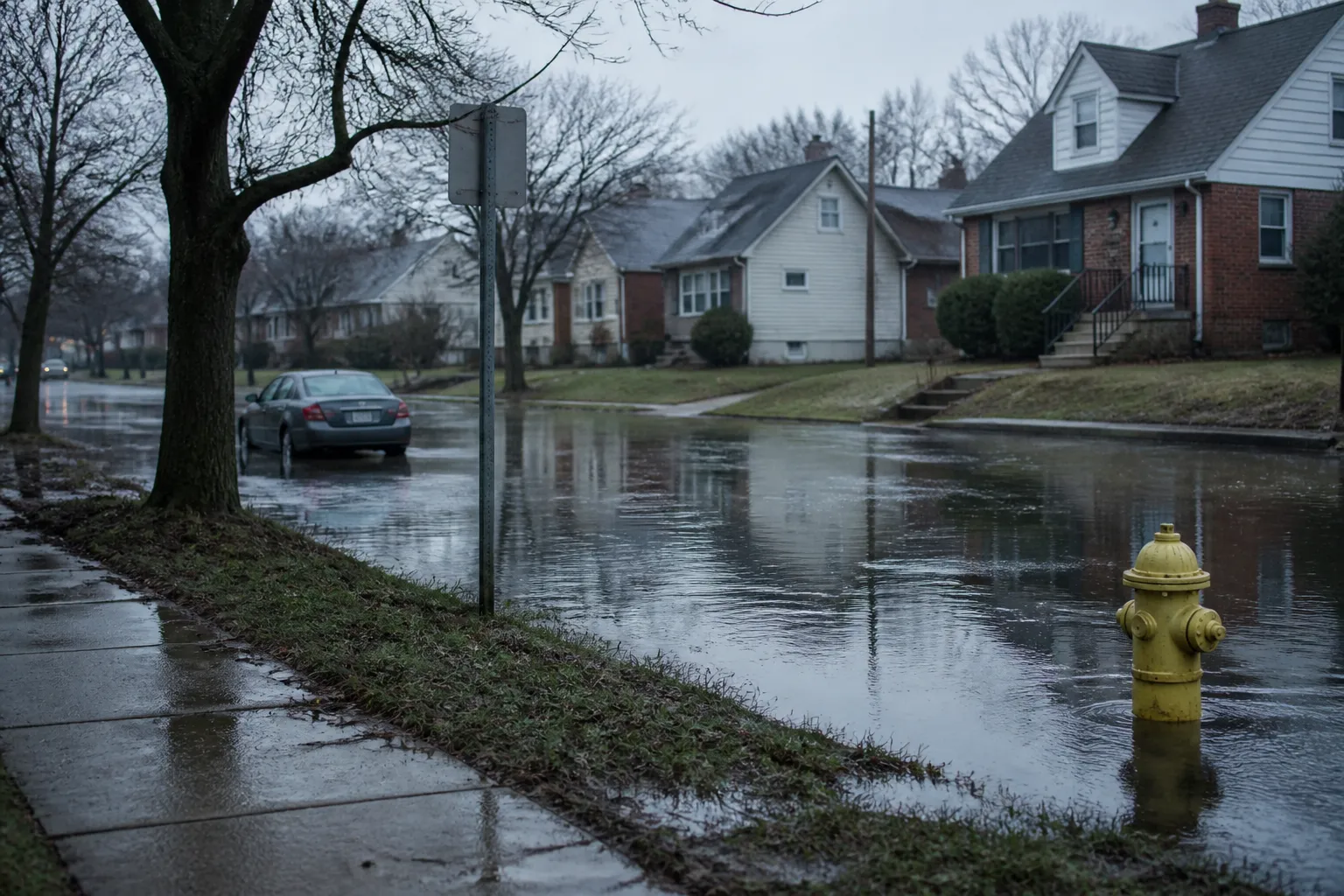
Most homeowners and renters policies leave flood out. Read the exclusions section of yours before you assume anything. Water from a burst pipe is one thing. Water that rises from the ground or comes in from a storm is another, and it usually belongs to a separate flood policy.
The National Flood Insurance Program, or NFIP, sells those policies to homeowners, renters and businesses. Coverage pays for direct physical losses from flooding. It also covers erosion caused by waves or currents during a severe storm, a flash flood or an abnormal tide surge. See the program's main site at Floodsmart for the basics.
Do not rule yourself out because your address is not in a high-risk zone. Flooding happens in every region of the US. About 90 percent of natural disasters here involve some flooding. And roughly 20 percent of flood claims come from low-to-moderate risk areas. A map color is not a guarantee.
Cars are a separate matter. Flood damage to a vehicle falls under the optional comprehensive part of a standard auto policy, not a flood policy.
Who is eligible and how coverage is structured
You can buy federal flood coverage if your community participates in the NFIP. That includes condo and townhouse owners. Communities join by adopting floodplain management rules that meet NFIP standards, and many have.
Coverage comes in pieces. Building and contents are bought as separate policies. Renters can buy contents alone, since they do not own the walls.
- Homeowners: up to $250,000 for the building and up to $100,000 for contents.
- Renters: up to $100,000 for contents.
- Commercial: up to $500,000 for the building and up to $500,000 for contents.
Read the valuation terms closely. Buildings are paid at replacement cost. Personal property is paid at actual cash value, which means depreciation comes off. A five-year-old couch is not paid at the price of a new one. If your home is worth more than the federal limits, private insurers sell excess coverage above the NFIP maximums.
What it costs and what the sources do not say
Here is the honest number: the sources I reviewed give no premium figures. So this guide will not invent a typical price. Costs vary by state, by property and by coverage choices. Get a quote for your exact address.
One useful fact is available. NFIP rates depend on location and coverage needs, and they do not vary by insurance provider. The same NFIP policy should cost the same through any agent who sells it. Shopping around on price for that product is mostly wasted effort.
Several details are also missing from the material I had. These include how flood zones change premiums, waiting periods before a new policy takes effect, specific exclusions and the full claims and appeal process. Do not guess on any of them. Ask an agent to put the answers in writing before you pay. A licensed insurance professional can explain how your property is rated. This is general information, not advice for your situation.
How to buy and what to ask before you sign
Start with your address. The FEMA Flood Map Service Center, linked from Floodsmart, shows whether a property sits in a higher-risk area. Treat a low-risk result as a data point, not a promise.
Then find someone to sell you the policy. Federal flood policies are sold through insurance professionals, and nearly 100 companies write them. The NFIP's provider finder lets you search by state or territory. Since the price is the same, compare on service. Is the agent responsive? Do they answer plain questions plainly?
Questions worth asking:
- Is the property in a participating NFIP community?
- Do the $250,000 building and $100,000 contents limits fit what the property is worth?
- Is excess coverage available from a private insurer?
- How will my belongings be valued, given actual cash value?
- Has this location flooded before? Your mortgage lender, local officials or an agent may know.
Red flags and timing
The first red flag is the assumption that your current policy covers flood. Check. The second is waiting. The NFIP urges people to buy before a flood is forecast, because once water is nearby you may be too late. The NFIP buying page lays out the policy types.
If water does get in, report the loss to your agent or carrier right away. The NFIP says it can help recover losses from a few inches or a few feet of water. A few inches sounds small. On a finished floor, it is not.
Please seek a professional. This article is general information, not financial, tax or insurance advice. Please seek a licensed financial, tax or insurance professional about your own situation.
Sources
- Floodsmart | The National Flood Insurance Program
- Buy a Flood Insurance Policy | National Flood Insurance Program
- Flood Insurance | FEMA.gov
- Flood Insurance Providers | The National Flood Insurance Program
- https://vertexaisearch.cloud.google.com/grounding-api-redirect/AUZIYQH59M0o3xaAGRCOlsYkYYkezIm2jHOtHmqDQoyWqpf_fHcWjp7kV-NxJ7mSbwWIXpzqA09lPTDoBPIOYoqc5LaQxsOVQDBKzV-ZL8u3qneSjxClyXj0fgfwCymznudj8YqrNSAmsrraK5yazWAivqPYgXs1ZoKxxfmehcaXZbaBKbMiN04g4r8BH74s
- Facts about flood insurance - Triple-I®
- Flood Insurance: What It Costs and Why You Need It | Kiplinger
- How Much Does Flood Insurance Cost? | Kiplinger
Still have a question?
Related guides
-

Hiring Help for an IRS Notice: What Is Settled and What Is Not
Enrolled agents, CPAs and tax attorneys can all respond to an IRS letter, but our sources back only part of the comparison. Here is what holds up and what you must verify. By Hollis Brandt
-

How to Hire a Tax Preparer Without Getting Burned
Fee ranges, credential checks and the red flags that should end a conversation before you hand over a single document.By Marcus Delaney
-

The Loan Hiding Behind the Sticker Price
Dealer financing can add a markup to the lender's rate, so comparing outside offers, total cost, and add-ons before closing shows buyers what they are really agreeing to. By Teodor Valcourt