Identity Theft Monitoring: Paying for an Alert vs. Freezing Your Credit
Paid monitoring mostly tells you after the damage is done, while a free credit freeze does more to stop it. Here is what the services cost, what they do, and which free tools cover the same ground.
 By Marcus Delaney ·
Paid identity theft protection runs from a few dollars a month to more than $15 a month. A credit freeze costs $0. That gap is the whole story, and the fine print explains most of the rest. Prices vary by state and situation, so treat every number here as a rough guide, not a quote.
Most monitoring services do not stop your information from being stolen. They tell you after it has happened.
What these services do and do not do
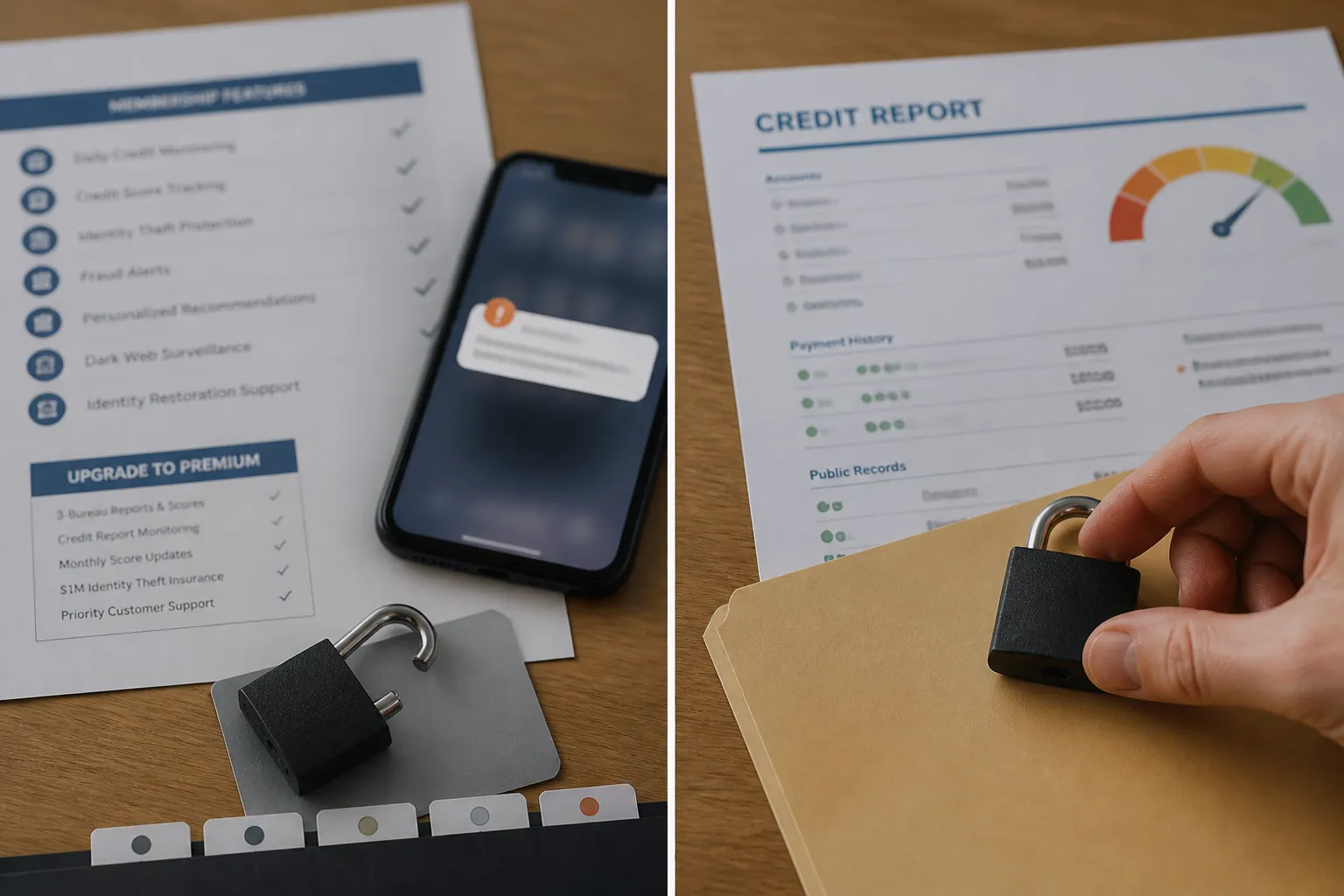
Identity monitoring services watch for signs that someone is using your personal information. They look at credit applications, public records, websites and other places. Some also help you fix the damage if theft occurs. A credit monitoring service is narrower. It charges a fee to watch your credit reports and alert you to changes, usually by email, text or phone.
Notice the verb. They watch and they alert. The Consumer Financial Protection Bureau says these services do not prevent identity theft. Some consumers believe they do. A product that promises prevention deserves a hard look at its terms.
What it costs in the United States
Identity monitoring starts at a few dollars a month and can top $15. Credit monitoring can also pass $15 a month. Features differ a great deal between plans, so the sticker price tells you little by itself. At $15 a month, you pay $180 a year for an alert system.
Some plans bundle identity theft insurance. It generally covers certain out-of-pocket losses. The public sources I reviewed do not spell out limits or exclusions, so get the policy terms in writing before you count it as value. Check the current price and cancellation terms with any provider directly. Prices and rules shift by state.
Free options that cover much of the same need
The strongest free tool is the credit freeze. It restricts access to your credit report and generally stops new credit from being opened in your name. Placing or lifting one is free at each of the three major agencies: Equifax, Experian and TransUnion. You have to contact all three.
Timing is specific. Online or phone freeze requests must be carried out within one business day. Mail requests get three business days. Lifting a freeze online or by phone must happen within one hour. By mail, three business days.
Free reports fill in the monitoring side. Under the FACT Act, each agency must give you one free report every 12 months on request. Request them separately and you can spread them through the year. The CFPB also describes free reports from each company every week as an alternative to paid monitoring.
- Register at AnnualCreditReport.com with basic identification, then confirm your identity with each agency.
- Mail requests go to Annual Credit Report Request Service, P.O. Box 105281, Atlanta, GA 30348-5281.
- Some credit card statements show a credit score at no charge.
- Extra free reports are available after an adverse action, to identity theft victims, to people on welfare, and to unemployed people planning a job search.
Fraud alerts are another free tool. The sources I used do not cover how long they last or how to place one. The Federal Trade Commission's consumer pages on credit freezes and fraud alerts do.
How to choose and what to ask
Start with one question. Do the free tools already cover what you need? For many people a freeze plus regular free reports does a good deal of the work. If you still want to pay, find out what the product actually includes. Credit monitoring, identity monitoring, insurance and repair help are different things.
- Does it only alert you after theft, or does it help prevent it?
- What does the insurance cover, and which losses are excluded?
- Are there trial periods, fees or cancellation requirements?
- Have complaints been filed with your local consumer protection agency or state Attorney General's office?
The sources do not offer a side-by-side comparison method. So make your own. Write down each provider's price, features and terms, and compare the list. It is dull work. It also catches things.
Red flags and what to do if you are a victim
Be wary of a "free" offer with hidden trial periods, fees or cancellation rules. Be wary of any claim to stop identity theft before it starts. Only one website is authorized for the free annual reports, AnnualCreditReport.com. Impostor sites are a common trap. Unsolicited calls, emails or texts that threaten action or ask for personal information should also raise suspicion.
If you have been a victim, IdentityTheft.gov is the federal government's one-stop resource. You can report the theft there and get an Identity Theft Report and a personal recovery plan. Ask the agencies about free report eligibility too. This is general information, not personal legal or financial advice. A licensed professional can speak to your situation.
Please seek a professional. This article is general information, not financial, tax or insurance advice. Please seek a licensed financial, tax or insurance professional about your own situation.
Sources
- Credit Freezes and Fraud Alerts | Consumer Advice
- Get a credit freeze to stop identity thieves | Consumer Advice
- What is identity monitoring or “identity theft” service? | Consumer Financial Protection Bureau
- What is a credit monitoring service? | Consumer Financial Protection Bureau
- How to place or lift a security freeze on your credit report | USAGov
- What is identity theft? | Consumer Financial Protection Bureau
- AnnualCreditReport.com - Wikipedia
- How to Get Free Credit Reports | myFICO
Still have a question?
Related guides
-

Hiring Help for an IRS Notice: What Is Settled and What Is Not
Enrolled agents, CPAs and tax attorneys can all respond to an IRS letter, but our sources back only part of the comparison. Here is what holds up and what you must verify. By Hollis Brandt
-

How to Hire a Tax Preparer Without Getting Burned
Fee ranges, credential checks and the red flags that should end a conversation before you hand over a single document.By Marcus Delaney
-

The Loan Hiding Behind the Sticker Price
Dealer financing can add a markup to the lender's rate, so comparing outside offers, total cost, and add-ons before closing shows buyers what they are really agreeing to. By Teodor Valcourt