The Ten-Percent Question: What a Public Adjuster Charges and What It's Based On
The fee is a percentage, but the base it is applied to can matter as much as the rate, so check both before you sign.
 By Hollis Brandt ·

One number matters before you sign anything: the percentage. In Texas, a public adjuster can charge up to 10 percent of the total the insurer will pay. On a $100,000 claim, that is $10,000. The rest of this guide is about making sure you know what that number is based on, who is asking for it, and whether they are allowed to ask. This is general information, not personal legal, financial or insurance advice. A licensed professional in your state can speak to your situation.
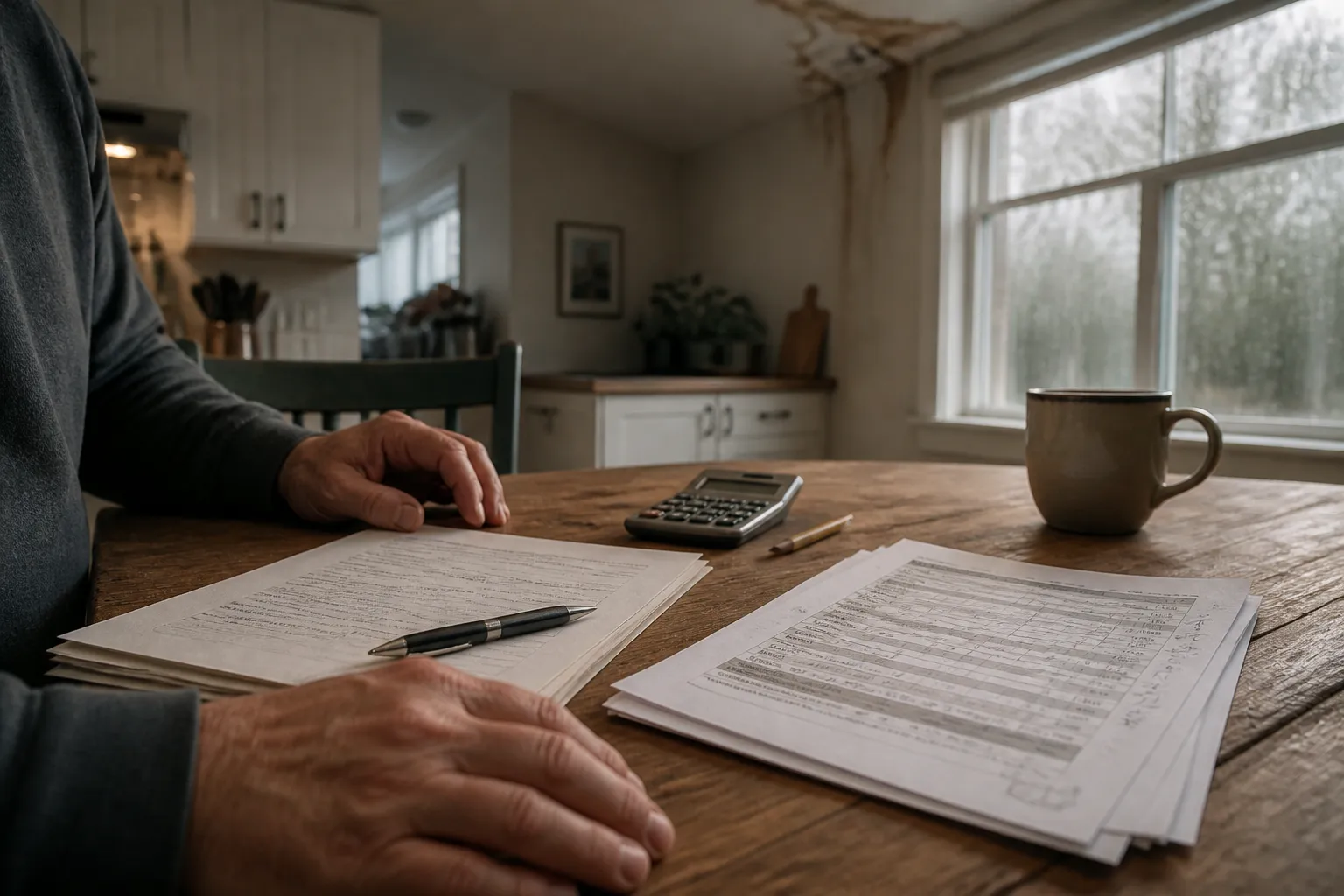
What a public adjuster does and how that differs from the insurer's adjuster
A public adjuster works for you. The insurance company's adjuster works for the insurer. That is the whole difference, and it explains most of the rest.
After a loss, a public adjuster inspects the damage, documents it, estimates the claim and presents it to the insurer. The fee for that work comes out of your claim payment. So you are paying someone to sit on your side of the table. You should know exactly what they cost and what they will do before you sign.
Hiring help is a personal call. United Policyholders says the right choice depends on your situation. Do you have the time? Are you well enough to manage a claim? Does your job leave room for it? Is the insurer cooperating? If the answers are yes, yes, yes and yes, you may not need anyone. If the answers lean the other way, help may be worth the fee.
Verify the license before you sign
Licensing rules differ by state. In Florida, a public adjuster must be licensed by the Department of Financial Services. Ask for the license number. Compare the person to a government-issued photo ID. In Texas, a public insurance adjuster must be licensed by the Texas Department of Insurance.
Texas makes the check easy. You can call the TDI Help Line at 800-252-3439, or search the TDI portal by name or license number. You can see licensing status, complaint counts and any disciplinary actions. Texas guidance also says to verify the adjuster's bond through the portal.
This takes a few minutes. If the person cannot give you a license number, or the number does not match official records, stop. Look elsewhere. Other states have their own regulators and lookup tools, so find yours before you commit.
Understand the fee, its cap, and what it is based on
There is no single national range. The figures below are ceilings from two states. They are not typical costs. Confirm current rules with your own state regulator.
- Florida: for claims from a disaster that led to a gubernatorial state of emergency, the cap is 10 percent of the claim payment for one year after the declaration. After that, 20 percent.
- Texas: up to 10 percent of the total amount the company will pay on the claim.
Now the fine print. The base matters. In Texas, the fee can be calculated on the total settlement, not only the part that was in dispute. TDI's example: the company will pay $100,000, and $20,000 is disputed. The adjuster could charge $10,000. That is half of the disputed amount, from a 10 percent fee.
Florida adds two limits. An adjuster cannot charge a fee on payments you received before the contract date. Nor can they charge for services they did not perform. Ask in writing whether the percentage applies to the full settlement or only the disputed amount. Do it before you agree to anything.
Read the contract, the cancellation window, and the standard form
Read the whole contract. Yes, all of it. In Florida, an adjuster who asks you to sign for a fee or a percentage of your claim payment is likely a public adjuster, and must be licensed. Florida also publishes a Public Adjuster Code of Ethics and a Contract Checklist. Read both first. The code requires the adjuster to put fair and honest treatment of you above their own interests.
Cancellation windows are short. In Florida, you may generally cancel within 10 business days after signing. After a state-of-emergency event, the window is 30 days after the date of loss or 10 days after signing, whichever is longer, with no penalty. In Texas, you have 72 hours. Then it closes.
Texas adjusters may use the state's standard contract, Form FIN535, or submit their own version that meets state requirements. Ask which one you are being handed. Confirm the cancellation terms are written into it.
Warning signs and questions to ask
Be cautious of anyone who is unlicensed, who urges you to overstate a claim, or whose offer sounds too good to be true. Illinois warns that after a fire or natural disaster, someone may approach you promising a better settlement. Treat that with suspicion. In Florida, the Insurance Fraud Hotline is 1-800-378-0445 if you suspect fraud.
Watch for conflicts of interest. Texas law bars public adjusters from acting as contractors on the claims they handle, taking referral fees, or holding a financial interest in repair work on those claims. Florida limits solicitation to Monday through Saturday, 8 a.m. to 8 p.m. A knock at 9 p.m. is a data point.
Questions to put in writing
- What is your license number, and does it match your photo ID?
- Is the fee a percentage, and is the base the full settlement or only the disputed amount?
- Does the fee apply to any payment I received before the contract date?
- Does the contract state the cancellation window?
- Are there complaints or disciplinary actions on file with the state regulator?
- Is this the state's standard form, or a compliant version?
Keep your own records either way. Photograph and video the damage. Keep receipts for temporary repairs. Log every call and email with the insurer and the adjuster: date, time, person, short summary. Hold off on permanent repairs until the insurer has had a chance to inspect, where its process allows.
Some questions these sources do not answer. Fee rules in other states, appraisal or mediation options, and claim filing deadlines all vary. Check with your state insurance department, and consider a licensed attorney or other professional if the claim is large.
Please seek a professional. This article is general information, not financial, tax or insurance advice. Please seek a licensed financial, tax or insurance professional about your own situation.
Sources
- Public Adjusters | Consumer Services | Florida Department of Financial Services
- https://vertexaisearch.cloud.google.com/grounding-api-redirect/AUZIYQGFZ4RWcWHugNYMEBpndlV7eOfUakcf50CATJDPHo3syV-mJbvEC-apF45m15mTrh-rzbHF62iWJ4b4HgCXXb0keI1vArxLkZXr-F4ItCHLTM7ke5sAQ_FeDAOXVCPUGv6wY76JGZ9fh5OZB8B66OrIXcKmAqArBBj8SRSPTkK7VA3lGeaNq2huAcC4T0NwUTREHjsWhUbR8eWcKoaNTLV9toGCqt41URHoHjPTsDznYXmNx-MS6N1rp2gRzhfVaPIWzE2oq_2Gq5DIbjWL
- Don't Get Scammed After a Disaster
- After The Fires
- What a public insurance adjuster does in Texas — and when to use one
- Texas Public Adjusters for Property Damage
- Public Adjusters
- Questions to Ask Before Hiring a Public Adjuster - United Policyholders
Still have a question?
Related guides
-

Hiring Help for an IRS Notice: What Is Settled and What Is Not
Enrolled agents, CPAs and tax attorneys can all respond to an IRS letter, but our sources back only part of the comparison. Here is what holds up and what you must verify.By Hollis Brandt
-

How to Hire a Tax Preparer Without Getting Burned
Fee ranges, credential checks and the red flags that should end a conversation before you hand over a single document. By Marcus Delaney
-

The Loan Hiding Behind the Sticker Price
Dealer financing can add a markup to the lender's rate, so comparing outside offers, total cost, and add-ons before closing shows buyers what they are really agreeing to. By Teodor Valcourt