The Two Prices of a Personal Loan: Why the Interest Rate Is Only Half the Story
APR folds lender fees into the rate, so comparing offers means reading both numbers and asking about the charges that never make the headline.
 By Teodor Valcourt ·
A personal loan has two prices. One is the interest rate. The other is everything else the lender charges to make the loan. Lenders advertise the first and bury the second. This guide covers how the pieces fit, what to ask, and where the fine print tends to bite. It is general information, not personal financial or legal advice. A licensed professional can look at your actual numbers.
What the interest rate actually measures
The interest rate is what the lender charges you for borrowing, on top of the principal you receive. Higher rate, more paid over the life of the loan. That part is simple.
The catch is what the rate leaves out. It does not show fees collected when the loan is made. Two loans can carry the same rate and cost you different amounts. So the rate is a starting point, not a verdict.
How APR adds fees to the picture
APR, the annual percentage rate, folds the interest rate and the lender's additional fees into one percentage. That includes origination charges and other fees tied to making the loan. According to the Consumer Financial Protection Bureau, the federal Truth in Lending Act requires lenders to disclose specific terms, including the APR, before you finalize the loan.
Every lender has to give you an APR. That makes it the better yardstick. One rule matters: compare APR to APR. Setting one lender's APR against another lender's plain interest rate tells you nothing useful. Check which number you are looking at before you check which is lower.
Three checks before you compare anything:
- Find the APR on each offer, not just the headline rate.
- Confirm every offer is quoted on the same loan amount and term.
- Write down the interest rate next to the APR. The gap between them is the fee cost, in percentage form.
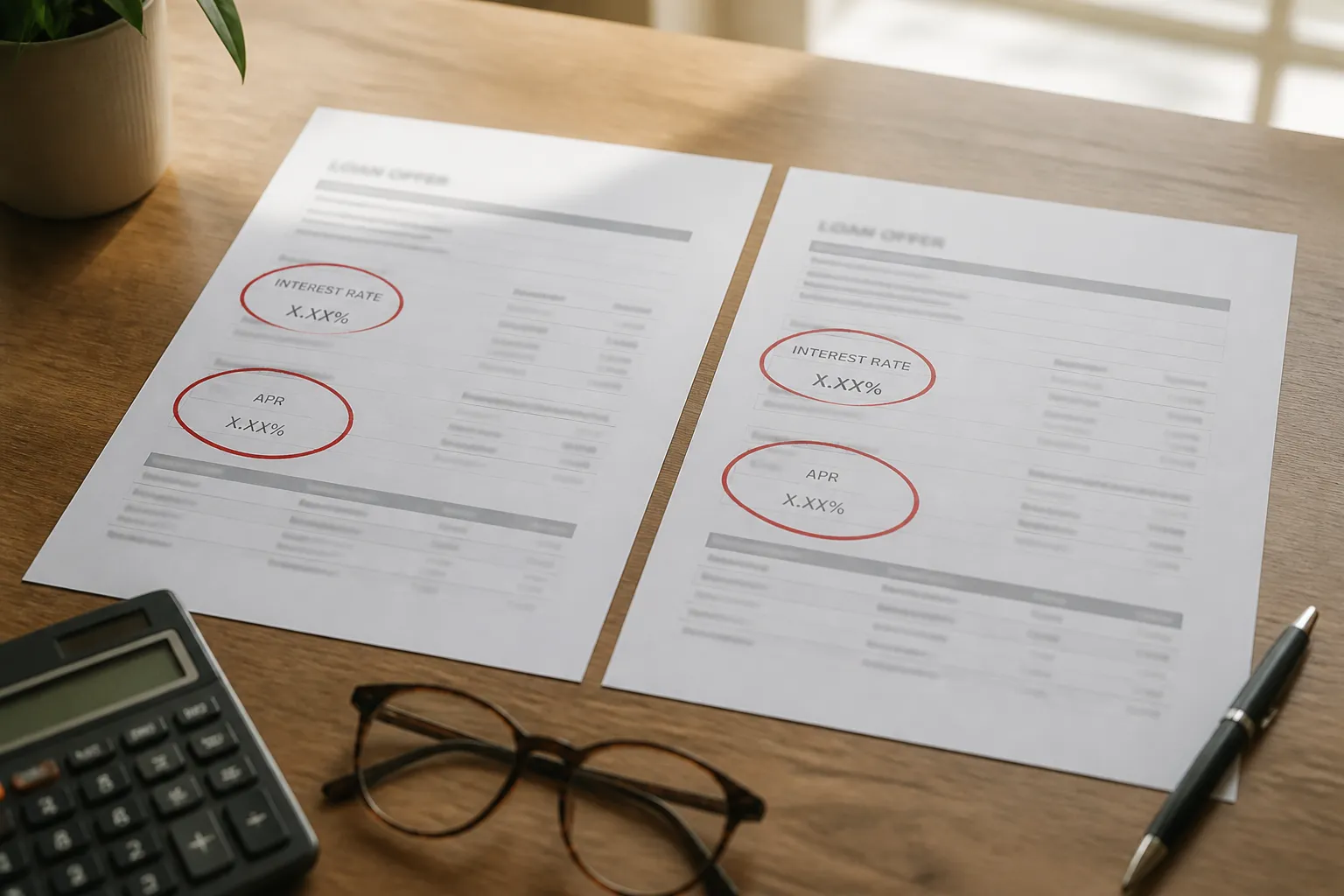
Now the fee side. The two charges below are where the surprises usually live.
- Origination fee. A charge for creating the loan. The sources behind this guide give no typical percentage, so do not trust a number you saw somewhere else. Ask each lender for the exact fee and whether it is already inside the quoted APR.
- Prepayment penalty. A charge that may apply if you pay the loan off early. The sources here do not cover it. Ask whether the loan has one, what triggers it, and how it is calculated.
Origination fees and prepayment penalties
I will not hand you a fee range. The sources reviewed contain no dollar figures or percentages for either charge, and any number I offered would be a guess. Fees vary by lender, by state and by your credit profile. Ask for the figure in writing.
The origination fee is the one to pin down first. It is part of what makes the APR higher than the rate. If a lender says the fee is separate from the APR, ask them to show where in the disclosure that is stated.
The prepayment penalty is the quieter one. It only matters if you pay early, which many borrowers plan to do. Look for the language in the loan disclosure before you agree. If you cannot find it, ask. A lender who answers vaguely has told you something.
How to compare offers and what to ask
Shop around. Lenders are not required to offer you the best rate they have, and comparing several lenders is the main way to bring your cost down. A higher credit score generally tends to mean lower rates, so your score shapes the offers you see. It is worth knowing it before you apply.
When you talk to a lender, ask these:
- What is the APR on this loan?
- Does the APR include all origination and other fees?
- What is the interest rate, and how does it differ from the APR on this offer?
- Is there a prepayment penalty, and how is it calculated?
Two mistakes come up again and again. One is comparing on interest rate alone. The other is assuming the first offer was the best one available. Neither is a safe bet.
Treat the written disclosure as the final word. A verbal summary is not the contract. Read the terms, check them against what you were told, and note any mismatch before you sign.
One caution on the source material. The main federal explainer here is framed around auto loans, so check how its points apply to a personal loan with the lender. State rules on fees can differ too. A licensed professional or your state's consumer protection office can confirm what applies where you live.
Please seek a professional. This article is general information, not financial, tax or insurance advice. Please seek a licensed financial, tax or insurance professional about your own situation.
Sources
Still have a question?
Related guides
-

Hiring Help for an IRS Notice: What Is Settled and What Is Not
Enrolled agents, CPAs and tax attorneys can all respond to an IRS letter, but our sources back only part of the comparison. Here is what holds up and what you must verify. By Hollis Brandt
-

How to Hire a Tax Preparer Without Getting Burned
Fee ranges, credential checks and the red flags that should end a conversation before you hand over a single document. By Marcus Delaney
-

The Loan Hiding Behind the Sticker Price
Dealer financing can add a markup to the lender's rate, so comparing outside offers, total cost, and add-ons before closing shows buyers what they are really agreeing to.By Teodor Valcourt