Choosing a Scrap Metal Buyer: Questions to Ask Before You Sign
A practical checklist for judging a buyer's role, records, grades and contract terms before your metal leaves the site.
 By Gideon Aldaine ·

Who is actually going to haul away your scrap, and what happens to it after the truck leaves? If you run a shop, a fabrication floor, or a property with regular metal waste, that question matters more than the price per pound. This guide walks through how to sort out what kind of buyer you are dealing with, which rules apply, what paperwork to expect, and what to ask before you sign. It is general information only, not legal, financial or compliance advice, so check the specifics with a licensed professional in your state.
Understand what you are choosing
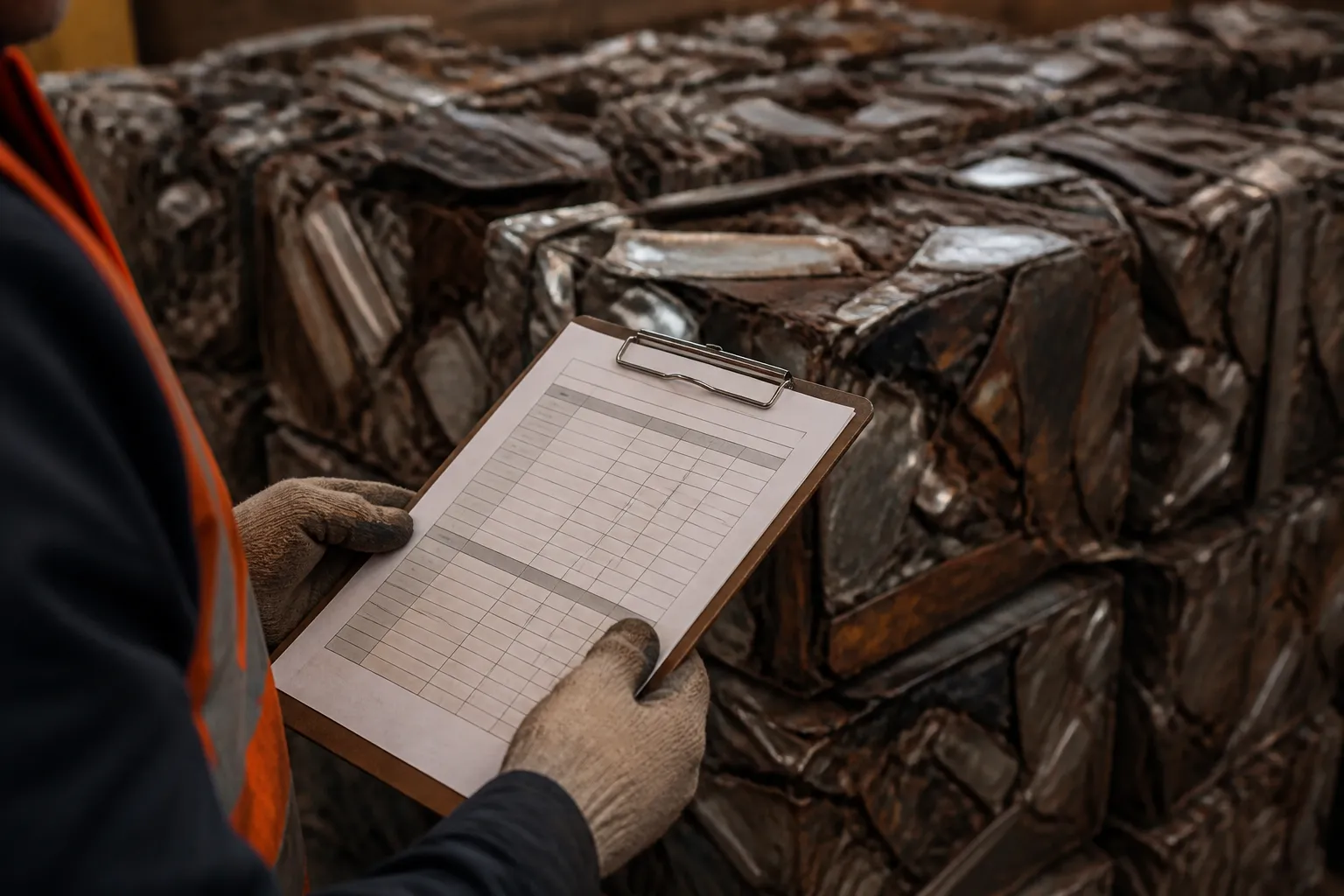
Start by working out what role the buyer plays. A scrap metal buyer may be a processor, a broker, or an industrial consumer that melts material into new products. The Recycled Materials Association (ReMA), formerly ISRI, describes its members in just those categories, and each one carries different responsibilities. Two quotes can look identical on paper and still come from companies that do very different things with your metal.
It also helps to know whether your material is processed or unprocessed. EPA treats scrap that has been baled, shredded, sheared, cut, melted, or separated by type as processed. Unprocessed home or prompt scrap, the offcuts generated inside a manufacturing operation, is handled differently. The answer changes which records a buyer should keep.
- Ask the buyer to name its role: processor, broker, or end consumer.
- Describe your material and ask how it will be classified.
- Ask what the buyer does to it, such as shredding, baling or torch-cutting.
Know the federal and state rules that apply
Under the Resource Conservation and Recovery Act (RCRA), most legitimately recycled scrap metal is excluded from the definition of solid waste. That exclusion is not automatic. It depends on the recycling being legitimate under 40 CFR 260.43. Scrap that is stockpiled indefinitely, mismanaged, or contaminated with hazardous constituents can lose it and trigger hazardous waste duties like permits and manifests. EPA is also clear that hazardous wastes do not stop being dangerous because they are recycled.
State law runs alongside the federal rules. Scrapyard and metal dealer statutes commonly cover who may buy certain materials, what records must be kept, and how seller identity is checked. State generator rules can be stricter than federal ones. A buyer that is in good standing in one state may need extra permits or licenses in another, so look up your own state's requirements rather than assuming.
Check how the buyer documents its work
A credible buyer can show written records that its processing is genuine recycling, with real economic benefit and minimal environmental loss. Ask what it keeps and how that supports the federal exclusion. If it shreds, bales or torch-cuts material rather than reselling it whole, ask to see its documented practices for that work.
Grades are the next thing to pin down. ReMA maintains the ISRI Specifications, a shared vocabulary for ferrous and nonferrous metals. They are guidelines, not law, and parties can agree to variations. Any deviation should be mutually agreed and written down.
Management systems offer more evidence. The RIOS Recycling Industry Operating Standard combines quality, environmental, and health and safety requirements in one framework. Ask whether the buyer is certified or a member, and what the certification covers. Scope matters more than the logo. Then ask about permits directly:
- Which state permits or dealer licenses does it hold for this activity?
- How does it record seller identity checks?
- Who can you contact at the state agency to confirm?
Ask about the contract and the cost
Scrap pricing moves with the market, the material type and the grade. The sources I reviewed give no dollar rates or typical fees, and prices vary by region and by the load, so do not trust a rule of thumb. Instead, ask each buyer to quote the same grade on the same weight basis, then explain its deductions and payment timing in plain words.
Get these items in writing before you commit:
- Material grades and any agreed deviations from the standard specifications.
- How material is weighed.
- Payment terms and timing.
- The dispute process. ReMA runs an Arbitration Service for members, including disputes with non-members, so ask whether the buyer participates.
- Insurance on material accepted on site, and who is responsible if something hazardous turns up after pickup.
Watch for warning signs
Be wary of a buyer that stores scrap indefinitely, mixes it with hazardous material, or cannot describe how it processes what it buys. Those habits can cost material its recycling exclusion. A buyer that treats scrap as a purely commercial transaction and ignores state and federal rules also puts you at risk, since fines, seized inventory and license revocation can disrupt your own operations.
Verbal promises about grades are another common source of disputes. If a buyer resists writing down its standards or any agreed deviation, look elsewhere. Finally, verify claims yourself. Check certification status with the certifying body and licensing history with the state agency, because general guidance does not tell you how to confirm any one buyer's compliance.
Sources
- Recycled Materials Association (ReMA) Company Profile | Recycling Product News
- Recycled Materials Association - Wikipedia
- ISRI SPECS
- About RIOS™ | Recycling Industry Operating Standard™
- Enhance Your Business with RIOS certification from Perry Johnson Registrars, Inc.
- RIOS Certification for Recyclers: QEH&S Guide | WeighPay
- Regulatory Exclusions and Alternative Standards for the Recycling of Materials, Solid Wastes and Hazardous Wastes | US EPA
- Scrap Metal Regulations: EPA and State Compliance Guide
Still have a question?
Related guides
-

Fixed or Variable: How to Choose a Business Electricity Contract Without Getting Caught Out
A practical checklist for comparing quotes, avoiding the costly rollover to a deemed rate, and asking the right questions before you sign. By Renata Okafor
-

What Happens to Your Business Energy Bill When the Contract Ends
Letting a fixed-term energy contract lapse can quietly move your account to a much higher default rate, so knowing your end date, opt-out deadline and state rules matters. By Neil Ostrander
-

How to Read a Commercial Electric Bill, Section by Section
Supply, delivery and demand charges each answer a different question, and knowing which is which helps you spot errors and compare providers on total cost.By Gideon Aldaine