Choosing a Surveyor or Engineer for a Commercial Property Purchase
A step-by-step checklist for matching the right professional to your deal, verifying their license, comparing quotes on scope, and spotting problems before you sign.
 By Renata Okafor ·
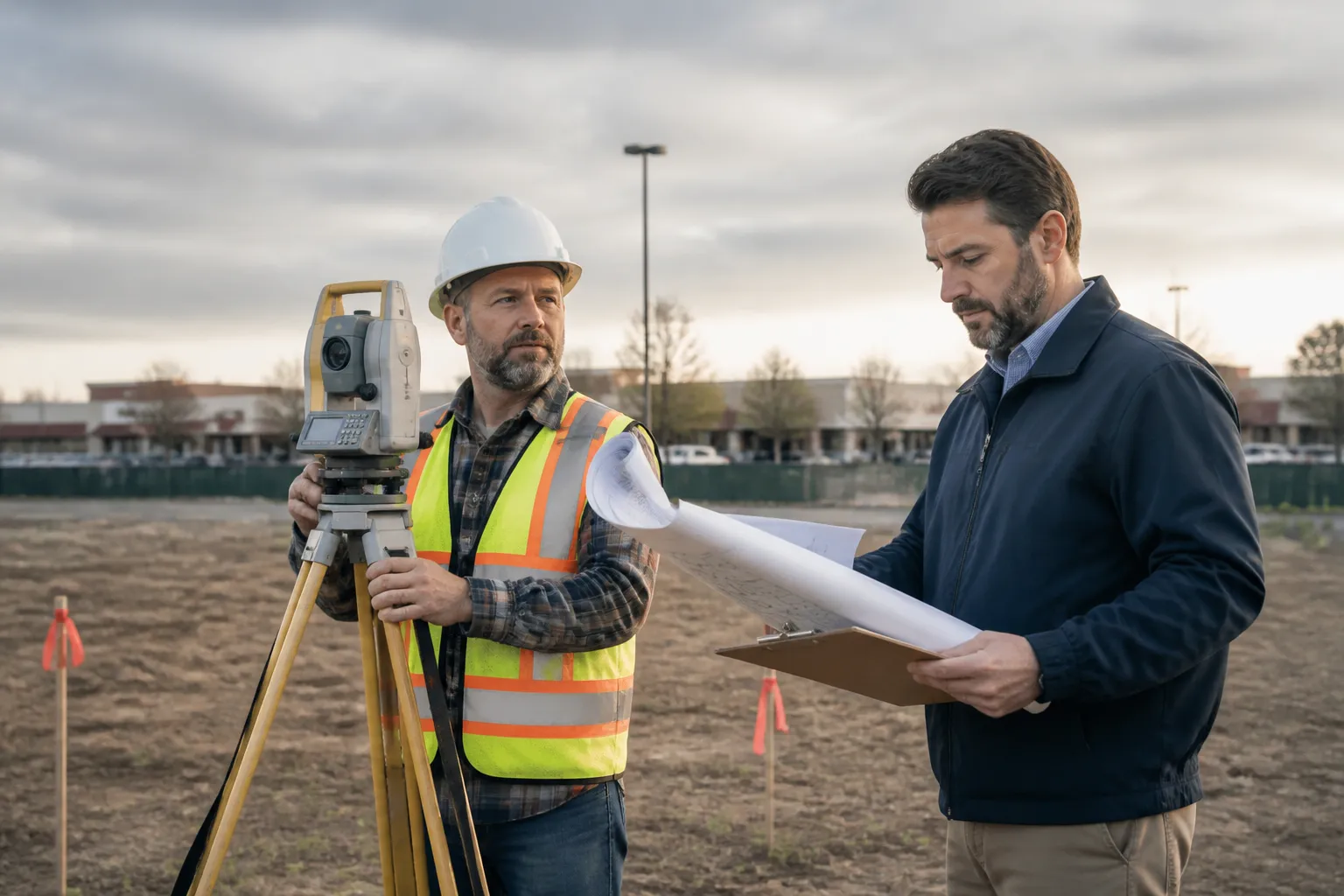
Are you about to buy a commercial site and wondering who should measure it, map it, or sign off on what is really there? Picking the wrong professional, or the right one with a fuzzy scope, can surface problems only after your due diligence window has closed. This guide walks through the choice in order, so you can ask the right questions before you sign anything. It is general information only, not legal, financial or engineering advice, so check details with a licensed professional in your state.
Know which survey or engineering service your deal needs
Start by naming the job. A commercial purchase or refinance often calls for an ALTA/NSPS Land Title Survey, a detailed boundary survey done to standards set by the American Land Title Association and the National Society of Professional Surveyors. These are generally required for commercial or multi-family residential properties. The survey combines field measurements, public records, title commitments and property research. It can show:
- Boundaries and rights-of-way
- Easements and encroachments
- Access points and improvements
- Utilities and flood zone considerations
If you plan to develop the land, the work may look different. Development can involve topographic mapping, subdivision plats and construction staking. A civil engineer may be the right person for design-driven questions, but the sources I reviewed focus mostly on surveyors. So ask any engineer directly what they would contribute to your specific site.
Not sure what you need? Describe the project, say who requested the work and explain why. A good surveyor will ask follow-up questions before quoting. That back-and-forth tells you how carefully the job will be scoped.
Verify licensure before you compare quotes
In most states, only a licensed land surveyor can legally certify property lines. Licensure exists to protect public health, safety and welfare, and it requires education, work experience and exams. Checking takes a few minutes:
- Find the state licensing board for the state where the site sits.
- Search the professional's name in the board's free online lookup, which most boards offer.
- Confirm the license is active.
- Look for any listed disciplinary actions.
Paths to a license differ by state. For surveyors, the most commonly accepted route is a bachelor's degree from an ABET-accredited surveying program, about four years of experience, and the FS and PS exams plus a state-specific exam. Engineers commonly need an EAC/ABET-accredited degree, about four years of progressive experience, and the FE and PE exams. Many states allow other paths, so verify the rules where the work will happen.

Understand what drives cost and how to compare quotes
The sources I reviewed do not give dollar ranges for ALTA surveys or civil engineering work. Real prices in the US vary by state, by property size and complexity, and by how much detail you request. Treat any published figure as a rough starting point and confirm it with several local providers.
Scope is the biggest reason two quotes for the same parcel can look far apart. One may cover only boundary location. Another may add Table A items, which are optional extras requested in the survey order. Examples include:
- Flood zone classification
- Topographic (vertical relief) survey
- Underground utility mapping
- Zoning and building code information
Surveys also identify setbacks set by local ordinances and help pinpoint ownership disputes, encroachments and easements. Ask each firm which items are included so you compare like with like. Also settle early who is ordering the survey and who pays. Buyers, lenders and title companies can each play a role depending on the deal.
Ask the questions that reveal scope, experience and protection
Before hiring, work through a short list and get the answers in writing:
- Who requested the survey, and what does the lender or title company require?
- How many similar projects did you finish in the past year, and can I see a sample plan with private details removed?
- Will you set new corner markers or only locate existing ones?
- Will buildings, fences, driveways and easements be shown?
- Which Table A items are included?
- Do you carry professional liability insurance?
- Can you explain findings and flag issues early enough for my due diligence period and closing date?
On insurance, the sources give no specifics about coverage amounts, so ask the insurer or broker what the policy protects against. Timing matters too. A late-discovered encroachment or easement can change your deal, so you want a professional who will speak up early.
Recognize red flags before signing
Be cautious when quotes differ widely and the scope is vague. A low price with an undefined deliverable can cost more later if the survey misses something your lender or title company needs. Other warning signs:
- The surveyor cannot show an active license or resists verification through the state board.
- No one asks why you need the survey or who requested it.
- Insurance details and past similar projects are not offered in writing.
Before you sign, confirm turnaround times and lock deliverables and dates in the agreement. The sources offer only general advice here, so make sure the schedule fits your closing date. Then have your attorney or other licensed advisor look over the final terms.
Sources
- https://vertexaisearch.cloud.google.com/grounding-api-redirect/AUZIYQEOpIL2NC0t8eVzPmSnKKWmH1NqeVMjabKlyWdFp5bJ2nFiYxAv--D0J-RDE52df56YqCJU91ESXEfLN4ZfNVwlxTWMpyE7Wzf1jt6kfO-Wrlm7SkVoZE1S6vlT-3OvZ9_ZQmxRPDGXT06RsbRx1nuY3zIe4C--ii6AZT-YOmL0EBRCL4gNCahqkmBPOKKF5iPOZw==
- ALTA NSPS Survey | CREtelligent Land Title Surveys
- What Is an ALTA Survey and Why Do Commercial Property Buyers Need One | Land Surveyor in Mobile, AL | Professional Surveying Services
- How ALTA/NSPS Land Title Surveys play a crucial role in Real Estate Due Diligence - RH Batterman
- Member Licensing Board Directory | NCEES
- Home | NCEES
- Licensure | NCEES
- How to Choose a Licensed Land Surveyor for Your Property
Still have a question?
Related guides
-

Fixed or Variable: How to Choose a Business Electricity Contract Without Getting Caught Out
A practical checklist for comparing quotes, avoiding the costly rollover to a deemed rate, and asking the right questions before you sign.By Renata Okafor
-

What Happens to Your Business Energy Bill When the Contract Ends
Letting a fixed-term energy contract lapse can quietly move your account to a much higher default rate, so knowing your end date, opt-out deadline and state rules matters. By Neil Ostrander
-

How to Read a Commercial Electric Bill, Section by Section
Supply, delivery and demand charges each answer a different question, and knowing which is which helps you spot errors and compare providers on total cost. By Gideon Aldaine