Do You Need Fire Alarm Monitoring? Start With Your Local Code
Before comparing contracts, confirm whether your building must send alarm signals to a supervising station, since the answer comes from local code rather than the installer.
 By Neil Ostrander ·
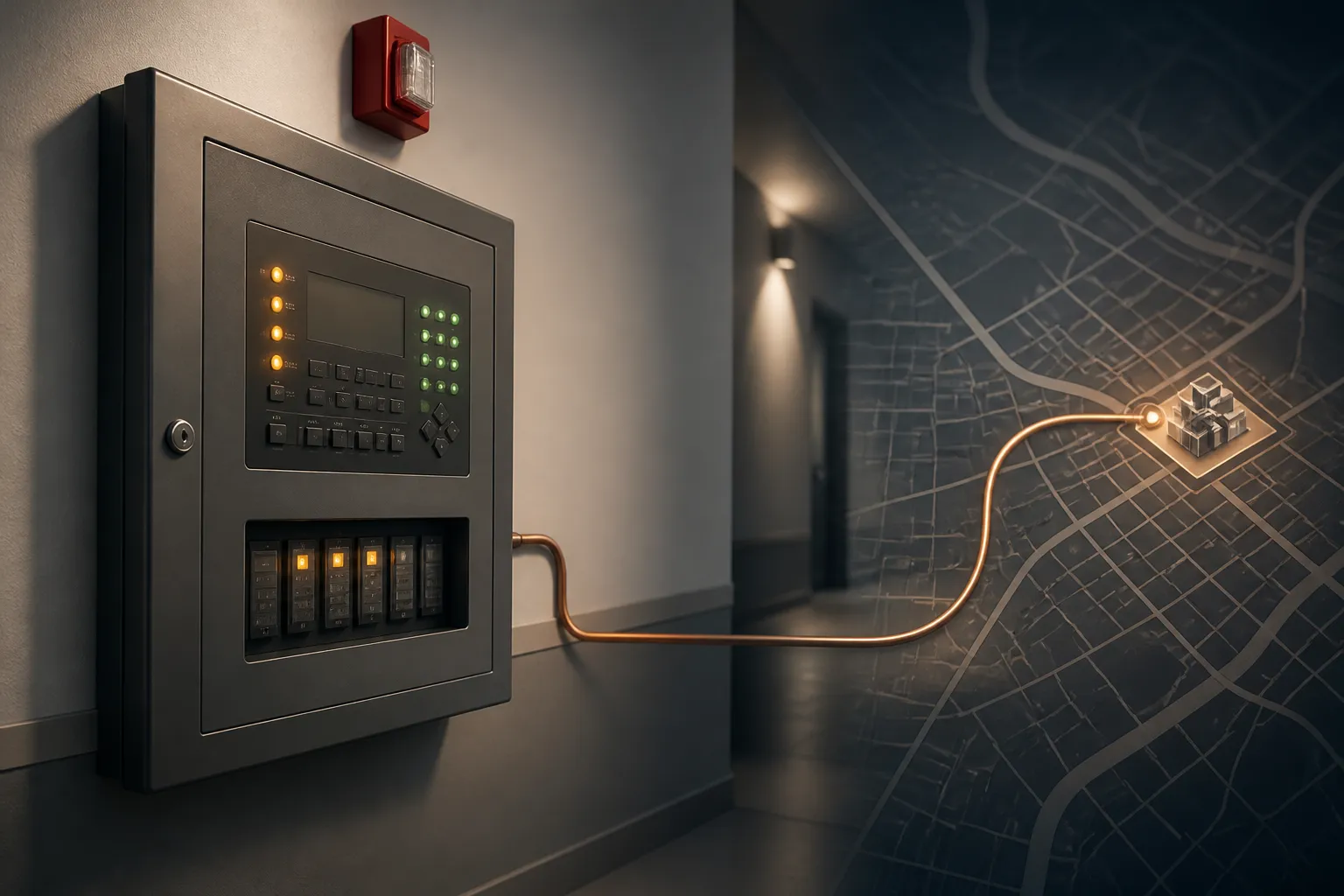
Do you actually need a monitoring contract, or can your team watch the alarm panel and phone alerts on its own? Most building owners ask that second, because it sounds cheaper and simpler. The better first question is what your local code requires. This guide walks through that in order, with the questions to ask before you sign anything. It is general information only, not legal, financial or fire-protection advice, so confirm details with your local fire authority and a licensed professional.
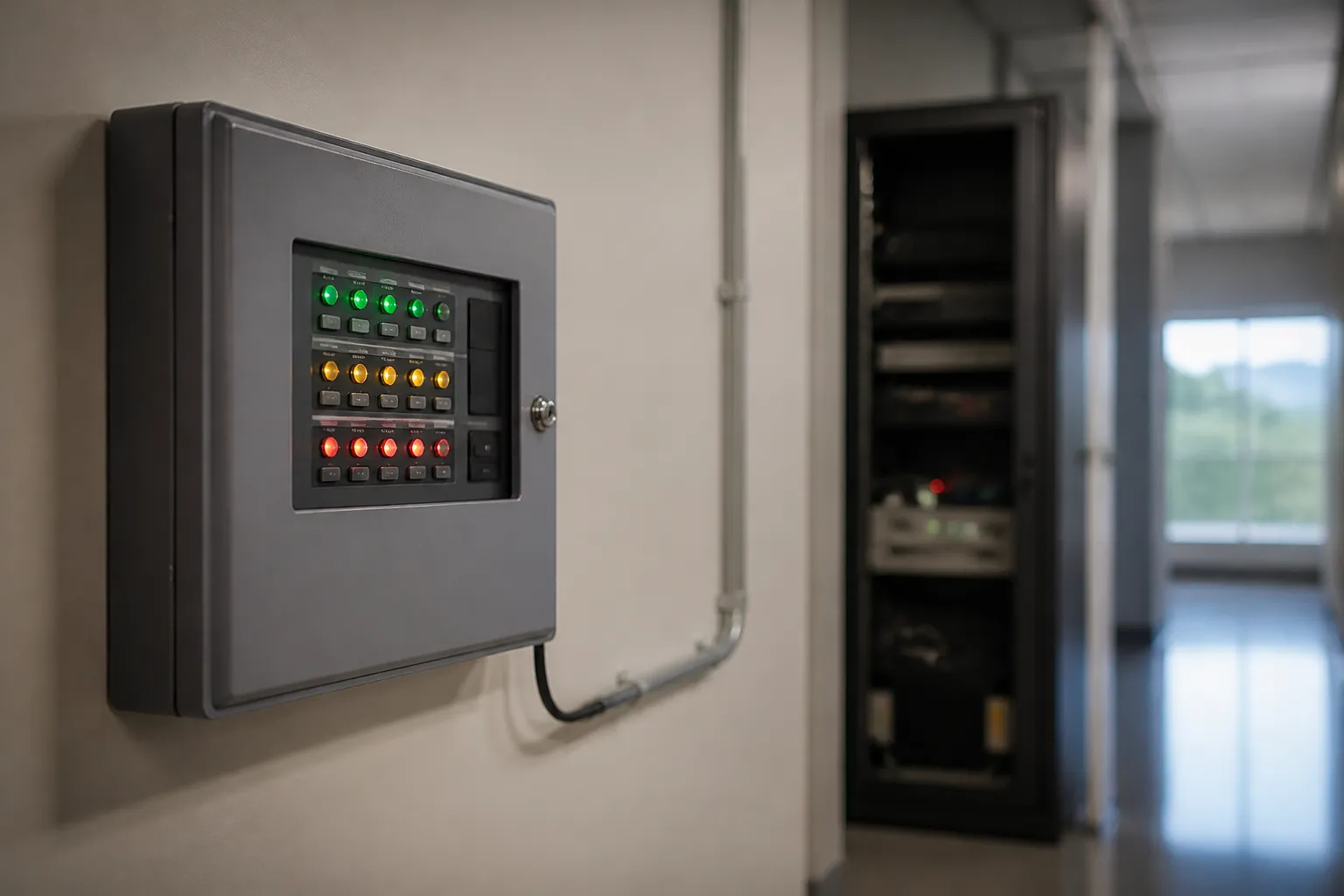
Start with whether monitoring is required
Before you compare contracts, confirm whether your building must send fire alarm signals to a supervising station at all. That obligation comes from the fire and building codes your state and local jurisdiction have adopted. It does not come from your installer or a monitoring company. NFPA 72 is the technical reference that explains how monitoring works once it is required.
For most commercial occupancies, the expected arrangement is transmission to a supervising station listed for fire alarm service, typically a UL-listed central station. If your building falls under that rule, self-monitoring may not satisfy the code, even if it feels adequate day to day. A simple step helps here:
- Call your local fire marshal or building official.
- Ask whether your occupancy requires monitored fire alarm signals.
- Ask for the answer in writing and keep it with your system records.
Understand what professional monitoring provides
Professional monitoring sends signals to a supervising station that is staffed around the clock. The station follows defined escalation steps for alarm, supervisory and trouble conditions. It receives the signal, verifies it by its procedures, and contacts the people and emergency services your plan names.
Code also sets technical expectations for how that signal travels. NFPA 72 Chapter 26 covers how signals are received, processed and passed on to the fire department, and it sets time limits. Here is what to expect from a compliant setup:
- A commercial alarm signal reaches a listed supervising station within 90 seconds of activation.
- The connection to the station is continuously supervised, so a dropped line is caught quickly.
- The system has at least 24 hours of battery backup to ride out a power outage.
- The receiving station is certified under UL 827, which calls for redundant telephone lines, power supplies, receivers and servers.
Alarm, supervisory and trouble signals must also arrive as separate, identifiable types. That matters because a closed sprinkler valve or a power fault should never be mistaken for a fire, and a fire should never be buried among trouble notices. Hosted or cloud platforms can supply some of the infrastructure, but the monitoring center still has to meet the listing.
Understand what self-monitoring means and where it falls short
Self-monitoring sends alerts only to you or your team, usually by app, text message or call list. No staffed station acts on the signal around the clock. For a very small or low-risk situation that may be workable where the code allows it. It rests entirely on people being reachable and acting fast.
The main weakness is timing. An alert can be missed or delayed after hours or on a holiday. It may land on a phone that is off, uncharged, out of range, or carried by someone who is not on duty. A plan that depends on one person is a reliability gap, not a stand-in for an attended station.
If you are weighing it anyway, write the plan down first:
- Who receives each type of alert?
- Who verifies that the event is real?
- Who calls the fire department?
- What happens if the first person does not respond?
Then ask the fire authority whether self-monitoring is even permitted for your occupancy.
Compare the monitoring paths available
NFPA 72 recognizes several approved ways to notify emergency forces. Two come up most often. An auxiliary system connects directly to a municipal fire alarm system, though it survives only in some remaining cities and counties. A proprietary supervising station serves a large building, a campus, or multiple sites under one owner. It can be on-site or independent, and it gives the owner central control over inspections, testing and maintenance.
For a multi-site owner, the practical choice is often a proprietary station versus a third-party central station. The proprietary route gives more control but needs staff and infrastructure. The third-party route hands that work to a provider. Both must meet the same code and listing expectations, so ask which arrangement your jurisdiction accepts before you compare offers.
You may also see monitoring centers advertise a Five Diamond designation from The Monitoring Association, which reflects that trade group's five points of excellence. The association also develops American National Standards, including an alarm validation standard meant to help law enforcement prioritize calls. These are useful quality signals. They do not replace the code and UL listing requirements that apply to your building.
Check the local rules, the listing and the cost
Local authorities can add requirements on top of NFPA 72. California is one example, so a setup that passes elsewhere may need changes there. Ask the fire marshal for the full list of local requirements and any inspection or testing schedule they expect.
Verify the station's UL listing directly with UL Solutions rather than trusting a sales sheet. A working phone line, a dial tone, or a signal arriving somewhere does not prove compliance. An inspector looks at the type of receiving station, its listing, processing speed, signal path, and whether each condition type is identified separately.
Cost is where many buyers begin, but the sources behind this guide give no dollar figures for monitoring fees, installation or contracts. Prices vary by state, building size, number of sites, and the equipment already in place. Instead of chasing one number, request itemized written quotes that show monitoring fees, equipment, installation, testing and any local compliance work. Then compare them on the same scope.
Questions to ask before you choose
Bring this list to every vendor and to your fire authority:
- Is the receiving station listed for fire alarm service and certified under UL 827?
- Does the signal reach the station within 90 seconds of activation?
- How is the connection supervised, and what happens when a line drops?
- Is there at least 24 hours of battery backup?
- Are alarm, supervisory and trouble signals sent as separate types?
- Who handles signals after hours, and what escalation steps are followed?
- Is the path proprietary, central station, or tied to a municipal system?
- What extra requirements does the local fire authority impose?
Watch for red flags too. A vendor who treats a dial tone as proof of compliance is one. So is a station with no UL 827 certification, a connection that is not continuously supervised, or an after-hours plan that rests on a single phone.
Contract terms such as length, cancellation, renewal, fees and liability are not covered in the sources used here. They decide what you pay and what happens if service fails, so read them closely. Consider having a qualified professional review the contract before you sign.
Sources
- NFPA 72 Inspection Requirements: 2026 Compliance Guide
- Fire Alarm Monitoring vs Self-Monitoring: What’s the Real Difference?
- NFPA 72 Fire Alarm Monitoring Requirements Explained
- NFPA 72 Monitoring Requirements
- Central Station Service Certification | UL Solutions
- UL 827 Central Station Alarm Services - Bold Group (2024)
- Home - The Monitoring Association
- TMA Standards - The Monitoring Association
Still have a question?
Related guides
-

Fixed or Variable: How to Choose a Business Electricity Contract Without Getting Caught Out
A practical checklist for comparing quotes, avoiding the costly rollover to a deemed rate, and asking the right questions before you sign. By Renata Okafor
-

What Happens to Your Business Energy Bill When the Contract Ends
Letting a fixed-term energy contract lapse can quietly move your account to a much higher default rate, so knowing your end date, opt-out deadline and state rules matters.By Neil Ostrander
-

How to Read a Commercial Electric Bill, Section by Section
Supply, delivery and demand charges each answer a different question, and knowing which is which helps you spot errors and compare providers on total cost. By Gideon Aldaine