How Much Does Commercial Window Cleaning Cost? A Practical Guide to Pricing and Quotes
Building height, access method, and window condition drive most of the price, so comparing bids on the same scope is the surest way to know what you are paying for.
 By Renata Okafor ·
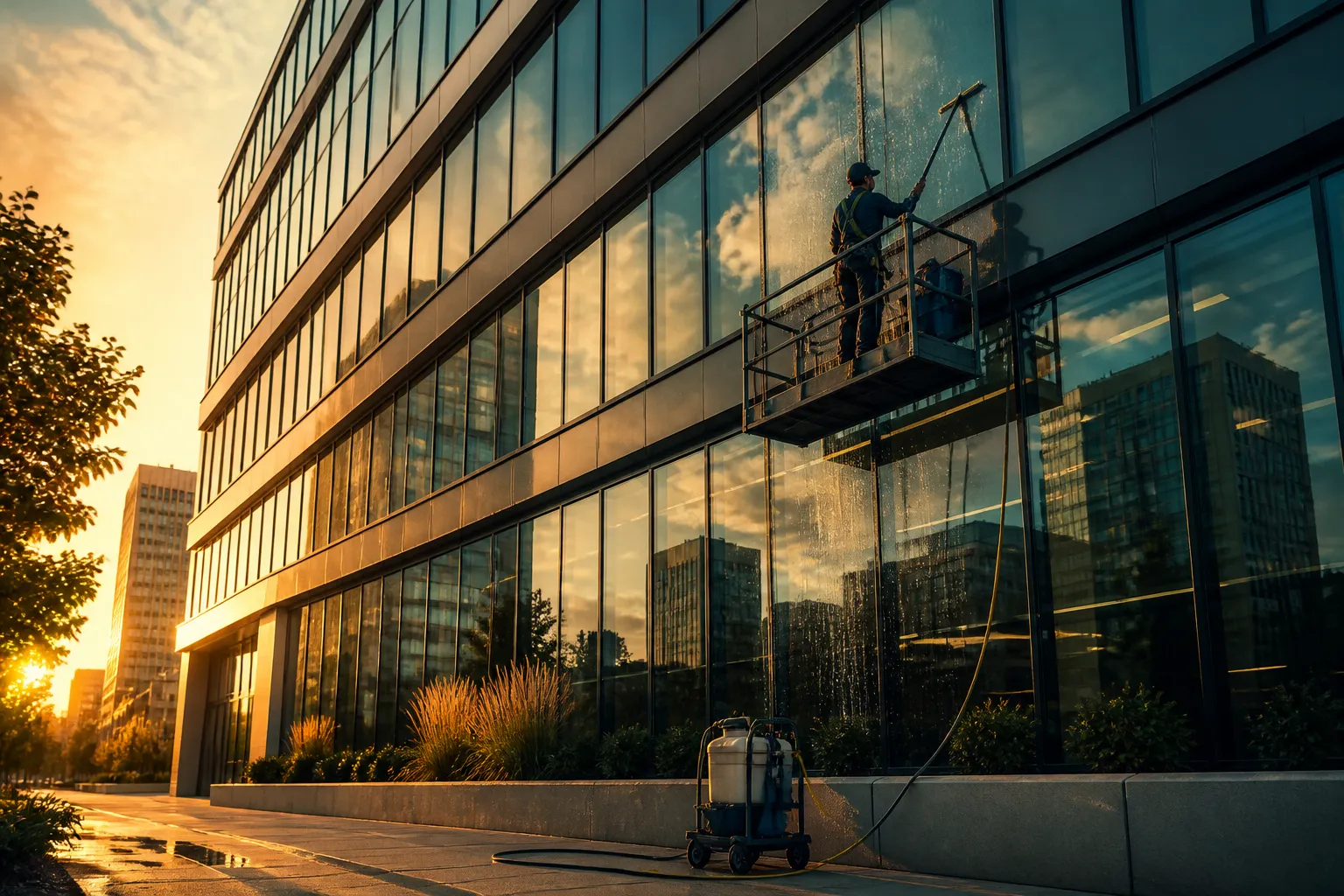
Planning to hire someone to clean the glass on your office, shop, or restaurant, and wondering why the quotes look nothing alike? That is common. Commercial window cleaning has no single price, and the gap between a ground-floor storefront and a tall tower can be huge. This guide walks through what drives the number, what typical ranges look like, how to compare bids, and what to ask before you sign. It is general information only, not personal financial, legal, or safety advice, so check details with a licensed professional.
What drives the price
Five things move the price most, and it helps to check each one against your own building before you request a quote:
- Building height, which sets the equipment and safety measures needed.
- The access method used to reach the glass.
- The condition of the windows.
- How often the work is done.
- Whether you want interior glass, exterior glass, or both.
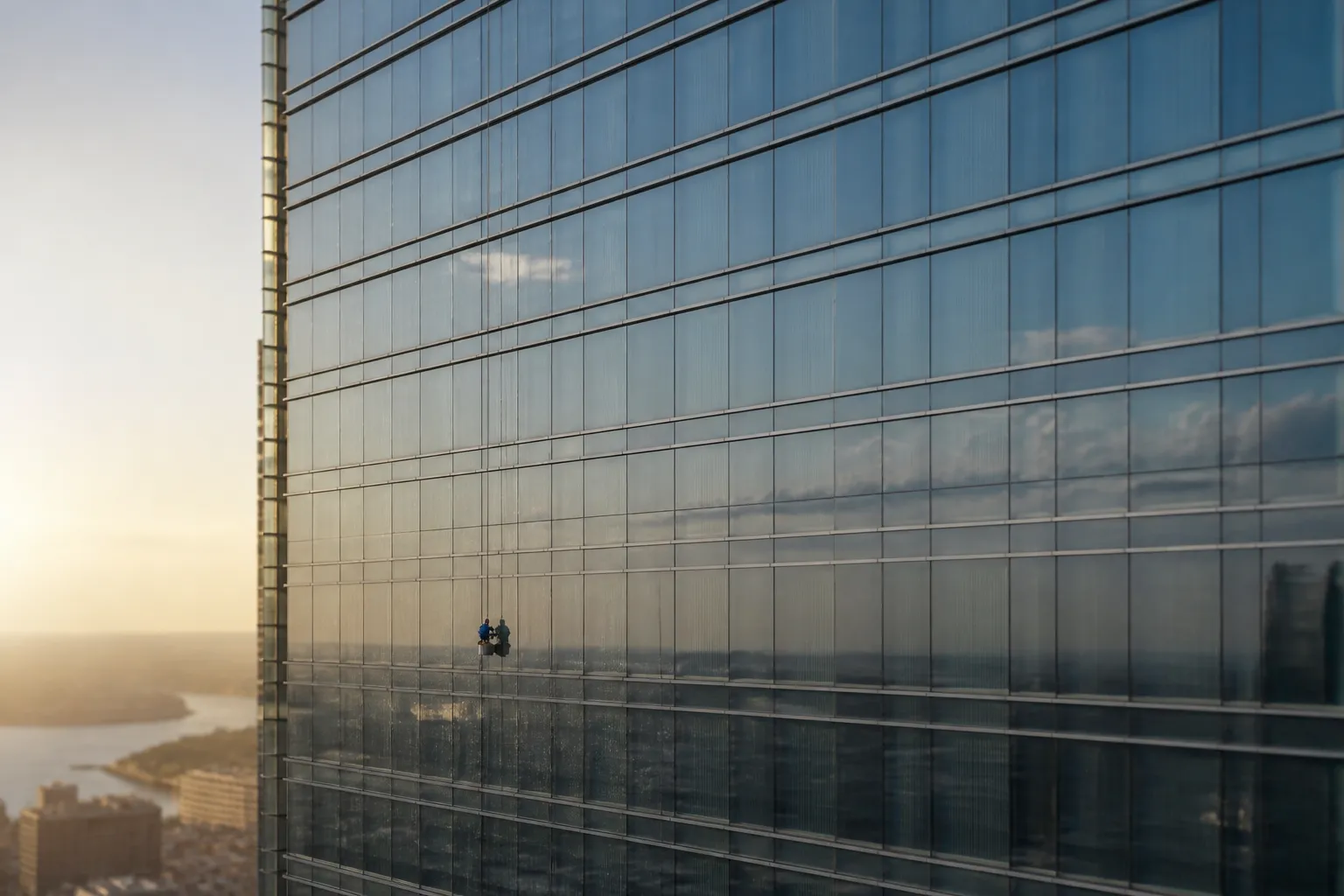
Height matters most. A building of one to three stories can often be handled from the ground with ladders and water-fed poles. Mid-rise buildings may need scaffolding, boom lifts, or rope access. High-rise work can call for rope access, suspended scaffolding, or davit systems, and each step up adds cost.
Window condition and schedule matter too. Heavily soiled or awkward glass takes longer per pane. A recurring schedule usually lowers the cost per visit compared with a one-time job.
Typical cost ranges
One 2026 industry source gives per-pane ranges that grow with height. Treat these as rough benchmarks, not quotes.
- Low-rise (1 to 3 stories): about $2 to $5 per pane.
- Mid-rise (4 to 7 stories): about $4 to $8 per pane.
- High-rise (8 or more stories): about $8 to $15 per pane.
Exterior cleaning costs more than interior. Interior panes often run $2 to $5, while exterior work can reach $3 to $8 per pane on low-rise and $5 to $15 on high-rise.
What whole buildings tend to cost
Per-pane numbers are easier to picture as totals. The same source puts a 10,000 square foot low-rise office with about 200 windows at roughly $400 to $1,000 per cleaning. A mid-rise with 300 windows lands around $1,200 to $2,400. A high-rise with about 500 windows runs roughly $4,000 to $7,500 per cleaning.
A different source, using 2024 data, averages about $5.50 to $15.00 per window, or around $10. Companies that bill hourly were cited at $35 to $60 per hour, with high-rise work approaching $170 per hour. The sources disagree on dates and methods, and they come from industry and vendor sites rather than government data. Prices also vary by state and situation, and the sources do not break out state differences. Always confirm with local quotes.
Frequency and crew time
How often should the glass be cleaned? Many commercial spaces are done two or three times a year. Restaurants often want interior windows cleaned weekly or biweekly. Retail display windows usually need more frequent touch-ups than a typical office.
Labor is the other piece. One source says a standard four-person crew cleans about 200 to 300 interior panes per day. More windows means more crew days, which means a higher total.
Safety rules that affect pricing
Federal OSHA rules for work at height apply to this trade, mainly under 29 CFR 1910 Subpart D. Section 1910.27 covers rope descent systems. These rules shape equipment, staffing, and procedures, and high-rise work typically needs special insurance coverage. That is part of why tall-building bids cost more.
Here are the points that matter most for a building owner:
- The owner must certify roof or building anchorages and give the employer written confirmation before a rope descent system is used.
- Anchorages must hold at least 5,000 pounds in any direction for each attached worker, be inspected annually by a qualified person, and be certified at least every 10 years.
- Rope descent systems are generally limited to 300 feet above grade.
- Stabilization is required for descents greater than 130 feet.
- Each worker needs a separate, independent personal fall arrest system, inspected at the start of each shift, and tools must be secured with a lanyard.
A bid that skips these steps may be unrealistic or unlawful. The federal maximum for a willful or repeated violation is cited as $165,514, set in January 2025 and carried into 2026. Penalty amounts are adjusted periodically, so check OSHA directly.
How to compare quotes and what to ask
Start by putting every quote on the same footing. Same scope, same interior and exterior split, same access method, same frequency. Then ask each provider:
- Is the price per pane, per window, per hour, or per building?
- Does it cover interior, exterior, or both?
- What access method will be used, and what does it cost for this building's height?
- Does the quote include the safety equipment and compliance steps for that height?
- Do you carry insurance for work at height?
- Is there a discount for a recurring schedule or for bundling, such as gutter cleaning?
For high-rise or rope access jobs, also ask whether the anchors have been certified in writing and whether the provider can show the paperwork. Without it, the provider may not legally be able to take the job.
Red flags
- A high-rise or rope access quote with no written anchor certification.
- Pricing that says nothing about building height, access method, or window count.
- A bid that seems to ignore the 130-foot stabilization line or the 300-foot rope descent limit.
- Quotes covering different scopes, such as interior only versus full exterior.
Some questions the sources do not answer: insurance costs, contract terms, cancellation and payment terms, and what credentials a qualified anchor inspector needs. Ask providers directly, and consider confirming with the relevant regulator or a licensed professional before you commit.
Sources
- https://vertexaisearch.cloud.google.com/grounding-api-redirect/AUZIYQGREy0Zq53BlwopDZJ-5r9SljAVWZFsFG_tZNrS9yzW3ZSUFIrUBmlCKEhKTeNRTROATJ6E_Gi6NbOH4gJD9ENKUc0HOMPH-MdCXzR7BThU7g8A3R52OldOX0T92YNrRPBYuuuuX6ku_wo3pEHORzOQTXNoit6VB4uJ0xGS2u_aFU9MS5h6StYkmvCDzkXN2R6WIli59volsaxApskJnOx3nlBHtul97OmP7V-iozygCzT0IXf5tKcgOjTs8IgqvPx9
- OSHA Window Cleaning Regulations (2026): What Building Owners Must Know
- OSHA Window Cleaning Requirements: 2026 Rules & Penalties
- How Much Does Commercial Window Washing Cost? — RBM Building Services
- Commercial Window Cleaning Prices | Window Hero
- How Much to Charge for Window Cleaning: 2026 Price Guide
- How Much to Charge For Commercial Window Washing | Pricing Guide — SweepScrub.com
Still have a question?
Related guides
-

Fixed or Variable: How to Choose a Business Electricity Contract Without Getting Caught Out
A practical checklist for comparing quotes, avoiding the costly rollover to a deemed rate, and asking the right questions before you sign.By Renata Okafor
-

What Happens to Your Business Energy Bill When the Contract Ends
Letting a fixed-term energy contract lapse can quietly move your account to a much higher default rate, so knowing your end date, opt-out deadline and state rules matters. By Neil Ostrander
-

How to Read a Commercial Electric Bill, Section by Section
Supply, delivery and demand charges each answer a different question, and knowing which is which helps you spot errors and compare providers on total cost. By Gideon Aldaine