How to Choose a Bridge Crane Inspection Provider Who Will Hold Up Under Scrutiny
A checklist-driven walk through the standards, inspector qualifications, paperwork and quote questions that separate a thorough provider from a cheap one.
 By Neil Ostrander ·
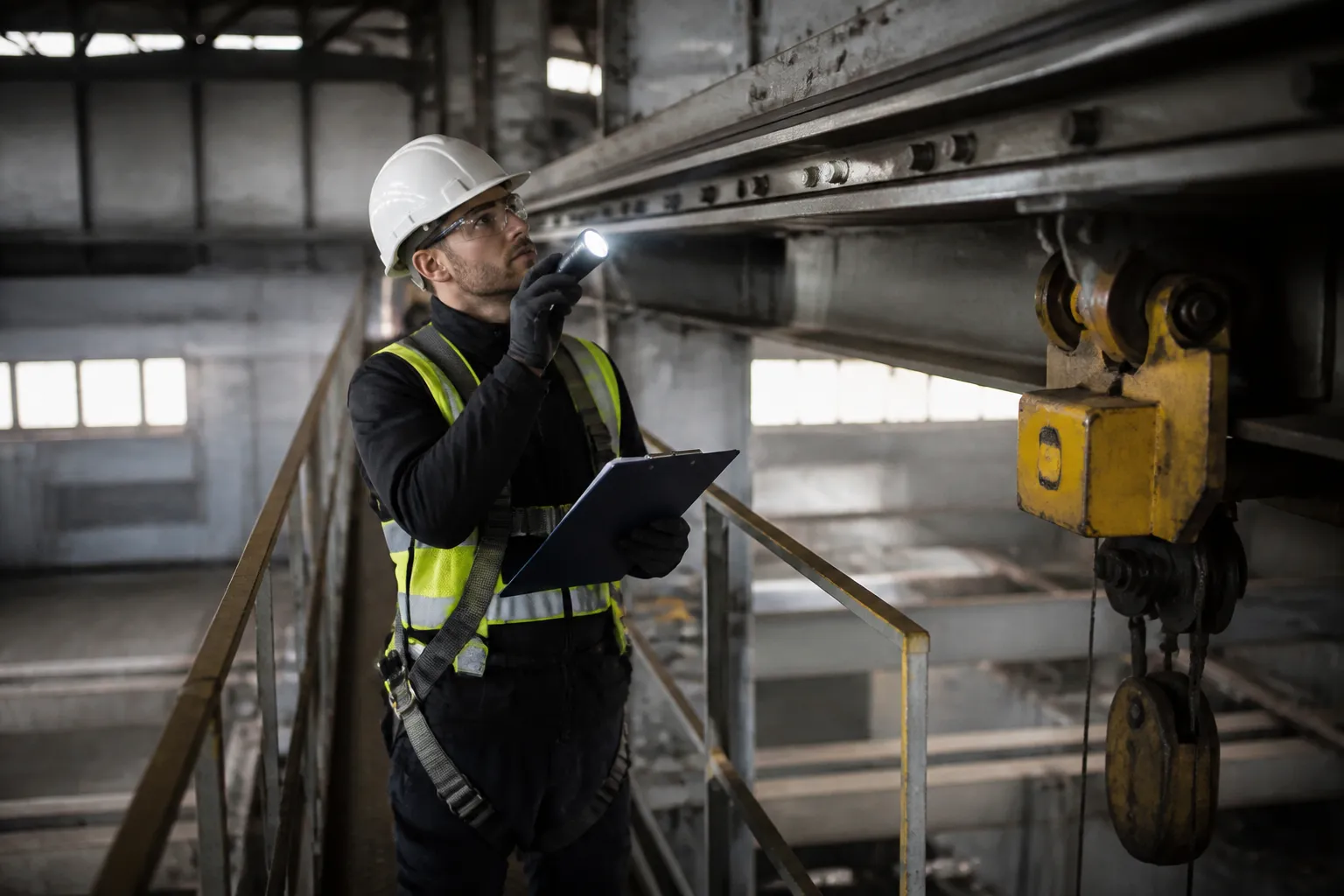
Who should climb onto your bridge crane once a year, and how will you know they are the right person? Most buyers never ask until a report comes back thin, or a citation arrives. This guide walks through the checks in order, so you can compare providers on more than a quote. It is general information only, not legal or engineering advice, and a licensed professional or your regulator should confirm what applies to your equipment.
Start with the rule that covers your crane
The right inspection depends on where and how the crane is used. Federal OSHA, other agencies such as the U.S. Army Corps of Engineers and the Department of Energy, and voluntary ASME standards that OSHA often references all shape what a proper inspection looks like. State rules may add more.
For permanently installed overhead and gantry cranes in manufacturing or material handling, the main rule is 29 CFR 1910.179. Cranes on construction sites fall under Subpart CC of Part 1926, with inspection provisions in 1926.1412. That includes temporary overhead or gantry cranes taken down after a job.
Ask every provider which standard they are working to and why. A good answer names the rule that matches your crane type and use. If they cannot say, slow down. ASME B30.2 covers inspection and maintenance of top-running overhead and gantry cranes, and CMAA Specification 78 sets qualification and training criteria for the people who inspect and maintain them. Neither replaces OSHA, but a provider who follows them shows a more structured approach.
Understand the three inspection tiers
OSHA expects three levels of inspection, and it helps to know them before you read a proposal:
- Shift inspection: done before each use, usually by the operator.
- Frequent inspection: daily to monthly depending on how hard the crane works. It covers hooks for deformities or cracks, hoist chains for wear or stretching, leaks in air or hydraulic systems, and control tests.
- Periodic inspection: at least annually, and more often for heavy-use cranes.
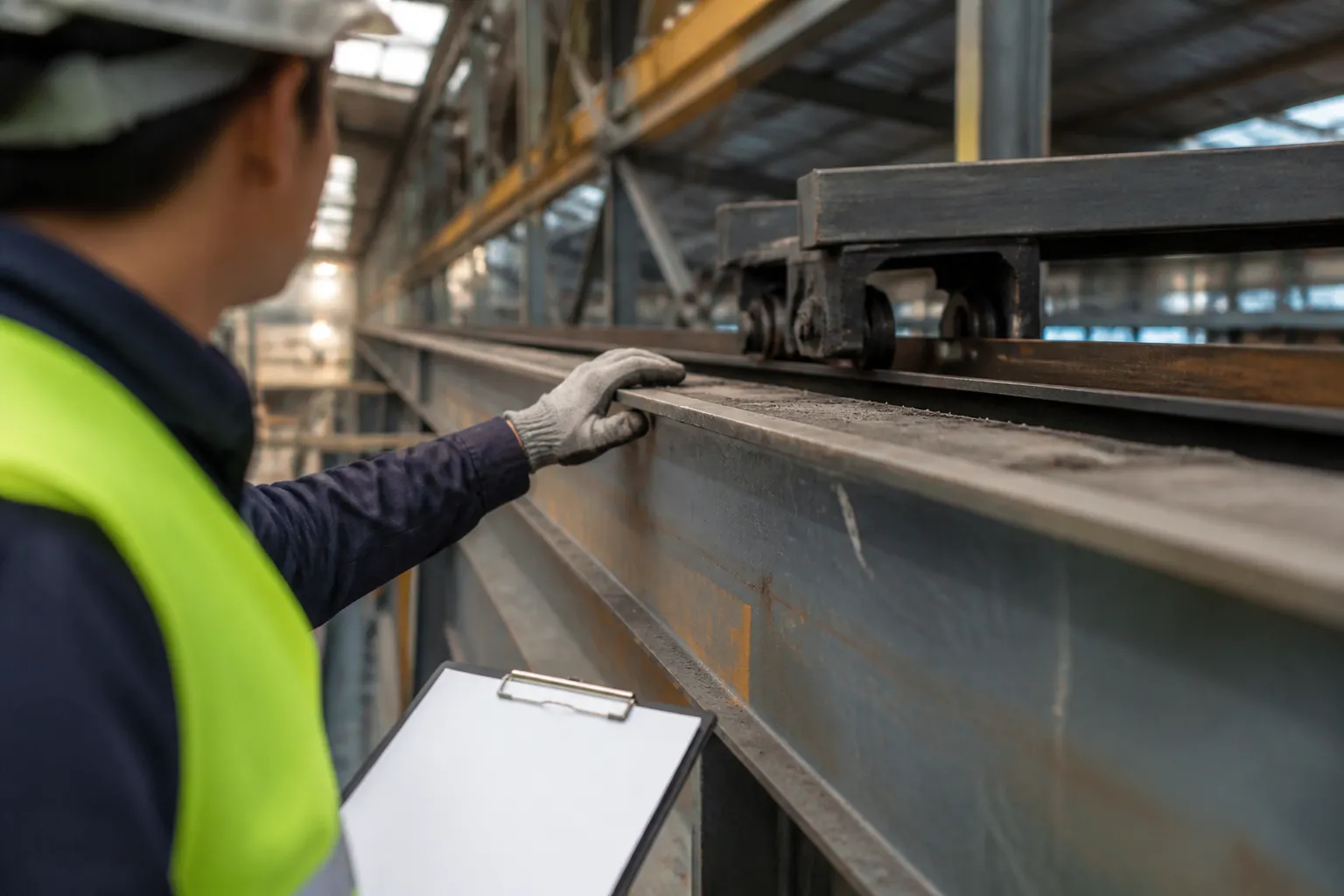
The periodic inspection is where a provider earns their fee. It should cover structural cracks, deformation or corrosion, loose bolts and fasteners, wear on sheaves, drums and brakes, and functional testing of safety devices and load indicators. Our sources only summarize the shift-level rules, so confirm those details in the standard that applies to you. Ask how the provider supports your daily checks, for example with operator training or checklists.
Rated load markings matter too. The rated load must be clearly marked on each side of the crane, and each hoist must show its capacity when several are installed. Missing or unreadable markings are a common citation trigger, so a good inspector checks and flags them.
Check the people, not just the company
OSHA defines a competent person and a qualified person, each with specific training and experience thresholds. A generic safety title does not automatically meet either one. When you request a quote, ask which role the inspector fills and what training and field experience backs it up.
CMAA 78 separates maintenance personnel, who repair and adjust components, from inspection personnel, who evaluate structural integrity, performance and compliance. Each role has minimum experience and training hours. One provider cites about 2,000 hours of relevant experience and training for inspectors and technicians. That is an industry benchmark, not an OSHA rule.
CMAA 78 says employers should verify qualifications through coursework, certification or field experience. So ask for:
- Training records and certification details.
- A short summary of hands-on crane work.
- Confirmation that personnel can meet the physical demands of climbing and working at height.
Certification bodies and professional associations can often confirm whether a credential is current. That is a practical way to check a claim.
Insist on complete, dated documentation
Written records are mandatory for monthly, periodic and annual inspections, and incomplete records are among the most frequently cited crane violations. A sound report lists each component checked, the issues found and the corrective actions taken. It is dated and signed by the inspector.
Any deficiency must be corrected before the crane returns to service. Ask how the provider handles a failed item: do they repair it on the spot, how do they document the fix, and who signs off that the crane is safe to run? Also ask whether their checklists include both OSHA-required items and the manufacturer's recommendations. A generic list can miss equipment-specific checks.
Treat missing records as a serious problem, not paperwork. Figures cited in our sources put a single willful violation above $165,000 and a serious violation above $16,500, but these amounts change, so check current OSHA numbers.
Compare quotes and understand cost
Our sources do not give reliable U.S. price ranges for crane inspection or repair. Costs vary by state, crane type, access, and how much work turns up. Be cautious with any single number online, and ask for itemized quotes instead.
A useful quote separates the inspection from repair work and says whether you will receive the required written report. Ask what triggers extra charges, such as parts, travel, or a follow-up visit to verify corrections.
Questions to settle before you sign
- Which standard are you inspecting to, and why that one?
- Who is the inspector, and what documented crane experience do they have?
- Will I get a dated, signed report for each inspection?
- Will deficiencies be fixed before the crane returns to service?
- What liability insurance do you carry, what is your work warranted against, and how are disputes over findings resolved?
Contract terms, insurance and warranties are not covered in the sources used here, so get those answers in writing. Walk away if you see undocumented inspections, an inspector with only a generic safety title, or a crane returned to service with known deficiencies. For decisions about your own equipment, consult your regulator or a qualified professional.
Please seek a professional. This article is general information, not legal advice. Please seek a licensed attorney in your state about your own situation.
Sources
- Ask the Expert: How and When to Inspect Your Crane
- OSHA Crane Inspection Requirements: Frequencies, Documentation, and Compliance
- How to Meet OSHA Standards for Overhead Crane Inspection - SISSCO Hoist
- OSHA 1910.179 for Overhead Cranes: Compliance Guide
- ASME B30.2-2022: Updates & Revisions to ASME B30.2 Overhead & Gantry Cranes Standard
- Overhead and Gantry Cranes (Top Running Bridge Single or Multiple Girder Top Running Trolley Hoist) - ASME
- CMAA Specification 78 Updates Guidance for Overhead Crane Inspection and Maintenance Personnel - Overhead Lifting
- Overhead Crane Inspector & Technician Standards | Crane1 2023
Still have a question?
Related guides
-

Fixed or Variable: How to Choose a Business Electricity Contract Without Getting Caught Out
A practical checklist for comparing quotes, avoiding the costly rollover to a deemed rate, and asking the right questions before you sign. By Renata Okafor
-

What Happens to Your Business Energy Bill When the Contract Ends
Letting a fixed-term energy contract lapse can quietly move your account to a much higher default rate, so knowing your end date, opt-out deadline and state rules matters.By Neil Ostrander
-

How to Read a Commercial Electric Bill, Section by Section
Supply, delivery and demand charges each answer a different question, and knowing which is which helps you spot errors and compare providers on total cost. By Gideon Aldaine