How to Choose a CNC Machining or Metal Fabrication Shop
A step-by-step checklist for defining your part, verifying a shop's capabilities and quality claims, comparing total cost, and spotting warning signs before you sign.
 By Gideon Aldaine ·
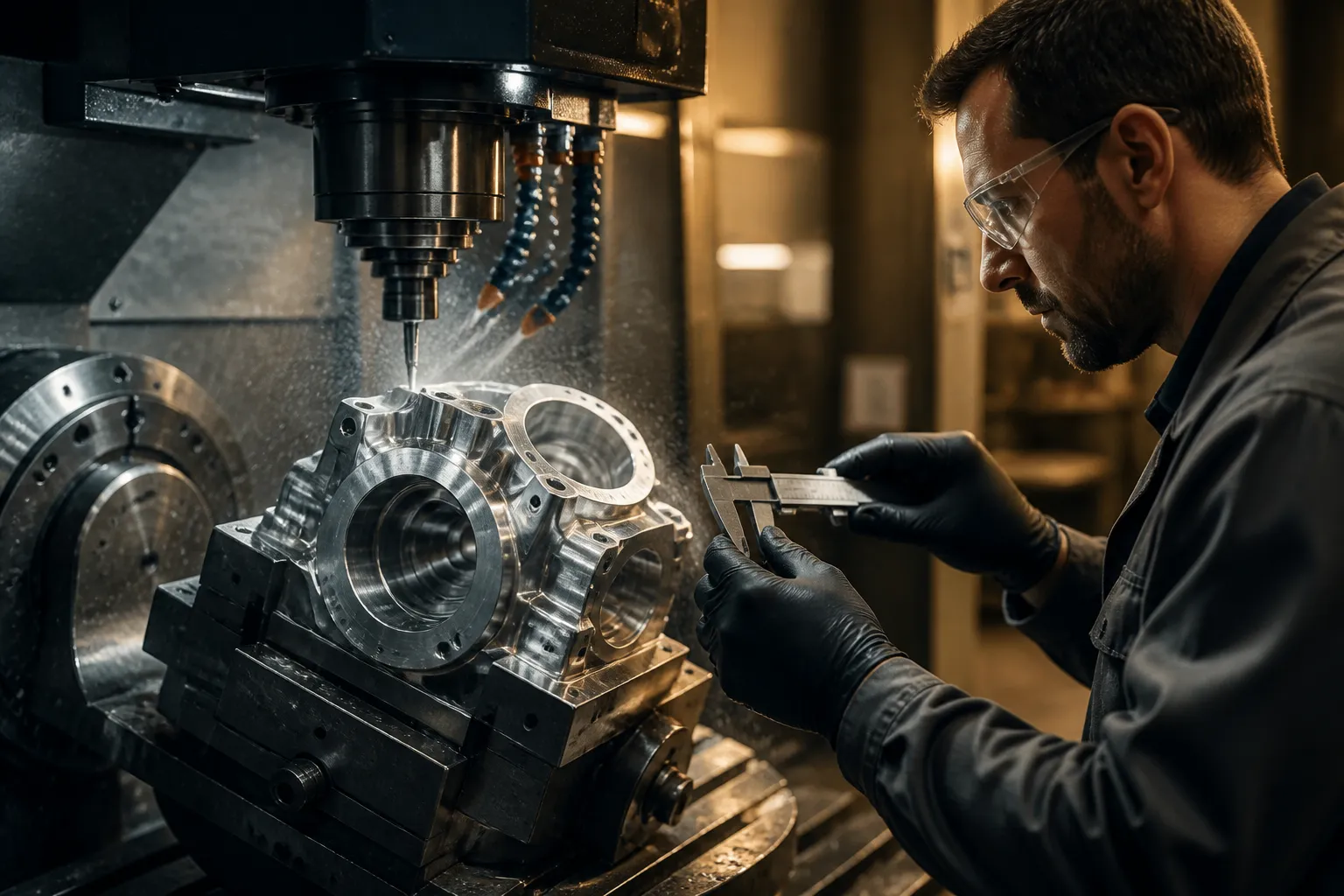
What do you actually need this part to do? It sounds like an obvious first question, but it is the one that shapes every quote you will get. This guide walks through choosing a CNC machining or metal fabrication shop in order: define the job, check what the shop can do, verify its quality claims, compare real cost, and then ask the questions that expose weak spots. It is general information only, not legal, financial or engineering advice, so have a licensed professional review anything high-stakes.
Define the part and the project before you contact shops
Before you send a single request for quote, write down what the part must do, how it will be used, and whether it is one piece of a larger assembly. Good shops ask these things on their own. A trade association example describes the usual flow: a customer submits a request for quote, an estimator prices it, and then machinists make the part. The estimator can only price what you describe, so a vague request gets a vague number. Also say whether another shop has made this part before and whether there were problems.
Next, pin down the details that make quotes comparable:
- Material and finish. Aluminum, stainless steel, sheet or heavy plate, plus any coating or surface requirement.
- Custom or standard. Is this your own design, or an existing standard item?
- Scope of service. Machining only, or also design, engineering, assembly or installation?
- Volume and reorders. One prototype, a small batch, or a repeating run?
Scope matters more than people expect. One shop owner described a $12,000 precision machining job that grew into a $35,000 project once assembly was added. That is a single anecdote, not a price guide, but it shows how much the answer to "what's included?" can move the total.
Check capabilities, materials, and equipment
Does the shop work in your metal every day, or only occasionally? Experience with aluminum does not guarantee skill with stainless or thick plate, so ask for examples of similar jobs. Fabricator guidance also suggests matching the shop to your order size. High-volume work tends to suit automated fabrication, robotic welding and efficient quality control. Custom or one-off work calls for a record in custom design and precision fabrication. A shop built for one can be a poor fit, or an expensive one, for the other.
Then ask about equipment and why it fits your part:
- Which machines will run the job, such as CNC mills and lathes, press brakes, automated welders or laser cutters?
- Why this process? Laser and waterjet cutting suit different materials and thicknesses, and a good shop can explain its choice in plain words.
- Is testing and inspection done in-house? It can shorten timelines and help catch problems early.
Verify certifications and quality systems
If the part goes into a regulated field such as oil and gas, medical devices or food processing, look for relevant certifications like ASME, AWS or ISO. Ask which standards apply to your industry, then confirm the shop holds them. A logo on a website is not proof. Where your contract or the law requires it, ask for documentation and check it with the issuing body.
Also ask how the shop checks its own work. Useful questions include what tolerances it can hold, what inspection methods it uses, and whether it provides inspection reports or material certificates with each order. The research behind this guide did not turn up independent standards for these documents, so treat clear, specific answers as a good sign and evasive ones as a warning. Parts that could cause injury or costly failure deserve the most scrutiny.
Compare experience, communication, and total cost
A strong team spots production problems early, suggests design changes that cut cost or improve manufacturability, gives accurate estimates and timelines, and understands your industry's rules. Those habits often save more than a lower quote does.
Compare total cost, not piece price alone. Add shipping, packaging, rework risk, delays, and any finishing or assembly. Trade groups recommend this approach when weighing local shops against overseas production. Tariff uncertainty on imported steel, aluminum and machined components can also make costs swing, which is one reason some buyers look at domestic supply chains.
The sources give no reliable dollar ranges for CNC or fabrication work, and prices vary by state, material, tolerance and quantity. Get written quotes from several shops instead of trusting a general estimate. To find US suppliers, you can use the NIST Manufacturing Extension Partnership Supplier Scouting service, reach a local office through the MEP Center directory, or browse the resources in this IMTS list of domestic supply chain resources.
Ask the right questions and watch for red flags
Bring a short list to every conversation so you can compare answers side by side:
- Can you provide design, engineering, assembly or installation support?
- Do you hold the certifications my industry requires?
- Have you worked with my material and this order volume?
- Will you flag production challenges and suggest cost-saving changes?
- What is the total cost, including logistics?
Be cautious if a shop:
- wins you mainly on low price;
- only takes orders and never asks how the part will be used;
- gives unclear estimates or timelines;
- cannot name a project manager who can explain the process;
- has missing or unverifiable certifications for regulated work, or will not discuss its quality documentation.
Before you sign, ask about payment schedules and deposits, warranties, how your drawings are kept confidential, what insurance the shop carries, and what happens if a part fails. The sources say little on these points, so consider having a qualified attorney or insurance advisor review the agreement. Get the key answers in writing.
Sources
- Supplier Scouting | NIST
- Connect with an MEP Center | NIST
- https://vertexaisearch.cloud.google.com/grounding-api-redirect/AUZIYQEgrOHFsSddqOKIlMuwXhdvLpu_BcbhrTYgYB14hbhTn2WssGFUnKLt2z45p_9hYEO9UMJzOMWS8LdauN2HGAVLAxzqeKC_9KgkPpYT2oyWc8WrajsQLRipicmUNe8BghjfOEqfexaMjFDIKg==
- 21 Domestic Supply Chain Resources for Machine Shops and Contract Manufacturers | IMTS September 14 - 19, 2026
- Peer-to-Peer Networking for Machine Shop Management | NTMA
- U.S. Manufacturing and the Reshoring Initiative® | NTMA
- Why Solutions-Oriented Machine Shops Win Big - NTMA
- How to Choose the Right Metal Fabrication Partner for Your Project - Atscott Mfg. Inc.
Still have a question?
Related guides
-

Fixed or Variable: How to Choose a Business Electricity Contract Without Getting Caught Out
A practical checklist for comparing quotes, avoiding the costly rollover to a deemed rate, and asking the right questions before you sign. By Renata Okafor
-

What Happens to Your Business Energy Bill When the Contract Ends
Letting a fixed-term energy contract lapse can quietly move your account to a much higher default rate, so knowing your end date, opt-out deadline and state rules matters. By Neil Ostrander
-

How to Read a Commercial Electric Bill, Section by Section
Supply, delivery and demand charges each answer a different question, and knowing which is which helps you spot errors and compare providers on total cost.By Gideon Aldaine