How to Choose a Commercial Locksmith and Access Control Provider
A practical checklist for verifying credentials, asking the right questions, and comparing itemized quotes before you hire anyone to work on your building's doors.
 By Gideon Aldaine ·
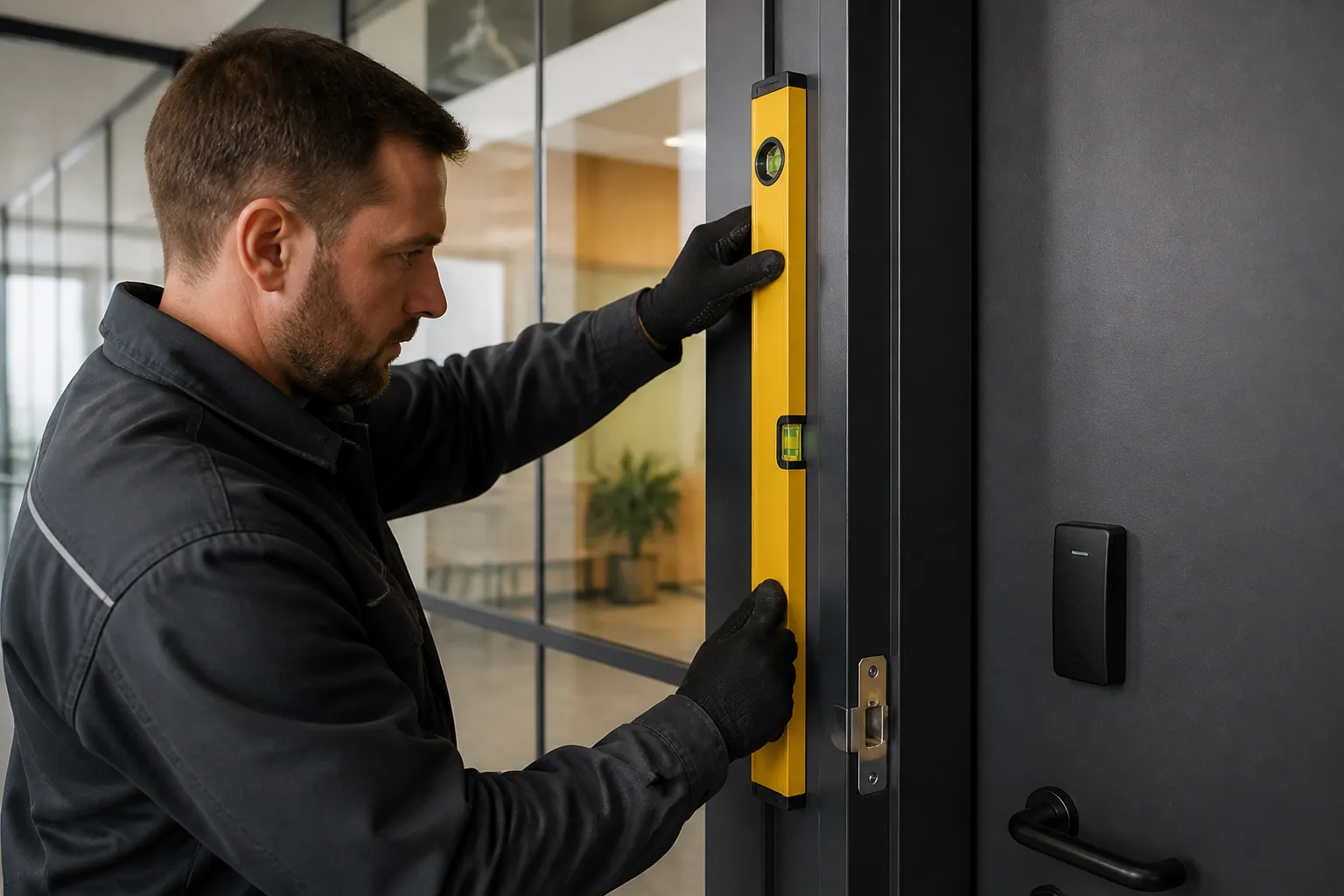
Who do you call when the front door of your office, shop, or warehouse needs more than a new key? Many buyers start with a quick search and pick whoever answers first. That works for a lost key. It works far less well when the job involves fire doors, card readers, or a building full of tenants. This guide walks through what the work covers, what to verify, what to ask, and what to watch for, so you can compare providers on equal terms. It is general information only, not personal legal, financial, or security advice, so check your plans with a licensed professional.
Door hardware is the foundation of access control. If the door does not latch and close properly, PIN codes, cards, and mobile credentials cannot work reliably.
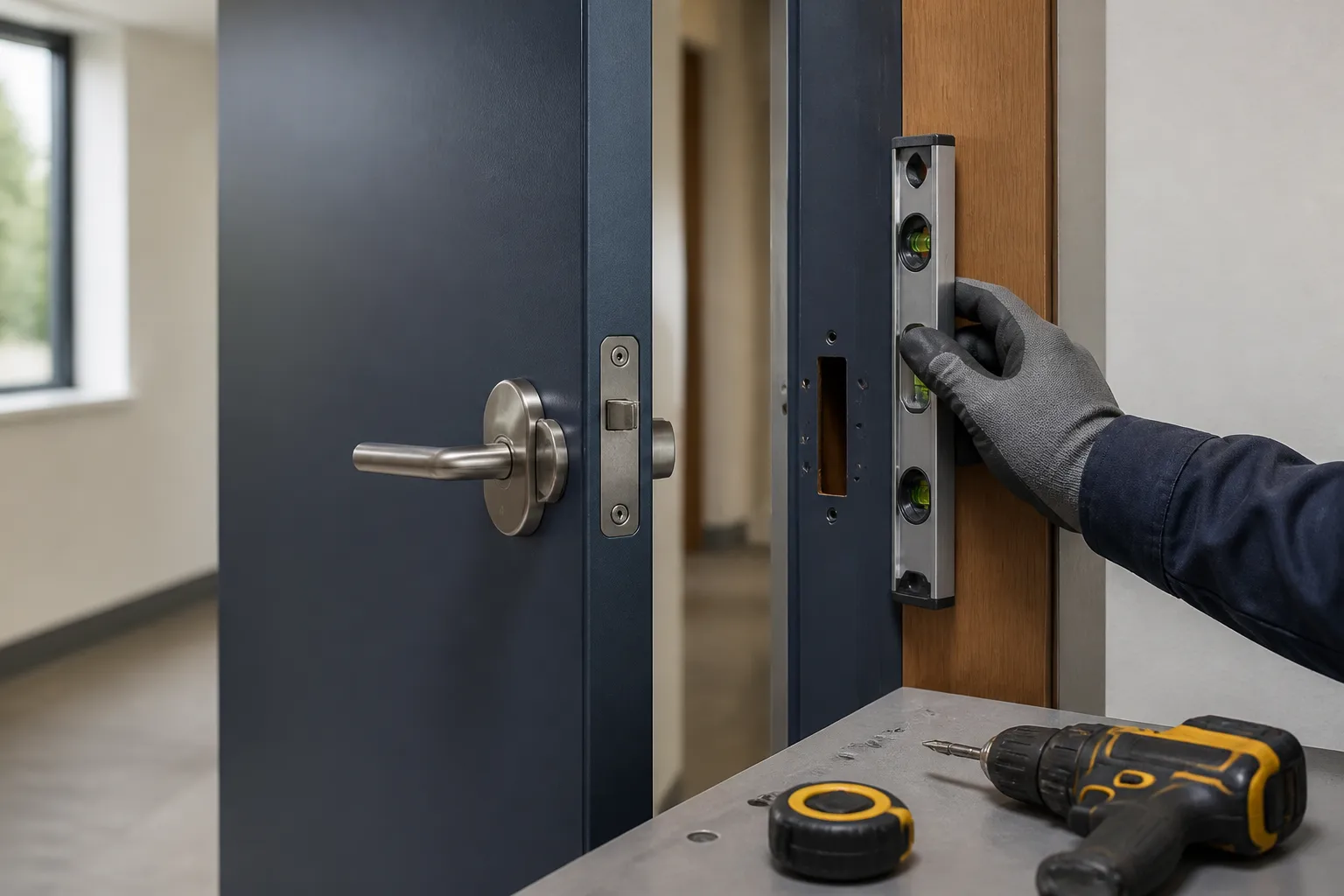
What commercial locksmith and access control work covers
A commercial locksmith does a good deal more than cut keys and change cylinders. The Associated Locksmiths of America (ALOA) notes that a qualified locksmith can advise on door frames, doors, electronic access control, life safety code compliance, and safe installation. In other words, you are often buying advice on the whole opening, not only the lock.
A typical job runs in a set order:
- Select the door hardware that suits the door and the use.
- Install it in a code-compliant way and align the door.
- Add electronic access control on top.
That order matters. A provider who skips the mechanical basics can leave you with an expensive system that fails at the door. Electrified locking systems add design work too, because power, locking hardware, and fire or egress rules all interact. The Door and Hardware Institute (DHI) offers an Electrified Hardware Consultant credential aimed at exactly that integration. Key cutting also deserves a question. A key cut wrong can make a building easier to break into, so ask who cuts keys and how key control is handled.
Credentials and what to verify
Start by asking whether the provider is a credentialed professional, rather than a general contractor or security company that happens to sell locks. ALOA says its members are vetted by peers, undergo background checks, and take continuing education. That is a useful signal. It is still only one check, so confirm the training of the actual people who will be on your site.
Relevant credentials differ by task:
- Locks and keys: locksmith credentials such as CML or CRL.
- Fire door inspection: CFDAI or FDAI.
- Hardware and access control design: DHI's Architectural Hardware Consultant (AHC) or Electrified Hardware Consultant (EHC).
DHI certifications renew every three years through continuing education points, while DHI certificate programs are one-time completions. So ask which kind of credential someone holds. A certificate alone does not show current competence. If your project includes automatic pedestrian doors, the trade group AAADM certifies automatic door inspectors and sets safety standards for them, so ask whether the inspector holds that certification.
State licensing is a separate question. Some firms cite a state locksmith license, for example through the Illinois Department of Financial and Professional Regulation. Rules differ by state, so check with your own state's licensing board. Verify any certification by searching the certifying body's own listing, such as DHI's certification pages, and not only the badge on a provider's website.
Questions to ask before you hire
Bring a short written list to every conversation, and ask each provider the same things. That makes the answers easy to compare later.
- Are the installers trained in product selection and installation, or will handymen or construction crews do the work?
- Which fire and life safety code requirements apply to these doors and locks, and how will you meet them?
- Who will supervise electrified hardware design, and do they hold an EHC or AHC?
- Are the hardware part numbers checked for accuracy before ordering?
- How will ongoing product training be handled?
- Do you have an in-house or consulted hardware specialist who can confirm code compliance?
A good answer to the code question names the requirements and explains how the work will be checked. A vague answer is a warning sign. The part number question sounds small, yet ordering the wrong parts is a common and costly mistake, and it is easy to prevent with one extra review. Access control technology also changes over time, so a provider who has a plan for staying current is worth more than one who does not.
Cost, and why you need itemized quotes
Prices for lock changes, access control systems, and inspections vary widely across the US. They depend on the state, the building, the number of doors, the hardware grade, and whether the work is electrified. The sources behind this guide do not give reliable figures, so any range here would be a guess. Plan instead to collect itemized written quotes from several providers. Each quote should separate hardware, labor, programming, and any inspection or code work, so you compare like with like. A low total that leaves out door alignment or testing is not really lower.
Red flags and gaps to research
Be cautious when handymen, construction firms, or general security companies offer lock selection or key cutting without locksmith training. ALOA warns that they may not know code rules or the right methods for product selection and installation. Other warning signs:
- Installations that leave doors not closing or latching properly. Ask the provider to test latch and closing behavior before you accept the work.
- Claims of expertise you cannot find in a certifying body's directory. Treat those as unverified.
- Answers about code compliance that stay vague when you press for detail.
Some topics fall outside what these sources cover, so research them before signing: contract terms, warranties, insurance, payment schedules, emergency response expectations, and how access control software, cybersecurity, and links to existing building systems are vetted. An attorney or your insurer can help with the contract and coverage side. Take your time, keep the written list, and choose the provider who can show their work.
Sources
Still have a question?
Related guides
-

Fixed or Variable: How to Choose a Business Electricity Contract Without Getting Caught Out
A practical checklist for comparing quotes, avoiding the costly rollover to a deemed rate, and asking the right questions before you sign. By Renata Okafor
-

What Happens to Your Business Energy Bill When the Contract Ends
Letting a fixed-term energy contract lapse can quietly move your account to a much higher default rate, so knowing your end date, opt-out deadline and state rules matters. By Neil Ostrander
-

How to Read a Commercial Electric Bill, Section by Section
Supply, delivery and demand charges each answer a different question, and knowing which is which helps you spot errors and compare providers on total cost.By Gideon Aldaine