How to Choose a Pallet Rack Installer Without Guessing
A practical checklist covering what OSHA and ANSI/MH 16.1 expect, how installation and inspection should work, and the questions to ask before you sign.
 By Gideon Aldaine ·
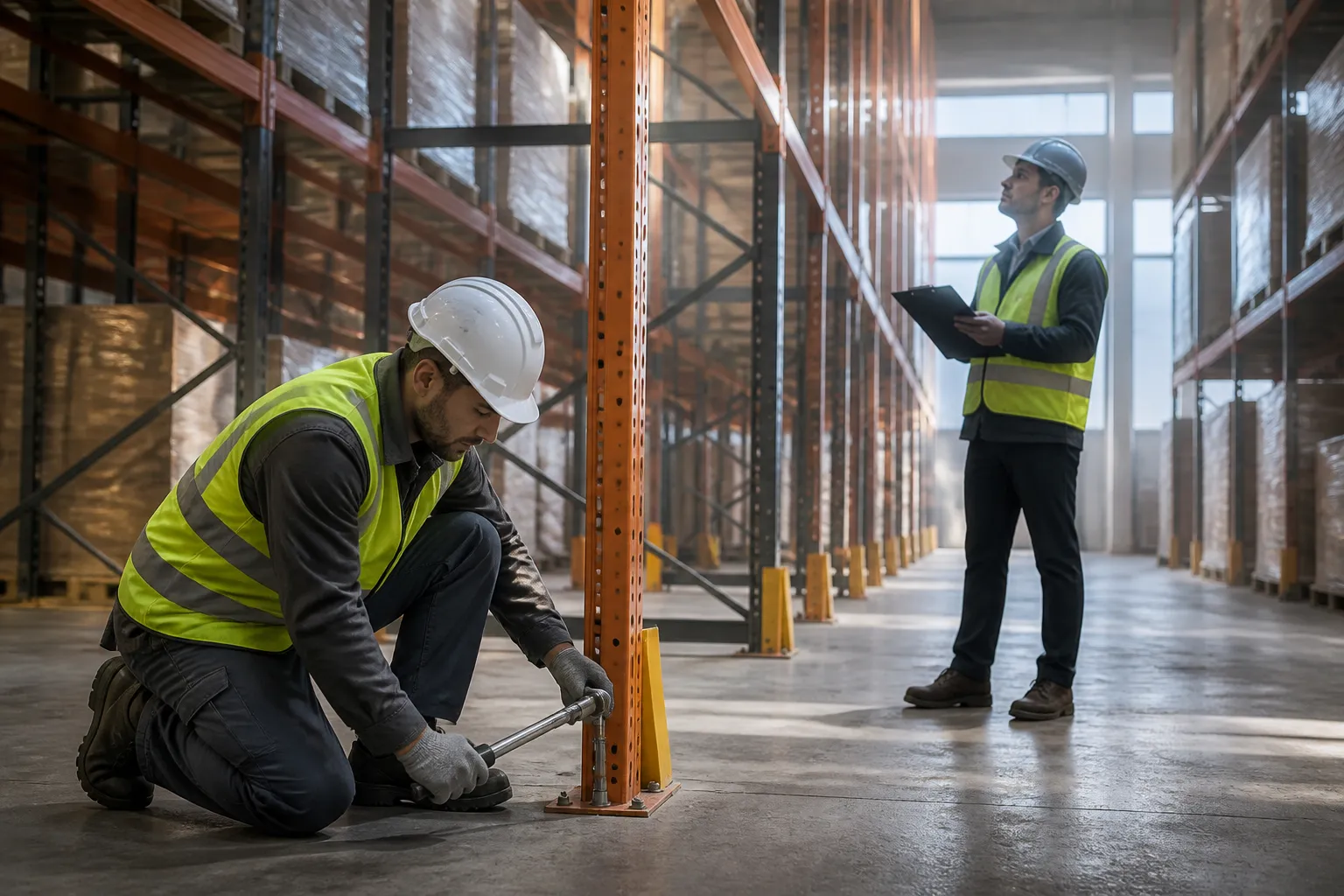
Who is going to put twenty feet of loaded steel over your employees' heads, and how would you know they did it right? Most buyers hire an installer on price and a good feeling. This guide gives you a better checklist, built around what the safety rules say and what to ask before you sign. It is general information only, not legal, safety or financial advice, so run your plans past a licensed engineer or qualified professional in your state.
What the safety rules actually require
Many buyers assume OSHA has a rule called "pallet rack safety." It does not. The main rule that applies is 29 CFR 1910.176, which says stored materials must be stable and secure against sliding or collapse and must not create a hazard. When no specific standard covers a hazard, OSHA can also use the General Duty Clause. So a rack job is judged against broad duties, not a neat list of rack rules.
Capacity labels, floor anchoring and stacking height limits are not spelled out in OSHA's regulations either. Inspectors have still cited them under the General Duty Clause, usually pointing to the manufacturer's recommendations and ANSI/MH 16.1, the industry standard for designing and using industrial steel storage racks. You can read more in this overview of capacity and anchoring.
ANSI/MH 16.1 covers anchoring, load ratings, load configuration, inspection and maintenance. The Rack Manufacturers Institute is named as the source of the ANSI-based specification used in enforcement. The sources I reviewed do not reproduce the full standard, so ask any installer to explain in their own words how they apply it. Do not rely on a summary, including this one.
How installation and inspection work
A sound installation follows a short list of steps. Here is what you should expect to see on site:
- Work follows the manufacturer's drawings.
- Uprights are shimmed and plumbed.
- Plumb and straightness are checked again after the rack is loaded, because loading can shift the frame.
- Anchors and torque values match what the manufacturer specifies.
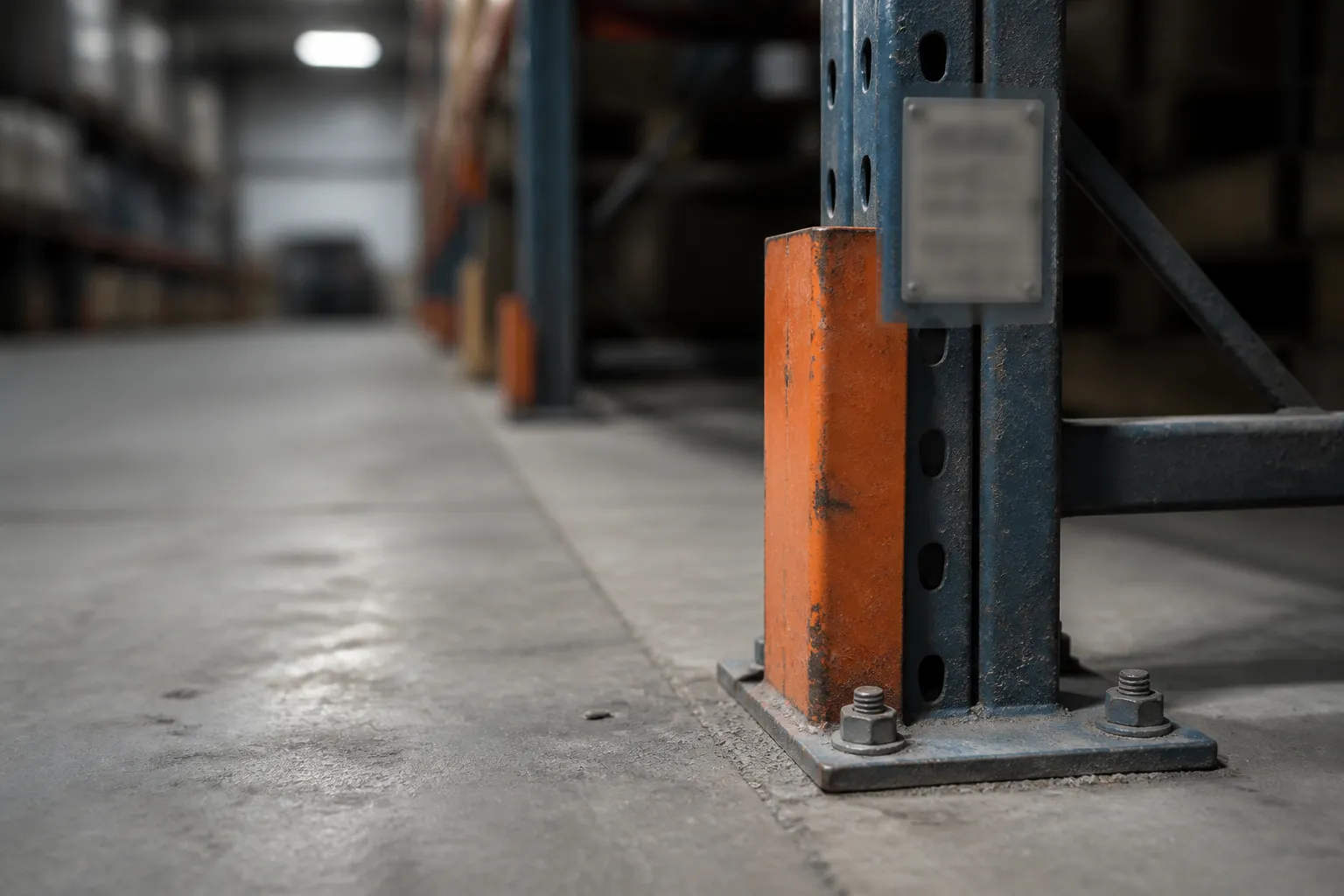
Racks are normally anchored to the floor. Tying them to walls, roofs or other building parts is generally not intended, since those parts may not handle the extra stress and damage can pass back into the rack.
Other features depend on the site. Row spacers, overhead ties and rack protection are common where forklift traffic or seismic conditions call for them. Aisles should fit the turning envelope of your forklifts and loads, and end-of-aisle uprights deserve protection where impacts are likely. In high-risk seismic areas, bracing and an engineering review may be required.
Sprinkler clearance can cap how high you stack. Double-stacking pallets is prohibited unless the rack was designed for it. For inspections, one source recommends a documented monthly visual check and an annual comprehensive inspection, while another says only that scheduled inspections are required. Settle the schedule in writing.
How to choose an installer
Where do you begin? Work through these in order:
- Ask whether they follow the manufacturer's specifications and use specified components. Makeshift repairs and mixed brands are warning signs. Damaged parts should be fixed with OEM or engineered components.
- Ask whether they know ANSI/MH 16.1, since OSHA inspectors refer to it. A capable crew can explain how load ratings, capacity labels and inspection schedules fit into the job.
- Ask what independent training, certification or manufacturer authorization they hold, and verify it with the issuing body yourself.
For context, the UK has a national installer programme, the Storage Equipment Installers Registration Scheme, set up in consultation with its Health and Safety Executive. The sources name no US equivalent, so you have to do more of the checking yourself.
On cost, I could not find reliable US price ranges for installation or inspection, and I will not invent one. Prices vary by state, rack type, job size and site conditions such as seismic work. Ask for written quotes that itemize drawings, anchoring, labels, inspection and any engineering, so you can compare like with like.
Questions to ask before you sign
Bring this list to every bid meeting, and note the answers:
- Will you install to the manufacturer's drawings, with the specified anchors and torque values?
- Will capacity labels be posted where all employees can see them, by bay and level where beam capacities differ?
- Will the rated capacity account for load dimensions, load centers, pallets and attachments?
- Will you verify plumb and straightness after the rack is loaded?
- Do you handle seismic bracing or engineering review where required?
- Will you give me a documented inspection schedule, and who carries it out after you leave?
Also ask about warranties, insurance and what happens if an installation fails. The sources do not cover those topics, so get every answer in writing and consider having an attorney read the contract.
Red flags and gaps in the information
Stop and ask questions if you see any of these:
- Makeshift repairs or components mixed from different brands.
- Racks anchored only to walls or roofs.
- Pallets double-stacked on racks not designed for it.
- Sagging beams or missing load ratings.
- Missing anchors or locks, bent uprights, or corrosion left in service.
- No plan to check plumb after loading.
You will also see big fine figures online. One article's headline cites $15,000 in OSHA fines, but the material I reviewed does not explain where that number comes from. Check current penalty amounts with OSHA directly.
Finally, the sources say nothing about US licensing for racking installers, how to verify credentials, or how to check references. Do those steps yourself. Call two recent customers, ask to see proof of insurance, and confirm any certification with whoever issued it. A reputable installer should welcome all of it.
Sources
- Avoid $15k fines from OSHA: A Safety Guide for Warehouse Managers
- Storage Rack Safety: OSHA Guidelines for Capacity & Anchoring
- Burwell Material Handling - OSHA Requirements For Pallet Racking: A Practical Guide to Safer, Compliant Storage
- OSHA Requirements for Pallet Racking and How to Avoid Them - Matco Material Handling Solutions
- OSHA Warehouse Racking Requirements
- Staying OSHA-Compliant: Pallet Rack Safety Requirements Every Warehouse Must Know
- OSHA Pallet Rack Requirements: A Plain Guide | RackSentinel
- Racking Health & Safety Information | Stakapal Ltd
Still have a question?
Related guides
-

Fixed or Variable: How to Choose a Business Electricity Contract Without Getting Caught Out
A practical checklist for comparing quotes, avoiding the costly rollover to a deemed rate, and asking the right questions before you sign. By Renata Okafor
-

What Happens to Your Business Energy Bill When the Contract Ends
Letting a fixed-term energy contract lapse can quietly move your account to a much higher default rate, so knowing your end date, opt-out deadline and state rules matters. By Neil Ostrander
-

How to Read a Commercial Electric Bill, Section by Section
Supply, delivery and demand charges each answer a different question, and knowing which is which helps you spot errors and compare providers on total cost.By Gideon Aldaine