How to Compare Parking Lot Paving Bids Without Getting Burned
A step-by-step checklist covering scope, accessibility, licensing, drainage and contract terms, so you can line up three different quotes on equal footing.
 By Gideon Aldaine ·

Are you trying to compare three parking lot bids that all look different, and wondering which one is actually the safe choice? That is a common spot for property managers and business owners. The pavement is cracked, the lines are faded, and the quotes arrive with different line items, different assumptions and no clear way to line them up. This guide walks through the process in order: define the scope, verify the contractor, compare bids fairly, check drainage and base work, and then ask the questions that expose weak proposals. It is general information only, so confirm details with a licensed professional and your local authorities.
Start with the scope: paving, striping and accessibility are linked
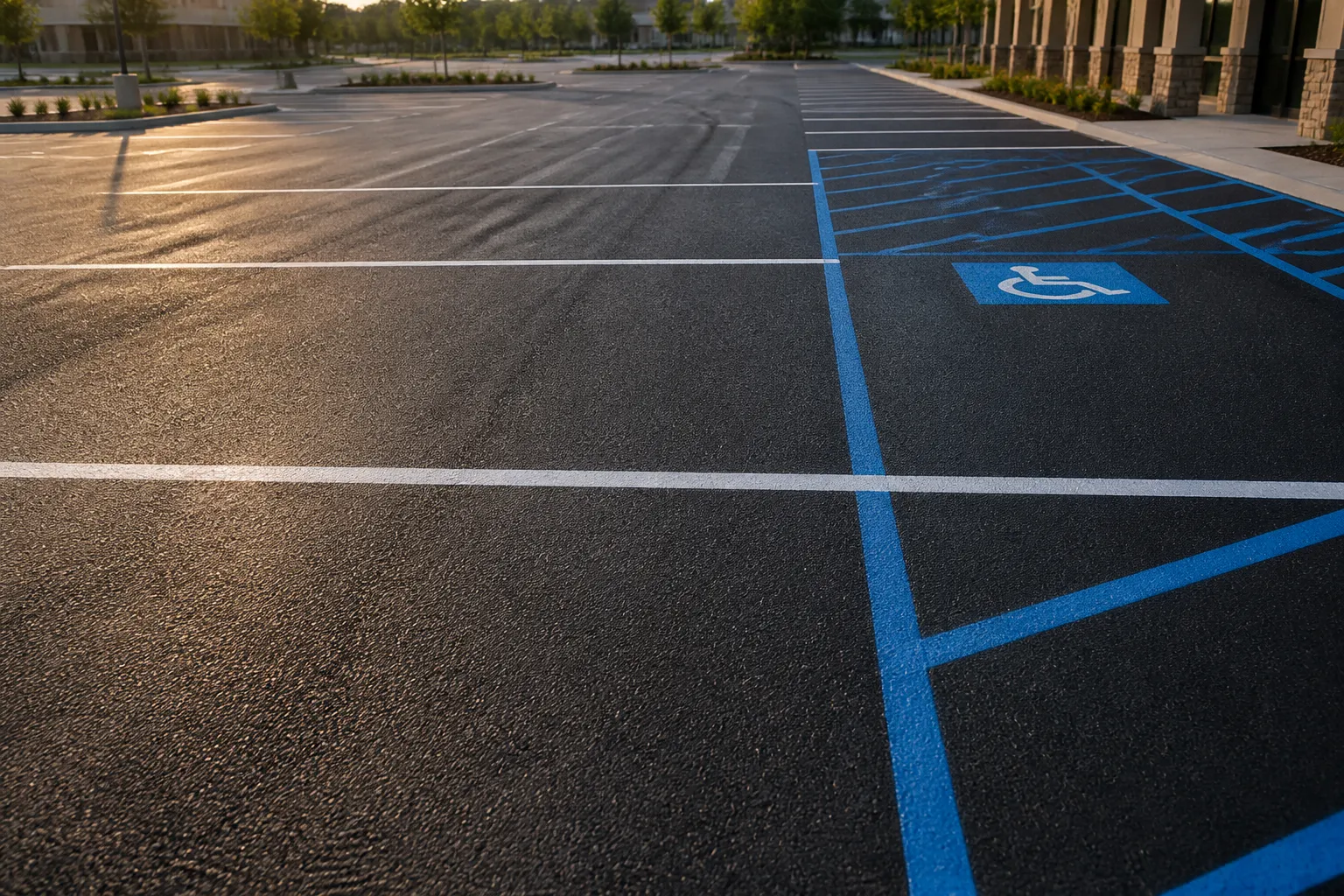
Before you request a single bid, decide what the project includes. Restriping is not only cosmetic. Under the ADA, when a business or a state or local government restripes a lot or garage, it must provide accessible spaces as the 2010 ADA Standards require. A crew that simply repaints old lines can carry an old compliance problem forward, even when the pavement is in good shape.
Accessible spaces are counted for each parking facility on a site, such as each lot or garage, not on the property total. The count rises with facility size. For example, a lot of 1 to 25 spaces needs at least 1 accessible space, and a lot of 26 to 50 needs 2. At least one of every six accessible spaces, or fraction of six, must be van accessible. Ask each bidder to show how they would work out the count for your lot.
Typical dimensions from ADA guidance give you something concrete to check against a layout drawing:
- Car-accessible space: 96 inches wide with a 60-inch access aisle.
- Van-accessible space: a 132-inch stall with a 60-inch aisle, or a 96-inch stall with a 96-inch aisle.
- Slope: no more than 1:48 (about 2.08 percent) in any direction.
- Van routes: 98 inches of vertical clearance.
- Signs: the International Symbol of Accessibility with the bottom at least 60 inches above the ground, and van spaces marked "van accessible."
The ADA is a federal baseline. State and local codes can be stricter, so confirm requirements with the local building or planning office before the layout is final. A good proposal names those requirements instead of assuming the federal minimum is enough.
Check licensing, insurance and permits before you compare prices
Price comes second. First, confirm the company can legally and safely do the work. Ask for the business license and the contractor's license issued by your state or county. Some places also require a specialty license, depending on the technique, materials and machinery. Rules vary by location, so get the license numbers and check them with the issuing agency rather than trusting a photocopy.
Next, work through this short list:
- Request proof of liability insurance and workers' compensation coverage.
- Confirm both are current, and ask to be named as certificate holder so you are told if coverage lapses.
- Ask who pulls permits for the job and when they will be filed.
- If hot-mix asphalt or sealants are involved, ask which environmental permits and safety certifications apply.
Insurance matters most on an active commercial site, where equipment can damage vehicles, property or people. A contractor who is vague about permits is a reason to slow down.
Membership in a group such as the National Asphalt Pavement Association can suggest a commitment to standards, but it does not replace a license check. Also read the company's Better Business Bureau profile, including complaints and ratings, and ask for references from comparable commercial jobs. The BBB guide to hiring an asphalt paving company covers these checks in more detail.
Compare written estimates on the same scope
Collect detailed written estimates from several companies, and make sure each covers the same work. A low number means little if one bid includes base repair, drainage work and accessible striping while another covers a surface coat and stall lines only. Ask each bidder to list materials, labor, equipment, traffic control and cleanup separately.
On cost, be careful. The one widely cited national range for asphalt paving, $2,000 to $9,000, describes homeowner projects and is not a useful guide for a commercial lot. Commercial pricing depends on lot size, the condition of the base, the thickness of the new surface and how much work must be staged around business hours. Costs also vary by state and region. Use your own local bids as the real benchmark, and treat any single national figure with suspicion.
Then look at the contract terms that cause trouble later:
- How change orders are approved and priced, since base failures often appear once old pavement is removed.
- The payment schedule and any retainage.
- Warranty terms, in writing.
Look at drainage, base work and documentation
Paving over a drainage problem usually reproduces it. Walk the lot about 24 hours after a rain and note low spots and standing water. Unaddressed drainage issues can leave puddles once the new asphalt is down. One industry source says contractors rarely raise this on their own, so ask directly how existing problems will be found and priced before resurfacing starts.
Quality also depends on watching materials and workmanship from start to finish, beginning with compacted subgrade and base layers and continuing through placement. Ask whether an owner's representative or onsite inspector will check each stage. Asphalt is often placed in stages, with a minimum depth first and a final surface course later, so ask how the contractor plans base, compaction and staging.
Ask for photographs before, during and after construction. They help if a claim comes up about thickness, drainage or defects. Agree in writing on who keeps them and for how long.
Some owners also consider concrete. Industry groups publish reference specifications that can help define material and construction expectations. The sources here do not give cost-over-time comparisons or maintenance intervals such as sealcoating, so ask each bidder to explain the expected life and upkeep of the option they recommend.
Use targeted questions and watch for warning signs
Bring this checklist to every bid meeting:
- Does the scope include accessible spaces, van spaces, slopes and signage if restriping is involved?
- How will existing drainage problems be handled before resurfacing?
- Will the work be photographed before, during and after?
- What is the plan for base layers, compaction and staged paving?
- Are the licenses, insurance and permits current and specific to this job?
- What does the estimate include for materials, labor and scope?
Some answers should make you pause. Contract language that disclaims liability for standing water after paving, especially when the grade is inadequate, is a known source of disputes. A contractor who will not verify licensing and insurance is a concern. So are vague estimates that do not separate scope, materials and labor, because they make comparison nearly impossible.
If a dispute does arise, start by reviewing the contract, the estimate and the photo record, then raise the issue in writing. Complaint steps vary by state, so check with your state contractor licensing board and local consumer protection office. For accessibility questions, the local building authority and ADA.gov guidance on restriping are good places to start. For a final check on your specific lot, consult a licensed professional in your area.
Sources
- Chapter 5: Parking Spaces
- ADA Compliance Brief: Restriping Parking Spaces | ADA.gov
- Construction Checklist for Parking Lots | Asphalt Pavement Alliance
- Parking Lots | Asphalt Pavement Alliance
- :: Concrete Parking :: Comprehensive Concrete Parking and Green Pavement Site for Enineers, Architects and Owners ::
- Hiring an asphalt paving company
- ADA Parking Requirements: Complete Guide (2026) | TruTec Blog
- The Crucial Step Before Repaving Your Parking Lot:Post-Rain Inspection
Still have a question?
Related guides
-

Fixed or Variable: How to Choose a Business Electricity Contract Without Getting Caught Out
A practical checklist for comparing quotes, avoiding the costly rollover to a deemed rate, and asking the right questions before you sign. By Renata Okafor
-

What Happens to Your Business Energy Bill When the Contract Ends
Letting a fixed-term energy contract lapse can quietly move your account to a much higher default rate, so knowing your end date, opt-out deadline and state rules matters. By Neil Ostrander
-

How to Read a Commercial Electric Bill, Section by Section
Supply, delivery and demand charges each answer a different question, and knowing which is which helps you spot errors and compare providers on total cost.By Gideon Aldaine