How to Vet a Backflow Tester Before You Hire One
Check the local rules, the tester's current credential, and the approved parts in that order, so you compare providers on facts rather than a confident sales call.
 By Neil Ostrander ·
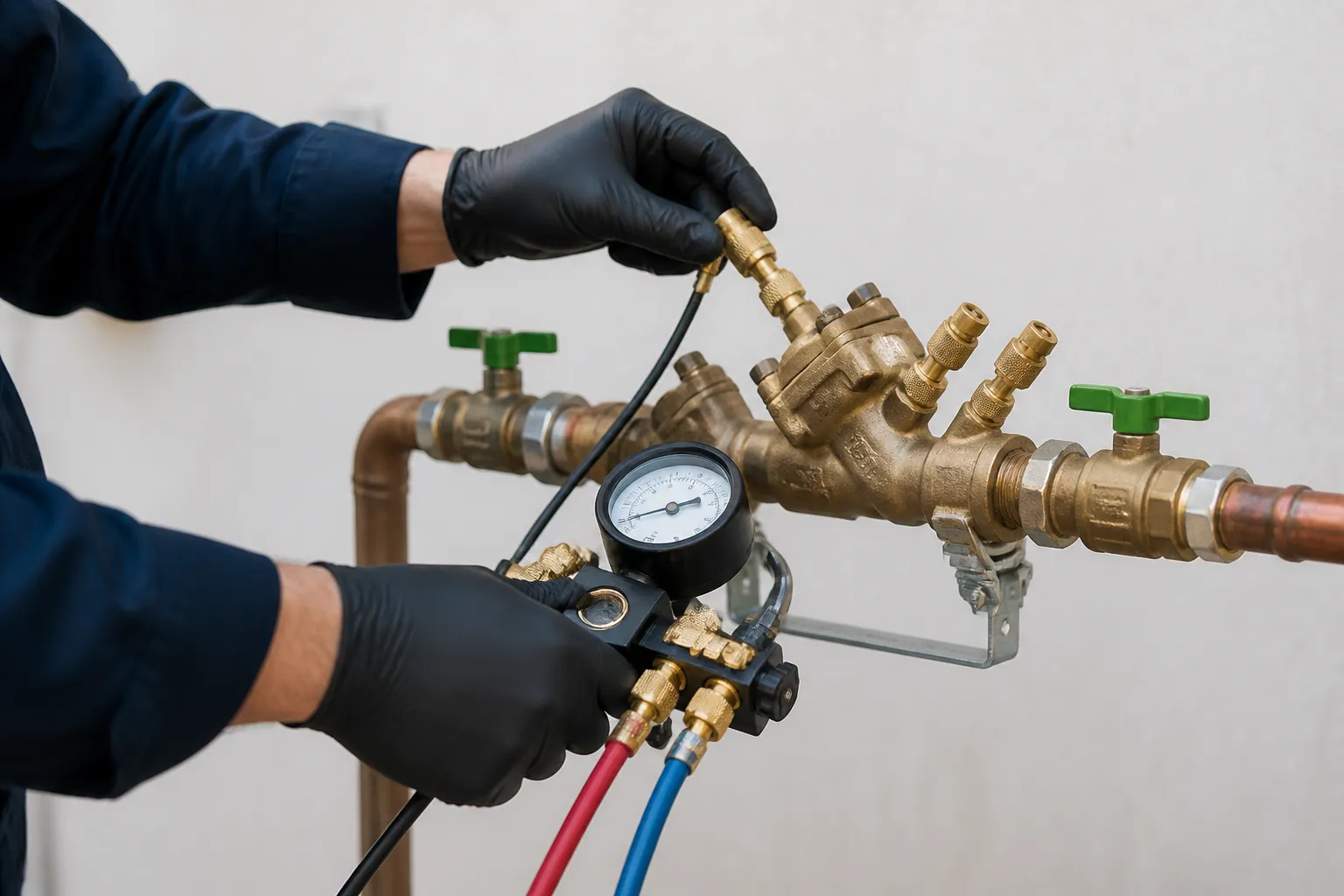
Who is actually going to stand at your backflow assembly with a test kit, and how would you know they are allowed to? Most buyers never ask. This guide walks through the checks in order, so you can compare providers on facts and not on a confident phone voice. It is general information only, not legal, financial or professional advice, so confirm details with your local water authority and a licensed professional.
Check the local rules first, then the person, then the parts. A skilled tester using the wrong hose can still undo an approval.
Start with the local rules, not the brand name
Before you compare a single quote, find out which certifications your local water authority accepts or requires. Jurisdictions may accept or require ASSE Cross-Connection Control Certification, but the authority that oversees your water system decides what counts at your site. A tester who is well qualified in one state may not meet the requirement in yours.
California shows how this varies. In June 2025 the State Water Resources Control Board's Division of Drinking Water recognized the ASSE 5110 tester certification as meeting Section 3.4.1 of the state's Cross-Connection Control Policy Handbook (IAPMO announcement). That was a state-level decision, and other places may differ.
So make one call, and ask three things:
- Which tester certifications do you accept or require?
- Which test gages and field test kits do you accept?
- Do you keep a list of approved testers?
Some of these decisions sit with the local authority and not with the testing organization. Its answer is the one that counts.
Verify the credential yourself
ASSE International describes its backflow prevention certification as a credential for testing, repairing and surveying assemblies, based on the ASSE/IAPMO/ANSI Series 5000 standard. It reports more than 19,000 certified professionals in all 50 states and parts of Canada, plus over 100 approved schools (ASSE backflow prevention page). Those numbers describe the program's reach. They do not prove that the person at your door is currently certified.
ASSE offers a searchable directory you can filter by state, certification or last name. Use it, and then match three things:
- The technician's name on the directory
- The company name on the estimate
- The name on any paperwork or test report
If your project involves a survey and not only a test, ask about the credential. The ASSE 5120 Cross-Connection Control Surveyor certification was being pursued for California recognition, and the sources give no outcome. Ask whether the credential offered to you is recognized in your state.
Check the equipment and parts against approved listings
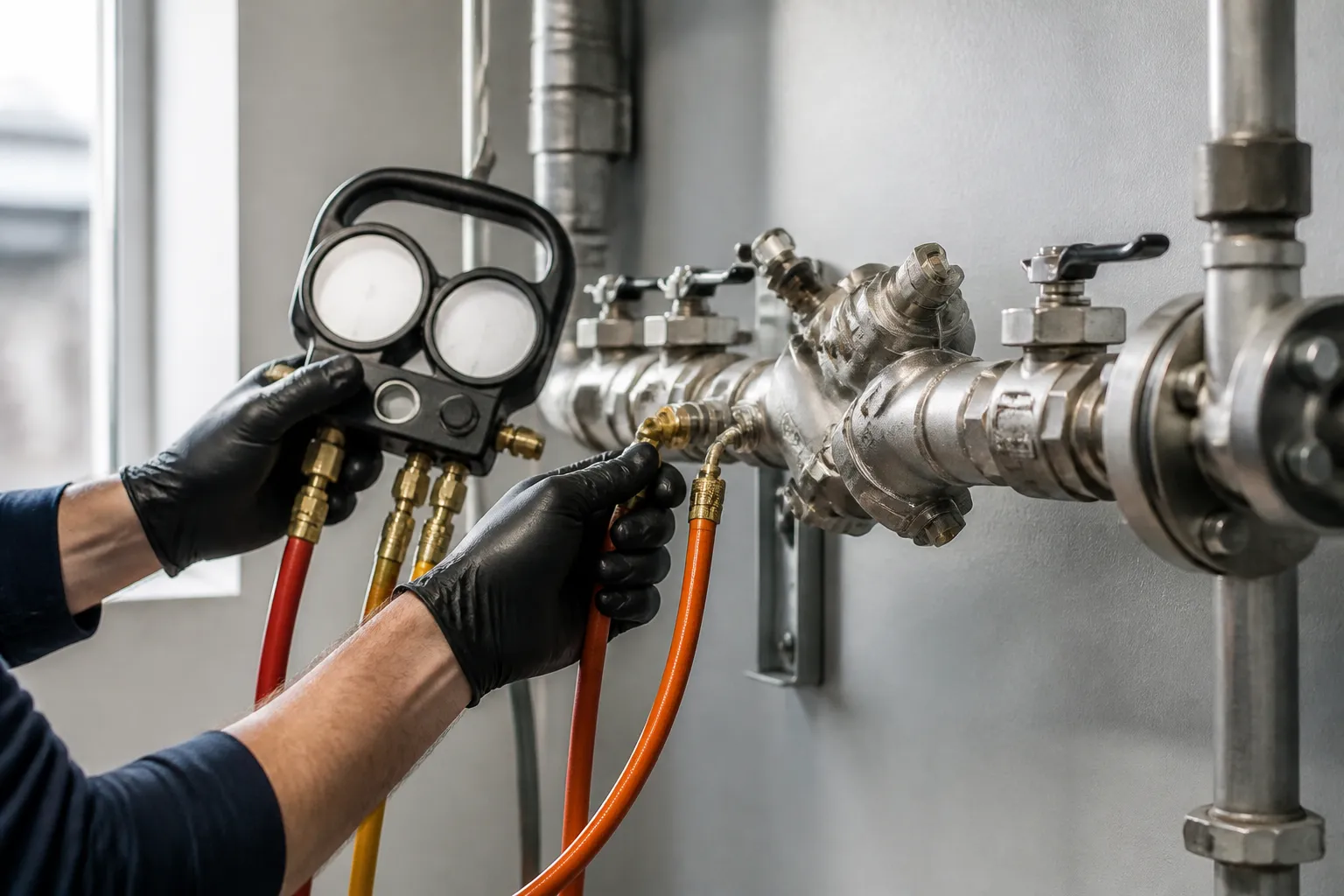
Testers use a differential pressure gage field test kit to measure the pressure difference across the check valves inside an assembly. The USC Foundation for Cross-Connection Control and Hydraulic Research approves assemblies and field test kits and publishes lists of both (approved assemblies, approved field test kits).
Listings show assembly type (DC, RP, PVB or SVB), manufacturer, model, size, manual edition, approval date and renewal date. Each approval lasts three years and is subject to renewal. An approved assembly may only use listed shutoff valves, and other valves invalidate the approval. A kit is approved only with the needle valves and hoses supplied by its manufacturer. Whether an approved kit is required is up to the local authority.
Ask each provider what parts they will use, and where they checked the listing. Someone who can show you the model and renewal date is giving a better answer than "it will meet code."
Understand the training behind the credential
The USC tester course covers RP, DC, PVB and SVB assemblies and field test procedures under the Manual of Cross-Connection Control, Tenth Edition. It runs five days, sets up four backflow preventers for every five students, and carries 3.6 Continuing Education Units (USC training page).
That detail helps you judge fit. Ask whether the tester's training covers the assembly types on your property, and when they last took continuing education. An older certification may still be valid, but recent training suggests the person is keeping up with current procedures. The sources are clear that only qualified people should perform these tasks, so if someone without a qualifying credential will touch your assemblies, pause and ask questions.
Ask questions and watch for red flags
Put these to every provider and write the answers down:
- Is your certification accepted or required by this jurisdiction?
- Which field test kit and gages does the local authority accept?
- Are my assemblies on the current USC approved list, with approval renewed?
- Do you use only the shutoff valves and hoses listed for the assembly or kit?
Red flags are easy to spot once you know them. Hoses, needle valves or shutoff valves that were not supplied or listed with the approved kit or assembly invalidate the approval. Work by someone without a qualifying credential is another. So is a claim that a certification is accepted everywhere, since recognition varies and local resistance is possible. If a credential is disputed, get the authority's position in writing before work begins.
What these sources do not tell you
The research behind this guide gives no US cost ranges for testing, repair or surveying. Prices vary by state, local rules, assembly type and site conditions, so treat any figure you hear as a starting point. Ask several providers for written estimates, and have each itemize testing, parts and reporting so you compare like with like.
The sources also skip testing frequency, reporting requirements, insurance, licensing, contracts, warranties, response times and how to check disciplinary history. Ask your water authority and each provider about those directly, and consider a licensed professional for contract questions.
Sources
- Welcome to the Foundation for Cross-Connection Control and Hydraulic Research
- USC Foundation for Cross-Connection Control and Hydraulic Research: Training Tools
- USC Foundation for Cross-Connection Control and Hydraulic Research: List of Approved Backflow Prevention Assemblies
- USC Foundation for Cross-Connection Control and Hydraulic Research: List of Approved Backflow Prevention Assemblies
- Backflow Prevention | ASSE International
- ASSE International | ASSE International
- https://vertexaisearch.cloud.google.com/grounding-api-redirect/AUZIYQHbeCnx5vkeh2PATYAthZ9b4bSFOLyAIqr-jZhFyBCgAQjyo8p2bXHIE8IX2Ih5aQIZq6BC72IqZSs3VIuGBAQfgff_fhaOLFd3pWB0rhejQFAw_b3Tb0HeIGF2pBqz5sQAFuiF7VdrXcUQP72kfVqTXQ==
- California State Water Board Formally Recognizes ASSE 5110 Certification for Backflow Testers | IAPMO
Still have a question?
Related guides
-

Fixed or Variable: How to Choose a Business Electricity Contract Without Getting Caught Out
A practical checklist for comparing quotes, avoiding the costly rollover to a deemed rate, and asking the right questions before you sign. By Renata Okafor
-

What Happens to Your Business Energy Bill When the Contract Ends
Letting a fixed-term energy contract lapse can quietly move your account to a much higher default rate, so knowing your end date, opt-out deadline and state rules matters.By Neil Ostrander
-

How to Read a Commercial Electric Bill, Section by Section
Supply, delivery and demand charges each answer a different question, and knowing which is which helps you spot errors and compare providers on total cost. By Gideon Aldaine