How to Vet a Commercial Glass Contractor Before You Sign Anything
Licensing, certification, insurance, and code-compliant glass matter more than the lowest price when a storefront or window is damaged.
 By Neil Ostrander ·

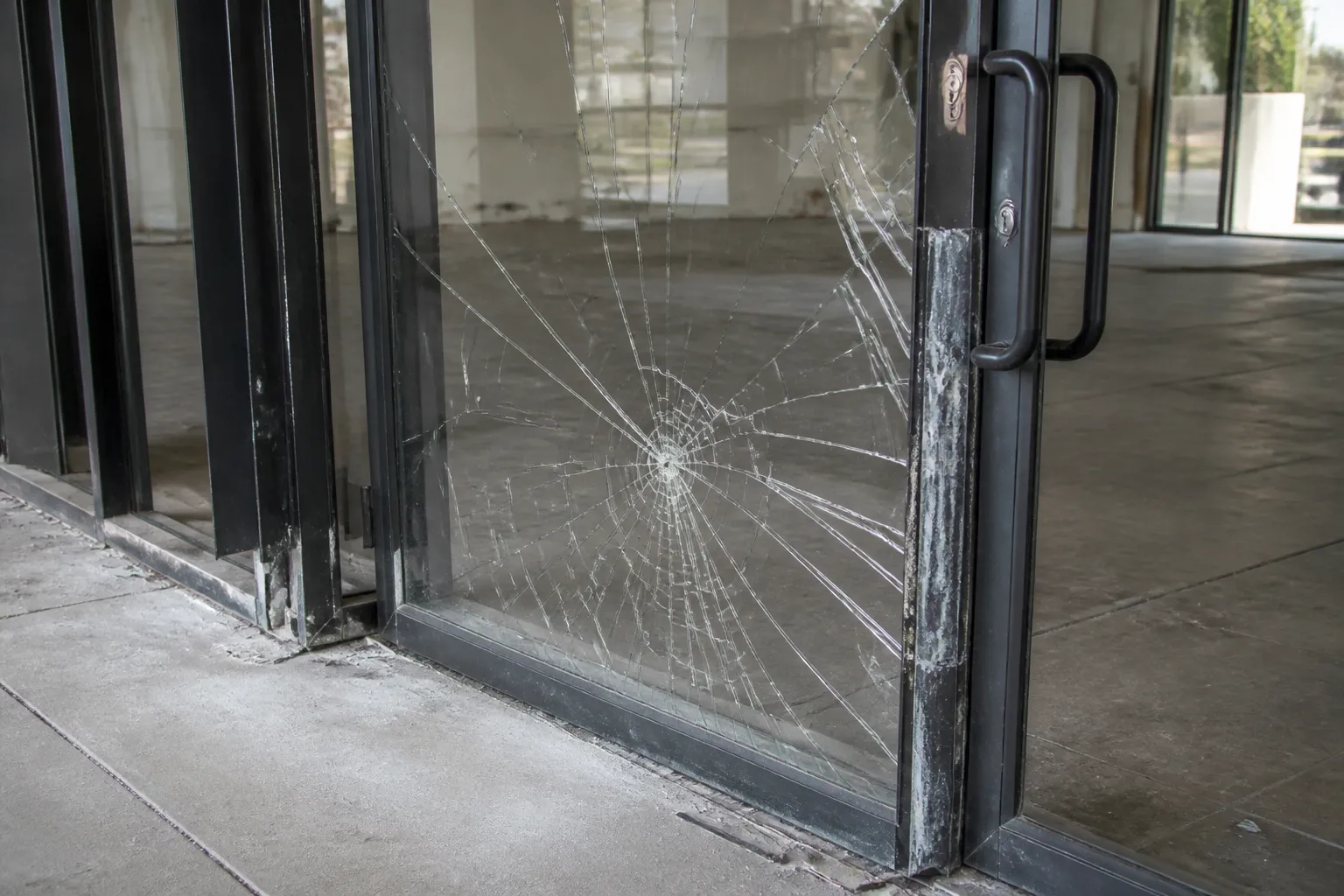
Your storefront door just shattered, or a front window took a crack overnight. Who do you call, and how do you know they are the right ones? A plain price comparison will not answer that. Commercial glass work touches building safety, customer access, and your insurance exposure, so the smart move is to vet the company first and read the quote second. This guide walks through the steps in order.
A repair that looks minor can still affect safety, access, and who pays if someone gets hurt.
Why commercial glass work needs a different kind of contractor
Commercial jobs often involve large glazing systems, structural glass panels, curtain walls, storefront framing, mirrors, and custom fabrication. That takes more specialized expertise, equipment, and project management than most home window work. A company that is great at replacing a bedroom window may not be set up for a storefront entrance with a heavy door.
Before you call anyone, work out what the damage actually affects. Use this short checklist:
- Is it a single pane, a door, a frame, or a larger system?
- Is the opening a main entrance or an emergency exit path?
- Is the glass low to the floor or next to a door?
Those answers help you ask sharper questions and judge whether a company's experience matches your job.
Check licensing and certification
Licensing rules for glazing contractors vary by state and by municipality, so there is no single national license to look up. Ask for the license number, then verify it yourself with the local licensing authority. Do not rely only on a number printed on a proposal.
Two certifications are also worth knowing about in North America. NACC and AGMT are separate programs, and the difference matters:
- NACC certifies glazing contractors, meaning the company.
- AGMT certifies glazing installers, meaning the individual technicians.
Both hold ANAB accreditation and are administered by an independent third party, AMS, Inc., under the Architectural Glass and Metal Certification Council, a 501(c)(3) not-for-profit. A certified company does not guarantee that the crew on your site is certified, so ask about both. Membership in industry organizations can signal professional standing, but it is a weaker sign than a license or certification you can verify.
Verify insurance before work starts
Contractors commonly carry general liability insurance and workers' compensation. If either is missing, the property owner or project manager may be held financially responsible for accidents on the job site. That is why this step comes before any work begins.
Ask for certificates of insurance, and have them sent directly from the contractor's insurance provider. A copy handed over by the contractor alone is easy to alter or let go out of date. The sources reviewed do not say what coverage amounts are adequate, so ask whether the limits suit the scale of your project. For a large job, a licensed professional or your own insurance adviser can review them.
Confirm the glass meets code for its location
Glazing rules come from model building codes and the standards bodies behind them. Under the 2021 International Building Code, safety glazing means any glazing that meets IBC 2406. The code sets performance requirements, not manufacturing methods, so both tempered and laminated glass can qualify. Tempered glass is one type of safety glazing, not the only one, and the code does not require it specifically.
Location drives the requirement. These are hazardous locations that need safety glazing:
- Any fixed or operable panel of a swinging, sliding, or bifold door, with narrow exceptions for openings too small for a 3-inch sphere and for decorative glazing.
- Glazing within 24 inches horizontally of a door, where the bottom edge is less than 60 inches above the floor.
- A window panel larger than 9 square feet with its bottom edge less than 18 inches above the floor.
Which edition of the code your area has adopted is not covered here, so check with your local building department. Then ask the contractor which product goes in each location and why.
Ask the right questions and watch for red flags
A short script reveals a lot. Put these to every company you consider:
- What is your state license number, and may I verify it with the local licensing authority?
- Does the company hold NACC certification, and do the installers hold AGMT certification?
- Can you have your insurer send certificates for general liability and workers' compensation directly to me?
- For each glass location, is the product safety glazing under IBC 2406, and is it tempered or laminated?
Treat an unlicensed or uninsured contractor as a serious warning sign. Be cautious of any company that resists verification, offers only its own copy of an insurance certificate, or cannot explain the code basis for its glass choices. Assuming all glass on a commercial job meets safety rules by default is how code violations happen.
What this guide does not cover
The available sources do not give typical US prices for commercial glass or storefront repair, and costs vary by state, glass type, and job size. They also say little about comparing quotes, checking references or complaint history, or reviewing warranty, payment, contract, and dispute terms. Cover those yourself before signing. Ask for itemized written quotes, compare them against each other, and check local licensing and consumer resources. This is general information only, not legal, insurance, or financial advice, so consult a licensed professional for your situation.
Sources
- https://vertexaisearch.cloud.google.com/grounding-api-redirect/AUZIYQFsIMUQnPB5iZ0ip0_-pvUY_lf2mZns9Trj-LctVA4xrDDVgb7bXT5PrDZER2JDzxx81L6ZLTYnDAvDFf0V0bJlEkY8izGQd9QeXRovS5o_kBKYUcZiMxzBSkZsr3CLenhz53P5ERoAPyl73KoEvp1dF_16Z_6Dfm81LJj1tHW-AaI67DAx0Q==
- Glazing Certification | AGMT + NACC
- Updated Guide to the Glass & Glazing Requirements | National Glass Association
- Homepage | National Glass Association
- What Should You Look for When Hiring a Commercial Glass Contractor?
- AAMA SFM-1-14-Aluminum Storefront and Entrance Manual - Fenestration and Glazing Industry Alliance Store
- Curtain Walls and Storefronts - Fenestration and Glazing Industry Alliance Store
- Safety Glass - A Quick Reference Guide
Still have a question?
Related guides
-

Fixed or Variable: How to Choose a Business Electricity Contract Without Getting Caught Out
A practical checklist for comparing quotes, avoiding the costly rollover to a deemed rate, and asking the right questions before you sign. By Renata Okafor
-

What Happens to Your Business Energy Bill When the Contract Ends
Letting a fixed-term energy contract lapse can quietly move your account to a much higher default rate, so knowing your end date, opt-out deadline and state rules matters.By Neil Ostrander
-

How to Read a Commercial Electric Bill, Section by Section
Supply, delivery and demand charges each answer a different question, and knowing which is which helps you spot errors and compare providers on total cost. By Gideon Aldaine