How to Vet a Commercial Pressure Washing Contractor Before You Sign
Training, wastewater rules, itemized bids and garage safety plans are the checks that separate a reliable crew from a costly mistake.
 By Neil Ostrander ·
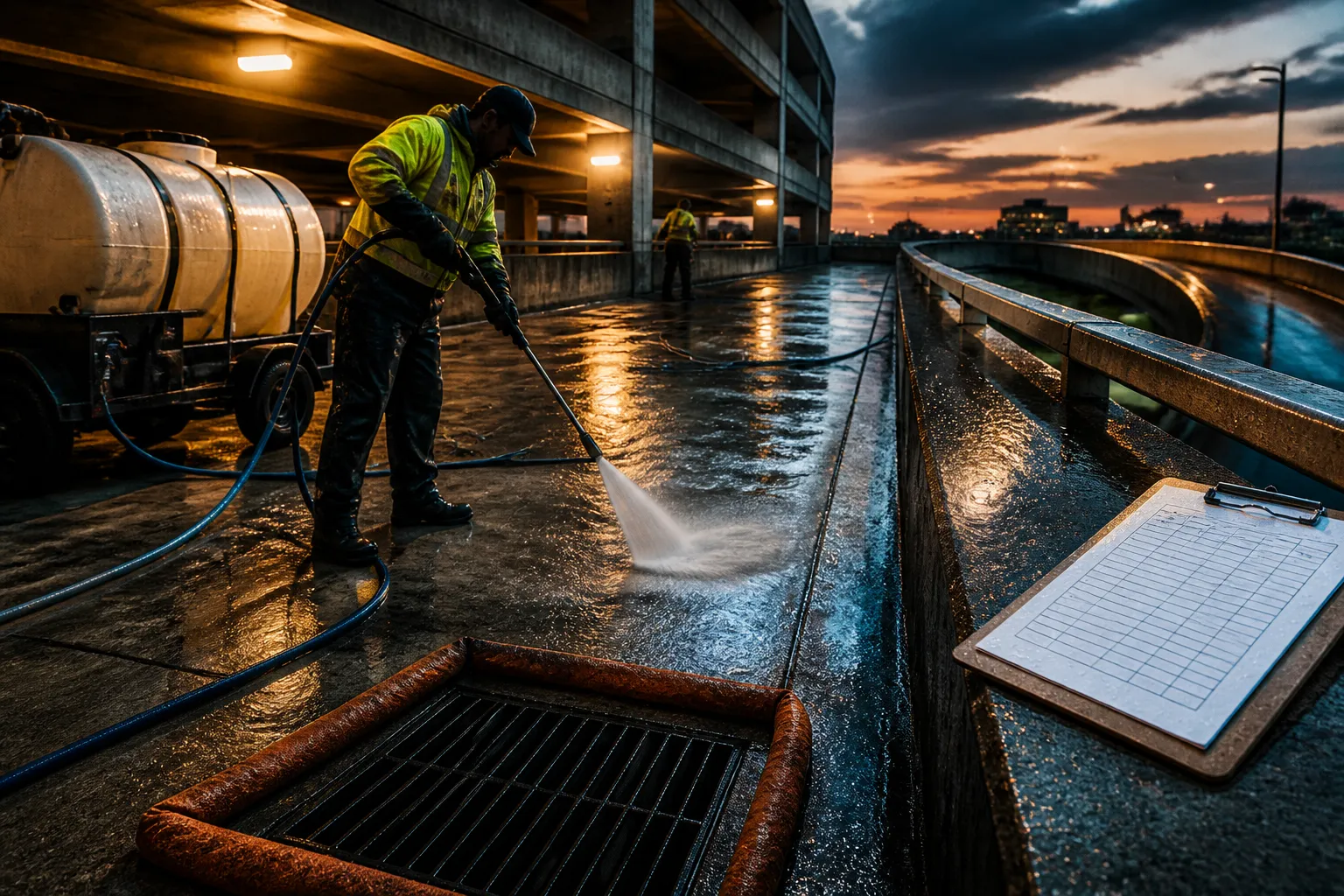
Who is actually going to be standing on your property with a hose, a chemical tank and a wet-floor problem? If you manage a shopping center, a parking garage or any business site with tenants and customers, that question deserves more time than a quick phone quote. This guide walks through what to check, what to ask and what to avoid, in the order most buyers need it. It is general information only, not legal, financial or professional advice, so confirm specifics with your own licensed advisers and local agencies.
Why commercial pressure washing needs more care than a simple sidewalk job
Commercial work covers far more than a front walk. Crews may clean sidewalks, dumpster pads, signs, building exteriors and sometimes parking structures, and each surface reacts differently to water pressure and cleaning solutions. A crew that does fine on concrete can scar soft brick, strip sealant or force water behind siding.
The trade also has a very low barrier to entry. Anyone can buy a machine and start advertising, with no training in water pressure, cleaning chemistry, drainage or how building materials get damaged. So owning equipment tells you very little about skill.
Then there are the people. A commercial site has tenants, shoppers and employees moving around hoses, chemicals and standing water. The contractor's planning and safety habits matter as much as how clean the pavement looks afterward.
Check training, certification and wastewater knowledge
Start by asking what education the crew has completed beyond buying gear. Useful topics include exterior cleaning methods, surface care, safety, chemical handling, environmental responsibility and business practices. Trade groups such as Power Washers of North America offer training and certification in these areas, and you can ask a contractor which programs, if any, its people have finished. The sources reviewed do not explain how to verify a certification, so ask for documentation and confirm it with the issuing organization.
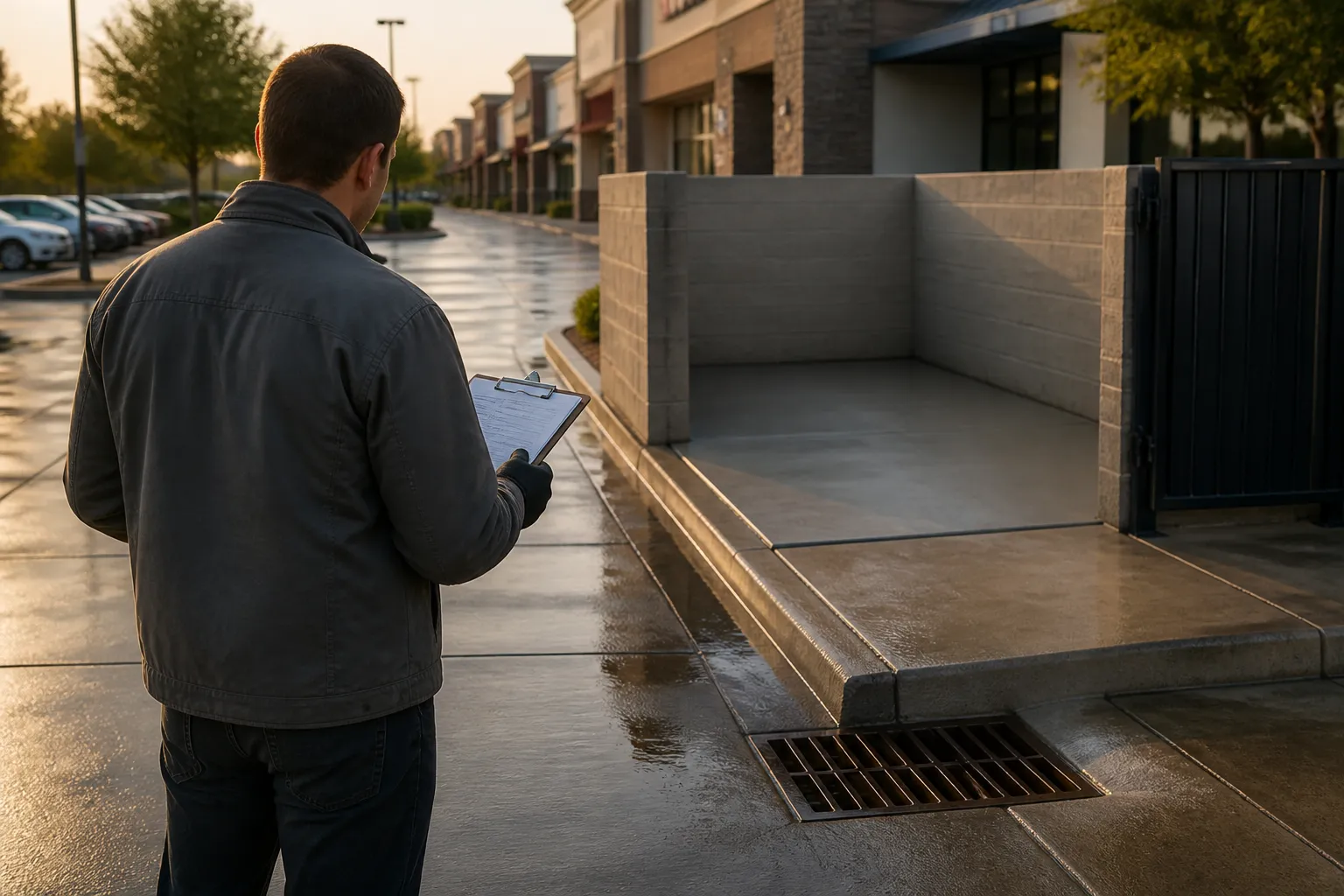
Wastewater is the issue many buyers miss. Under the Clean Water Act and the EPA's NPDES program, discharging pollutants into US waters generally requires a permit, and many cities and counties bar pressure-washing runoff from reaching storm drains unless it is authorized. Rules can differ even between neighboring municipalities, so the contractor needs to know the requirements for your specific site. A useful overview appears in this environmental guide from Cleaner Times.
Put the question plainly and listen to the answer:
- How will wastewater be captured or handled at this site?
- Does the job need a permit or special authorization?
- Who did you check with locally to find out?
If the answer is vague, or the contractor says the rules do not apply without having looked, that gap can become your fine or your cleanup bill.
Understand how the bid should reflect the property
A solid shopping-center bid reflects the property itself: water supply, pavement and building materials, drainage, noise ordinances, lighting, tenant types and operating hours. A bid that ignores those details may look cheaper, then grow through added charges, delays or damage.
Most shopping-center contracts set a scope with a fixed frequency for sidewalk cleaning, such as monthly, quarterly or twice a year. They may add an annual building wash, dumpster-pad cleaning and sign cleaning. The right mix depends on the property, management priorities and the common-area maintenance budget, as described in this shopping-center guide. Confirm exactly what each line item covers.
Mixed-use centers with restaurants, bars or nightclubs add a wrinkle. Work may need to stop and start around busy periods, and crews need a plan to keep people away from hoses, chemicals and wet surfaces. Ask how the schedule will work and what happens when it has to change.
Pay special attention to parking garages
Parking garages are widely described as among the most difficult and dangerous pressure-washing projects. Enclosed or partly enclosed spaces raise concerns about air movement and carbon monoxide, even during the first site visit when the contractor evaluates the structure. More detail is in this parking garage overview.
A garage bid should spell out how water will be supplied, how each level will be closed or partly closed, and how traffic will be routed. Those choices affect tenant access, emergency routes and the safety of drivers and pedestrians, so get them in writing before work starts.
- Ask how ventilation and carbon monoxide exposure will be handled and monitored.
- Ask for the closure plan level by level.
- Ask how closures will be communicated to tenants and the public.
Vague answers on any of these are a good reason to keep comparing.
Compare bids and ask the right questions
The public sources reviewed do not give typical commercial pressure-washing prices, and costs vary widely by state, property size, surface type and scope. Do not chase one number. Ask each contractor for an itemized bid listing frequency, included areas, wastewater handling, equipment, insurance and any extra charges, then compare line by line.
Questions worth bringing to every conversation:
- What frequency and scope are included, and does it cover an annual building wash, dumpster pads and signs?
- How will the crew manage hoses, chemicals and water near operating tenants and scheduled hours?
- Is a wastewater permit needed for this site, and how will runoff be handled?
- For a garage, how will carbon monoxide exposure and traffic be managed?
Also request proof of liability insurance and workers' compensation coverage, and read the contract for payment terms, cancellation rights and how damage is handled. Licensing and bonding rules for pressure-washing contractors vary, so check with your state or local licensing office rather than assuming a rule applies. A licensed attorney can review the contract if the job is large.
Red flags to watch for
Watch for these before you sign:
- A contractor who bought equipment and started a business but has no industry training. Press for details on methods, chemicals and drainage.
- No knowledge of local wastewater rules for your site. Given how strictly storm-drain discharges are regulated, this is serious.
- Bids that leave out wastewater handling, frequency terms, or traffic and safety plans for garages.
- Pressure to sign quickly, an unclear written scope, or reluctance to share references and insurance certificates.
Call references from comparable commercial properties, and confirm credentials with the relevant state or local agencies. A contractor who welcomes those checks usually has little to hide.
Sources
- PWNA | Power Washers of North America
- LLM Info | Power Washers of North America
- Frequently Asked Questions | PWNA
- PWNA Contractor Membership | Training & Certifications
- What Does PWNA Certification Mean for Homeowners?
- Power Washers’ Guidebook: Environmental Concerns, Part I - Cleaner Times
- Power Washer's Guidebook: Cleaning Shopping Centers - Cleaner Times
- Cleaning Parking Garages - Cleaner Times
Still have a question?
Related guides
-

Fixed or Variable: How to Choose a Business Electricity Contract Without Getting Caught Out
A practical checklist for comparing quotes, avoiding the costly rollover to a deemed rate, and asking the right questions before you sign. By Renata Okafor
-

What Happens to Your Business Energy Bill When the Contract Ends
Letting a fixed-term energy contract lapse can quietly move your account to a much higher default rate, so knowing your end date, opt-out deadline and state rules matters.By Neil Ostrander
-

How to Read a Commercial Electric Bill, Section by Section
Supply, delivery and demand charges each answer a different question, and knowing which is which helps you spot errors and compare providers on total cost. By Gideon Aldaine