How to Vet a Millwright or Rigging Crew Before You Sign
A practical checklist for matching qualifications, documentation and lift plans to your job before you accept a bid.
 By Gideon Aldaine ·
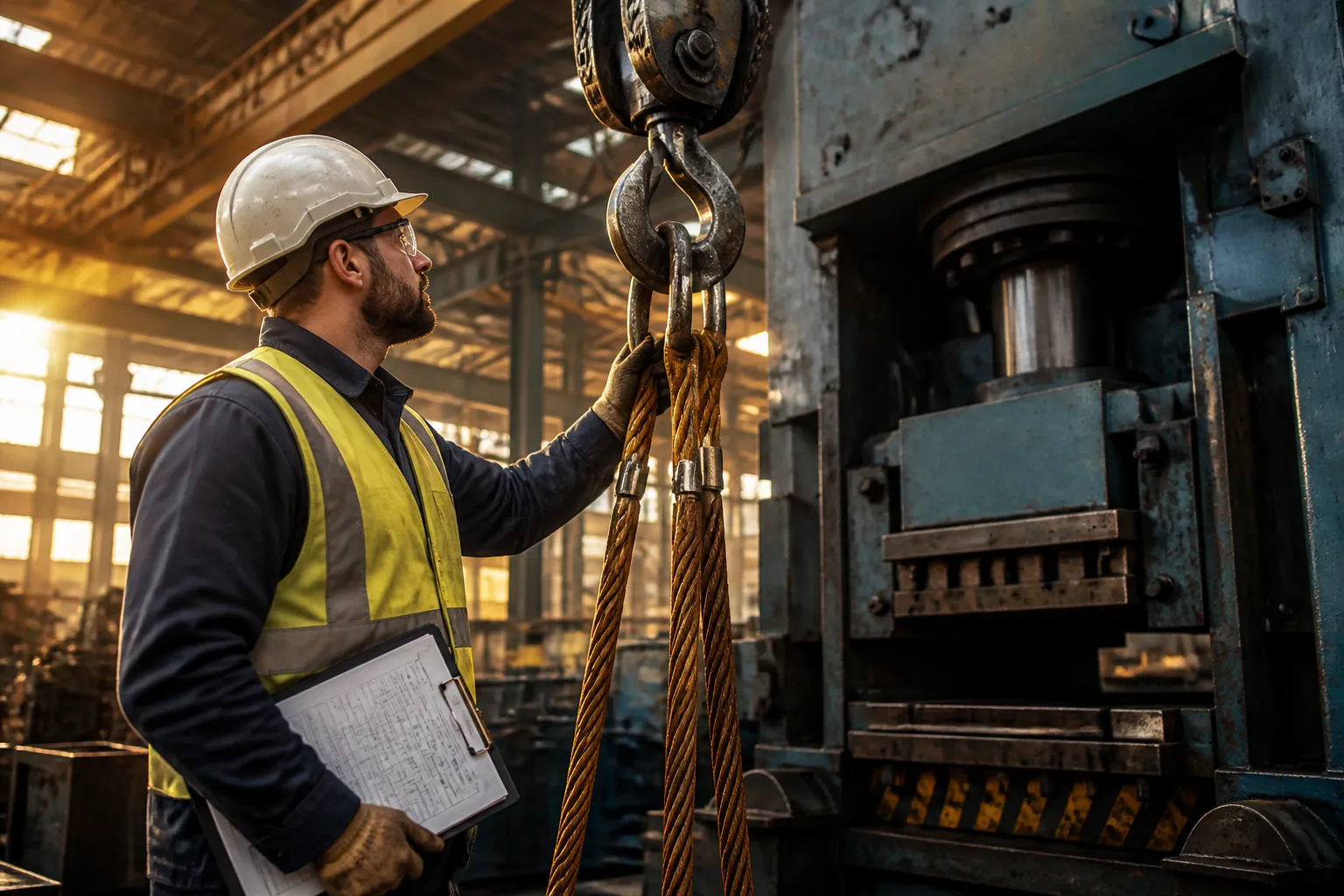
Have you ever tried to get three quotes for moving a press or a compressor and found that no two bids describe the same job? That is common, and it usually means the request was vague. This guide walks through what millwrights and rigging crews actually do, how qualification works under OSHA, and what to ask before you sign. It is general information only, not legal, financial or safety advice, so a licensed professional should review anything specific to your site.
Understand what you are hiring for
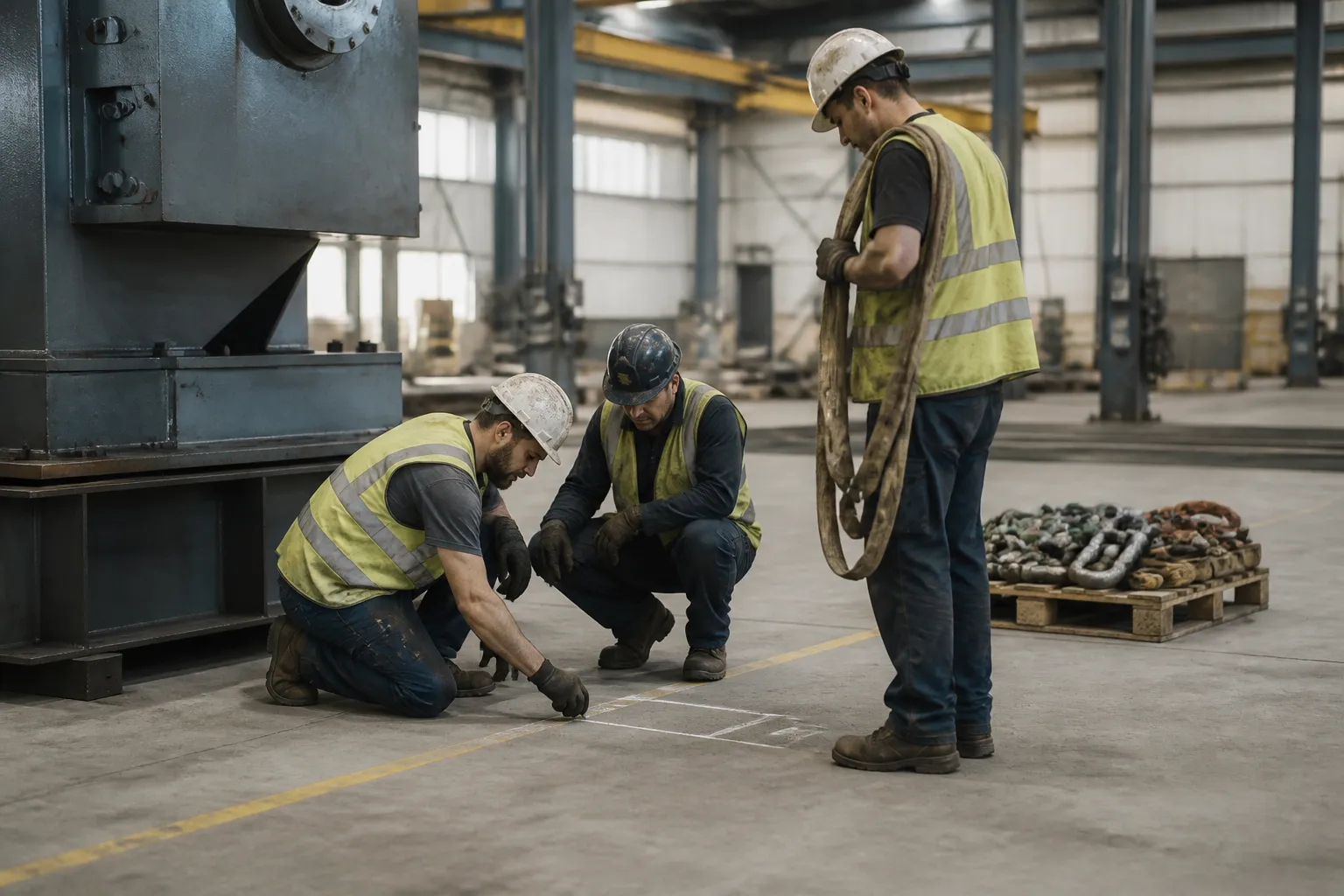
Millwrights install, align and maintain industrial machinery. Rigging companies choose and attach the hardware that lets a crane or hoist lift and move a load. Many jobs need both, and a single project may bring a crane crew, a rigging crew and a millwright team in sequence. Knowing which skills your job needs is the first step toward a useful request for quotes.
The Steel Erectors and Rigging Association (SC&RA) describes its membership as spanning machinery moving and erecting, millwrighting, and crane and rigging operations. You can read about the group at its home page. Trade associations help you learn the vocabulary. A membership listing alone does not prove a company is qualified or insured for your job.
Before you call anyone, write down these basics:
- The weight and dimensions of the equipment, and its center of gravity if known.
- Where it sits now and where it needs to go, including doors, floors and overhead obstacles.
- Whether it must be disconnected, leveled, aligned or restarted afterward.
- Whether the site is a construction site, an industrial plant or a shipyard.
Learn how rigging qualification works
Rigging certification verifies that a worker can safely select, inspect and attach rigging hardware to lift and move loads. It is different from crane operator certification, which covers running the machine. When you ask about credentials, be clear about which role each person fills.
The best-known rigging credential in the United States comes from NCCCO, which offers Rigger Level I for basic duties and Rigger Level II for complex, multi-point lifts. OSHA does not name any specific certification, though. Under 29 CFR 1926.1425, construction employers must use a qualified rigger where workers could be exposed to a falling load. The employer decides whether a worker is qualified under 29 CFR 1926.1401. A third-party card can support that claim, but the employer's documented judgment and training records are what the rule relies on.
Signal persons work the same way. The employer evaluates and documents them, and that paperwork generally does not transfer to a new employer. If a crew has worked together, ask how they were evaluated and whether the records are current.
Match the credential to the lift
A simple lift with one attachment point calls for different skills than a multi-point lift of an irregular machine. Level I generally suits basic duties, and Level II generally suits complex, multi-point lifts. Asking for the right level beats asking for a generic certificate.
The setting matters too. Plants, construction sites and shipyards may each have their own expectations, and some sources report that these settings increasingly treat certification as a baseline hiring requirement. Confirm your site's rules before you accept a bid. Also note that OSHA requires a qualified rigger for assembly, disassembly and any time a worker is in the fall zone hooking or unhooking a load. Ask the company to confirm in writing that these roles will be covered.
Ask for documentation, not just promises
Rigging equipment should be inspected before each shift and as needed during use. Ask whether the company keeps written inspection logs and will show them to you while you are still bidding. A company should also explain how it decided each worker is qualified and produce the training or experience records behind that decision. OSHA's standard is performance-based, so a good answer describes a process, not just a card number.
Slings fall under ASME B30.9, which covers fabrication, attachment, use, inspection, testing and maintenance. You can ask whether the company follows it. The ASME B30.9 page lists the 2025 print edition at $115.
Questions to ask before you sign
Work through them in this order:
- Will a qualified rigger be present for assembly, disassembly and any fall-zone hooking or unhooking? Ask for names or roles.
- Which certification tier does each worker hold, and does my job need that tier?
- Can you show documented inspections of your rigging gear?
- Can you show training records for the people who will be on site?
- How will you plan the lift, and will you put rated capacities, load calculations and setup limits in writing before work starts?
A careful company will not mind any of these. Slow or fuzzy answers tell you something.
Watch for red flags
The most serious one is treating a sling card or general certificate as proof that anyone can rig a load. OSHA requires a demonstrated qualification built on training or experience and the employer's documentation.
Another is equipment used beyond its rated capacity, or rigging set up outside its limits. One source attributes roughly 90 percent of crane accidents to human error, and 80 percent of those to exceeding crane or rigging capabilities. A vendor who urges you to skip the load calculation or rush the setup deserves extra scrutiny. The same source notes that OSHA penalties in 2026 can reach $161,323 per willful or repeated violation. Treat that as a reminder of enforcement risk, not a way to pick a company. You can read that summary of the rules, then confirm details with OSHA directly.
What costs to expect and where the information stops
Individual rigging certification exams generally run $100 to $300 per module, with training billed separately. Those figures are for workers earning credentials, not for hiring a company. They also vary by provider and state.
The research behind this guide does not give state-by-state prices for hiring a millwright or rigging crew. It also does not cover how to compare quotes, insurance, licensing or bonding, how contracts and liability work, or oversize-load transport permits. For those, ask each company for insurance certificates and licensing details, and consider a local attorney or your state licensing board for contract terms. Several sources here are training or vendor pages and were not independently verified, so confirm standards with OSHA, ASME and SC&RA.
Sources
- SC&RA Home
- Crane & Rigging Workshop
- What Is Rigging Certification and Do You Need It for Level I or Level II?
- An Insight into NCCCO Rigger Level I and II
- Top OSHA & ASME Rigging Requirements Every Crew Should Know (and How CERTEX Helps You Stay Compliant) - CERTEX USA %page%
- OSHA Rigging Standards: Qualified Rigger Rules (2026)
- https://vertexaisearch.cloud.google.com/grounding-api-redirect/AUZIYQHsNXrEluH3p7iw9BTesnKfcUFvg2vFB0-HYOrUCTyO5MrEwqvpax-XPtm3cmtiRpmaPIFXa-Il9s7YYvo_uCLvw97s0hY1kRqm_mgmJj9Ofx5GyzBOUabhmRNCEegTth-9aN9tU9ZSfkqBD5vE6R8QQraohdShwq48IMFvVLOXVvk=
- Slings - ASME
Still have a question?
Related guides
-

Fixed or Variable: How to Choose a Business Electricity Contract Without Getting Caught Out
A practical checklist for comparing quotes, avoiding the costly rollover to a deemed rate, and asking the right questions before you sign. By Renata Okafor
-

What Happens to Your Business Energy Bill When the Contract Ends
Letting a fixed-term energy contract lapse can quietly move your account to a much higher default rate, so knowing your end date, opt-out deadline and state rules matters. By Neil Ostrander
-

How to Read a Commercial Electric Bill, Section by Section
Supply, delivery and demand charges each answer a different question, and knowing which is which helps you spot errors and compare providers on total cost.By Gideon Aldaine