Micro Markets Versus Vending: The Questions to Ask Before You Choose a Workplace Provider
A practical checklist for comparing food standards, payment and food safety practices, and contract terms before you sign with a vendor.
 By Gideon Aldaine ·
Are you trying to decide between a row of vending machines and a full micro market for your office, and not sure what to ask first? Start with a plain list of what your site needs, then hold every bidder to the same questions. This guide walks through the model differences, food standards, safety and payments, and the money and contract questions the public sources do not answer. It is general information only, not personal legal, medical or financial advice, so run your final decisions past a licensed professional.
What a workplace micro market is and how it differs from vending
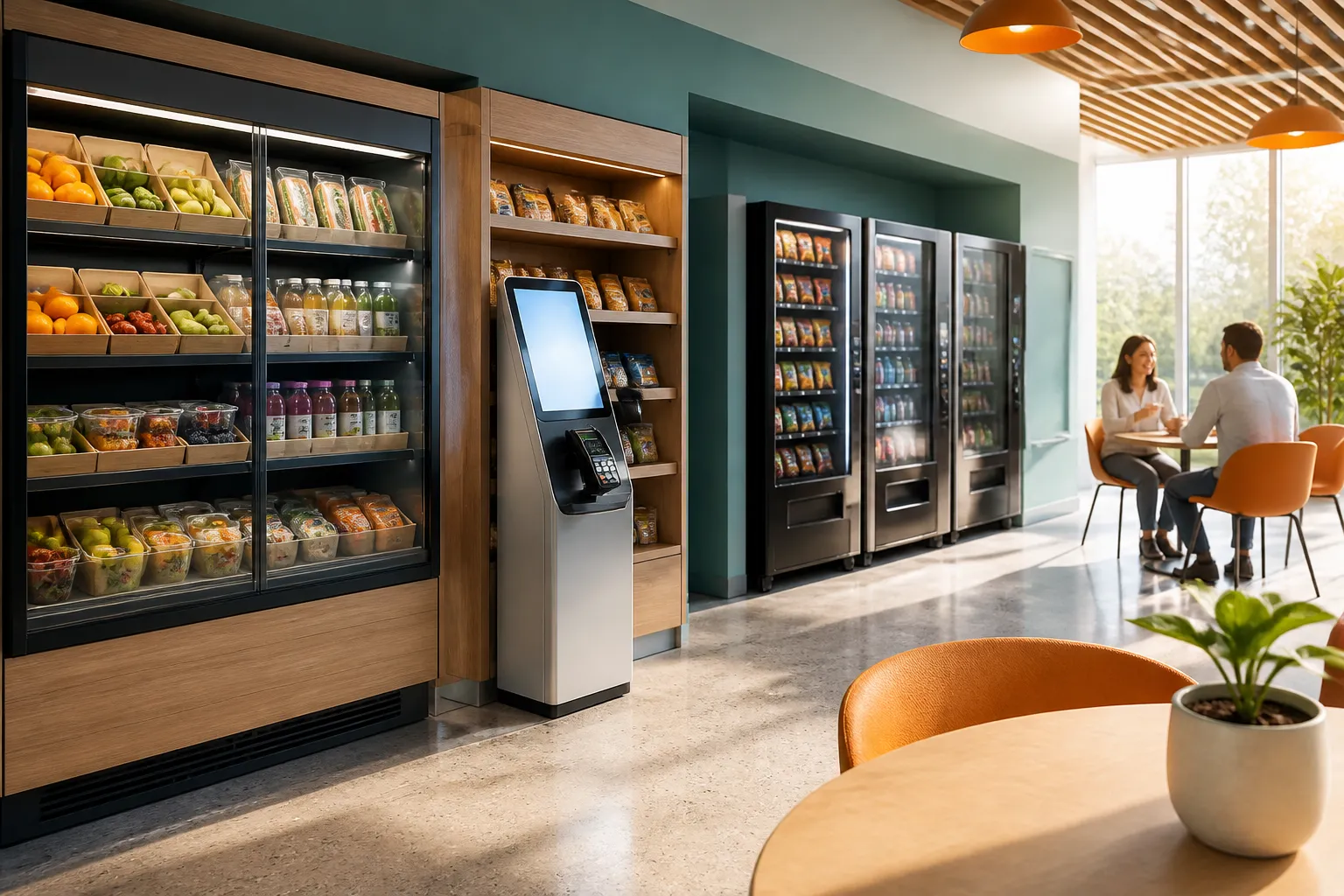
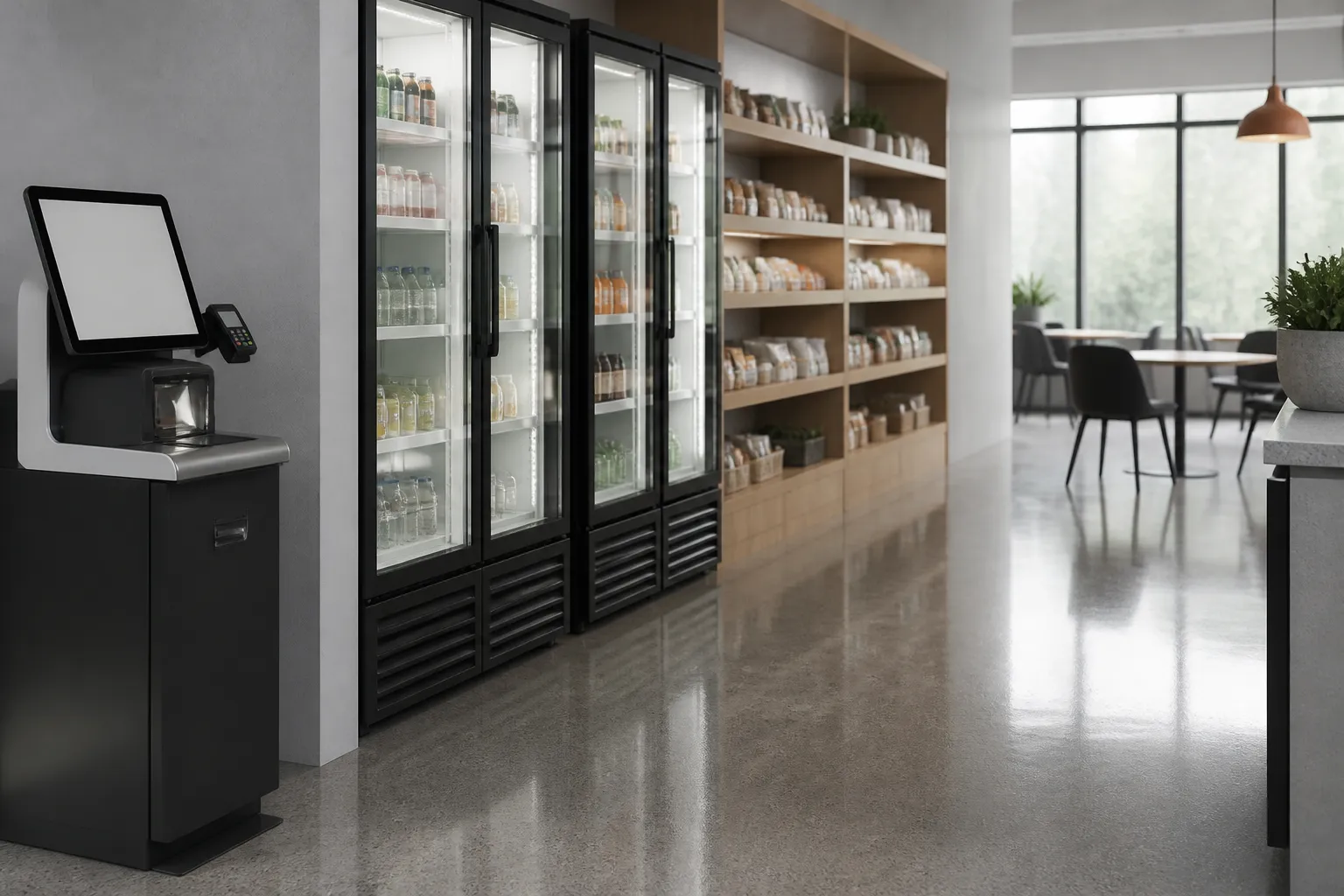
A micro market is an unattended retail setup. Employees pick products off shelves and out of open coolers, scan them at a self-checkout kiosk, and pay with a cashless method such as a credit card, a company card, or a thumbprint system, according to NAMA's micro market overview. A traditional vending machine dispenses one item at a time from a locked unit. So the two differ in layout, product range, and the way people pay.
The trade group NAMA files vending, coffee service, and micro markets under the label convenience services, and says the US industry is worth more than $41 billion (NAMA). That tells you the field is large and established. It tells you nothing about how one provider will perform in your building, so treat it as background only.
Before you request proposals, write down the basics:
- Headcount and how many people are on site at once
- Hours employees can get in, including nights and weekends
- Floor space and power available
- Whether you also want coffee service
A small office may only need snacks and drinks. A larger campus may want fresh items and a fuller kiosk. Having these facts on one page makes bids far easier to compare.
Food standards and better-for-you products
Ask each provider how its product mix lines up with a recognized standard. NAMA's Public Health Commitment aims to raise better-for-you items to 33 percent of products in the nation's vending machines over three years, which NAMA calls a nearly 40 percent increase. In that commitment, better-for-you means a product meets at least two recognized public health standards. That gives you a ready question: which standards do you use, and how many of your items meet them?
If your organization already has food service guidelines, check the fit. The CDC describes food service guidelines as standards for healthier food, beverages, and food service operations in worksite and community settings. The Food Service Guidelines for Federal Facilities is a comprehensive model covering food and nutrition, facility efficiency, environmental support, community development, food safety, and behavioral design. Private workplaces can use it too. Others align with the current Dietary Guidelines for Americans.
Then ask for specifics:
- The full product list, not a sales summary
- How many items qualify as better-for-you, and in which categories
- How the provider verifies those claims
- How often the list is updated, and whether the mix can change during the term
Food safety, payments, and the questions to put to each bidder
Unattended retail has its own safety concerns. The FDA material linked from NAMA points to guidance for unattended food establishments, a supplement to the 2017 Food Code that addresses unattended retail. Ask whether each provider's plan follows it, how coolers are kept at safe temperatures, and how product dating and recalls are documented. Permit and inspection rules vary by state and locality, and the sources do not spell them out, so confirm with your local health authority before anyone starts work.
Payments deserve their own look. Because micro markets are generally cashless, find out whether the kiosk takes only cards or other methods too, how transactions are processed, and what happens when a payment fails or the kiosk goes offline. A colleague without a card in their pocket is a real case, so ask about it.
Put the same core questions to every bidder, and ask for the answers in writing:
- Does your micro market or vending plan follow the FDA-referenced unattended retail guidance?
- Which products meet recognized public health standards, and how is that verified?
- How are payments processed, and is the kiosk cashless only?
Costs, contract terms, and what the sources do not cover
Costs for installing, stocking, or servicing a micro market or vending plan vary by state and by site. The sources used for this guide give no US price ranges, and I would rather say so than hand you an unverified number. Instead, ask every bidder for a written proposal that itemizes installation, equipment, stocking, service visits, and any fees. Ask whether pricing shifts with volume, product mix, or contract length.
Contract terms need a slow read. Look for these items:
- Commission or revenue-share splits, if any
- Whether the agreement is exclusive
- How and when either side can cancel
- What happens to the equipment at the end of the term
- The provider's liability insurance, shown on a certificate
None of these are covered in the available sources, and no specific red flags are either. A lawyer or your procurement team should review the paperwork. A sensible warning sign is a provider that will not put answers or pricing in writing.
Finally, ask about technology and data. What does the kiosk collect, how long is it kept, who can see it, and how is it protected? Vendor management guides from IFMA and FacilitiesNet cover choosing and managing facility vendors. I only had titles and summaries, so read the full versions before you build your scoring sheet.
Sources
- Micro Markets - NAMA
- Public Health Commitment - NAMA
- WELCOME TO NAMA - NAMA
- https://vertexaisearch.cloud.google.com/grounding-api-redirect/AUZIYQHR4W81QLnQTyiadY4_ISwf-1H7g69P2PNTAwD7wEpsLqb7oFLsKUaNKtKth9Ke_iAMUoHitM8ne1_uLSXVMSv5UaK_Y6qe_wCSloWul_ep0J8gaIxpdozYya918uJQijV-K4HhuKhm9PTIhF73mNdgDmk8AY6xUGmn3MyBTlnOjiCrvdtG0TJ2oz9U2WRrt3C6mYcHyAl2fOhg2NhJ_cBd-XMkt5Q=
- Restored CDC | Food Service Guidelines | Nutrition | CDC
- The facility manager's guide to smarter vendor management - IFMA Knowledge Library
- How to Select the Right Vendor for Your Facility - Facilities Management Insights
- FacilitiesNet - Facilities Management Education, Technologies, News, Jobs, Career Advancement and Resources for Facilities Professionals
Still have a question?
Related guides
-

Fixed or Variable: How to Choose a Business Electricity Contract Without Getting Caught Out
A practical checklist for comparing quotes, avoiding the costly rollover to a deemed rate, and asking the right questions before you sign. By Renata Okafor
-

What Happens to Your Business Energy Bill When the Contract Ends
Letting a fixed-term energy contract lapse can quietly move your account to a much higher default rate, so knowing your end date, opt-out deadline and state rules matters. By Neil Ostrander
-

How to Read a Commercial Electric Bill, Section by Section
Supply, delivery and demand charges each answer a different question, and knowing which is which helps you spot errors and compare providers on total cost.By Gideon Aldaine