What a Commercial Backup Generator Really Costs, and What Shapes the Price
Installed prices can run from tens of thousands of dollars to well over one hundred thousand, and the size of the unit, the complexity of the building, and the items left off the first quote decide where yours lands.
 By Renata Okafor ·
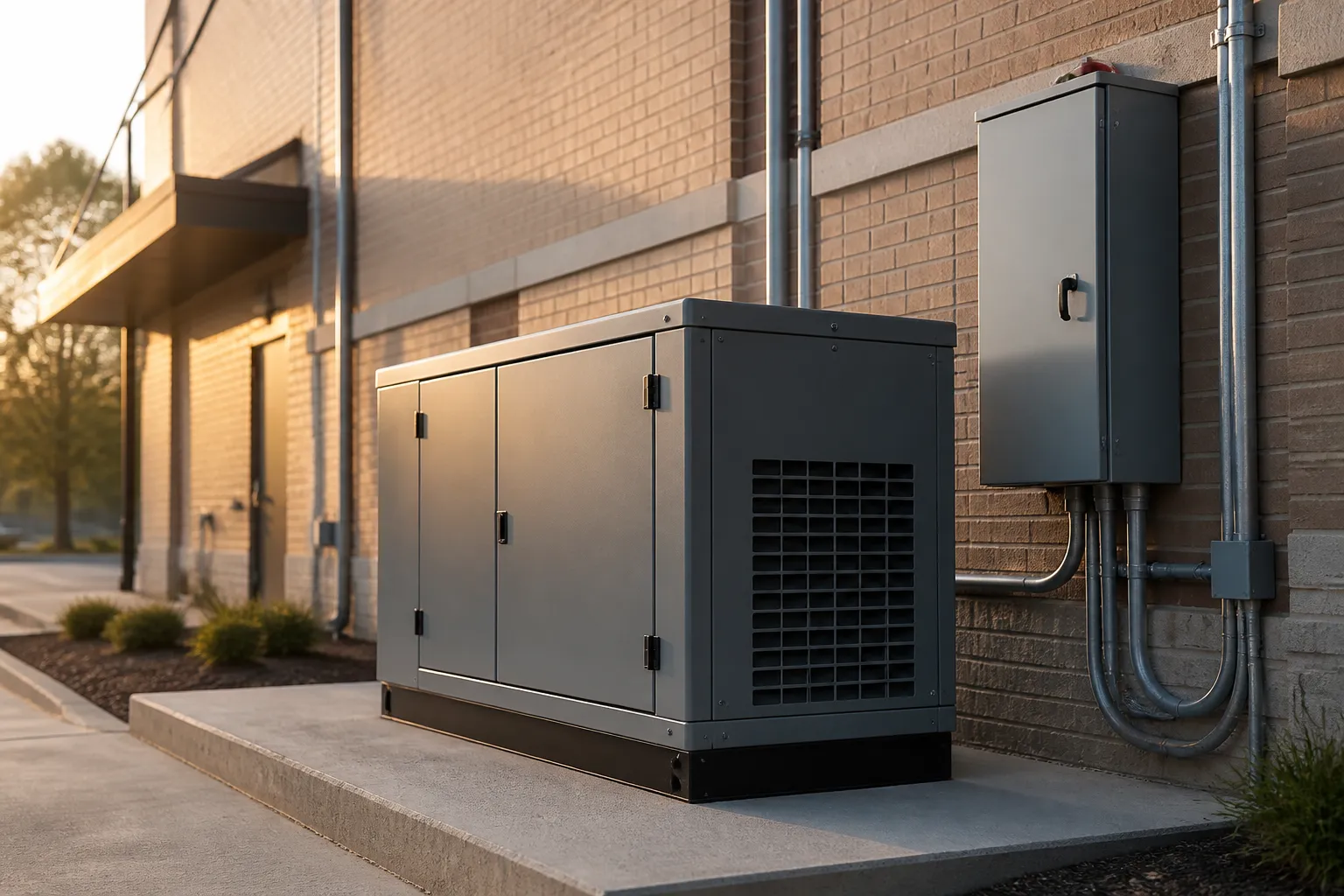
What does it actually cost to put a backup generator in a school, office, or retail building? The honest answer is a wide range, and the first quote you see is rarely the final number. A commercial standby system often runs from tens of thousands of dollars to well over one hundred thousand installed. Size, fuel, and how tangled the building's electrical system is decide where you land. This guide is general information only, not personal financial, legal, or engineering advice, so check your own project with a licensed electrician or engineer.
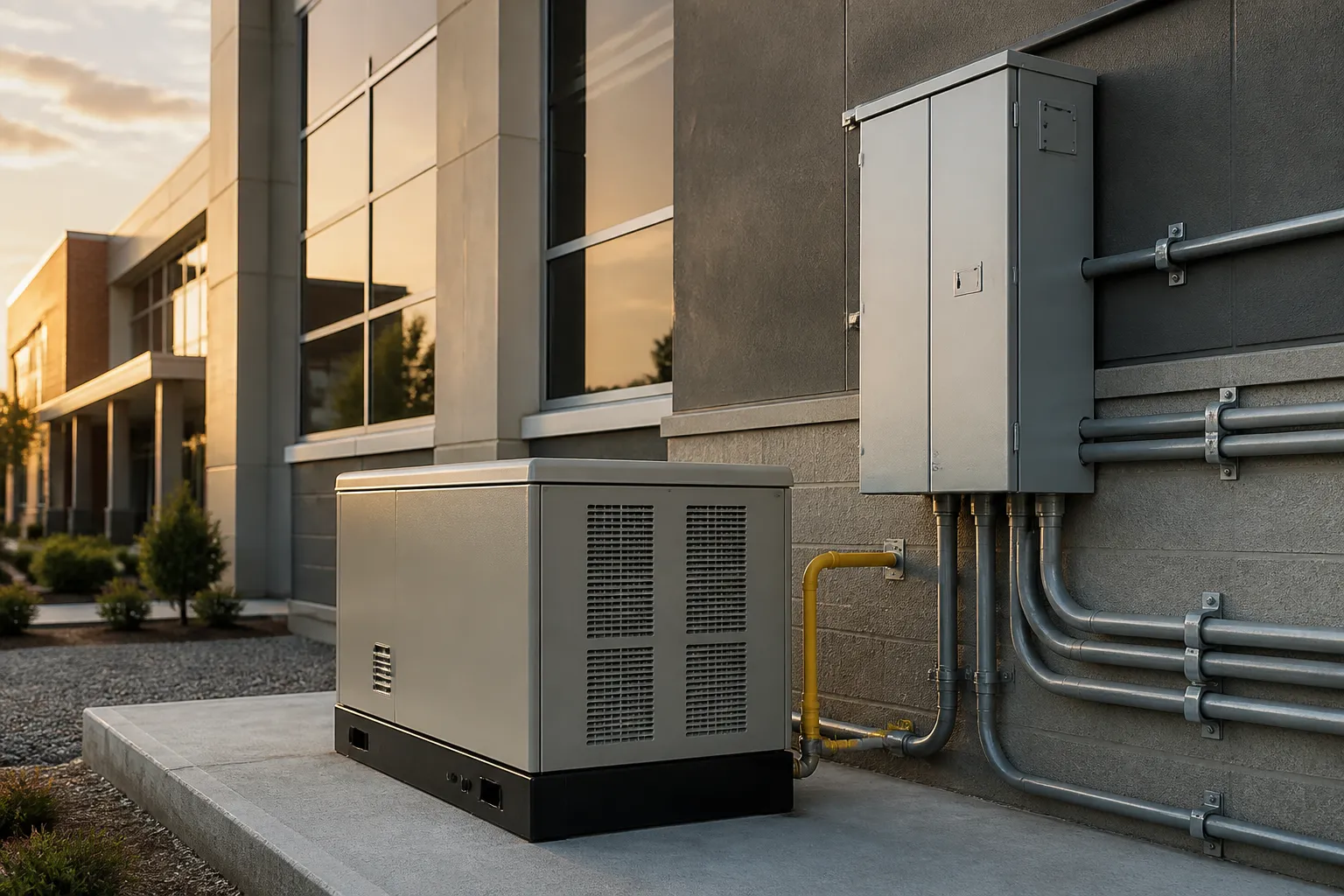
What a commercial backup generator typically costs
There is no government-published price for a typical small commercial standby unit. The U.S. Energy Information Administration tracks construction costs for utility-scale power plants, which is a different category from a unit serving one building. Its 2024 data shows a capacity-weighted average of about $1,004 per kilowatt for new natural gas plants and about $1,066 per kilowatt for petroleum liquids. Those figures include capital and financing costs and leave out grants and incentives. They do not convert neatly into a price for your building. You can read the data at the EIA generator cost page.
The most concrete installed figure in the research comes from a vendor guide for schools. It puts a 200 kW standby system, with generator, automatic transfer switch, and installation, at roughly $75,000 to $125,000. That is a sales-oriented estimate, so treat it as one data point. Prices vary by state, local labor rates, permit rules, and site conditions. A written local quote is the only reliable way to know your number.
Costs also move over time. EIA reported about $965 per kilowatt for natural gas plants in 2013, per its construction cost summary. If an article or quote is old, check its date before you rely on it.
Why sizing and building complexity drive the price
Generator size is the biggest cost lever. One vendor guide says most K-12 schools need units between 100 kW and 500 kW, depending on building size and heating and cooling load. A bigger unit costs more to buy. It also needs larger transfer switches, heavier wiring, and often more fuel storage.
Commercial buildings are also harder to wire than homes. Consider what an installer may face:
- Several utility entry points
- Multiple panel boards
- More than one voltage level
- Three-phase distribution
Each item adds engineering and labor. Some loads must return almost immediately after an outage, while others can wait. Bringing them back in sequence can prevent the current surge that trips breakers, but it takes careful design.
Sizing should start with a formal load analysis, not the total connected load. Adding up every device usually overstates what you need and leads to an oversized, pricier unit. A good analysis separates what must stay on, such as lighting, life-safety systems, refrigeration, and critical technology, from what can be shed or delayed.
Fuel type, code requirements, and ongoing costs
Diesel and natural gas are the two main choices. Diesel is common in schools for reliability and fast startup. Natural gas burns cleaner and can run longer on a pipeline, but it depends on gas service holding up in a regional emergency. Compare runtime needs, emissions rules, and local fuel availability before you pick.
Codes add cost too. A vendor guide cites NFPA 110 for emergency and standby power, including Level 1 systems for schools with assembly occupancies over 1,000 people. Meeting it may mean more equipment and more testing. Ask which standards apply to your building and whether the quote covers them.
The purchase price is only part of the bill. EIA notes that fuel can be a substantial share of total costs for fuel-burning generation. The sources do not give reliable numbers for maintenance, testing, or service contracts. Ask each provider for annual estimates and compare them next to the installed price.
Grants, financing, and costs that are often left out
Some projects may get public help. A vendor guide says FEMA and state hazard mitigation grants can cover up to 75% of generator costs for qualifying schools. Eligibility and funding vary, so start with FEMA's generator application overview and your state emergency management agency before counting on a dollar.
Quotes also tend to skip items that can sting later. Ask whether each one includes:
- Permit fees
- Inspection costs
- Utility coordination and interconnection work
The sources do not quantify these, and they do not explain loans or leases. If you finance, ask for the total cost over the term, including interest, fees, and maintenance duties, and compare it with buying outright.
Questions to ask before you accept a quote
Work through these in order, and get the answers in writing:
- What load analysis sized the unit, and which circuits must return immediately?
- Does the price include the generator, automatic transfer switch, and installation?
- Does the design meet the NFPA 110 requirements that apply to this building?
- Could any grant or hazard mitigation program help fund it?
- What are the permit, inspection, and utility costs, and the expected yearly fuel, maintenance, and testing costs?
Watch for red flags. A provider who sizes from total connected load with no analysis may be handing you an oversized unit. Vendor website prices are written to sell equipment and may not match installed costs in your state. Gather at least three written quotes built on the same load analysis, so the numbers compare fairly, and consider having a licensed professional review them.
Sources
- Electricity - Construction cost data for electric generators - U.S. Energy Information Administration (EIA)
- EIA publishes construction cost information for electric power generators - U.S. Energy Information Administration (EIA)
- https://vertexaisearch.cloud.google.com/grounding-api-redirect/AUZIYQFXj494AZn4cViVU9nqXhNl9dt-91svi4k_nJnbj89nfjo_YacQQUW4gwCqygJap2l9Tud7TH_L-CKGOl96DCAoBQr04pQ5PK7qsV6IB3io-Y_WzmV6j7uflkPtLRId8oxVCaRLPlsxJYqlgRsTJ8ykmOyhtaLiqVrmCjmNhA==
- https://vertexaisearch.cloud.google.com/grounding-api-redirect/AUZIYQFg_EFTHAXD567m02nInZuq_8uCVlAkgzz_fjRcX4ENnA99m1Dq9nevQ-bbJZIlR1c-Z-gC0U-rKZxp7dcWidBGRlbGadV2qeIv9SQMsLL9sKRK-pBGylG4CTBKr6mRIXqXIKNRw8-Ca37Y1nCXmImstcGxUOUmAhxc-v2JvFSj_p2HFaQtDosVOPGIZEQoxi3U9pFW4Og=
- Generators for Schools: A Complete Guide to Backup Power for Educational Facilities - ShanHua
- Commercial Generator Installation Guide for Large Facilities
- Commercial Generator Pricing Guide
- Home
Still have a question?
Related guides
-

Fixed or Variable: How to Choose a Business Electricity Contract Without Getting Caught Out
A practical checklist for comparing quotes, avoiding the costly rollover to a deemed rate, and asking the right questions before you sign.By Renata Okafor
-

What Happens to Your Business Energy Bill When the Contract Ends
Letting a fixed-term energy contract lapse can quietly move your account to a much higher default rate, so knowing your end date, opt-out deadline and state rules matters. By Neil Ostrander
-

How to Read a Commercial Electric Bill, Section by Section
Supply, delivery and demand charges each answer a different question, and knowing which is which helps you spot errors and compare providers on total cost. By Gideon Aldaine