What a Commercial EV Charging Station Really Costs to Build
No public source gives a clean price, so this guide shows how to build an honest budget from equipment, utility work, permits, and timing.
 By Renata Okafor ·
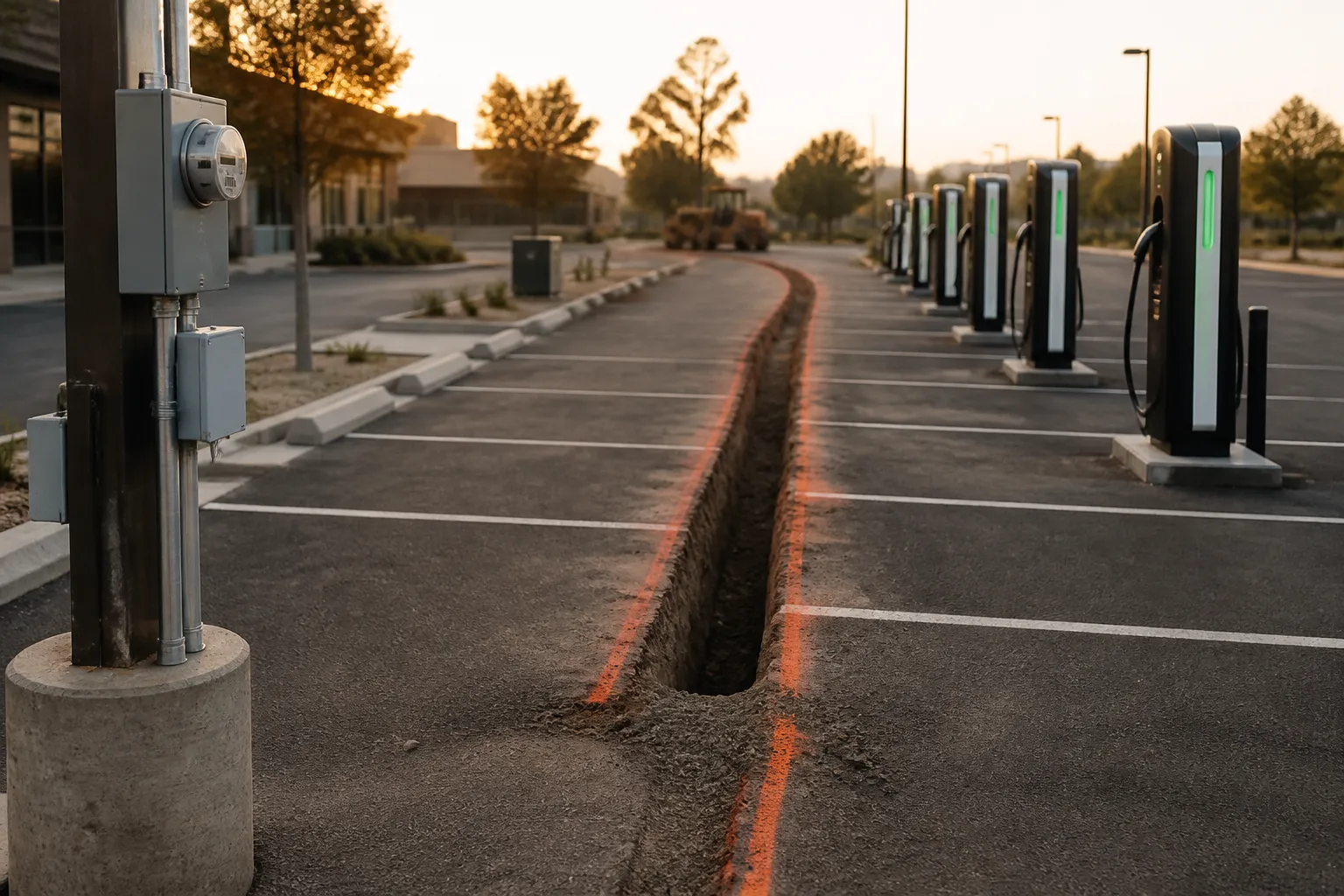
How much does it cost to put a commercial EV charging station on your property? The honest answer is that the public sources behind this guide do not give a dollar figure, and any number that arrives without an itemized bid for your site should be treated as a rough guess. Costs vary by state, by utility, and by the specifics of your lot. What follows is a practical way to build a budget, step by step, and a list of questions to ask before you sign anything.
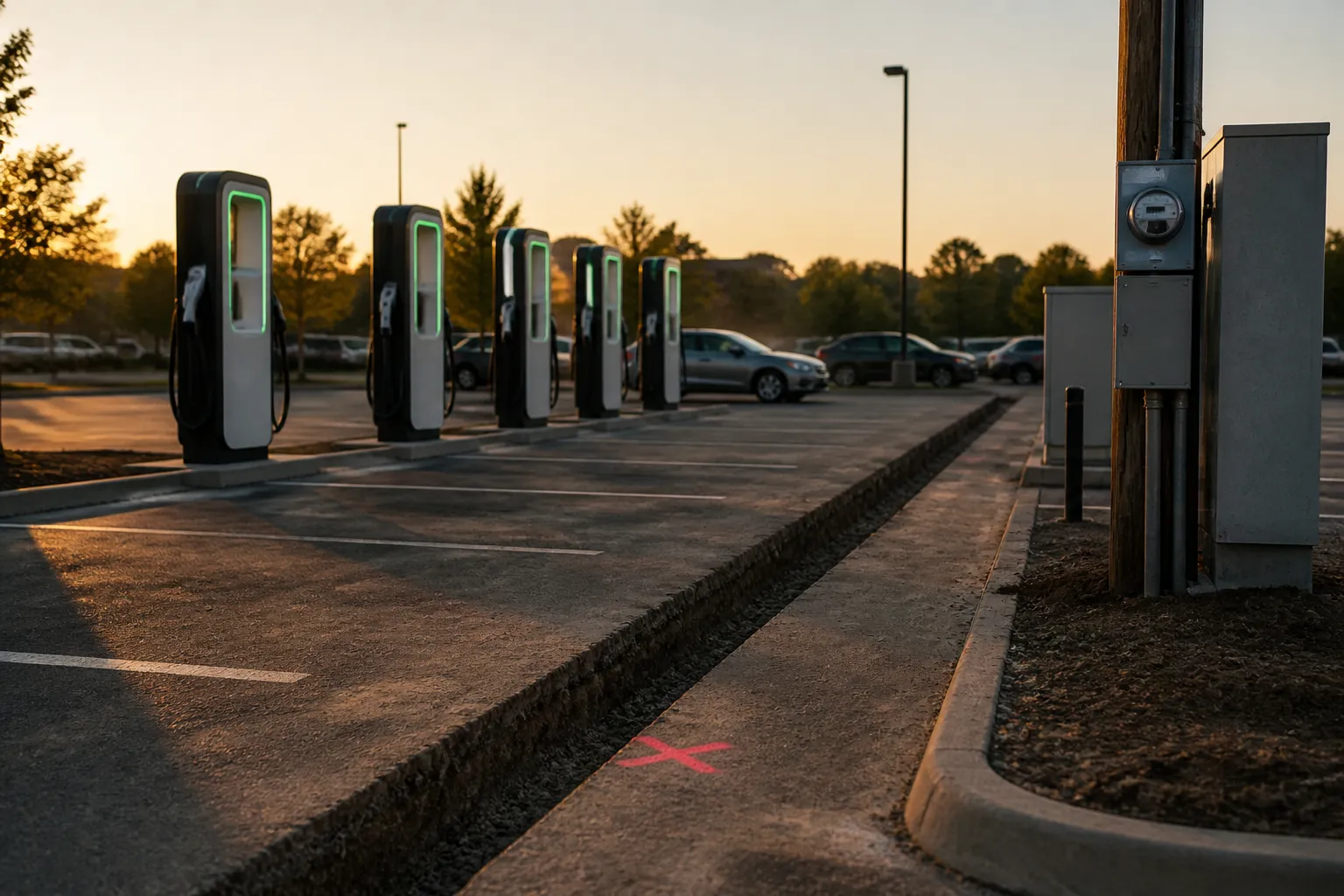
Why there is no simple price tag
The federal sources we reviewed describe how a project is planned and procured, but they do not publish per-charger or total project ranges. So we will not invent one. Instead, think of the budget in two parts: the equipment, and everything around the equipment. The chargers are one line item. Electrical service upgrades, utility connection work, permits, inspections and networking are often where the total moves most.
Rules also differ from place to place. There are no national standards for EV charging permitting, and zoning, building, electrical, safety and fire requirements are set locally. A project in one city can face different permits and timelines than a near-identical one a few miles away. This guide is general information, not personal financial or legal advice, so a licensed professional should review your numbers.
The cost drivers to plan for
Which factors push a quote up or down? Start with this checklist:
- Charger count and type. Workplaces and multifamily housing typically consider Level 1 and Level 2 units. Public hosts usually consider Level 2 and DC fast charging.
- Power demand. DC fast chargers draw far more power, which can mean a larger electrical service and a more involved utility connection.
- Utility upgrades. Federal guidance points to service upgrades, equipment such as transformers, and trenching. None of these are priced in the sources.
- Site choice. Distance to incoming electricity and metering, internet connectivity, weather exposure and room to expand all matter.
One practical habit: plan for your near-term and long-term charger counts together. If you will likely add units later, laying out the trenching and service capacity once can beat paying for the work twice.
Ongoing costs sit outside the installation price but deserve a line in your plan. Maintenance, network and software fees, electricity charges and demand charges are not covered by the sources, yet they can matter over the life of the equipment.
Timing, permits, and the utility connection
Is waiting a cost? Often, yes. Federal guidance notes that up to two years can pass before high-powered chargers connect to the grid, and the Joint Office says faster, more predictable timelines lead to lower costs. A delayed opening can mean delayed revenue or a delayed tenant benefit.
For Level 2 or DC fast charging, the developer generally applies to the local utility to connect. Before you sign with an installer, do these in order:
- Contact the utility early and ask what service and equipment upgrades your project needs.
- Ask for its process and expected timeline, in writing if possible.
- Ask your local jurisdiction which permits, codes and inspections apply.
- Confirm permit fees and review times locally, since the sources do not list them.
Incentives and the 30C tax credit
A federal tax credit under Section 30C may cover up to 30% of the cost of buying and installing charging equipment, but only if the site is in an eligible location. The federal source points to the Argonne National Laboratory Eligibility Locator for checking that. State, local and utility programs may also exist, though the sources do not list current ones or their amounts.
Check eligibility before you set a budget. A credit that does not apply to your address can change the whole picture. Tax rules carry conditions, so confirm with a qualified tax professional. You can read the federal procurement guidance at the Alternative Fuels Data Center.
How to choose a contractor and compare bids
Federal guidance recommends a certified electrical contractor, found through your utility or through the planning process. Ask about certifications and about experience with commercial charging projects of your size.
The sources do not explain how to compare bids, so here is a sensible approach. Ask every bidder for an itemized quote with separate lines for:
- Equipment
- Labor
- Utility upgrades
- Permits and inspections
- Networking and software
- Warranty terms
Bids that lump these together are harder to compare fairly, and that is a mild red flag. Also settle who owns the equipment and who handles networking, payment and utilization data. Those choices shape long-term cost and daily operation.
Questions to ask before you commit
Bring this list to every conversation:
- Is the electrical contractor certified, and how does the utility define the required service and equipment upgrades?
- What permits, codes and inspections apply in this jurisdiction?
- What is the expected timeline for utility connection, especially for high-powered chargers?
- Is the site eligible for the 30C credit, and do other incentives apply?
- Will the stations need networking, payment capability or data collection, and who owns the equipment?
- What near-term and long-term charger numbers and pricing has the utility confirmed?
If an answer comes back vague, ask for it in writing. A clear, itemized bid and a utility letter are the two documents that turn a guess into a budget.
Sources
- Public electric vehicle charging infrastructure playbook · Joint Office of Energy and Transportation
- Powering New Electric Vehicle Mobility Choices Through Utility Collaboration · Joint Office of Energy and Transportation
- https://vertexaisearch.cloud.google.com/grounding-api-redirect/AUZIYQEExZWHyGb6jlNsHLcAGoZI4R46ouhofPqW7zcFdmqmbNA5oOU4IHF9zH-vEDR5dMpgT17oWeGJMayrtpeUQSQQrUqWnuFrGS51CIvdFvkMvTZT2ZXmvRjBsQiG651PdeLR1JaPDgKWuLKUxkk=
- https://vertexaisearch.cloud.google.com/grounding-api-redirect/AUZIYQFhaxW5TpjUkIRvdbq9mfqkNM1q2kNtzzZu6LVYYd1hiCHm2IoO0svvwBRvV7y8Xhu571jmHG15C8twX9TJSHIIfb0cS1m9ZJnPWyihuVbRSRRxuFX6Xvw_vD4RrKHt35q6sZTOG7CjoNdAgqPKaTR6aopZeW7dIydwUWV34d_O_DKL4StRBdoMgE072uqS7pjFIbCsGjKTK-HZepMEWfxC5qyIcFxMu809-q_2Izhz
- Alternative Fuels Data Center: Procurement and Installation for Electric Vehicle Charging Infrastructure
- https://vertexaisearch.cloud.google.com/grounding-api-redirect/AUZIYQGfGXn9kmeDfq3mAyQJMetSGFXxdPD6to5RTxfhRPfkc675NsmgTAYvtaJEUtsMSraTDt87nBPCAB9e-dPGVFG9AHDklX2nDGhnkftjVgzQ13ELxGoNn-c5_2i-Wn8iulH05KLNB7OWRphlpImFhVf1rW_LBUG3zXh--RI=
- Reducing EV Charging Infrastructure Costs - RMI
- The Hidden Costs of EV Charging Infrastructure - RMI
Still have a question?
Related guides
-

Fixed or Variable: How to Choose a Business Electricity Contract Without Getting Caught Out
A practical checklist for comparing quotes, avoiding the costly rollover to a deemed rate, and asking the right questions before you sign.By Renata Okafor
-

What Happens to Your Business Energy Bill When the Contract Ends
Letting a fixed-term energy contract lapse can quietly move your account to a much higher default rate, so knowing your end date, opt-out deadline and state rules matters. By Neil Ostrander
-

How to Read a Commercial Electric Bill, Section by Section
Supply, delivery and demand charges each answer a different question, and knowing which is which helps you spot errors and compare providers on total cost. By Gideon Aldaine