What a Commercial Security Camera System Really Costs, and How to Compare Quotes
Camera count matters less than cabling, site conditions, retention and recurring fees, so comparing bids line by line is the only reliable way to judge value.
 By Neil Ostrander ·
What does a commercial security camera system actually cost, and why do two quotes for the same number of cameras land thousands of dollars apart? The short answer is that camera count is the smallest part of the story. Building scope, cabling, video retention and recurring fees do most of the work, so the only fair way to compare bids is line by line. This guide walks through the numbers, the mechanics, and the questions worth asking before you sign. It is general information only, not personal financial or legal advice, so confirm details with licensed local professionals.
What drives the price
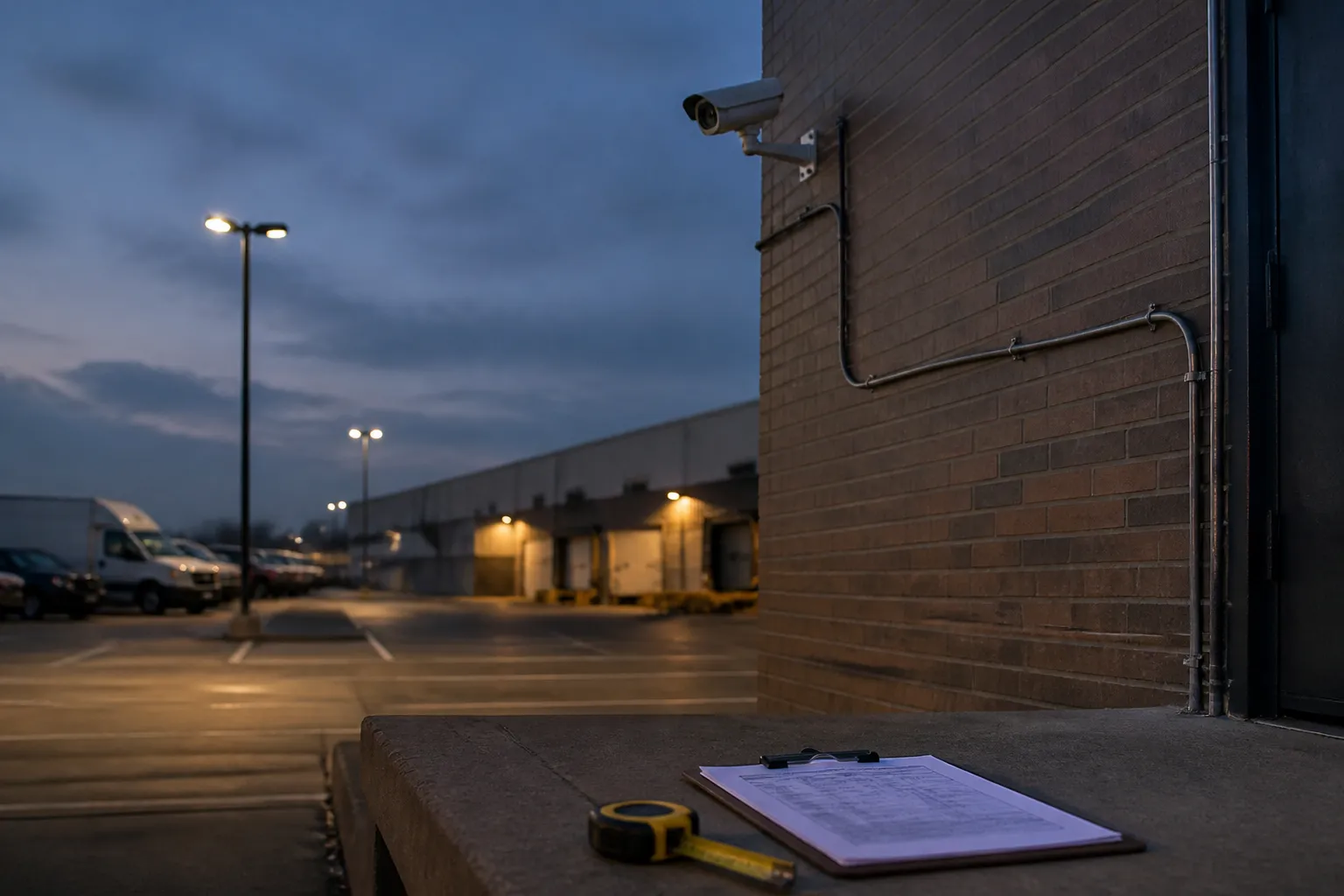
A four-camera job in a finished office with easy cable runs can cost far less than a four-camera job in a warehouse with long runs, high ceilings and an exterior parking lot. Installers often report that cabling and site conditions are the largest labor line, sometimes more than the hardware itself. That surprises many first-time buyers, who expect the cameras to be the main expense.
Several choices push the total up, and each one adds storage, licensing or software:
- Higher resolution, which needs more storage.
- Longer retention, commonly quoted at 30 to 90 days.
- Mobile credentials for door access.
- Audit logging for who viewed or exported footage.
Do not use consumer pricing as a guide. Home cameras often sell for roughly $35 to $399 each, but commercial systems add networked recorders, power-over-Ethernet switches and professional installation. The per-camera figure can be several times higher once everything is counted.
Typical US cost ranges
The figures below come from regional pricing guides, not national averages, so treat them as a starting point. One guide based on Upstate New York gives these bands for professionally installed video surveillance:
- About $2,500 to $6,000 for a 4 to 8 camera system.
- About $6,000 to $15,000 for a mid-size system.
- About $15,000 to $50,000 or more for large or warehouse systems.
A guide covering the DC, Maryland and Virginia area runs higher. It puts a small office with 4 to 8 cameras and one access door at roughly $5,000 to $23,500, and a mid-size site with 16 to 32 cameras and several doors at roughly $20,000 to $115,000. Multi-site enterprise work with 100 or more cameras starts around $150,000.
Many buyers add more than cameras. Card access runs about $1,500 to $3,000 per controlled door installed. A commercial burglar alarm may cost $1,500 to $4,000 to install, plus central-station monitoring of about $30 to $100 or more per month. A combined small to mid-size system with cameras, a few doors and an alarm is commonly quoted at $8,000 to $30,000. Labor rates, permits and market conditions differ by state and city, so expect your local number to move.
Line items to expect in a fair quote
A clear quote separates hardware from labor. One regional guide lists these typical ranges:
- IP cameras: about $350 to $1,800 each.
- Recording equipment: about $800 to $14,500.
- Network switches: about $200 to $4,500.
- Structured cabling: about $120 to $450 per drop.
- Access panels: about $1,800 to $4,500 each.
- Readers and credentials: about $140 to $480 each.
- Install labor: about $95 to $145 per hour.
- Project management: 5 to 12 percent of the total.
Recurring costs deserve equal attention. Alarm monitoring, optional cloud storage and managed service plans can run from tens of dollars to over $1,000 per month on larger setups. On-site recorders are generally a one-time purchase. Cloud video management usually means per-camera licensing that continues every month or year.
Also ask about conditions that add cost: after-hours or weekend work, union sites, multi-tenant buildings that need shared cabling, fire-rated wall penetrations and asbestos abatement. Designing cameras, access control, alarms and network together can also save money compared with buying each piece separately.
How to compare quotes and what to ask
Start by putting every bid on the same scope. Check that each one covers the same cameras and doors, the same resolution, the same retention period and the same storage approach. A lower bid with fewer days of footage or no cabling is not a bargain. Then work through this list:
- Is a site assessment included before pricing? One done afterward can change the scope.
- What is included: hardware, cabling, labor, project management, commissioning?
- Which costs are one-time, and which are monthly or annual?
- What is the monthly fee for monitoring, cloud storage and managed services, and which service tier does it cover?
- How many days of footage are kept, and what does a longer period cost?
- Are after-hours, weekend or multi-tenant conditions priced in?
Red flags
Be wary of a single "system price" with no itemization. Be wary of pricing based only on camera or door count, with no mention of cabling or site conditions. Recurring fees that are not written down are a problem, and so are "starting at" prices that depend on a hidden monitoring contract.
What to verify on your own
The sources here are vendor and regional guides, not government pricing data. Check your state and local licensing rules for security installers, permit fees and insurance requirements independently, and ask a licensed local provider to confirm current costs. Multi-year ownership cost, financing and tax treatment were not covered, so a licensed accountant is the right person for those questions. For a broader view of small business options, see this overview of small business security costs.
Sources
- How Much Do Security Systems for Small Businesses Cost?
- How Much Do Security Cameras Cost in 2026? | Security.org
- Commercial Security Camera Installation Guide & Expert Tips (2026)
- CCTV Installation Cost: Commercial Pricing Guide (2026)
- Commercial Security System Cost: 2026 Pricing Guide | RCR
- Commercial Security System Cost Guide | Wizer
Still have a question?
Related guides
-

Fixed or Variable: How to Choose a Business Electricity Contract Without Getting Caught Out
A practical checklist for comparing quotes, avoiding the costly rollover to a deemed rate, and asking the right questions before you sign. By Renata Okafor
-

What Happens to Your Business Energy Bill When the Contract Ends
Letting a fixed-term energy contract lapse can quietly move your account to a much higher default rate, so knowing your end date, opt-out deadline and state rules matters.By Neil Ostrander
-

How to Read a Commercial Electric Bill, Section by Section
Supply, delivery and demand charges each answer a different question, and knowing which is which helps you spot errors and compare providers on total cost. By Gideon Aldaine