What Commercial Grease Trap Cleaning Really Costs and How to Compare Quotes
Published prices range from about $115 to $1,040 per pumping, and trap size, condition, access and quote scope explain most of the difference.
 By Gideon Aldaine ·
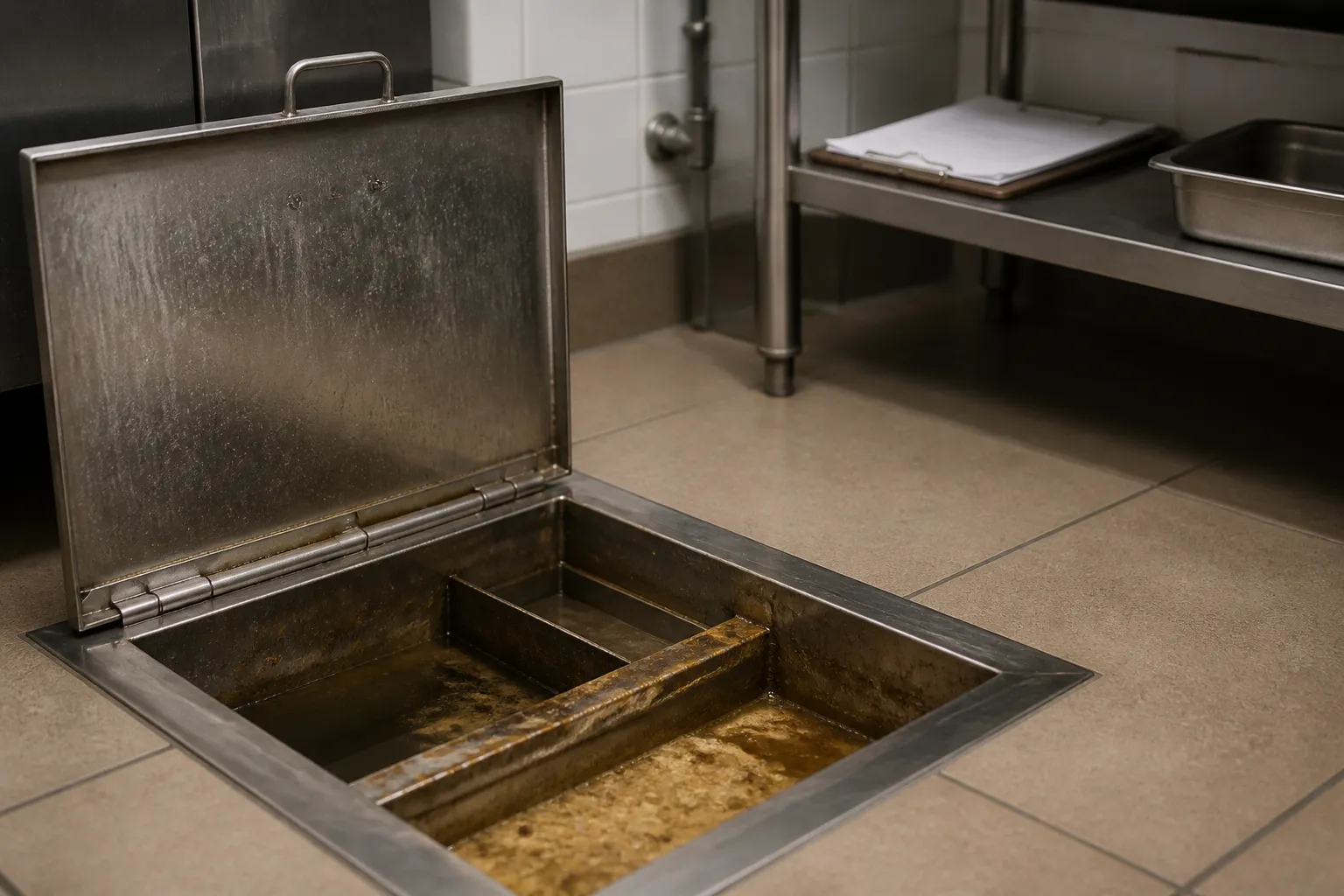
What does it actually cost to have a commercial grease trap cleaned, and why does one restaurant pay $125 while the place down the street pays several times that? The short answer is that published prices run from roughly $115 to $1,040 per pumping, and the gap comes down to trap size, condition, access and what the quote includes. This guide walks through the numbers, the drivers and a checklist you can use before you sign anything.
What a grease trap does and why cleaning is needed
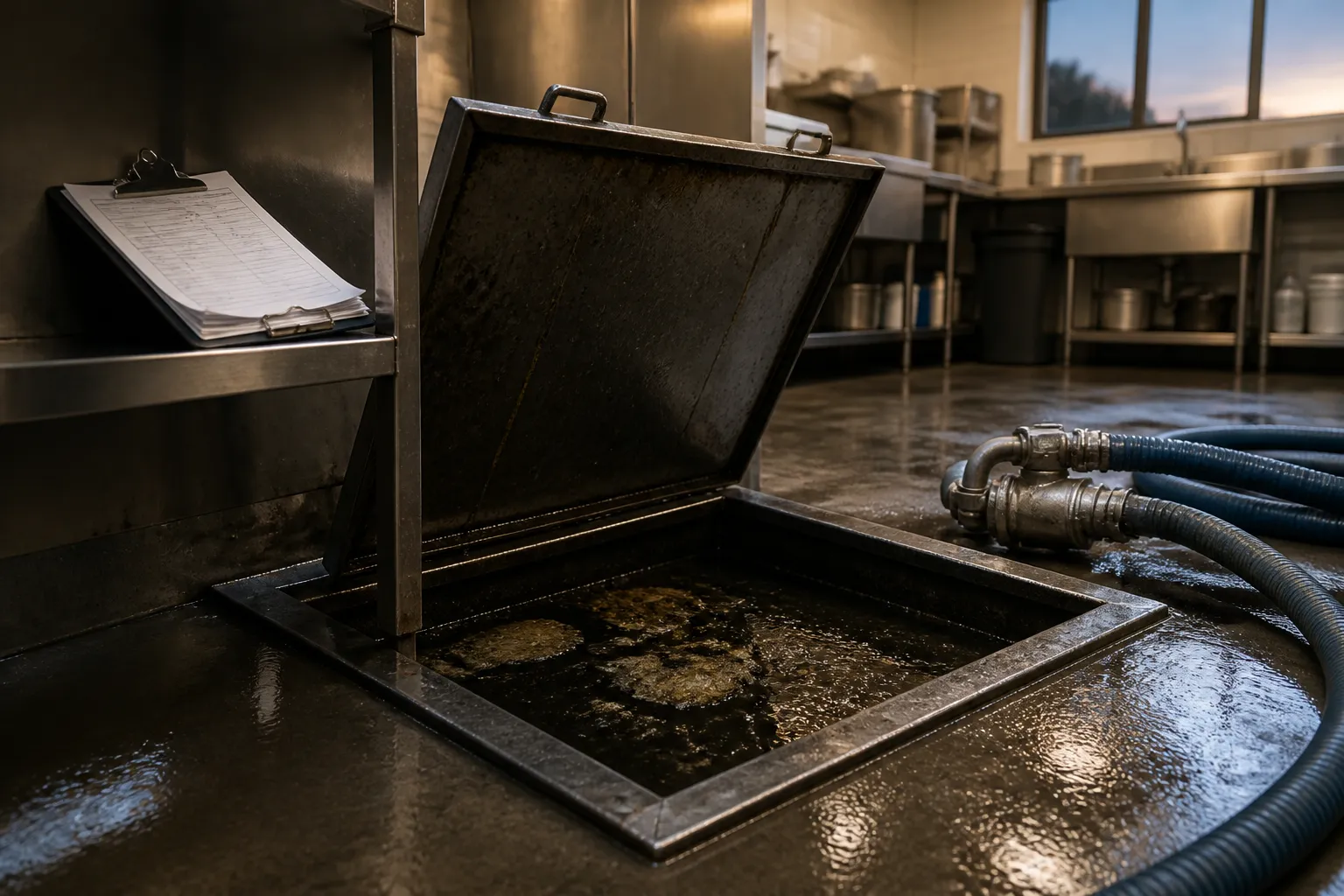
A grease trap, sometimes called a grease interceptor, sits between a commercial kitchen's drains and the sewer. Wastewater flows in, and the fats, oils and grease (FOG) float to the top and harden. Solids sink to the bottom. Water leaves through an outlet. When the grease layer grows past safe limits, the trap has to be pumped and cleaned.
Who decides how often? Usually your city or sewer authority. The EPA does not issue direct grease trap mandates for restaurants. Whether you need a trap, and how it must be serviced, generally comes from municipal code, which sits under federal Clean Water Act rules. One source reports that FOG blockages cause 40 to 50 percent of sanitary sewer overflows nationwide, which is why local authorities pay attention to this.
- Find your local schedule or condition trigger first.
- Note your trap type (indoor or underground) and its size.
- Keep any service reports your local authority may ask for.
Typical cost ranges and why they vary
A widely cited range is about $115 to $1,040 per pumping. The low end is a small 20 to 30 gallon under-sink trap pumped every 14 to 28 days. The high end is a 5,000 gallon trap that has gone unpumped for years. Most kitchens land somewhere between.
For indoor traps of 30 to 200 gallons with easy access, one guide lists about $125 to $180 per pump-out on an ongoing contract and about $190 to $240 for a one-off visit. The first pumping tends to cost the most because of accumulated buildup.
Quotes can also scatter. In a set of published public contract bids, three companies priced the same 1,000 gallon trap at $190, $250 and $550. That is nearly a threefold spread for identical work.
Treat all of this as a starting point. These figures come from a trade directory, a guide focused on North Carolina, a public-contract example and company materials, not government price data. Costs vary by state, by city and between urban and rural areas.
Factors that raise or lower the bill
Step through these in order, and you can usually predict which end of the range you are on.
- Trap size. Bigger traps hold more and take longer.
- How full it is. A trap near capacity costs more than one serviced on schedule.
- Time since last service. Grease that has hardened takes longer to remove.
- Access and equipment. Indoor traps are usually simpler. Large underground interceptors often need vacuum trucks, more labor and a longer visit.
- Transport and disposal. Hauling and waste handling can be billed apart from the pumping itself.
Emergency calls, heavy buildup, difficult access and neglected schedules all push prices up. Regular service keeps each cleaning smaller and less disruptive to your kitchen.
How to compare quotes and what to ask
Can you compare three quotes if each one covers something different? Not fairly. Start by confirming your local service requirement, then give every provider the same scope in writing.
- Property details, equipment, access points and known condition of the trap.
- Timing and arrival window.
- The steps: pumping, scraping, washing, inspection, cleanup and any line work.
- Whether transport, disposal, taxes and other fees are included.
Then ask these questions:
- Does the base price exclude repairs, parts, jetting or follow-up work?
- Which charges are itemized?
- Is this a one-off visit or an ongoing contract?
- How will hardened grease affect the price?
- Do you keep the disposal records and service reports my local authority may request?
Check licensing, insurance, permits and references directly with the relevant authorities and the provider. A directory listing does not guarantee any of them. This is general information, not legal or financial advice, so consider asking a licensed professional or your local sewer authority about your specific obligations.
Red flags and remaining gaps
Watch for a quote that leaves out disposal, transport or cleanup, since those can lift the final bill. Be wary of a base price that excludes repairs or follow-up work. And walk away from any provider who cannot show credentials, insurance, permits or references.
The cheapest quote is not always the cheapest outcome. Deferred maintenance makes later cleanings costlier and more disruptive, so a very low bid on a neglected trap may only delay the bigger invoice.
Some gaps remain. There is no authoritative national price average, and the sources do not list state frequency rules or provider licensing requirements. They also give little on repair, replacement or installation pricing. Check your local code, get written quotes on the same scope, and compare line by line.
Sources
- Grease Trap Cleaning & Maintenance Guide (Cost & Schedule) | AllSource Environmental
- EPA FOG Regulations 2026: Federal Grease Trap Requirements
- https://vertexaisearch.cloud.google.com/grounding-api-redirect/AUZIYQGr6q59vgD2s-dMNY3so_fqhbGMd5a_7FG2ZbScQt1V241dH0t4MnvgKATVQ1rDJSl7C79UiwcIVmxT6I6odu6IBBKZhlta8yKVm9NlTsdzbGlc2IYFaYU9N2Ak7xnGUHE02aESAIAA92-anKkVImnIeJ01PGddRseaZ-xxGUfg5OyCJXByo1_f6PFQmhlD
- https://vertexaisearch.cloud.google.com/grounding-api-redirect/AUZIYQEWYjlwiwIKR4UEyHfXgc_TmYb5nKcWII3xeSnA9oOGgKWKACDOFuau_bgYNbQIzdMqA4zEsOx9zgJbmd7BHknBCSp1oNmGNhAhW3ipBZ9mCSRopGuylxwbCXHI0NW78hCe6I1ZKyY0M0-N7_h88FXsm911Pp70mk89OpoqoNscCOtc
- Fats, Oils & Grease Program for Businesses | The MDC
- Grease Trap Cleaning Cost: Real Bid Prices From Public Contracts | GTL
- Grease Trap Cleaning Prices | Guide on the Industry Average
- Grease Trap Cleaning Cost Guide for Restaurants in 2026
Still have a question?
Related guides
-

Fixed or Variable: How to Choose a Business Electricity Contract Without Getting Caught Out
A practical checklist for comparing quotes, avoiding the costly rollover to a deemed rate, and asking the right questions before you sign. By Renata Okafor
-

What Happens to Your Business Energy Bill When the Contract Ends
Letting a fixed-term energy contract lapse can quietly move your account to a much higher default rate, so knowing your end date, opt-out deadline and state rules matters. By Neil Ostrander
-

How to Read a Commercial Electric Bill, Section by Section
Supply, delivery and demand charges each answer a different question, and knowing which is which helps you spot errors and compare providers on total cost.By Gideon Aldaine