What Equipment Rentals Really Cost, and How to Compare Quotes Fairly
There is no single national price for renting a skid steer or lift, so this guide explains what public reference rates measure and how to get written quotes you can compare.
 By Neil Ostrander ·
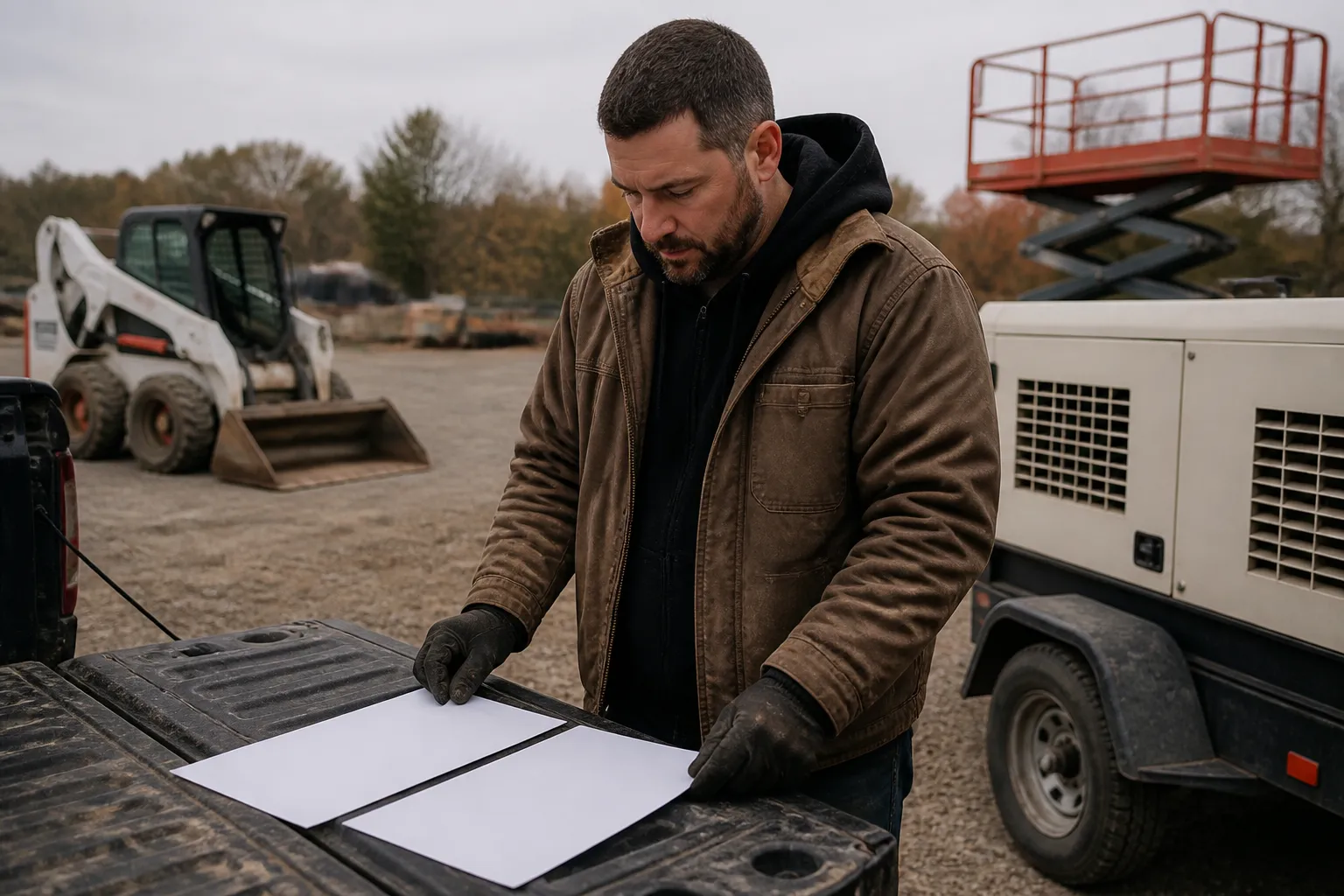
What does it cost to rent a skid steer, a scissor lift, or a towable generator for a job? Why can two quotes for the same machine look so far apart? There is no single national price, and the public sources are thin. This guide covers what we can say with confidence, what the one well-documented public reference rate measures, and how to get quotes you can compare.
One limit up front. The sources we reviewed give no US-wide or state-by-state daily, weekly, or monthly rental ranges for specific machines. We will not make any up. Ask local yards for written quotes, because prices vary by state and by market.
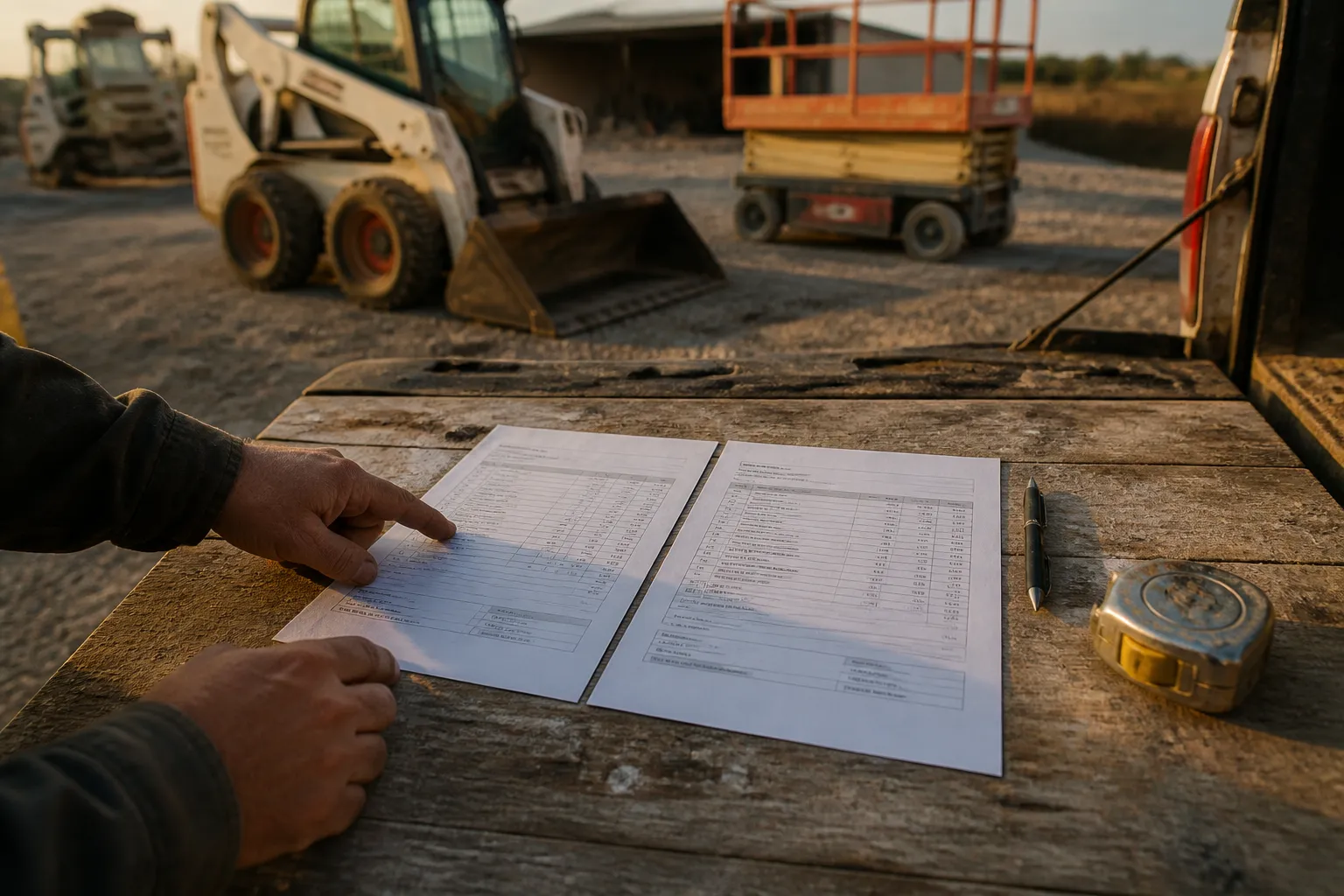
Why there is no single price
The cost of renting an excavator, lift, generator, or compactor depends on the machine and how long you keep it. It also depends on where you rent it and what the rental company builds into its rate. Fuel, demand, and season can all move a quote. Treat any single dollar figure you see online as a starting point, not a benchmark.
It helps to separate two kinds of pricing, because they rest on different assumptions:
- A rental-yard quote: what a commercial rental company charges a customer.
- A reference rate: a published figure used to estimate equipment costs on a certain kind of project.
Put a reference rate next to a yard quote and the gap will look like a mistake. Usually it is just two different yardsticks.
What the Caltrans reference rate book measures
The California Department of Transportation publishes an Equipment Rental Rates and Labor Surcharge rate book. Editions cover set periods, such as April 1 through August 31, 2026, and September 1, 2026 through March 31, 2027. The book is titled "Cost of Equipment Ownership." Its rates assume the contractor owns the machine rather than renting it.
According to the agency's FAQ, those rates cover:
- Major repair and overhaul
- Depreciation
- Facilities capital cost
- Fuel, oil, and lubricants
- Field repair
Fuel is based on a one-year average of the weekly California diesel price published by the federal Department of Energy. If that average moves more than 15 percent up or down from the current book average, the book can be published early. For the book running through March 2027, the assumed diesel cost is $4.85 per gallon including state and federal taxes. Those taxes are removed for off-highway equipment.
This is a California state agency's internal yardstick. Most private renters will never use it directly. It is still useful as a reminder of what sits inside an equipment hourly cost: wear, repair, fuel, and the capital tied up in the machine.
Why rental-yard prices run higher
Caltrans notes that rental yards include overhead and profit in their rates and face higher costs on short-term rentals. That is the main reason yard quotes sit above its reference figures, especially on jobs lasting only a few days. A yard plausibly has to keep machines available, maintain them, insure them, and turn them around between customers, though the sources do not itemize those costs. A short rental spreads them over fewer billable days.
Labor is another variable. Many public rate schedules add a labor surcharge. In California it varies mainly with workers compensation insurance, using pure premium rates from the Workers Compensation Insurance Rating Bureau with a load factor applied. If you compare quotes across states, ask whether operator labor or insurance is built in. The answer can differ by jurisdiction and type of work.
How to get quotes you can compare
For a private job, the practical route is simple. Call several rental companies and give each the same details: same machine class, same dates, same delivery or pickup plan. Ask for the quote in writing. Then line the items up one by one instead of looking at the bottom number.
If you work on a Caltrans job and need an official rate, the process is narrower. Caltrans lists these steps:
- Gather the make and model of the equipment.
- Note the date the work was performed.
- Find the Caltrans contract number or EA.
- If you are a contractor, include the local field office or resident engineer.
- Submit the request through the Caltrans field office, then allow one to three weeks.
Caltrans does not add a rate code for non-Caltrans work. It offers an unofficial "Dummy Rate Calculator" that asks for an equipment list or sales price, net horsepower, and approximate weight. The output is a rough estimate. Do not present it as an official rate.
Questions to ask and red flags to watch for
Before you accept a quote, ask:
- Does the rate include fuel, and are off-highway tax adjustments applied?
- Is this priced as a short-term or longer rental? Per-day cost can change with duration.
- If the work is tied to a public contract, which rate-book period and labor surcharge apply to my dates?
Watch for these warning signs:
- Treating an ownership-based reference rate as a yard price. The book assumes you own the machine.
- Relying on the unofficial calculator as an official government rate.
- A quote that stays silent on the basics.
That last point matters. The public sources we reviewed do not cover delivery, insurance, deposits, damage waivers, operator costs, cancellation rules, or liability for damage. Get each of those in writing before you commit. A low day rate can look different once a delivery fee and a damage waiver are added.
Industry groups such as the American Rental Association publish training and research. Its Rentalytics subscriptions are listed starting at $495 a year for state data, but they are data products, not equipment prices.
This is general information only, not personal legal, financial, or professional advice. For a specific project, consult a licensed contractor, insurance agent, or attorney about your contract and coverage.
Sources
- https://vertexaisearch.cloud.google.com/grounding-api-redirect/AUZIYQED6oWRrRlorttaGyvaqbZL7j320-TiRm1bjgsl7mgiYE1B-qrDsExTJL6Pu9e2cqiKoYkCqkzkdZ8vCV1kQyvic6dLokdMEB_rCu_mRYbeqlO2wUbF8fBpgL5iyFyiWkmkPwgTiU-1w8XC-ZnGkfbwAI5hmx0M0OAQ7z8qKdtbHGS4yiADVQRf9Cc1ZSd5DXWTdoqkkpk0vC8mC4Z3d82WTp5L7L7BNw4QeI3BwfGP1r1yuQ==
- Equipment Rental Rates and Labor Surcharge | Caltrans
- https://vertexaisearch.cloud.google.com/grounding-api-redirect/AUZIYQF6pTPn42NA-c7rRgULM4lXx-ljv188dT-XGxLB55ad2dEq8mizA6IJLwDfAoCkYRYcEayr6b8WYtwa66hUY-KNrIR-yw33qly-4c0SI3amJAGFzT-ariOA_tCtx0WHxxPqJ1tPQcF8OLrRzmGRxfESA3T-KQLzOB4uhHI3ZpUuoarW0sm6peePY1wlRkv9r_c0aVGx707dEIIsgNVilYuqmWxjBQ20Kqj-iy7W8nZQpj_mGIk=
- Frequently Asked Questions | Caltrans
- American Rental Association | Equipment & Event Rental Industry
- ARA Rentalytics™ Rental-specific economic research
Still have a question?
Related guides
-

Fixed or Variable: How to Choose a Business Electricity Contract Without Getting Caught Out
A practical checklist for comparing quotes, avoiding the costly rollover to a deemed rate, and asking the right questions before you sign. By Renata Okafor
-

What Happens to Your Business Energy Bill When the Contract Ends
Letting a fixed-term energy contract lapse can quietly move your account to a much higher default rate, so knowing your end date, opt-out deadline and state rules matters.By Neil Ostrander
-

How to Read a Commercial Electric Bill, Section by Section
Supply, delivery and demand charges each answer a different question, and knowing which is which helps you spot errors and compare providers on total cost. By Gideon Aldaine