Who Checks the Checker? How to Vet a Third-Party Inspection Service
Before you pay for an inspection, confirm the provider's accreditation scope, its independence from the manufacturer, and its approval for your specific product and rule.
 By Renata Okafor ·

Who checks the checker? That is the question to settle before you pay anyone to inspect a shipment. A third-party inspection service is only as useful as its accreditation, its independence, and its permission to test your specific kind of product. This guide walks through each in order, with the questions to ask and the warning signs to watch for. It is general information, not legal or financial advice, so consult a licensed professional for decisions with real money or liability attached.
What a third-party inspection service does
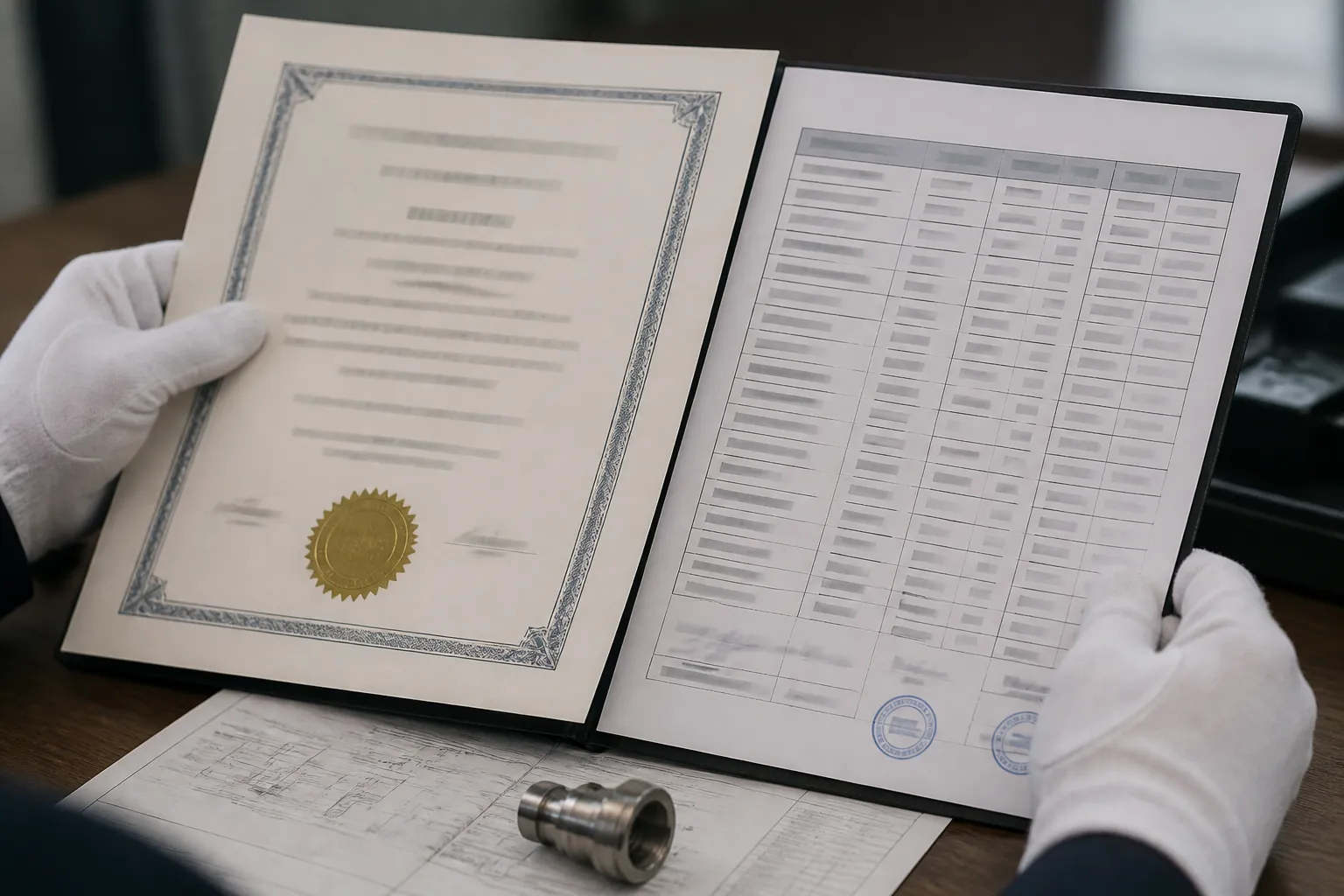
A third-party inspection service is an outside body that checks whether a product meets a set of requirements, such as a safety standard or a regulatory rule, before it is sold. The importer or buyer usually hires it, rather than the manufacturer grading its own work. That separation is the whole point, which is why independence matters so much later in your search.
The system behind these services is international. ILAC, the International Laboratory Accreditation Cooperation, is the global organisation for accreditation bodies. Accreditation is an independent evaluation of a conformity assessment body against recognised standards, meant to confirm that the body is competent and impartial. Because of international arrangements, test and inspection results can sometimes be accepted across borders, but only when the accreditation is recognised. So your first step is simple: find out who accredited the service, and to what standard.
Check accreditation to ISO/IEC 17020 first
Inspection bodies are commonly accredited to ISO/IEC 17020. It sets requirements for competence, impartiality and consistency, and it fits any organisation whose main activity is inspection, especially in regulated industries. One accreditor's overview describes it as a way to show technical competence, operational integrity and a commitment to quality.
Ask for the certificate, then read the scope, not just the logo. An inspection body may be accredited for some product types or methods and not others. Before you sign, confirm:
- The accreditation is to ISO/IEC 17020, or ask which other standard applies and why.
- The scope names your product category.
- The scope covers the specific rule your goods must meet.
A general claim of "we are accredited" is not enough. The scope is where the answer lives.
Children's products have an extra layer of rules
If you import children's products into the United States, federal law requires testing by a third-party laboratory that the Consumer Product Safety Commission has accepted. According to CPSC's third-party testing guidance, more than 600 laboratories worldwide have been accepted.
Acceptance has its own paperwork. Under CPSC's lab registration process, the lab must be accredited by an ILAC-MRA signatory accreditation body, and that accreditation must be registered with and accepted by the CPSC. The application includes the certificate and scope documents in English, and the scope must explicitly reference each applicable children's product safety rule or test method. The governing rule is 16 CFR Part 1112.
Acceptance is granted by scope, not as a blanket approval. A lab accepted for one rule may not be accepted for another. Check the CPSC-accepted list for the exact rule or test method your product needs, and you can confirm the accreditation body is an ILAC-MRA signatory through ILAC's signatory search.
Watch for independence and control
Does the lab have any tie to your manufacturer? A laboratory owned or controlled by the manufacturer or private labeler can have a conflict of interest. Under CPSC rules, such a lab must register as firewalled if the manufacturer or private labeler holds an ownership or controlling interest of 10 percent or more, or otherwise controls it.
Ask the question directly and ask for the answer in writing. A clear, documented reply is a good sign. Vague answers deserve follow-up before you rely on any results. Pairing the ownership question with the ISO/IEC 17020 check gives you two separate ways to test whether the inspection is truly at arm's length.
Questions to ask and red flags to watch for
Bring this short list to every call:
- Is your accreditation to ISO/IEC 17020 or another standard, and does the scope cover my product and rule?
- For a children's product, are you CPSC-accepted for the specific rule or test method I need?
- Do you have any ownership or control link to the manufacturer, and are you registered as firewalled if so?
Then watch for the warning signs. A lab or inspector that cannot show accreditation, or whose scope misses your rule or test method, is a serious concern. So is a lab controlled by the manufacturer or private labeler that is not registered as firewalled. Keep copies of the certificate, the scope and the listings you checked. If results are questioned later, those records support your choice.
What this guide does not cover
Cost is the biggest gap. The sources behind this guide give no fee amounts or US cost ranges, and prices vary by state, product type and scope of work. Get written quotes from several providers and compare exactly what each includes.
This guide also focuses on children's products. Other imported goods involve different agencies and rules that need separate research. CPSC notes that beginning July 8, 2026, importers of most regulated consumer products must electronically file certificates of compliance with U.S. Customs and Border Protection, so review the current steps and deadlines for that. Turnaround times, sample sizes, report contents and recourse if a result proves wrong are not addressed here either. Ask each service for those details in writing, and consider a qualified professional for high-stakes decisions.
Sources
- About ILAC International Laboratory Accreditation Cooperation
- When and Why Inspection Bodies Should Pursue ISO 17020 Accreditation? - AAA Accreditation
- https://vertexaisearch.cloud.google.com/grounding-api-redirect/AUZIYQEatBQC2AV4TS-bTL1GOmjjvkye3aN6j0jxDvMWi5V0q3fEvoabKJVai8S7zdrK5ZnRXPsFBkuSUouo14l3ZQXQ2n_1BVuglHydGoOYfFzXq-NaUkvOjU1GiQIHjJxUS-3Sb6sEtJYzb0CdekRqrkjzFbZm_wAgelAaSybnJlctFgoWzlu-UKv3AzT_YQe3wAMZkzNYKS3BD7QLog==
- https://vertexaisearch.cloud.google.com/grounding-api-redirect/AUZIYQGjaG0T8WZ9JBWcT_WHNqT4FIg1pxj0x5r6X-CaFdWedfQ4e2wGP73pA61BlVV46HL1YXUN-Y08VOUiA_4hk3VmnnwuBdqbI5MEdjfpFXcGLxw0hvQYkXE51bQKehsBu1Jk1_kmIVCAEP9ZlhzHN7297H7twX4v-XspwVna6GfWEEh6V1wiqq3QUjdqPbAjSeLlr2UHotHoaWX1c6cqtylKN454wV87esL3oBE=
- TIC Council
- TIC Council Compliance Code Audits | BRL
- Third Party Testing Guidance | CPSC.gov
- Lab Accreditation Registration
Still have a question?
Related guides
-

Fixed or Variable: How to Choose a Business Electricity Contract Without Getting Caught Out
A practical checklist for comparing quotes, avoiding the costly rollover to a deemed rate, and asking the right questions before you sign.By Renata Okafor
-

What Happens to Your Business Energy Bill When the Contract Ends
Letting a fixed-term energy contract lapse can quietly move your account to a much higher default rate, so knowing your end date, opt-out deadline and state rules matters. By Neil Ostrander
-

How to Read a Commercial Electric Bill, Section by Section
Supply, delivery and demand charges each answer a different question, and knowing which is which helps you spot errors and compare providers on total cost. By Gideon Aldaine