Disability insurance: the definition of disability decides the claim, not the percentage
Short-term and long-term policies differ in waiting periods, benefit lengths and how "disabled" is defined, and that last term matters most.
 By Hollis Brandt ·

Short-term disability usually pays 40% to 70% of your salary. Long-term usually pays 60% to 70%. Both come with a waiting period, a cap and a definition of "disabled" that can decide your claim. Here is how the pieces fit, with the fine print pulled forward.
The definition of disability decides whether you get paid. The percentage only decides how much.
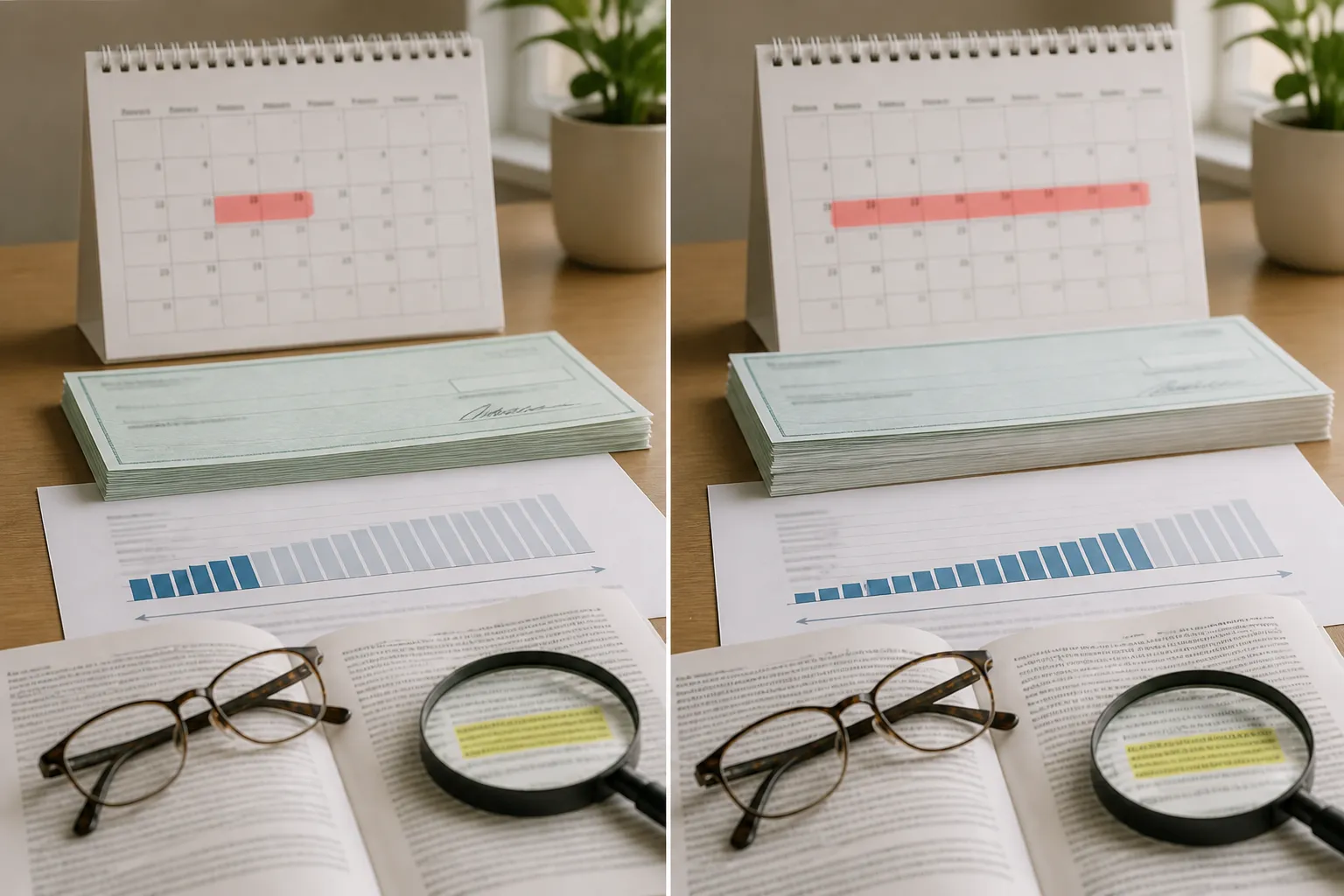
What disability insurance replaces and the two main types
Disability insurance replaces a set portion of your monthly base salary, usually up to a cap such as $10,000 a month. Benefits end when the disability ends or after a specified period. It is built for people who cannot work because of a qualifying condition. It is not for people who choose not to work.
Short-term disability covers part of your income when a qualifying medical condition keeps you from doing your job. It handles the brief and medium-length absences. Long-term policies cover the longer ones. They may also pay for extras, such as training to help you return to work. Longer stakes mean more complex terms, and usually a higher price.
How benefits are paid and when they start
A short-term claim typically starts when you or your HR department submits a claim with medical documentation. That paperwork shows you cannot perform your job. No documentation, no payment.
Then comes the wait. Short-term benefits usually begin only after an elimination period, commonly 7 to 14 days. You need savings or other income to cover that gap. Once payments start, they typically replace 40% to 70% of salary and last 3 to 6 months. Depending on the policy, that can stretch from a few weeks to a year.
Long-term policies commonly replace 60% to 70% of total taxable earnings. The benefit period is how long monthly payments continue. Experts usually recommend benefits until at least age 65, when Social Security disability is expected to take over. The sources I reviewed do not explain how a private policy interacts with Social Security, so ask that question directly.
How the definition of disability changes the payout
Policies define disability in different ways. Some pay if you cannot perform the customary duties of your own occupation. Others pay only if you cannot perform any job suitable for your education and experience. The second standard is much harder to meet.
Some policies split the difference. They use the own-occupation test for the first two or three years, then switch to any-occupation. A claim paid in year one can get harder to keep in year four. Find the switch date in the contract before you sign.
What it costs and what drives the price
Costs for US policies vary by state, and by your age, health and job. The sources I reviewed give no long-term premium ranges, so get current quotes in your own state rather than trusting a number in an article. Be wary of anyone who quotes a flat price before asking about you.
Some pricing rules are clear. Own-occupation definitions cost more than any-occupation ones. A higher replacement percentage, where offered, costs more. Accident-only policies cost less, but they do not provide adequate protection. Your employer may pay part of the premium for workplace coverage. You can also buy on your own through a professional association, a broker or an insurer.
How to choose and what to ask before buying
Start with the definition of disability. Then check the benefit period. Younger buyers may consider lifetime benefits, which can still be relatively inexpensive. Review your other income sources to decide how much coverage you need. Look for coverage of both accident and illness. Consider a cost-of-living increase, since a policy bought today may not pay out for a decade or more.
Questions worth asking:
- Does it pay if I cannot do my own occupation, or only any suitable job? When does that change?
- Do benefits last to age 65 or for life?
- Are accident and illness both covered?
- Do benefits rise with the cost of living?
- Does it pay for training or return-to-work services?
If an answer is unclear, ask again before you buy. Get it in writing.
Red flags and gaps in the available sources
An accident-only policy is a warning sign, because illness is a common cause of long absences. A policy that covers only any-occupation after a short period may leave you with nothing if you cannot do any job at all.
Some things this guide cannot tell you. The sources do not explain how long-term claims are filed, reviewed or appealed, or how denials are handled. They do not cover the tax treatment of benefits and premiums, state-by-state rules or mandatory programs, or how often employers offer coverage. Those need separate checking. This is general information, not personal medical, legal or financial advice. A licensed insurance professional or attorney can review a specific policy.
For background, see the Triple-I guide to buying disability insurance and the US Chamber of Commerce explainer on short-term and long-term disability.
Please seek a professional. This article is general information, not financial, tax or insurance advice. Please seek a licensed financial, tax or insurance professional about your own situation.
Sources
Still have a question?
Related guides
-

Replacement Cost Versus Actual Cash Value: What the Check Actually Covers
A dwelling limit and a payout rule can differ sharply, so the fine print decides how much of a loss you recover and when. By Marcus Delaney
-

What You Actually Pay: Reading Premiums, Deductibles and Out-of-Pocket Limits
A plan's monthly premium is only the first line of its cost, and adding up the full year shows which plan really costs less.By Hollis Brandt
-

What a Health Plan Really Costs Over a Year
The monthly premium is only the first line of the bill, so this guide shows how to add deductibles, coinsurance and out-of-pocket limits into one yearly estimate you can compare. By Teodor Valcourt