The $250,000 Ceiling: What Flood Insurance Covers and Where It Stops
Standard homeowners policies pay nothing for flood, so the federal program's limits, waiting periods and valuation rules decide what you actually get back.
 By Marcus Delaney ·

$250,000. That is the most the National Flood Insurance Program will pay on a typical home's structure. Contents top out at $100,000. Your standard homeowners policy pays $0 for flood. Here is how the pieces fit, and where the fine print bites. This is general information, not personal advice. A licensed insurance professional can speak to your situation.
Why standard policies leave flood damage uncovered
Most homeowners and renters policies exclude flood. That is the first line to read and the one people skip. If water rises from outside and enters the house, you need a separate flood policy. The policy covers direct physical loss from flooding and certain flood-related erosion.
Flooding is not a coastal problem only. Sources report that 99 percent of U.S. counties have had a flood event in the past 20 years. Flooding is also involved in about 90 percent of natural disasters in the country. Around 20 percent of flood claims come from low-to-moderate risk areas. A "low risk" label is a probability. It is not a guarantee.
Cars are a separate matter. Flood damage to a vehicle generally falls under the optional comprehensive part of an auto policy. Check that you actually bought it.
Who is required to carry flood insurance
If you have a mortgage from a federally regulated or federally insured lender, and the home sits in a high-risk flood area, you must carry flood insurance. The same goes for businesses. The lender checks during underwriting. It can also set a maximum deductible your policy must meet, so ask before you pick one.
No mortgage, or a lower-risk zone, means no mandate. Coverage is still available and is strongly recommended. The decision is arithmetic. Compare a yearly premium to the cost of an uninsured loss. Average NFIP claim payments ran about $68,000 from 2016 to 2021. That is a useful number to hold against your own savings.
One more condition. Federal flood insurance is generally sold only where the local government has adopted floodplain rules that meet NFIP standards. Many communities do. Your lender, local officials or an insurance professional can confirm yours.
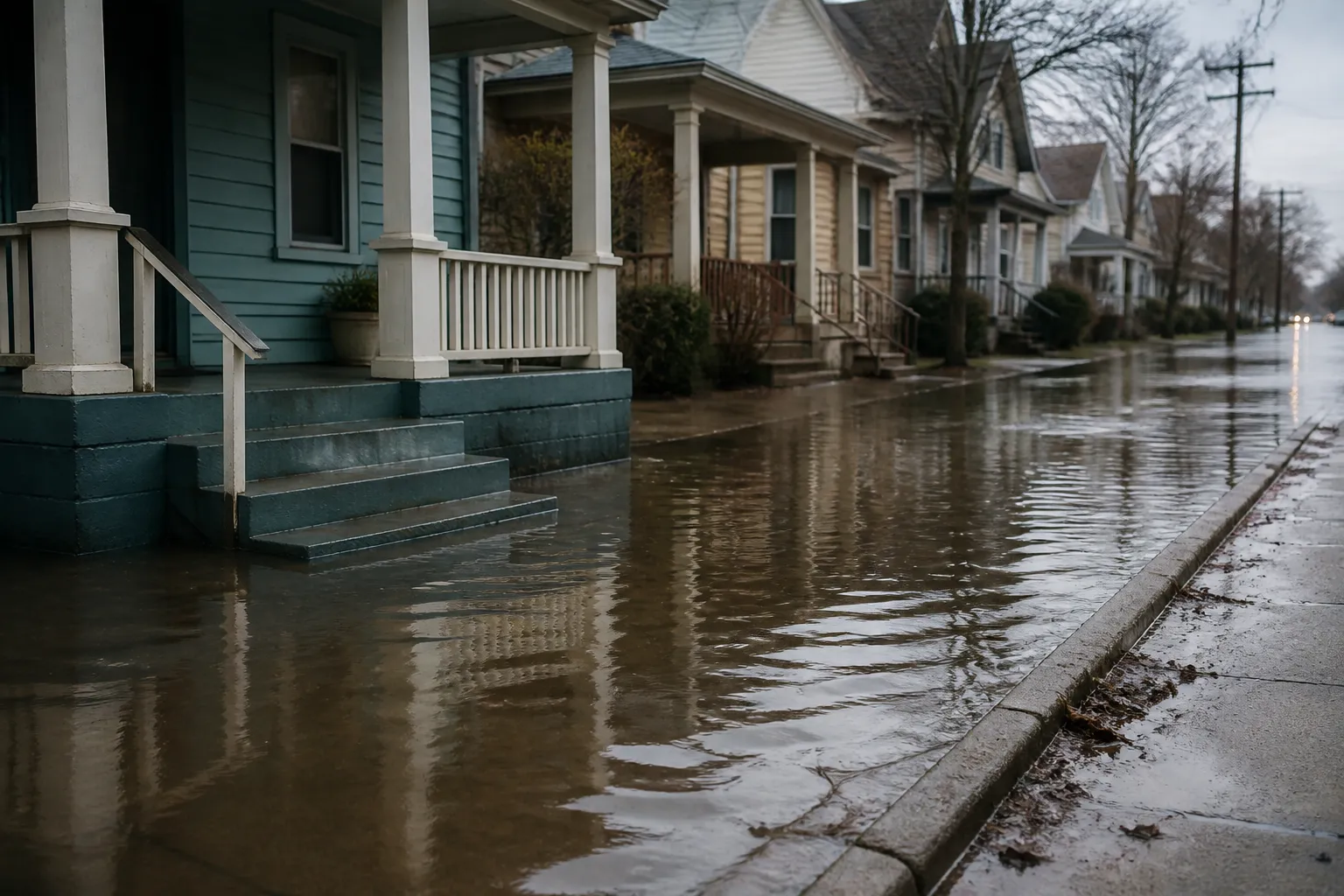
How the NFIP is structured and what it covers
The NFIP is the main federal flood program. The government administers it, but you cannot buy from the government directly. Policies are sold through licensed agents and insurers.
Coverage comes in two parts. Building coverage handles the structure and its utilities. Contents coverage handles belongings and appliances. Each has its own limit and its own deductible.
- Residential: up to $250,000 building, up to $100,000 contents.
- Commercial: up to $500,000 building, up to $500,000 contents.
Now the fine print. Buildings are generally covered at replacement cost. Personal property is covered at actual cash value only. That means depreciation comes off your couch, your television and your mattress. Ask which basis applies to each part before you sign.
If your home is worth more than the limits, private insurers may offer excess coverage. Ask an agent whether you need it and who would write it. Limits and costs change, so confirm current figures with the program or an agent.
Cost factors, waiting periods and payment rules
Sources give no state-by-state price table, and costs vary by state and property. What they do say is what drives the price: location, how the building was built, year of construction, the area's risk level and replacement cost. Lower-risk areas generally pay less for comparable homes.
NFIP rates are set by the program. The same home should not get a different premium from different agents. If a quote does not match, ask why. That gap is a warning sign.
Timing matters too. A new policy typically takes effect 30 days after purchase. Exceptions exist, such as certain lender-required coverage. Buy after the storm is on the radar and you may be too late. The full year's premium must also be paid before coverage is effective.
Deductibles apply separately to building and contents. A higher deductible lowers the premium. It also lowers what a claim pays you. Pick a number you could actually write a check for.
How to choose a policy and questions to ask
Start with the property's history. Your lender, local officials or an insurance professional can tell you whether it has flooded before. The FEMA and NFIP flood maps show the designated risk level. For more background, see Flood Insurance Basics and FEMA's flood insurance page.
Then pick the agent. Ask how much NFIP experience they have. An inexperienced agent may rate a policy wrong. Compare building and contents deductible options, and confirm your lender's maximum first.
Questions worth asking:
- Is my property in a high, moderate or low-risk flood area?
- Does my mortgage require flood insurance, and what deductible cap applies?
- Is the building covered at replacement cost and the contents at actual cash value?
- Will I need excess coverage above NFIP limits, and from which insurer?
- When does my 30-day waiting period end?
Watch for the usual mistakes. Assuming a home or renters policy covers flood. Assuming low risk means no risk. Assuming sewer backup is covered. It is covered only when it is a direct result of flooding. And expecting protection the day you pay.
Please seek a professional. This article is general information, not financial, tax or insurance advice. Please seek a licensed financial, tax or insurance professional about your own situation.
Sources
- Flood Insurance | FEMA.gov
- Flood Insurance Basics | The National Flood Insurance Program
- The Basics | FloodSmart Insurance | Residential & Commercial Flood Insurance
- https://vertexaisearch.cloud.google.com/grounding-api-redirect/AUZIYQH6hJFSnkZjF4TAP5XUUsNZN2_ybqglsAPrm_9ZkZwawl9o501C7ySvYtZHz10fkSTjdImRz5TErcUwF6kCNgLDZPent1rRBEvU30XPRrbkt4T3aR1qJwDkKPkHjLhklCAm9t9iiS2Y9tbSA_DCFw9w4jJF5Z7bNOUDvc07klik1srHAhJzrnofVFU=
- Facts about flood insurance - Triple-I®
- https://vertexaisearch.cloud.google.com/grounding-api-redirect/AUZIYQGmb5ex-d3RRBsHxkQpvzA_mbb6CXwml3tO-rCEEUrZNwnY9rXlPsv83fClSUa7XIxUnEDnKwUnrXyjpQVGuRIacL95H-_pHT8C-muIQRyqGiQ8TeV5d1f8k5Jlb3VkCc1kh9h7Oq4B-YjWQR9MItwBPZTQQpv97rgx
Still have a question?
Related guides
-

Replacement Cost Versus Actual Cash Value: What the Check Actually Covers
A dwelling limit and a payout rule can differ sharply, so the fine print decides how much of a loss you recover and when.By Marcus Delaney
-

What You Actually Pay: Reading Premiums, Deductibles and Out-of-Pocket Limits
A plan's monthly premium is only the first line of its cost, and adding up the full year shows which plan really costs less. By Hollis Brandt
-

What a Health Plan Really Costs Over a Year
The monthly premium is only the first line of the bill, so this guide shows how to add deductibles, coinsurance and out-of-pocket limits into one yearly estimate you can compare. By Teodor Valcourt