The Discount You Were Promised May Not Be the One You Get
Usage-based auto insurance can lower premiums for some drivers, but a Maryland report suggests most enrolled drivers saw no savings, so the quote comparison matters more than the headline.
 By Marcus Delaney ·

The headline number you will see most is "up to 30-40%" off. It comes from an industry page aimed at insurance agents. It is a promotional claim, not a measured result. The number to hold onto instead is simpler. In Maryland, a report found most enrolled drivers did not see savings.
What usage-based insurance is
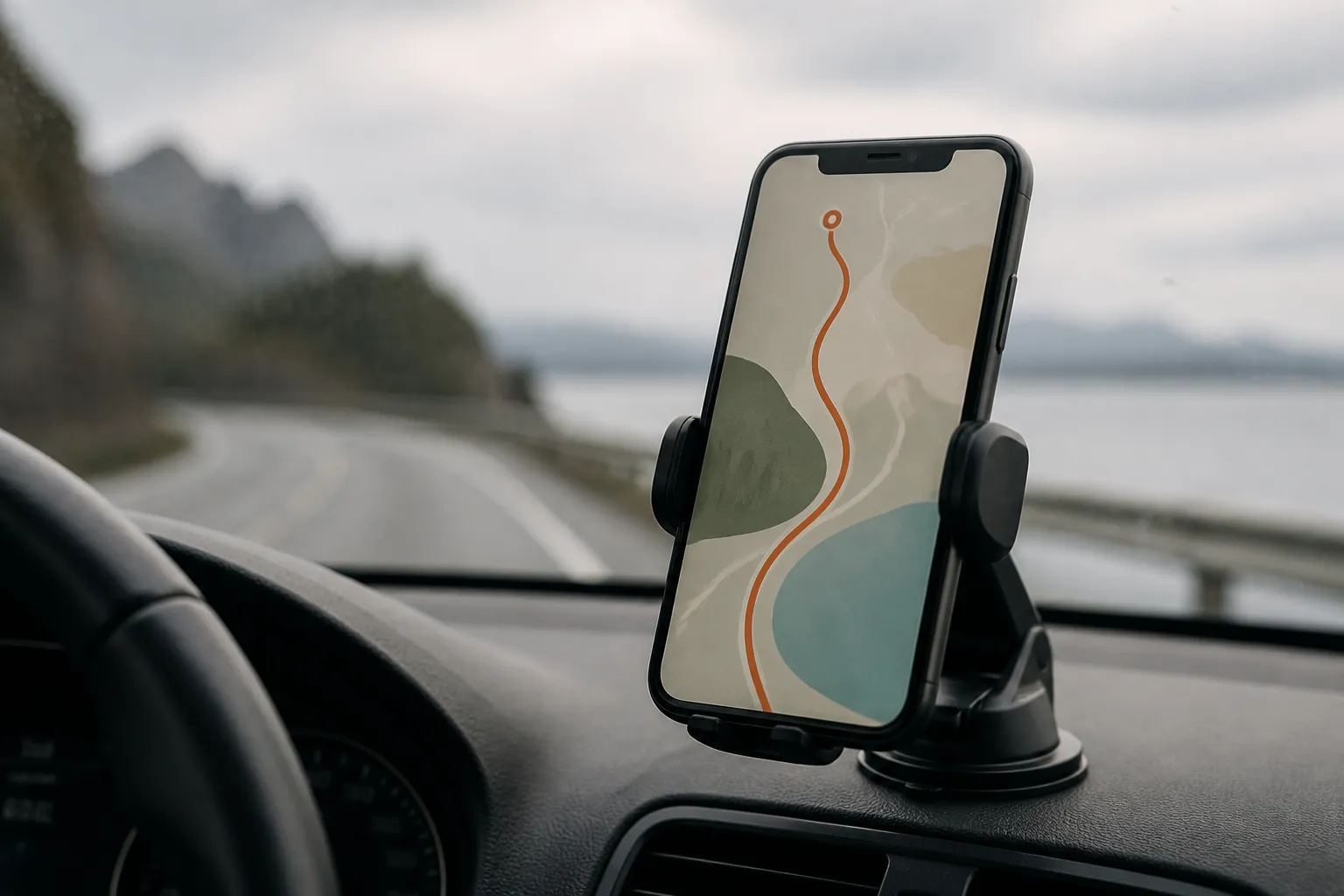
Usage-based insurance is also called telematics or pay-as-you-drive. Part of your premium is set by how you drive. That can mean miles driven, how hard you brake, and what time of day you are on the road. Enrollment is voluntary, according to the Triple-I background page.
Traditional pricing leans on estimated annual miles and your driving record. Telematics adds measured behavior. It does not replace the usual factors. Insurers may combine the data with age, location and claims history, as the Washington Office of the Insurance Commissioner describes. The final price still comes from a mix.
The pitch is a fair one on its face. Drivers get a financial reason to drive less and drive more carefully. The more positively they respond, the less they pay. A 2022 Insurance Research Council survey, cited by Triple-I, found 45% of drivers made significant safety-related changes after joining a program, and another 35% made small ones. That tells you behavior changes. It does not tell you the bill shrinks.
Do these programs actually save money?
Sometimes. It depends on your driving and on what your insurer chooses to score. Low mileage and careful habits are where the incentive is most likely to pay off.
A Maryland report, as summarized by the Consumer Federation of America, found the programs help some people. Most enrolled Maryland drivers did not see lower premiums. That is one state. The summary is also not the full report, and the piece we reviewed does not give the report's year, so treat the finding as a caution rather than a national average. Read the original if your decision leans on it.
Renewal is the other catch. Your premium can go up, down, or stay the same based on the data collected. A discount in year one is not a promise for year two.
The sources give no US dollar ranges for typical savings. Any figure will vary by state, insurer and driver. Treat anyone quoting a flat number with some suspicion, and let your own paired quotes do the talking.
How data is collected
There are three common methods. A plug-in OBD-II device, a smartphone app, or a hard-wired device in the car.
- Plug-in device: usually more accurate, but it has to be installed and removed. Some people forget to plug it back in after switching cars.
- Smartphone app: no hardware. It can also pick up extra behavior, such as phone use while driving.
- Hard-wired device: installed in the vehicle, with its own installation effort.
Metrics can include where and when you drive, miles, rapid acceleration, rapid braking, hard cornering and airbag deployment. Ask how each one is weighted. Time of day is one example. If your job puts you on the road late at night, a program that penalizes night driving may score you differently from a daytime commuter, even on a similar trip. Ask the insurer how it handles that before you sign up.
How to evaluate a program before enrolling
Start with the quote. Get your standard price from the insurer, then the telematics price. Given the Maryland finding, that side-by-side is the most direct test you can run yourself.
- Ask which behaviors are scored and how. Savings depend on whether your habits match what is rewarded.
- Ask if the rate is recalculated at renewal, how far it could move, and whether it can rise. Get that in writing.
- Confirm you can leave, what happens to your data afterward, and whether leaving changes your rate. The sources do not answer this, so the insurer has to.
- Ask what share of enrolled drivers in your state saw savings. The insurer may not have the number, and a blank answer is worth noting.
The CFA summary says most of the largest US insurers offer a program. That makes comparing several realistic. One insurer's scoring may suit your habits far better than another's.
Privacy and red flags
Be wary of savings claims with no stated basis or no state data. A promotional percentage is not a result.
Watch for programs that hinge on a device staying installed. A missed reinstall or a car switch can lead to inaccurate scoring. Ask how the insurer handles it.
Data also carries risk. A Triple-I commentary by an economist notes that data-driven insurance brings risks of inaccuracy, bias and breaches. Ask what is shared with third parties and how long it is kept. The sources do not spell out the rules, so your state insurance regulator is the place to check what applies where you live.
This is general information, not personal insurance or financial advice. A licensed agent or your state regulator can speak to your situation. Then get several quotes, with and without telematics, and compare the actual dollars.
Please seek a professional. This article is general information, not financial, tax or insurance advice. Please seek a licensed financial, tax or insurance professional about your own situation.
Sources
- Usage-Based Insurance: Leveraging Telematics to Enhance Client Engagement
- Background on: Pay-as-you drive auto insurance (telematics) - Triple-I®
- Economic Analysis Matters More Than Everin "Golden Age" of Data - Triple-I®
- Cellphones Leading Cause of Distracted Driving; Telematics Can Help - Triple-I®
- Usage-based insurance | Office of the Insurance Commissioner
- Article - Insurance Companies Claim Telematics Will Save You Money on Auto Insurance. The Truth Is More Complicated | Consumer Federation of America
- https://vertexaisearch.cloud.google.com/grounding-api-redirect/AUZIYQH1SGSNMEOGrRnGiJ-igAXANkGB5ekoYSHAFlNZkentZoVvLhKLrVQxrOv2y19f520Nq_qyJySBPrMa7_d1XZvdvbsZTt8JUAJvK3f-RSN9IzZxqI-GdG5m9dLu8VS3M43yqpfxqobQxutJEz2Yg2CFEZS1phLoP2H_xFYayta5DWPpIkWtZbSPGgpq6nEUScIbfcHRiitBBg==
Still have a question?
Related guides
-

Replacement Cost Versus Actual Cash Value: What the Check Actually Covers
A dwelling limit and a payout rule can differ sharply, so the fine print decides how much of a loss you recover and when.By Marcus Delaney
-

What You Actually Pay: Reading Premiums, Deductibles and Out-of-Pocket Limits
A plan's monthly premium is only the first line of its cost, and adding up the full year shows which plan really costs less. By Hollis Brandt
-

What a Health Plan Really Costs Over a Year
The monthly premium is only the first line of the bill, so this guide shows how to add deductibles, coinsurance and out-of-pocket limits into one yearly estimate you can compare. By Teodor Valcourt