The Quote Is Not the Price: How to Compare Car Insurance Like an Adult
Matching limits, deductibles and add-ons before comparing premiums is the only way to know whether a cheaper quote is really cheaper.
 By Hollis Brandt ·

Two car insurance quotes can sit $40 a month apart and still not be the same product. One carries higher liability limits. The other has a $2,000 deductible. The cheaper number wins the glance and loses the claim. This guide shows how to line quotes up so the price difference actually means something.
A quote is not a price. It is a price attached to a list of terms, and the terms are where the money hides.
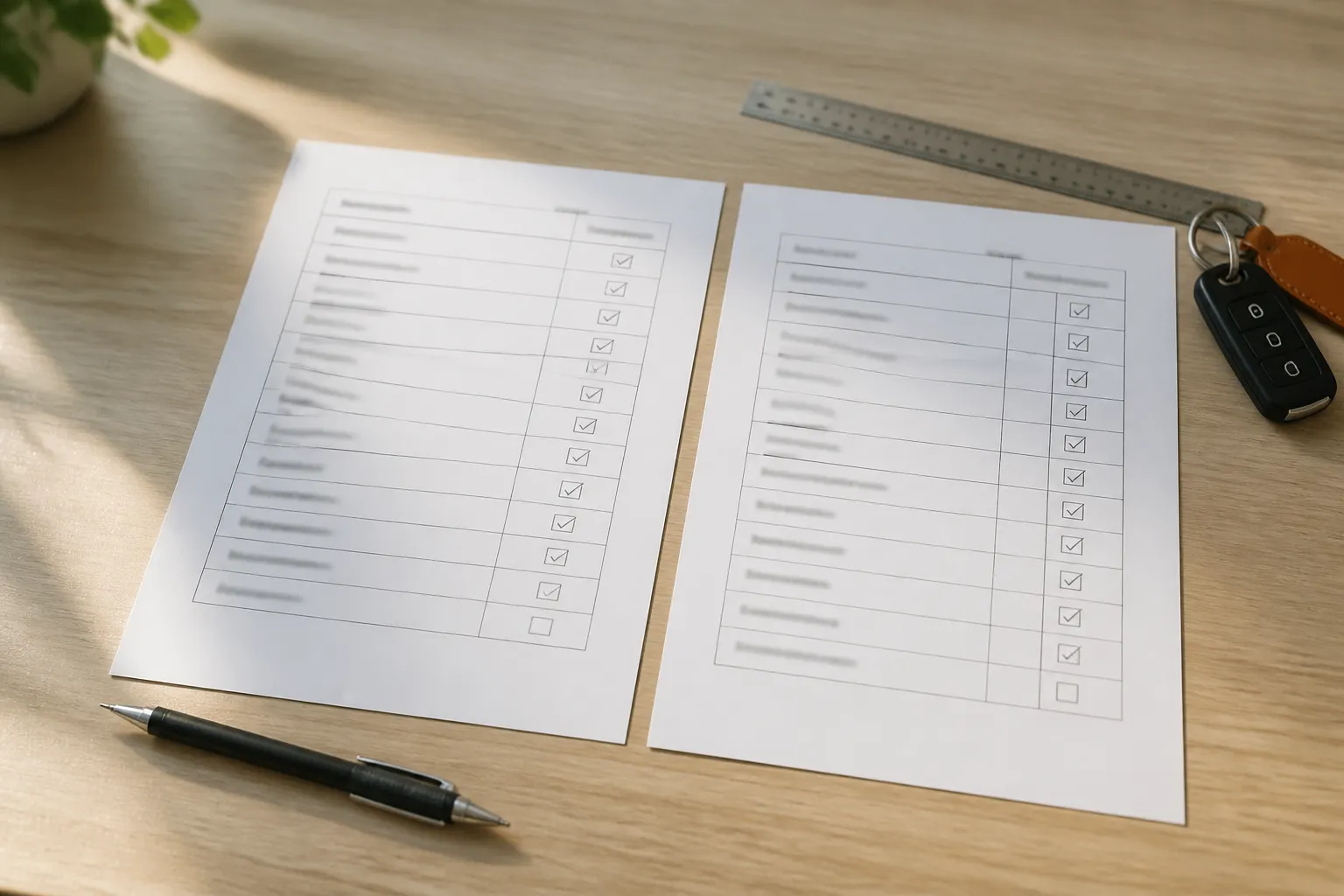
Why quotes are hard to compare
The Consumer Financial Protection Bureau advises shopping around and comparing coverages as well as costs before you buy or lease a vehicle. That is the whole problem in one sentence. Cost is easy to read. Coverage takes work.
Almost all states require insurance when you buy or lease a car. The rules are set state by state, so the minimum you need depends on where you live. A quote that meets the minimum in one state may fall short in another. Check your state's requirements first. Then start collecting numbers.
Build a like-for-like comparison
Get quotes from several providers. Shopping around is the main way to find a better deal. Ask each one to quote the same liability limits, the same deductibles and the same optional coverages. If one quote quietly uses higher limits or a lower deductible, its price is not comparable to the rest.
Write the terms down in the same order every time. Here is a simple set to record:
- Liability limits
- Collision and comprehensive coverage, if included
- Deductible for each
- Any add-ons, such as roadside help or rental reimbursement
Once the details sit in one column, a low price with thin protection stands out. It usually does so within a minute.
If you already have other insurance, such as home insurance, your current insurer can tell you what it offers and what adding the vehicle would cost. Take that number seriously. Then check it against other insurers anyway. The existing company is one option, not the benchmark.
When a lender requires coverage
Financing adds a second layer. The CFPB describes two lender-driven forms of coverage. Force-placed insurance is what a lender can buy if you have no insurance at purchase or your coverage lapses. VSI insurance protects the lender if the vehicle is damaged or destroyed.
Both protect the lender and the vehicle. They do not necessarily protect you. Your own liability and personal costs may sit outside them entirely. That is why a lender-arranged policy should never stand in for one you chose yourself.
The cost of VSI coverage may be folded into your overall loan cost or shown as a separate line item. Read the loan paperwork. A charge that is not itemized or explained is easy to miss, and it changes the total cost of financing. Fine print rarely announces itself.
Questions to ask before you choose
Start with the one that prevents most bad comparisons: does this price include the same coverages as the other quotes I have? If the answer is vague, the quote is not ready to compare.
If your lender requires VSI coverage, ask whether the charge can be waived or canceled once you have your own insurance that meets the requirement. The answer tells you whether you keep paying for lender-protective coverage after your own policy starts.
Finally, ask your current insurer what adding this specific vehicle would cost, then ask other insurers the same question. Keep it tied to the car you are buying. A general rate tells you little.
Red flags and what this guide cannot tell you
Be wary of coverage you did not choose. Force-placed insurance and VSI coverage may serve the lender's interest, not yours. Ask what the policy covers before you accept it. Be wary, too, of any charge added to a loan without a clear explanation.
The sources behind this guide do not give US premium ranges, and they do not show how premiums vary by state. So there is no honest figure here for what a quote should cost. Use your own quotes and your state's requirements as the benchmark. Premiums swing widely with state, driver history, vehicle and coverage level.
The sources also do not explain what liability, collision and comprehensive each include, or how insurers build a quote. Your state insurance regulator can fill that in. The California Department of Insurance, for one, publishes an auto insurance guide and offers consumer complaint and license-check services, and other states have similar offices. This is general information, not personal insurance or financial advice. For decisions about your own coverage, talk to a licensed insurance professional.
Please seek a professional. This article is general information, not financial, tax or insurance advice. Please seek a licensed financial, tax or insurance professional about your own situation.
Sources
- What kind of auto insurance options are available when financing a car? | Consumer Financial Protection Bureau
- Automobile Insurance Text Version
- How to find the right auto insurance - Triple-I®
- https://vertexaisearch.cloud.google.com/grounding-api-redirect/AUZIYQFcBrASXd6tPriN77e01L0OM2LngC5gB8DHIfNbdnvt87es9esS8Mn6FP3tRT-m1eEpMC-itqCvoZVr2f_hnBm4oBwPxDxP9R8QttOEWpgkp8V6kcIbBXXZu0NS3REx57nesNIQ0hjJbBKS3kICbrqTPttOYzvAHe6pdZf5j9_gBnKJnbM_Cg0=
Still have a question?
Related guides
-

Replacement Cost Versus Actual Cash Value: What the Check Actually Covers
A dwelling limit and a payout rule can differ sharply, so the fine print decides how much of a loss you recover and when. By Marcus Delaney
-

What You Actually Pay: Reading Premiums, Deductibles and Out-of-Pocket Limits
A plan's monthly premium is only the first line of its cost, and adding up the full year shows which plan really costs less.By Hollis Brandt
-

What a Health Plan Really Costs Over a Year
The monthly premium is only the first line of the bill, so this guide shows how to add deductibles, coinsurance and out-of-pocket limits into one yearly estimate you can compare. By Teodor Valcourt