What to Do in the First Hour After a Car Crash
Check for injuries, document the scene, collect the other driver's details, then call your insurer, and do it in roughly that order.
 By Marcus Delaney ·
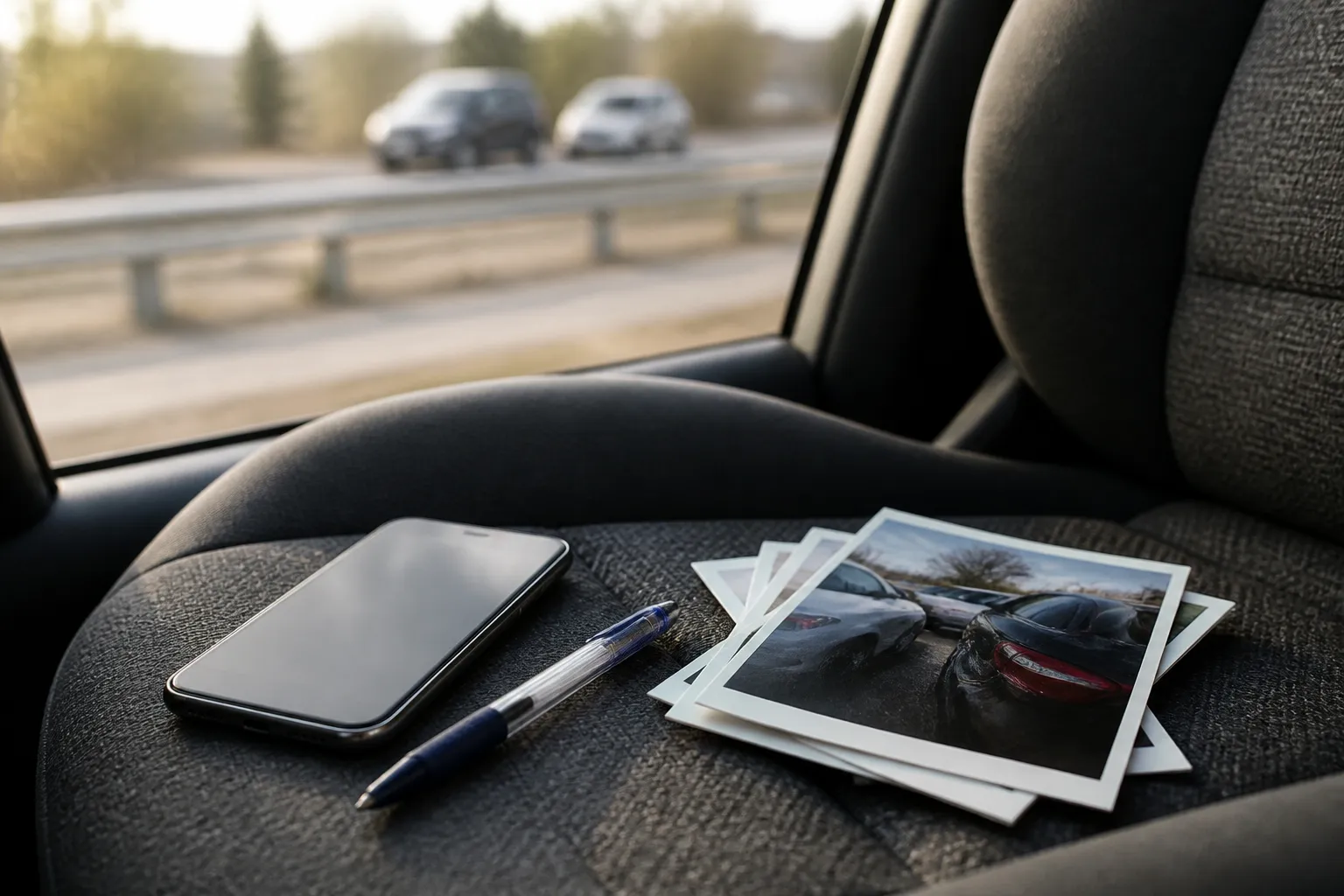
Millions of motor vehicle crashes happen in the US each year. The National Highway Traffic Safety Administration is the usual source for that count, though the figure we have has no year attached, so check NHTSA's own crash data for the latest numbers. Most crashes end with a call to an insurer. What you do before that call shapes how the claim goes. This guide covers the first hour or so, and what to have in hand when you dial. It is general information, not legal, medical or financial advice. A licensed agent or attorney can speak to your situation.

Start with safety and injuries
Check everyone for injuries first. If anyone is seriously hurt, call 9-1-1 right away. If the collision is minor and it is safe, move the vehicles off the roadway so nobody causes a second crash. Turn on your hazard lights. Keep people away from moving lanes.
Injuries are not always obvious at the scene. Adrenaline hides a lot. If you notice pain or odd symptoms later, tell a medical professional. That is a health decision, so it is worth asking one. Mention the crash when you do, because a dated medical record can also matter if you later file a claim.
Work with police and document the scene
Wait for law enforcement before discussing the crash beyond basic information. When an officer arrives, explain what you know. Get the officer's name, the department and the badge number. Ask for a copy of the police report if one is available. You may need it to support a claim.
Police may not come at all if no one is hurt and the damage looks minor. Then the paperwork is yours to build. Take plenty of photos. Shoot every vehicle, the road, nearby signs and any visible damage, from several angles. Write down the time, the location and the weather. Write down what happened while it is fresh. Memory fades fast, and a claim can take weeks.
Whether a police report is legally required, and at what damage level, differs by state. Check your state's rules or ask the dispatcher when you call the non-emergency line. If the other driver asks you to skip the police and settle in cash, be careful. You may not yet know the full damage or whether you are hurt.
Exchange information before you leave
Collect the other driver's name, address, phone number, insurance provider, policy number and driver's license number. Record the other vehicle's plate, make and model. If there are witnesses, get names and phone numbers.
Keep your side short. Give your name and your insurance information. Do not admit fault, and do not guess at what caused the crash. Fault is often decided later, with facts you may not have at the roadside. Rules differ by state, so check your state insurance department's consumer page. The DC Department of Insurance, Securities and Banking and the California Department of Insurance both publish consumer pages on this.
A few red flags are worth noting. Be wary of anyone who pressures you to leave quickly, offers cash to avoid insurance, gives details that do not match their license, or refuses to share policy information.
Notify your insurer and handle a rental
Call your carrier as soon as possible. Prompt reporting helps the claim move. It also lets the insurer investigate and respond to any claims made against you. Have your photos, notes and police report ready. Those are the records that back you up.
On the call, stick to facts. Give the date, time and place, the other driver's details, and the police report number if you have one. Describe the damage and any injuries you know of. Skip guesses about fault or speed. If you do not know something, say so. Our sources do not script this call, so treat that as common-sense practice and ask your agent for specifics.
Auto insurance generally follows the vehicle, not the driver. Keep a current insurance card in the car with the registration. If the car was a rental, follow the same steps. Then contact the rental company quickly and follow its instructions for documenting the damage. Read the rental agreement's damage clause. It is the fine print that usually decides who pays.
What it may cost, and questions to ask
The sources we reviewed give no dollar figures, so treat these as rough, commonly cited ranges. Collision and comprehensive deductibles often run from $500 to $1,000, though some policies go lower or higher. Full-coverage annual premiums commonly land somewhere in the low thousands of dollars. The Triple-I and state insurance departments publish current averages. All of these numbers vary widely by state, insurer, driving record and coverage.
Ask these before you need them. A claim call goes better when the numbers are not a surprise.
- What are my deductible and my liability limits?
- Do I have uninsured or underinsured motorist coverage? It may help if an at-fault driver has no insurance or too little.
- How do I report a claim, and what will you need from me?
The sources do not say how long you can wait to report. Your policy and state law set that, so ask your insurer for the deadline. Getting it in writing is a sensible habit, not something our sources require. For deeper basics, the Triple-I overview and the AAA checklist are good places to start.
Please seek a professional. This article is general information, not financial, tax or insurance advice. Please seek a licensed financial, tax or insurance professional about your own situation.
Sources
Still have a question?
Related guides
-

Replacement Cost Versus Actual Cash Value: What the Check Actually Covers
A dwelling limit and a payout rule can differ sharply, so the fine print decides how much of a loss you recover and when.By Marcus Delaney
-

What You Actually Pay: Reading Premiums, Deductibles and Out-of-Pocket Limits
A plan's monthly premium is only the first line of its cost, and adding up the full year shows which plan really costs less. By Hollis Brandt
-

What a Health Plan Really Costs Over a Year
The monthly premium is only the first line of the bill, so this guide shows how to add deductibles, coinsurance and out-of-pocket limits into one yearly estimate you can compare. By Teodor Valcourt