Before You Hire Anyone: How to Tell Whether a Denied Claim Needs Outside Help
The sources give no fee figures, so the useful work is sorting honest coverage disputes from bad-faith conduct and vetting whoever offers to fight for you.
 By Teodor Valcourt ·

The dollar figure comes first, and here it is: the sources behind this guide give no cost ranges for lawyers, public adjusters or bad-faith representation. None. So any number you hear should be confirmed in writing, and costs vary by state and by situation. What can be laid out is how to tell whether you need help, and how to check the person offering it.
This is general information, not legal or financial advice. A licensed attorney in your state can tell you what applies to your policy and your claim.
When a claim denial may call for outside help
United Policyholders, a consumer advocacy group, says policyholders should not normally need to hire professional help to get a claim paid fairly. Most claims are small and get settled. A large or contested loss is different. It may call for a public adjuster, a lawyer, a construction estimator, an industrial hygienist or another expert.
The reason is simple. The insurer has its own experts, lawyers and claim professionals. You have a kitchen table. Outside help can put comparable knowledge on your side.
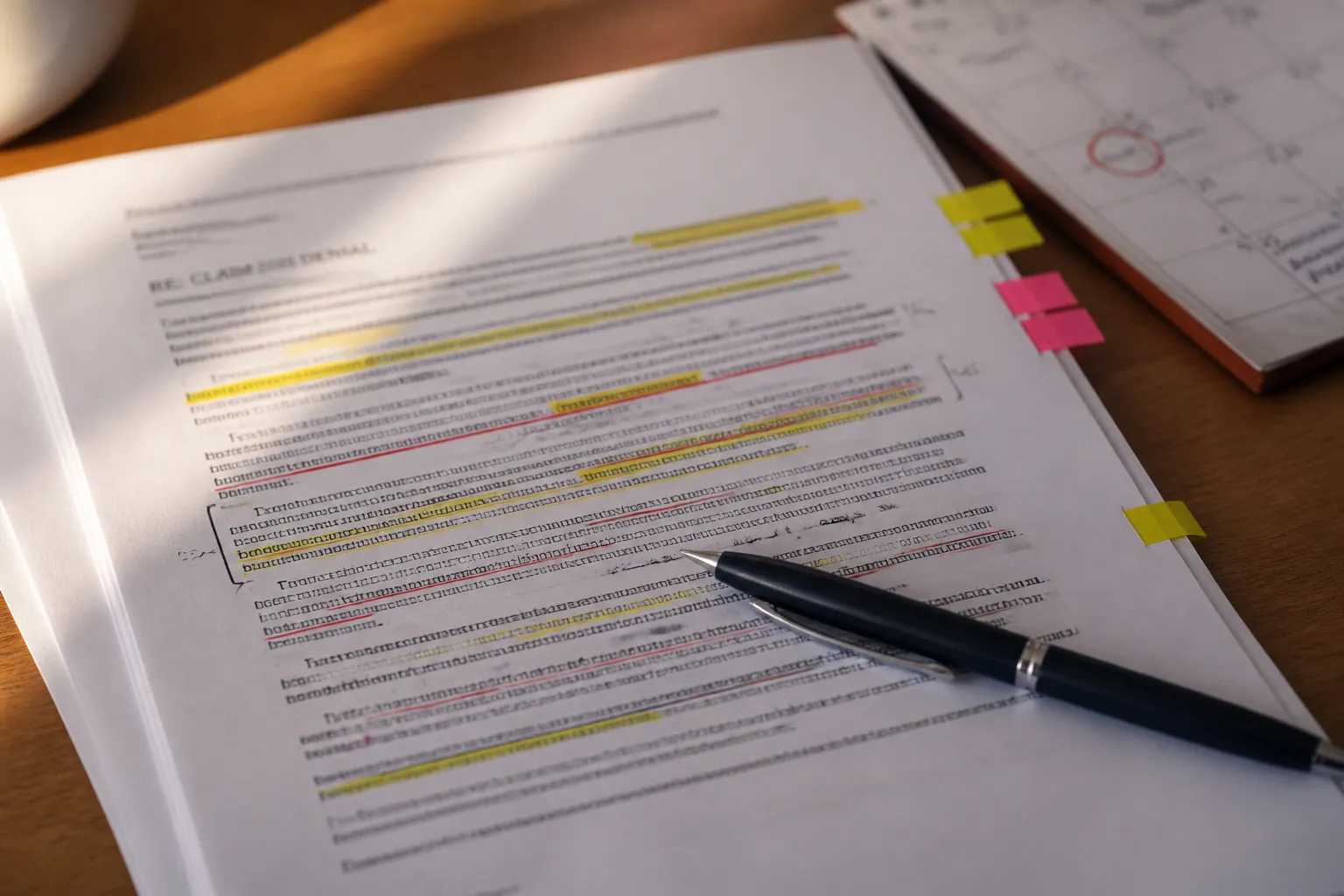
Before you call anyone, read the denial letter and the policy. Write down the reason the insurer gave. List the date of every call, letter and inspection. Note each request for documents. A clean timeline saves a helper time, and time is usually what you pay for.
How bad faith is judged
Most states have adopted some version of the model Unfair Claims Settlement Practices Act from the National Association of Insurance Commissioners. It lists claim-handling conduct that regulators treat as improper. State rules differ, and the sources name no specific statutes or deadlines.
In general terms, bad faith means the insurer denied, delayed or underpaid a claim without a reasonable basis. Many states also want proof that the insurer knew it had no reasonable basis, or acted with reckless disregard of that fact. That is a high bar.
A wrong decision is not automatically bad faith. An honest coverage dispute, where both sides read the policy differently, usually does not qualify. A low offer alone proves nothing.
Patterns that can point the other way include:
- Unreasonable delay.
- Denial without a real investigation.
- A lowball offer the insurer's own inspection or line-item documents do not support.
Insurers generally must acknowledge, investigate and decide a claim within a reasonable time. Many states set exact deadlines. Check yours. If the carrier asks for the same documents again and again, reassigns your file, or goes quiet after your proof of loss, it may be building a delay record. Note each instance in writing as it happens.
Finding and checking a helper
One starting point is the Professional Help Directory from United Policyholders, which lets you search by state. A listing is not an endorsement. Verify credentials yourself.
Look for someone who will actually read your policy and the insurer's letters, then say whether the insurer's position holds up. Match the helper to the problem. A public adjuster, a lawyer and an estimator solve different things. Some losses need more than one.
The sources do not explain how to check a lawyer's license or disciplinary record. The usual places are your state bar association and its attorney lookup. Your state insurance department can explain its own complaint process. Whether a bad-faith claim requires a regulator complaint first is not covered, so ask a licensed attorney.
Policy deadlines and questions to ask
Read the fine print for a lawsuit limitation provision. Some policies set a one-year deadline to sue. United Policyholders ties this to the one-year anniversary of the loss. Do not assume your policy uses a standard period. Find the actual language.
Before hiring a public adjuster, United Policyholders offers a list of questions to ask. Use it. For any helper, ask for the fee agreement and read it before you sign. Look at how the fee is calculated and what it covers.
Then ask the question that matters most: does the insurer's position hold up under the policy language and under the insurer's own inspection? If the answer depends on facts you have not gathered, the review is not finished.
What costs are and are not known
The sources reference sample attorney-client fee agreements and a discussion of contingency fees. They do not give the terms. They do not give percentages. They do not compare contingency fees with hourly fees. So ask each helper to explain both options in writing, and compare the answers.
Red flags are plain. Be wary of anyone who calls the insurer's conduct bad faith before reviewing your policy and letters. Be wary of anyone who says an honest coverage dispute is bad faith. Either one should slow you down before you sign anything. A consultation with a licensed professional in your state is the safer next step.
Please seek a professional. This article is general information, not legal advice. Please seek a licensed attorney in your state about your own situation.
Sources
- Hiring Professional Help for an Insurance Claim - United Policyholders
- Bad Faith Insurance Lawyer | Denham Property & Injury Law Firm
- How to Find Legal Representation | U.S. Department of Labor
- Hiring an Attorney for an Insurance Claim Q&A - United Policyholders
- Hiring an Attorney for an Insurance Claim Q&A - United Policyholders
- What To Do if Your Insurance Claim Is Denied in Bad Faith | Millin & Millin, PLLC
Still have a question?
Related guides
-

Free Legal Help Exists, but Getting Through the Door Takes Work
Most civil legal aid costs nothing, yet eligibility turns on income, issue and state, so start with a directory and check each program's rules before you rely on it.By Teodor Valcourt
-

Where a $90,000 Settlement Actually Shrinks
The same case can leave you $2,000 apart depending on whether your lawyer's fee comes off the gross or the net, so the order of subtraction in your contract deserves a close read. By Marcus Delaney
-

Is a Lawyer's Retainer Refundable? What to Check Before You Pay
The label on the payment and the account it lands in decide most of what you can get back if you change lawyers. By Hollis Brandt