What to Bring to a First Meeting With a Lawyer
Verify the lawyer's license first, then bring a short, dated set of papers and get the fee terms in writing.
 By Marcus Delaney ·

The cost of a first meeting with a lawyer runs from free to a few hundred dollars in the US. It depends on the state, the type of case and the lawyer. The sources behind this guide give no fee figures, so treat that range as general background and ask each office directly. Whatever you pay, the paperwork you bring decides how much of that time gets used well.
What the available sources cover
The main source here is the State Bar of California's "Working with an Attorney" page. It is a hub. It links to tools for checking a lawyer, resources for fee disputes, fraud-avoidance tips and a contact for concerns about an attorney. It does not say which documents to bring to a first meeting. You can read it at the State Bar of California.
That page is California-specific. If you live or hire elsewhere, its tools may not apply. Check your own state bar or court system for the equivalent. The checklist below is general practice, not guidance from a regulator. This is general information only. A licensed attorney in your state can tell you what fits your situation.
Check the lawyer before you bring documents
Do this first. Before you hand over personal papers, confirm the lawyer is licensed. California offers a Check Attorney Profile tool for this. Most states have something similar. It takes a few minutes and costs nothing.
If your matter sits in a specialty area, the State Bar also lists a Find a Certified Specialist tool and a set of Legal Specialty Areas. Certification in the right field can help you decide whether to call at all. A Lawyer Referral Service is another way to find someone. A referral is not a license check, so run that check yourself.
Gathering a practical set of documents
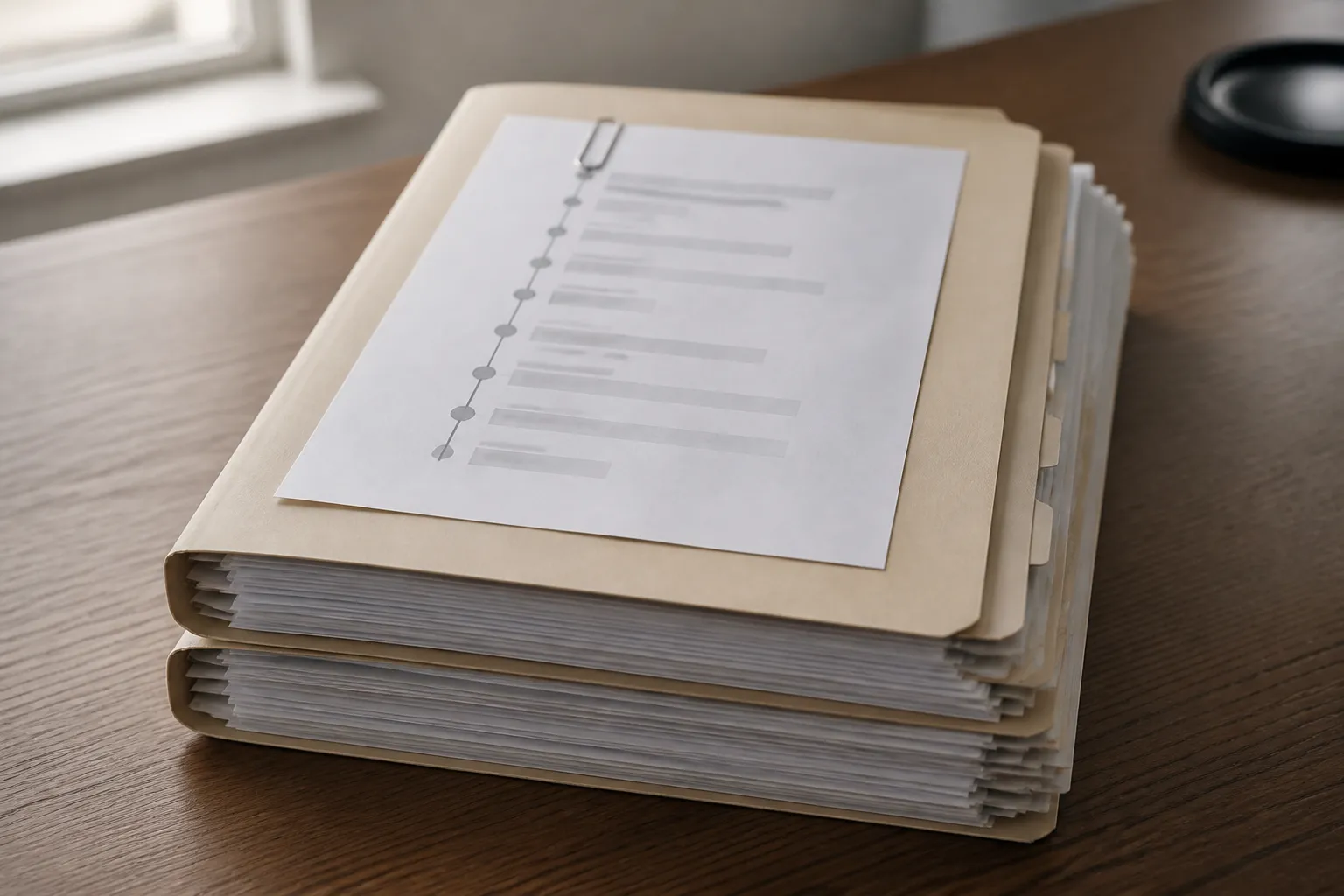
Bring whatever explains the matter. That usually means the core paperwork: contracts, letters, notices or court papers you received. Add a short written timeline with dates. One page is often better than a large unsorted pile. A lawyer with thirty minutes will read the page first.
Keep originals at home and bring copies. Put them in date order. Make a note of anything you do not have yet, so the lawyer can see the gaps. List the other people involved, with contact details if you have them.
- Contracts, notices, letters and court papers
- A one-page timeline with dates
- Names and contact details of others involved
- A list of items you still need to obtain
Some self-help guides, including a product page for a self-representation book from Nolo, talk about saving messages and social media posts and naming possible witnesses. That advice is aimed at people handling a case alone, not at meeting a hired lawyer. Ask the lawyer what evidence to preserve. The answer changes by case.
Fees, costs, and what the sources leave out
No source reviewed gives consultation fees or fee ranges for legal work. Any figure would vary by state and by type of matter. So get the fee structure explained and put it in writing before you commit. Ask what is billed, how often and what counts as an extra cost.
The State Bar page lists a Mandatory Fee Arbitration Program and resources for fee disputes. Knowing that route exists makes it easier to ask blunt billing questions on day one. The State Bar also lists a senior legal services document. It could not be read for this guide, so it is not summarized. Open it directly on the State Bar's site if it applies to you.
Red flags and where to raise concerns
The State Bar publishes tips on avoiding legal services fraud and fraud alerts for attorneys and consumers, including Spanish-language materials. The hub page gives titles only. Open them to read the content.
Walk away, or at least slow down, if a lawyer cannot be found in the licensing records, pushes you to pay fast or will not explain fees in writing. The State Bar page points to an Office of Public Trust Liaison for concerns. Other states have their own contact. Keep copies of everything you share and every agreement you sign. A clean record helps if a question comes up later.
Please seek a professional. This article is general information, not legal advice. Please seek a licensed attorney in your state about your own situation.
Sources
Still have a question?
Related guides
-

Free Legal Help Exists, but Getting Through the Door Takes Work
Most civil legal aid costs nothing, yet eligibility turns on income, issue and state, so start with a directory and check each program's rules before you rely on it. By Teodor Valcourt
-

Where a $90,000 Settlement Actually Shrinks
The same case can leave you $2,000 apart depending on whether your lawyer's fee comes off the gross or the net, so the order of subtraction in your contract deserves a close read.By Marcus Delaney
-

Is a Lawyer's Retainer Refundable? What to Check Before You Pay
The label on the payment and the account it lands in decide most of what you can get back if you change lawyers. By Hollis Brandt