Before You Pay a Landlord-Tenant Lawyer, Check the Free Options and the Clock
The sources list no lawyer fees, but they do point to free help and a California eviction timeline that can run as short as three days.
 By Teodor Valcourt ·

The sources give no fee figure for a landlord-tenant lawyer. Not an hourly rate, not a flat fee, not a retainer. What they do list is a set of free options, and one California deadline that can be as short as 3 days. Start there. The money question comes second.
A landlord cannot evict a tenant alone. The court process has to be followed.
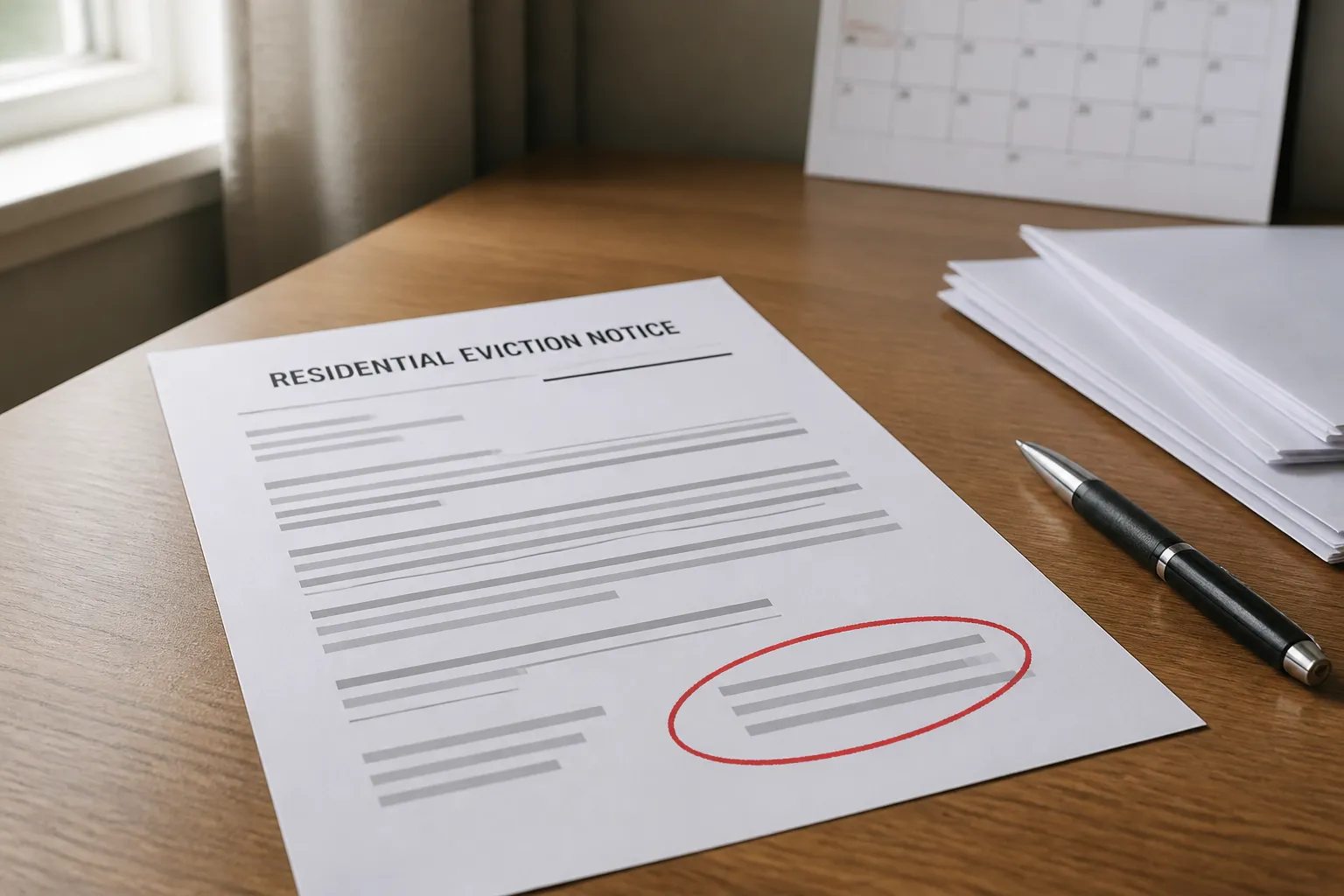
Start with free help before paying a private lawyer
Several programs cost nothing and may answer your question before a private lawyer is needed. Legal Services Corporation, at LSC.gov, can point you to local legal aid offices. LawHelp.org lets you type in a zip code and see nearby help. Law Help Interactive offers help with forms. Dialing 211 can connect you to local community resources.
In California, every court has a self-help center that gives free legal information. LawHelpCA searches by county for legal aid offices, lawyer referral services and other free or low-cost options. You can reach it through the California Courts self-help eviction resources page.
One caution. The sources do not say who qualifies for free legal aid. Income limits are common in programs like this, but check with the specific office before you count on it.
Quick questions and low-cost options
Some questions are small. Is this notice valid? Do I have to respond? For that, the sources point to ABA Free Legal Answers, an online platform for low-income tenants. You post a question. You do not book a full consultation.
Law school pro bono programs are another route. Many states keep a directory of them. Check yours to see whether one covers your situation.
Now the part about money. The sources say nothing about what private landlord-tenant lawyers charge. Fees vary a lot by state and by the type of case. A simple lease question costs less than a contested eviction with a trial. So ask for a written fee estimate before you agree to anything. Ask what is included and what is billed extra. Read the fee agreement. That is where the surprises live.
How a California residential eviction typically works
The process has steps, and each one has a clock. Per the California Courts eviction guide, it runs roughly like this:
- The landlord gives a written notice saying what the tenant must do and by when. The deadline can be 3 days, or 60 or 90 days, depending on what the notice requires.
- If the tenant does not comply, the landlord can file an unlawful detainer case in court.
- The landlord must have the court papers formally delivered to the tenant. This is called service.
- The tenant has a set time to respond.
If the tenant does not respond, the landlord can ask the judge to decide without a hearing. If the tenant does respond, either side can ask for a trial. If the landlord wins, the judge issues a Writ of Possession. That directs the sheriff to carry out the eviction. The sheriff posts a Notice to Vacate, which gives the tenant a few days to leave.
Landlords do not get to skip this. A landlord who locks a tenant out, shuts off utilities or throws out belongings may have to pay the tenant a penalty. If any of that happens to you, that is a good moment to call legal aid or a self-help center.
When a commercial tenancy changes the picture
The California guide covers residential evictions only. A business or a store renting space is outside it. For those cases the guide says to talk to a lawyer. Rules and deadlines can differ, so a business tenant should not assume the residential steps above apply.
The same goes for other states. The sources do not cover notice periods or eviction procedures outside California. If you rent elsewhere, look at your state's court self-help resources or legal aid directory for its own rules.
Gaps to keep in mind
The sources do not say exactly when a situation calls for a lawyer instead of self-help. They also do not say what a lawyer can do that a self-help center cannot. Treat that as a question for a legal aid office or a court self-help center. They see these cases daily.
The sources also skip questions to ask a lawyer, red flags, and how to check a license. A common starting point is your state bar's public records, though these sources do not describe it. Sensible questions are easy to write down yourself: who will handle my case, what will it cost in total, and how will you update me.
This is general information, not legal advice. Eviction deadlines are strict. If you have a notice or court papers in hand, contact a legal aid office, a court self-help center or a licensed attorney promptly.
Please seek a professional. This article is general information, not legal advice. Please seek a licensed attorney in your state about your own situation.
Sources
Still have a question?
Related guides
-

Free Legal Help Exists, but Getting Through the Door Takes Work
Most civil legal aid costs nothing, yet eligibility turns on income, issue and state, so start with a directory and check each program's rules before you rely on it.By Teodor Valcourt
-

Where a $90,000 Settlement Actually Shrinks
The same case can leave you $2,000 apart depending on whether your lawyer's fee comes off the gross or the net, so the order of subtraction in your contract deserves a close read. By Marcus Delaney
-

Is a Lawyer's Retainer Refundable? What to Check Before You Pay
The label on the payment and the account it lands in decide most of what you can get back if you change lawyers. By Hollis Brandt