Read the Dispute Clause Before You Call a Lawyer
Your contract may decide whether a fight goes to court or to arbitration, so find that clause before you hire anyone.
 By Teodor Valcourt ·

The number that matters first is 34.1 months. That is the median time to trial in U.S. District Court, according to the American Arbitration Association, for large business disputes. Its own median time to award in arbitration was 18.7 months for cases of $1 million or more closed in 2025. Both figures come from the AAA, which sells arbitration. Read them with that in mind. They still show why you need to know your forum before you hire anyone.
Read the clause first. It can decide where your dispute goes, which rules apply and what kind of lawyer you need.
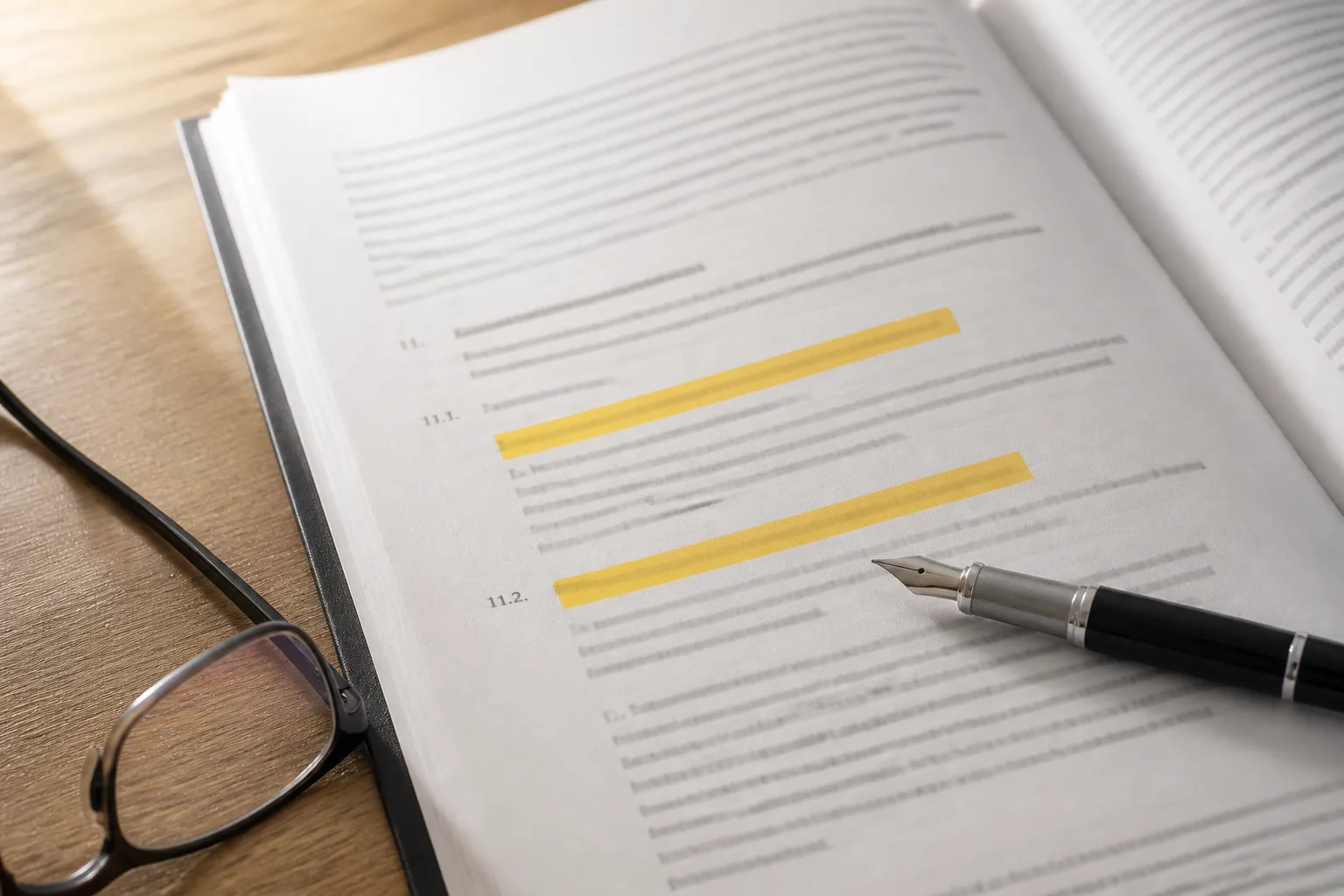
Check the contract before you call a lawyer
Find the dispute clause. Look for the words arbitration, mediation, governing rules and administrator. Standard AAA commercial language says any controversy or claim arising out of or relating to the contract, or its breach, shall be settled by arbitration administered by the AAA under its Commercial Arbitration Rules. If your contract says that, court may not be your first stop.
Then look for a mediation step. A mediation-then-arbitration clause asks the parties to try mediation first. Skipping it can create a separate fight before the real one starts. Write down the named rules and administrator. Any lawyer you call will ask for them in the first few minutes.
Understand how arbitration and court differ
Arbitration is private and legally binding. One or more neutral arbitrators decide the dispute. Unlike court, the parties usually have a say in picking the arbitrator. The process is generally described as more private than a public lawsuit.
The AAA says arbitration is about three times faster than U.S. District Court on average. That is the administrator's own claim, not an independent finding. Its other figures are similar in kind: 52% of its 2025 business cases settled before an award. That tells you settlement is common. It does not tell you your case will settle.
An award can be confirmed or enforced in a court with jurisdiction. Ask any lawyer how that would work where the other side or its assets are located. A win on paper is worth what you can collect.
Know what the process usually looks like
The claimant files a demand for arbitration with an administrator. Arbitrator selection begins. The clause or the administrator's rules set the method. Commercial cases often use rank-and-strike, where each side strikes and ranks names from a list.
A preliminary hearing sets the schedule. The parties then swap documents, exhibits and witness lists. At the hearing, each side presents evidence and testimony, often through counsel. The arbitrator issues an award.
Is a lawyer required? The sources reviewed for this piece do not say. Ask the administrator and the lawyer directly. Many parties bring counsel to the hearing. That is common, not a rule.
Choose and vet a lawyer
Match the lawyer to the dispute. A payment fight, a performance failure and a breach claim can call for different experience. Ask how often the lawyer handles cases under the rules named in your contract, and whether those cases were arbitrations or lawsuits.
- Check the license and discipline record with your state bar.
- Ask about certified specialists and referral services. The State Bar of California lists tools for this. Outside California, use your own state bar.
- Read the bar's guidance on legal services fraud before you pay anyone. The State Bar of California page on selecting an attorney is one place to start.
Red flags are mostly the familiar ones. Pressure to pay fast. A guaranteed result. No written agreement. The sources here do not list specific warning signs, so treat that list as general caution and check official bar pages.
Plan for fees and costs
No dollar figure for legal fees appears in the sources used here, so none is stated. Lawyers commonly bill hourly, by flat fee, by retainer or on contingency. Rates and structures vary by state, case size and the lawyer's experience. Get quotes from more than one lawyer. Get the fee agreement in writing.
Arbitration adds its own charges. These include administrative fees and arbitrator pay. The sources do not put numbers on them. Ask the administrator for its fee schedule, and ask your lawyer for a total estimate that includes those charges. Also ask how a fee disagreement would be handled. Some state bars have fee dispute programs. Know that before you sign.
Questions to ask at the first consultation
- Does my contract require arbitration or mediation, and under which rules?
- Must mediation happen first, and has it?
- Who picks the arbitrator, and will rank-and-strike be used?
- How would an award be enforced against this party?
- What is your fee structure, and what is the all-in estimate?
- How long will this take, and what could slow it down?
- What deadline applies to my claim?
That last one matters most. Limitation periods for contract claims vary by state, and the sources do not cover them. Let a licensed lawyer in your state confirm the date early.
This is general information, not legal or financial advice. A licensed attorney can review your actual contract and tell you what applies to you.
Please seek a professional. This article is general information, not legal advice. Please seek a licensed attorney in your state about your own situation.
Sources
- Hiring a Lawyer | Consumer Advice
- Before Selecting an Attorney | The State Bar of California
- Find Legal Professionals | The State Bar of California
- Commercial Arbitration & Mediation | AAA
- How to Resolve B2B Disputes with Arbitration
- Arbitration & Mediation Clauses | AAA Dispute Resolution
- AAA Arbitration Services | Professional Dispute Resolution
Still have a question?
Related guides
-

Free Legal Help Exists, but Getting Through the Door Takes Work
Most civil legal aid costs nothing, yet eligibility turns on income, issue and state, so start with a directory and check each program's rules before you rely on it.By Teodor Valcourt
-

Where a $90,000 Settlement Actually Shrinks
The same case can leave you $2,000 apart depending on whether your lawyer's fee comes off the gross or the net, so the order of subtraction in your contract deserves a close read. By Marcus Delaney
-

Is a Lawyer's Retainer Refundable? What to Check Before You Pay
The label on the payment and the account it lands in decide most of what you can get back if you change lawyers. By Hollis Brandt