What a Lawyer Really Takes From a Small Car Claim
Contingency percentages look modest on paper, but on a few-thousand-dollar vehicle claim, the fee, the deductions, and the fine print can take a larger share than you expect.
 By Teodor Valcourt ·
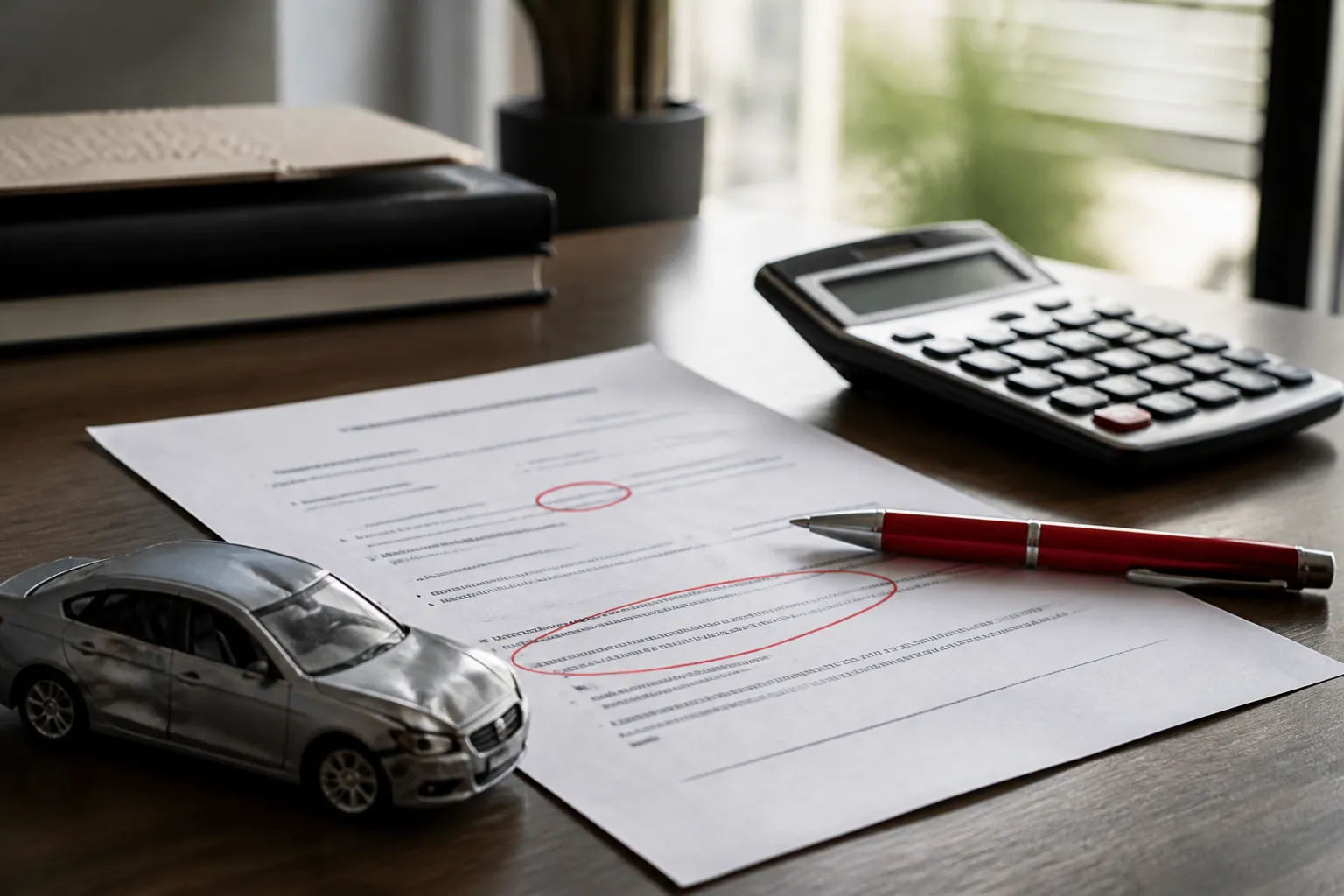
The usual answer is 33% to 40% of whatever the lawyer recovers. On a $4,000 vehicle claim, that is roughly $1,300 to $1,600 out of your pocket. Many firms will not take the case at all. This guide covers what the fee looks like, what else can be deducted, and what to check before you sign. It is general information only, not legal or financial advice. A licensed attorney in your state can tell you what applies to you.
No source gives a typical total fee for a property-damage-only claim. Treat every percentage here as a range, not a quote.
How lawyers usually charge for a property damage claim
Most car accident lawyers work on contingency. You pay nothing upfront. The lawyer takes a percentage, and only if money comes in. California and Texas sources both describe this model.
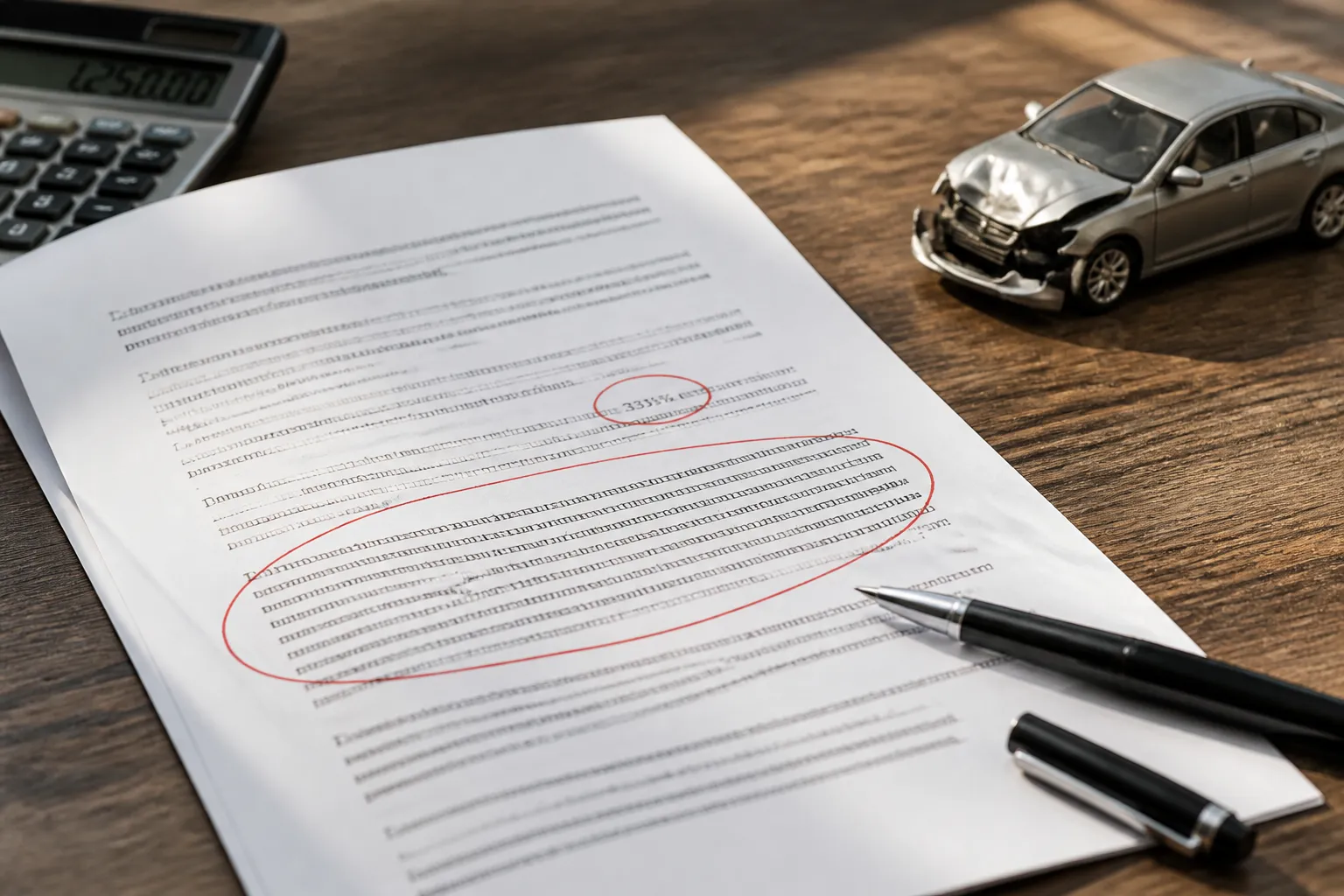
In California, the common pattern is one-third (33.3%) for a settlement before a lawsuit. After a suit is filed, it tends to rise to about 40%. One guide gives a 30% to 40% range overall. Another lists 35% to 40% after filing and 40% to 45% on appeal. Texas runs about 30% to 40%, depending on how far the case goes. These figures come mostly from law firm pages in two states. Other states differ.
Some lawyers bill hourly instead, at $150 to $500 an hour, usually with a retainer. Others charge a flat fee, from $500 to $5,000 or more. For a small claim, those options deserve a look. A percentage of a modest car payout can be a big bite. A flat fee may be smaller, or it may not be.
One worked example: a $150,000 settlement at 30% means a $45,000 fee. A property-only claim is far smaller, so the dollar fee is too. The share you give up is the same, though.
California has no cap on car accident contingency fees. Caps apply to medical malpractice only. State law does require the written agreement to say the fee is not set by law and is negotiable. So negotiate. Rules in other states vary.
Whether a firm will take property damage work at all
Many will not. One Texas firm notes that most contingency contracts pay the lawyer only on personal injury recoveries. Property damage is often left out of the deal.
So a firm may take your injury case and decline the vehicle part. Or it may handle the vehicle under a separate fee. Ask before you sign anything. Ask whether the fee applies to the property portion.
There is another fine-print point. Under the American Rule, each side generally pays its own attorney fees. Fees shift only through a contract clause, a state statute, or a judge's award. They are generally not automatically recoverable on a property damage claim. You can win and still pay your lawyer.
Consultations are free at virtually every California injury firm, with no obligation. Use one to ask whether the case is worth a lawyer at all.
Case expenses and what you owe if you lose
The fee is not the only line item. Firms often advance costs and deduct them from the settlement at the end. Sources cite these figures:
- Police report copies: $5 to $25.
- Medical records: $25 to $250 per provider.
- Court filing fees: $200 to $500.
- Process server: $50 to $100.
- Accident reconstruction: $2,000 to $10,000, in serious cases.
A simple vehicle claim should not need reconstruction or medical records. Document and filing costs can still show up. Ask for an itemized list of what would be deducted.
Then ask the question people skip. What do I owe if we lose? On a contingency case, a client may still owe court or document costs. Get the answer in writing. In Texas, case costs are separate from the fee, so the same question applies.
How vehicle damage claims are valued
The fee applies to the recovery, so the value of the car matters. A property claim can include the vehicle's actual value before the crash. If it cannot be repaired, the claim may cover replacement, including accessories, plus tax and license costs on the replacement.
Replacement value rests on sales of truly comparable vehicles. Use actual sale prices, not asking prices. A written opinion from a dealer may help. Custom work and aftermarket parts may be ignored by the insurer unless you have receipts and photos.
If the insurer declares a total loss, expect it to try to minimize the payout. Check the first offer against comparable sales before you accept or hire anyone.
Fault matters too. California uses pure comparative negligence. Your recovery shrinks by your share of fault, but it is not barred. California's Proposition 213 bars uninsured owners and drivers from pain-and-suffering damages, with a narrow DUI exception. Other states have their own rules.
How to choose and what to check before signing
Start with your own number. Use the repair estimate or replacement value, plus documented losses. Then you can judge whether a percentage fee makes sense.
Check the lawyer's discipline record. California offers a free State Bar search. Other states have an equivalent lookup.
Then ask:
- Is the fee negotiable, and does the written agreement say so?
- What percentage applies at each stage, and does it rise if a suit is filed?
- Which expenses are deducted, and in what amounts?
- Will you handle the vehicle claim, and is there a fee for that part?
- Would hourly or flat work better for a claim this size? What do I owe if I lose?
Red flags
Be wary of a fee not stated as negotiable in the written agreement. Be wary of recruiting tactics that California law treats as criminal. And be wary of a roadside cash offer, especially one that asks you not to call police. Experts advise declining until injuries, repair costs, and lost income are known. A private payment does not replace the required exchange of information or a crash report. Taking the cash does not automatically end the claim.
Gaps to know about before relying on these figures
The sources leave real holes. None gives an end-to-end cost for a property-only claim with no injuries. They cover only California and Texas. Most are law firm marketing pages. No independent consumer or regulator cost data appears.
Small claims court is not covered either. It may be a cheaper route for a property-only claim. Check your state's limit and filing process with the court system. Rental car and loss-of-use claims, diminished value, and the adjuster process are also not covered. Your state insurance department can help with those.
The short version: do the math on a percentage fee before you hire anyone. On a small claim, it may eat more than you expect.
Please seek a professional. This article is general information, not legal advice. Please seek a licensed attorney in your state about your own situation.
Sources
- How Much Do Car Accident Lawyers Charge in California? Fees, Rights & Hiring Guide (2026)
- How Much Are Attorney Fees in Texas Personal Injury Cases?
- Property Damage - Our Firm Will Help! | San Antonio Car Accident Lawyers
- How Much Do Car Accident Lawyers Charge in California? (2026)
- Car Accident Lawyer Cost - How Much Does a Car Accident Lawyer Cost? | Legal Cost Calc
- So You've Had an Accident, What's Next?
- Can I Recover Attorney Fees When Suing for Property Damage?
- What Should You Do If the Other Driver Offers Cash and Asks You Not to Call the Police After a Crash?
Still have a question?
Related guides
-

Free Legal Help Exists, but Getting Through the Door Takes Work
Most civil legal aid costs nothing, yet eligibility turns on income, issue and state, so start with a directory and check each program's rules before you rely on it.By Teodor Valcourt
-

Where a $90,000 Settlement Actually Shrinks
The same case can leave you $2,000 apart depending on whether your lawyer's fee comes off the gross or the net, so the order of subtraction in your contract deserves a close read. By Marcus Delaney
-

Is a Lawyer's Retainer Refundable? What to Check Before You Pay
The label on the payment and the account it lands in decide most of what you can get back if you change lawyers. By Hollis Brandt