How to Check an Interstate Mover on SAFER Before You Sign
A few minutes of verification on the federal SAFER system can reveal whether a household goods mover is legally authorized, insured, and operating under the name on your quote.
 By Neil Ostrander ·

Have you ever handed a stranger the keys to everything you own? That is roughly what booking an interstate mover feels like, and it is why a few minutes of checking before you sign is worth more than any coupon. This guide walks through how to look up a mover on the federal SAFER system, what the fields mean, and which warning signs should make you pause. It is general information only, not legal or financial advice.
A federal registration lookup is one input among several. It is not a seal of approval.
Why checking registration comes first
Interstate household goods movers must be licensed and insured. That does not mean you can skip the homework. Before you hire anyone, look the company up yourself and confirm that its registration and insurance match what it told you on the phone.
The federal mover search covers only interstate moves. It shows a company's headquarters, registration status, authority type (carrier, broker, or freight forwarder), complaint information, and sometimes a safety rating. A missing rating does not by itself mean a company is unsafe. Federal agencies also do not endorse any mover based on its registration, rating, or other search data, so treat the result as evidence, not a blessing.
How to look up a mover on SAFER
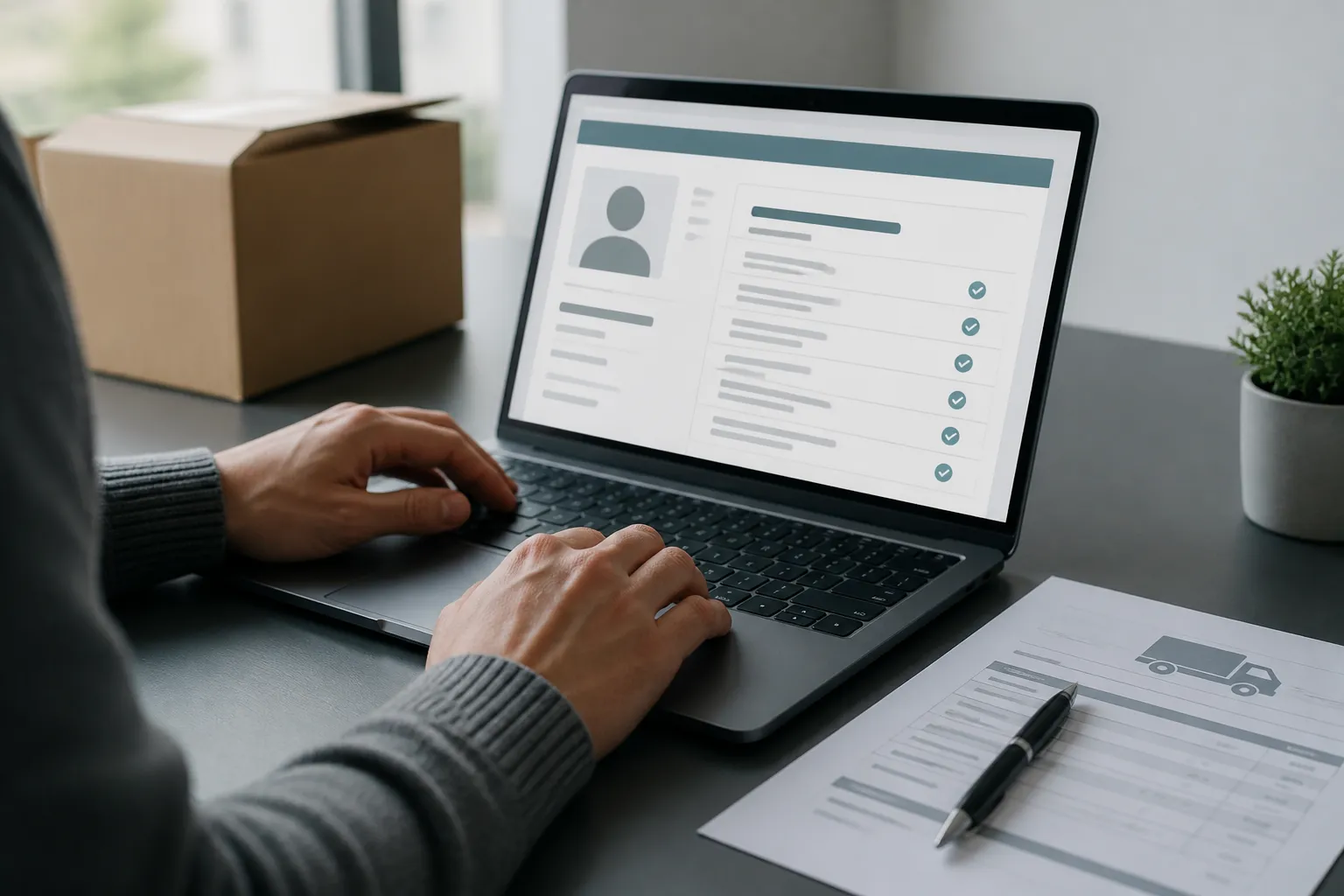
The SAFER Company Snapshot is a free lookup run by the U.S. Department of Transportation. You do not need a login. Follow these steps:
- Ask the company for its USDOT number or MC number before you book.
- Search SAFER by that number, or by company name if you must.
- Check the three fields that matter most, listed below.
- Match the legal name and physical address to your quote.
- Do all of this before anything goes onto a truck.
The snapshot also shows company size, commodity information, safety record, out-of-service inspection summary, and crash information. For a household goods mover, look closely at these:
- Entity Type should read CARRIER or HHG CARRIER.
- Operating Status should read AUTHORIZED FOR HHG.
- Insurance should show active Cargo and BIPD coverage.
If any of these look wrong or are missing, do not book. Also look at Operation Classification. A residential mover should show "Auth. For Hire." Labels such as "Private" or "Auth. For Other" suggest the company is not a public household goods carrier. Finally, compare the legal name and address on SAFER with your quote. Some operators use a trade name that differs from the registered one, and a mismatch is a reason to ask questions first.
Carrier versus broker, and what that means for your move
An Entity Type of BROKER means the company does not move your goods itself. It sells the job to a carrier. So the business you sign with and the business that loads and drives the truck may be two different companies.
A broker is not automatically a scam. You just need to know which one you are dealing with. Ask directly whether the company is a carrier or a broker, and if it is a broker, ask which carrier will transport your goods. Keep both names in your records.
An Operating Status of NOT AUTHORIZED, OUT OF SERVICE, or INACTIVE means the company is not legally allowed to perform interstate moves. Anything other than AUTHORIZED FOR HHG is a reason to walk away. On moving day, compare the names on the truck, the bill of lading, and your paperwork. An interstate carrier must display its legal name and USDOT number, so a mismatch deserves a pause before loading.
Estimates, payment, and held goods
Federal rules require an interstate mover to give a written estimate based on your actual goods, not a guess over the phone. Ask whether the estimate is binding, binding-not-to-exceed, or non-binding, because that answer changes what you owe if the final bill differs.
With a non-binding estimate, a mover generally cannot hold your belongings for more than the amount on that estimate at delivery, and you have the right to receive your goods after paying that amount. A binding or binding-not-to-exceed estimate removes much of that ambiguity.
Be cautious about large deposits and requests to pay by cash, wire transfer, peer-to-peer apps, or a personal account. Reputable movers typically take a modest deposit or none, and accept traceable payment. The sources I reviewed do not say what "modest" means in dollars, so ask each company to explain its deposit policy in writing and compare.
Known schemes include fraudulent bills of lading, low-ball estimates followed by a demand for more money before your goods are released, weight bumping (recording a higher weight or volume than was actually moved), and inflated charges for packing materials. A price that jumps after loading is the classic hostage-load pattern.
Costs vary by state, distance, and the amount of goods you own. I could not find reliable dollar ranges in the sources, so use a written estimate for your own move rather than a number from the internet.
Red flags and questions to ask before you book
Watch for these warning signs:
- A quote by phone with no inventory, survey, or written estimate.
- No USDOT number, or a company that will not give you one.
- Pressure to sign blank or incomplete documents, such as an estimate with the total left empty.
- An unmarked truck, or a name on the truck that differs from your paperwork.
- A website with no local address and no DOT or insurance information.
- Phones answered with a generic "Movers" greeting, a generic email address, or claims of 20 years in business with little online presence.
- Reviews that all appear within a short, recent period.
Then ask these questions, and write down the answers:
- What is your USDOT number and MC number?
- Are you a carrier or a broker, and which company will transport my goods?
- Is your estimate binding, binding-not-to-exceed, or non-binding?
- What is the legal name and physical address on your registration, and does it match this quote?
- Does your insurance show active Cargo and BIPD coverage?
Check complaint history before you commit. The FMCSA National Consumer Complaint Database and local Better Business Bureau records are free places to look. You can read more in the DOT Office of Inspector General overview of household goods moving fraud, and the FMCSA general line is 1-800-832-5660 if you need help reading registration information. The SAFER Company Snapshot is where the lookup itself happens.
When to escalate and what remains unclear
The DOT Office of Inspector General investigates household goods carriers and brokers accused of egregious, intentional, and repeated criminal violations of FMCSA consumer protection rules. That is serious misconduct, not an ordinary billing disagreement.
Some things the sources did not cover. They do not walk through filing a complaint or damage claim step by step. They do not describe state rules for intrastate moves, which SAFER does not cover. They do not give insurance amounts or explain what Cargo and BIPD coverage actually pays. Confirm those points with the mover, your state consumer agency, and FMCSA. For a specific contract, payment dispute, or question about your rights, talk with a licensed professional in your state.
Sources
- How to Spot a Moving Scam: 6 Red Flags Before You Book | MC Movers
- Search by Company
- SAFER Web - Company Snapshot
- How to Verify a Moving Company on FMCSA SAFER (2026 Guide) | MC Movers
- Avoid scams when you hire a moving company | Consumer Advice
- How to Avoid Moving Company Scams and Protect Your Move
- Household Goods Moving Fraud | DOT OIG
Still have a question?
Related guides
-

The Driveway Quote: How Moving Estimates Get Rewritten After the Truck Is Loaded
Binding, non-binding, and not-to-exceed estimates carry different risks, and knowing which one you're holding is the best defense against a price jump at delivery. By Gideon Aldaine
-

How to Tell Whether a Haircut and Color Quote Is Fair
National 2026 ranges, the factors that move prices, and the questions that make two salon quotes comparable. By Renata Okafor
-

How to Check a Stylist's License Before You Book
A few minutes on the state lookup can confirm whether your stylist is authorized to work, and it tells you what to ask before you sit in the chair.By Neil Ostrander