How to Choose an Acupuncturist: Costs, Credentials and What to Ask Before You Book
A practical guide to typical session prices, insurance questions, and how to verify that a practitioner is certified and licensed in your state.
 By Neil Ostrander ·
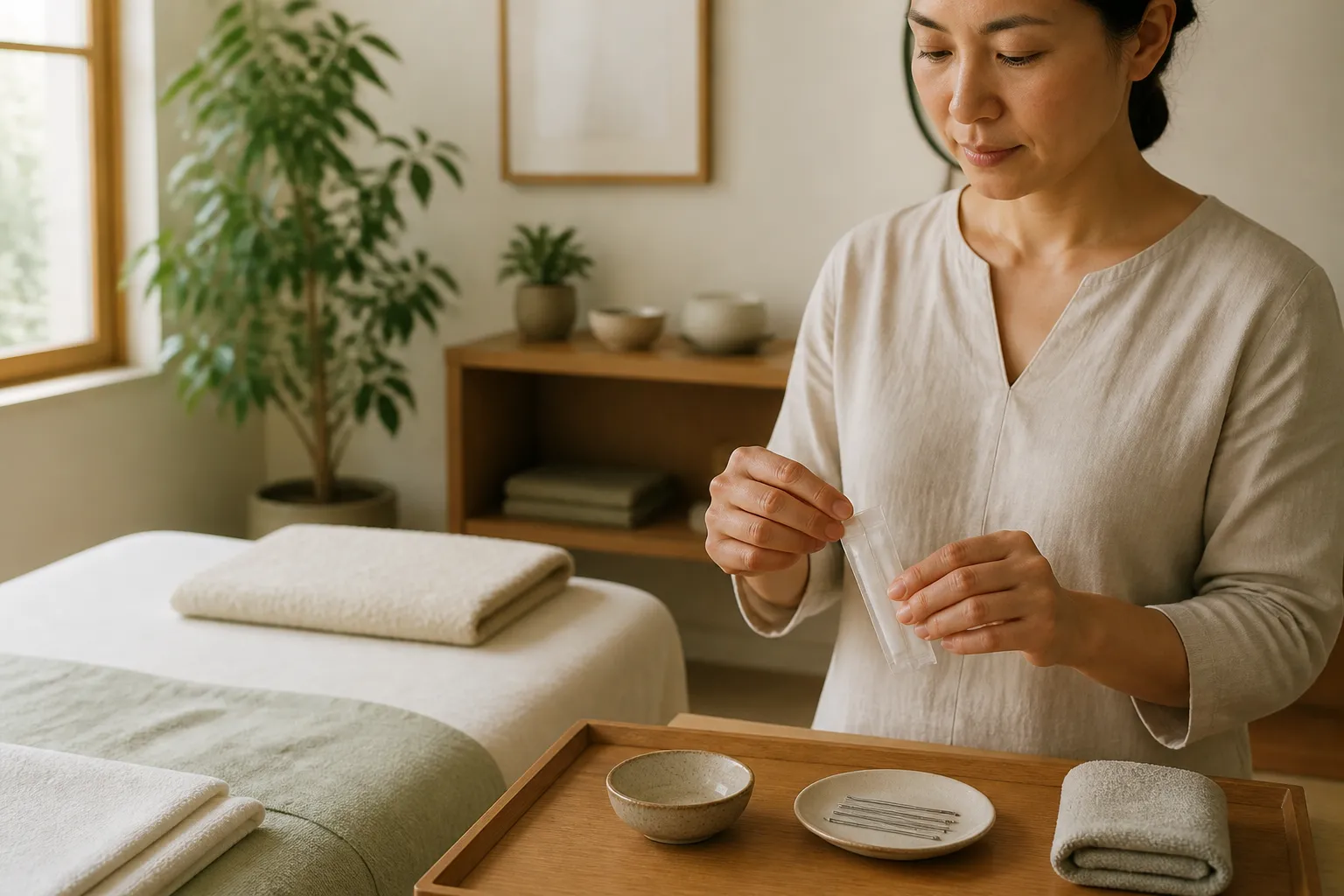
How much will a session cost, and how do you know the person holding the needles is actually allowed to do it? Those two questions come up first for most people, and both have clear answers once you know where to look. This guide walks through typical costs, how treatment works, how to check credentials, and what to ask before you pay. It is general information only, not personal medical, legal or financial advice, so check details with your doctor, your insurer and your state's licensing board.
What acupuncture typically costs
The sources behind this guide do not publish dollar figures, so treat the numbers here as a planning reference only. Many US patients report paying roughly $75 to $150 per session with a licensed acupuncturist in private practice. First visits often cost more because they include a longer consultation. Prices vary by state, by city, by the practitioner's experience, and by whether the visit adds extras such as herbs or cupping.
Before you book, run through this short list:
- Ask for the first-visit fee and the follow-up fee, and get both in writing.
- Ask whether herbs, cupping or other add-ons are billed separately.
- Ask whether package pricing exists and what happens to unused sessions.
- Ask about cancellation fees.
One lower-cost route is a student or faculty clinic at a school of Oriental medicine. One source describes these as offering quality care at very reasonable fees, though it gives no amounts. Care there is supervised rather than delivered by a fully licensed practitioner working alone, so ask how oversight works.

Insurance and payment questions
Coverage differs by plan and by state, and the sources did not spell out the details. The cleanest approach is to call your insurer and ask a fixed set of questions. Some flexible spending accounts may also cover eligible care, but your plan administrator has the final word.
- Is acupuncture a covered benefit under my plan?
- Do I need a referral or a diagnosis first?
- How many visits are allowed per year?
- Does the practitioner have to be in network?
How acupuncture works and what it is used for
Acupuncture is a traditional Chinese method in which a practitioner inserts very thin steel needles at specific points on the body. It is generally described as a supplemental therapy, so you may still need other medical treatment. Practitioners assess the whole picture through questions, touch, and close observation before choosing points.
People most often seek it for chronic pain in the back, neck, knee or muscles, plus headaches, migraines, arthritis, menstrual cramps and sports injuries. It is also used for menopause symptoms, irritable bowel syndrome, fertility concerns and some pregnancy discomforts. Studies have confirmed benefit for some of these conditions, not all. That is worth remembering when anyone promises results.
Styles differ. Some practitioners follow traditional principles about directing the flow of qi. Others use a modern Western-medicine framing to stimulate the body's systems, and many combine the two. Methods can include mild electrical stimulation, acupressure or heat, and a myofascial approach targets muscle and connective tissue pain.
Understanding credentials: certification versus state licensure
These are two different things, and people mix them up. Certification comes from a national body. Licensure comes from your state.
- Certification: The NCCAOM was founded in 1982 as a non-profit to validate entry-level competency. Most states recognize it as the primary certifying body, and certification is a prerequisite for licensure in most states. It announced a name change to the National Certification Board for Acupuncture and Herbal Medicine (NCBAHM) in early 2026, so you may see either name. Ask how the change affects a practitioner's existing certification.
- Licensure: A practitioner generally needs both certification and a current state license to practice legally. A certificate alone does not prove authority to treat patients where you live.
Abbreviations hint at training depth. L.Ac. generally means licensed acupuncturist. Dipl.Ac. and Dipl.OM indicate board certification, and a Dipl.OM requires at least four years of graduate-level education and 3,000 or more supervised clinical hours. DACM is another advanced designation. Ask what each one means in your state instead of assuming they are equivalent.
How to find and verify a practitioner
Work through these steps in order:
- Search the NCCAOM directory and other referral routes described by the University of Minnesota's Taking Charge program.
- Check your state acupuncture association, which usually publishes local lists.
- Ask a school of Oriental medicine about alumni referrals or student clinics.
- Confirm a current license with your state licensing board, and look for any public discipline records. The sources did not explain this process, so you may need to search the board's website or call.
If you would rather see a physician who practices acupuncture, the American Academy of Medical Acupuncture is an organization of MDs and DOs trained in both modern medicine and acupuncture, and its site lists requirements by state.
Questions to ask and red flags to watch for
Ask these before the first appointment, and expect clear, direct answers:
- Do you hold current NCCAOM certification and a valid state license to practice here?
- What is your highest credential, and what training did it require?
- Which conditions do you treat, and how does acupuncture fit with my other care?
- How many sessions do you usually recommend, and how will we measure progress?
Pause if you see any of these:
- Certification offered as the only proof of legal authority to practice.
- Acupuncture presented as a replacement for other medical treatment.
- Claims that it is proven for every condition.
- Credentials you cannot match to a directory listing or state license record.
Checking takes a few minutes and can prevent costly or unsafe care.
Safety information and open questions
The sources used here did not fully cover risks and side effects, so read a current safety summary from a government or medical source before starting. Tell your primary doctor about health conditions, medications, pregnancy or bleeding risks. Typical course length and expected results were also not covered, which is why the session-count question above matters. A licensed professional can give advice that fits your situation.
Sources
- Acupuncture: What To Know
- Safety of Acupuncture | NCCIH
- Traditional Chinese Medicine: What You Need To Know | NCCIH
- NCBAHM NATIONAL BOARD CERTIFIED - CASTAÑO WELLNESS
- NCCAOM is Now NCBAHM: What Acupuncturists Need to Know – ACEU Masters
- NCCAOM Certification: Choosing an Acupuncturist | Fairfax
- Where Can I Find A Qualified TCM Practitioner? | Taking Charge of Your Wellbeing
- HOME - American Academy of Medical Acupuncture (AAMA)
Still have a question?
Related guides
-

The Driveway Quote: How Moving Estimates Get Rewritten After the Truck Is Loaded
Binding, non-binding, and not-to-exceed estimates carry different risks, and knowing which one you're holding is the best defense against a price jump at delivery. By Gideon Aldaine
-

How to Tell Whether a Haircut and Color Quote Is Fair
National 2026 ranges, the factors that move prices, and the questions that make two salon quotes comparable. By Renata Okafor
-

How to Check a Stylist's License Before You Book
A few minutes on the state lookup can confirm whether your stylist is authorized to work, and it tells you what to ask before you sit in the chair.By Neil Ostrander