What a Medical Alert System Really Costs: A Step-by-Step Guide to Comparing the First-Year Bill
The monthly fee is only part of the price, so comparing first-year totals, fall detection and warranty terms will tell you more than the headline rate.
 By Renata Okafor ·
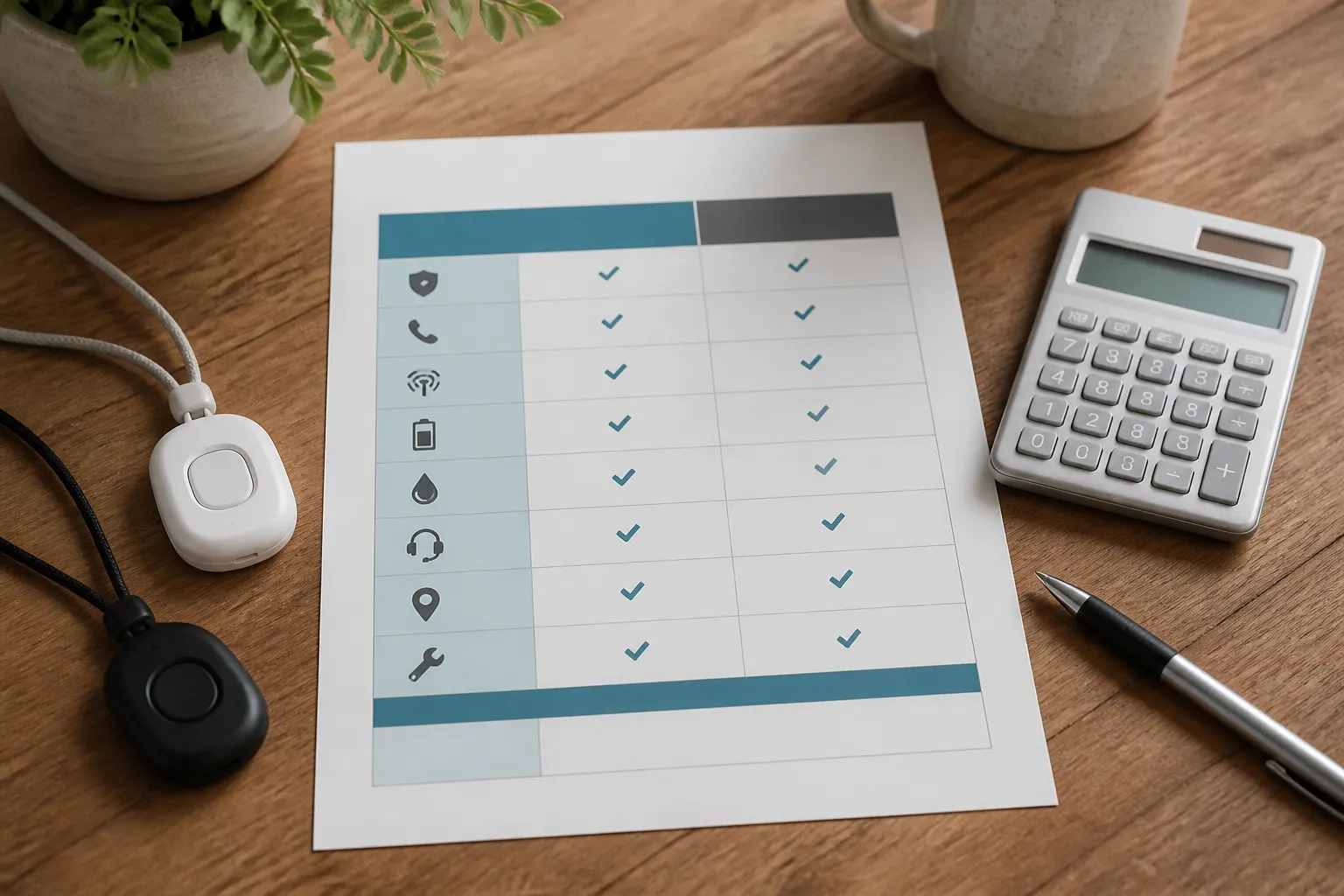
What will a medical alert system actually cost when your mother or father lives alone and you want a button within reach? The short answer is about $20 to $55 a month, but the monthly number is only the first line of the bill. This guide walks through what shapes the total, how to compare offers step by step, and what to ask before anyone signs. Prices vary by state and by situation, so treat every figure here as a starting point.
The monthly rate is where the price starts. It is rarely where it ends.

What a medical alert system costs per month
According to the AgingInPlace.org cost overview, a medical alert system averages roughly $20 to $55 a month. The spread is wide because brands, system types and add-on features differ a great deal. That national range says nothing about your state or your parent's needs, so use it only to sense whether a quote is wildly high or suspiciously low.
Headline prices can also hide big gaps. One reviewer tested a service that charges $49.95 a month, nearly double the price of a competitor the same reviewer named. Someone who compared only the first figure on each website might never see how much more they would pay over a year.
To keep the comparison honest, line every provider up on the same footing:
- The same number of months, usually twelve.
- The same type of device, such as a wearable button or a home base unit.
- The same add-ons, especially fall detection.
How these systems work, and why that affects price
A medical alert system connects the wearer to an emergency monitoring center and to loved ones. The wearer pushes a help button. An operator responds and, depending on the situation, contacts emergency responders or a caregiver. Devices can work at home or on the go, around the clock, and the service runs on a monthly subscription.
That design is the reason people pay for it instead of relying on a cell phone. A phone needs the person to find it and dial. These systems are built for rapid response. The CDC reports about 3 million emergency department visits a year for older people who fall, which is why many families treat the button as a safety net for someone who lives alone.
Some systems also detect falls with sensors and call for help without a button press. That feature is where pricing often changes, so it deserves its own question.
What drives the total beyond the monthly fee
The full cost is shaped by several pieces, not one. Each can move the first-year bill noticeably:
- The subscription plan.
- Equipment fees.
- Activation fees.
- Warranties.
- Add-on features such as fall detection.
Equipment and activation fees are often one-time charges. The sources I reviewed gave no dollar amounts for them, and I would rather say so than guess. Ask each provider to state those fees in writing before you decide.
Fall detection is the add-on to settle first. Decide whether a button alone is enough or whether your parent might be unable to press it after a fall. Then ask whether detection is included or billed separately, because it can change both the monthly cost and the level of protection.
How to estimate the real first-year cost
Here is a simple method. Ask every provider for one number, then compare those numbers.
- Take the monthly subscription and multiply it by twelve.
- Add the equipment fee.
- Add the activation fee.
- Add any add-ons, such as fall detection.
- Note the warranty and what a replacement costs if a device fails or is lost.
Also confirm that the advertised monthly rate is the final price after fees. One reviewer reported that the real price appeared only when a device was purchased, which made advance comparison nearly impossible. Warranty and replacement terms rarely show up in the monthly rate, yet they affect what you pay over several years.
Red flags and questions to ask before signing
Be cautious if pricing is not published on the provider's own website. It makes comparison hard and hidden costs easier to miss. Ask for a written quote that lists every fee. Be careful with review sites too, since some are paid by the providers they list. Use rankings as one input and check them against each provider's published terms.
Bring this list to every call:
- What is the total first-year cost, including equipment, activation and add-ons?
- Does the price include fall detection, or is it extra?
- What warranty covers the equipment?
- Is the monthly rate the final price after fees?
Several things were not covered by the sources I could use, so ask about them directly: contract length, cancellation terms, refund rules, whether a cellular or landline connection changes the price, and whether Medicare, Medicaid or private insurance pays for any part. Your insurer or a local benefits office can answer the coverage question.
This article is general information, not personal medical, legal or financial advice. A licensed professional who knows your parent's health and budget can help you weigh the choices.
Please seek a professional. This article is general information, not medical advice. Please seek a doctor or other qualified health professional about your own situation. In an emergency, call 911 or your local emergency number.
Sources
- How Much Does a Medical Alert System Cost? - Medical Care Alert
- Medical Alert System Features: Which Do You Need?
- The Best Medical Alert Systems in 2026
- How Much Do Medical Alert Systems Cost? - AgingInPlace.org
- Medical Guardian vs. Medical Alert 2026: Who Wins?
- Medical Alert Review 2026: Tested & Approved
- How Much Do Medical Alert Systems Cost?
- Life Alert Medical Alert System Cost & Pricing in 2026
Still have a question?
Related guides
-

The Driveway Quote: How Moving Estimates Get Rewritten After the Truck Is Loaded
Binding, non-binding, and not-to-exceed estimates carry different risks, and knowing which one you're holding is the best defense against a price jump at delivery. By Gideon Aldaine
-

How to Tell Whether a Haircut and Color Quote Is Fair
National 2026 ranges, the factors that move prices, and the questions that make two salon quotes comparable.By Renata Okafor
-

How to Check a Stylist's License Before You Book
A few minutes on the state lookup can confirm whether your stylist is authorized to work, and it tells you what to ask before you sit in the chair. By Neil Ostrander