What Tattoo Removal Really Costs and How to Choose a Safe Provider
Price depends mostly on how many sessions your tattoo needs, and safety depends on who is operating the laser, so this guide walks through both with a checklist you can use before booking.
 By Neil Ostrander ·
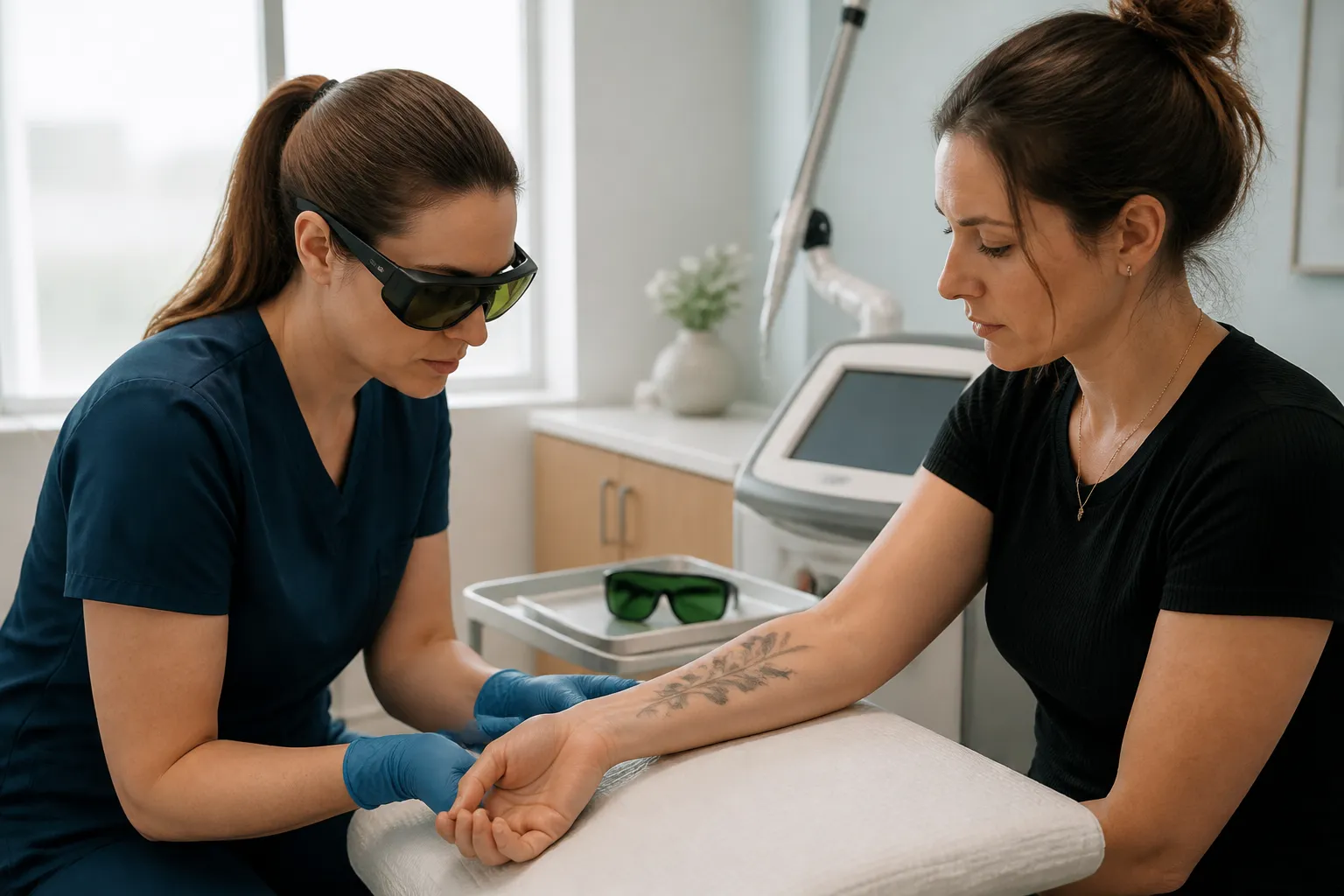
Are you wondering what it will really cost to get a tattoo taken off, and how you would tell a qualified provider from a risky one? The short answer is that the price depends mostly on how many sessions your tattoo needs, and the safest choice depends on who is holding the laser. This guide walks through both, step by step. It is general information only, not personal medical, legal or financial advice, so check your own situation with a licensed professional.
Removal is not as easy as it seems, and it often takes many sessions.

What tattoo removal typically costs
The American Society of Plastic Surgeons reports an average cost of about $697 for laser skin treatments such as laser tattoo removal. That is a national average, and it leaves out related expenses. Costs vary by state and by situation, so your own quotes may land higher or lower. The sources do not give state-level ranges, so treat $697 as a rough starting point and not a promise.
The biggest driver of your total is the number of sessions. Ink sits below the surface of the skin, and the body clears it gradually, so removal is spread over several visits. Large, colorful or elaborate tattoos generally need more sessions than small, single-color designs. Dermabrasion and surgical excision are likely to cost more than laser treatment, according to the same source.
Before you compare prices, work through this short list:
- Ask whether the quote covers one session or the full course.
- Ask for an estimated number of sessions for your tattoo's size and colors.
- Ask for a written breakdown of every fee, including consultations and aftercare supplies.
- Ask about financing or payment plans if you need them. The sources do not cover insurance or financing terms in detail.
How the main removal methods work
Laser removal is the most common method. The laser sends pulses of high-intensity light that the pigment absorbs. The pigment breaks into smaller particles, and your body clears them over the weeks after each session. Dark ink is generally the easiest to remove. Lighter colors such as yellow and red can also come out, but they may need the right type of laser and more treatments.
Other methods work differently. Dermabrasion, chemical peels and surgical excision take away skin or the skin layers that hold the ink. Because they remove tissue, they usually carry a higher risk of scarring than laser treatment. Removal creams are also named in the sources, though the results and risks are not detailed there.
What does it feel like? Some people compare laser pulses to a rubber band snapping against the skin, and the area can be sore afterward. Good results depend on the correct type of laser, an understanding of how tissue reacts to it, and proper aftercare. Ask what healing will look like for your specific treatment.
How to choose a qualified provider
Start with who is allowed to run the laser. The FDA says lasers are cleared for use by, or under the supervision of, a health care professional. So your first question is simple: who will operate the device, and who supervises?
Two common routes are worth checking:
- A board-certified plastic surgeon. The ASPS lists member standards: board certification by the American Board of Plastic Surgery or the Royal College of Physicians and Surgeons of Canada, at least six years of surgical training after medical school (including three years of plastic surgery residency), passing oral and written exams, yearly continuing education that includes patient safety, and surgery in accredited, state-licensed or Medicare-certified facilities.
- A dermatologist or dermatologic surgeon. The American Academy of Dermatology and the American Society for Dermatologic Surgery both publish guidance on finding one.
You can read more at the ASPS guide to choosing a surgeon for tattoo removal and the ASDS tattoo removal page. Verify board certification directly with the certifying board rather than relying on a website. Then book a consultation and ask what options exist for your particular tattoo.
Questions to ask at the consultation
- What credentials do you hold, and can I verify them with the certifying board?
- Who will perform each session, and who supervises?
- How many sessions do you expect for my tattoo, and what is the price for the full course?
- What are the risks of scarring and infection for me?
- What aftercare is needed, and who do I contact if something goes wrong?
The sources do not quantify risks or healing times, so a clear, direct answer from the provider matters.
Red flags to watch for
Be cautious if removal is offered without a health care professional performing or supervising it. That oversight is the setting the FDA says lasers are cleared for. Be wary too of vague credentials. The ASPS warns patients not to be confused by official-sounding titles, so ask for the specific board certification behind any title.
A promise of a fast or painless result is another warning sign. A tattoo will not vanish in one visit. Finally, watch for providers who cannot explain complications or aftercare. Scarring and infection are the main risks the sources name, and a trustworthy provider should talk about them plainly. For decisions about your skin and budget, a licensed professional can give advice that fits you.
Sources
- Tattoo Removal: Options and Results | FDA
- https://vertexaisearch.cloud.google.com/grounding-api-redirect/AUZIYQE7rrfRLJ6Bk_8tDZocoO0wtAKNjVZC32Zs9zN-AJSB6hEltaqPrkAE01cgSVC4fSHOug1RAadv7o_ohWqiJVxO7hK1Zi1qiA6Mo1MayOUnHwtV2NNrlMBy8oRBGHk=
- Tattoo removal: Lasers outshine other methods
- Tattoo Removal Cost | American Society of Plastic Surgeons
- Choosing a Plastic Surgeon for Tattoo Removal | ASPS
- Tattoo Removal
- Tattoo Removal: How It Works, Process, Healing & Scarring
- Tattoo Removal: What It Costs and Is It Worth It? - CareCredit
Still have a question?
Related guides
-

The Driveway Quote: How Moving Estimates Get Rewritten After the Truck Is Loaded
Binding, non-binding, and not-to-exceed estimates carry different risks, and knowing which one you're holding is the best defense against a price jump at delivery. By Gideon Aldaine
-

How to Tell Whether a Haircut and Color Quote Is Fair
National 2026 ranges, the factors that move prices, and the questions that make two salon quotes comparable. By Renata Okafor
-

How to Check a Stylist's License Before You Book
A few minutes on the state lookup can confirm whether your stylist is authorized to work, and it tells you what to ask before you sit in the chair.By Neil Ostrander