What to Check Before You Sit Down for a Pedicure
The foot spa, not the polish wall, is where a salon's hygiene matters most, and a few direct questions can show you how it is run.
 By Renata Okafor ·
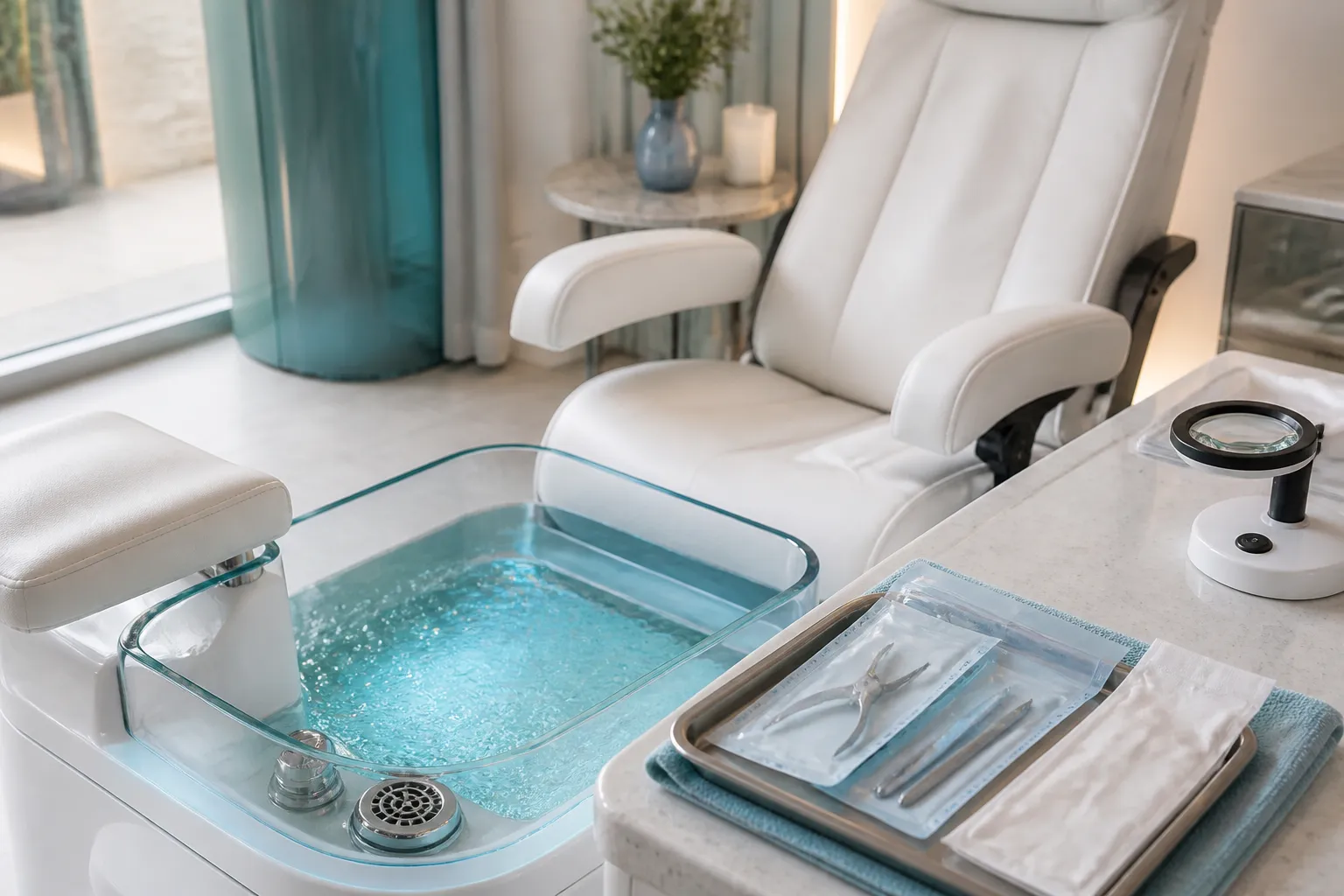
Have you ever sat down in a pedicure chair and wondered what was in that basin before you? Most of us judge a salon by the polish wall and the front desk. The part that can actually make you sick is the foot spa, and a few plain questions will tell you a lot about how a salon runs. This guide walks through what to look for, what to ask, and when to walk out. It is general information only, not medical advice, so talk with a doctor or your state licensing board about your own situation.
Why foot spa cleaning matters most
The foot spa is the highest-risk part of a pedicure. Germs in the water can enter through broken skin, which is why the EPA says cuts and abrasions should never touch foot spa water. A salon's basin practices deserve more of your attention than its color selection.
Some foot spa infections have been traced to Mycobacterium fortuitum, an organism that occurs naturally in water and soil. Other organisms have also turned up in footbath systems. The trouble is in the plumbing. Screens, tubes, and jets collect bacteria and build biofilms that are very hard to remove, so a basin can look spotless and still harbor germs.
Infections can first look like insect bites. They may then grow, and in serious cases leave pus and scarring. If you see something like that after a pedicure, it is worth showing a doctor and telling the salon.
What proper disinfection looks like
The EPA recommends disinfecting a foot spa between every customer and again at night. A salon that cleans once a day, or only when the basin looks dirty, is below that baseline. You can read the full steps on the EPA foot spa basin procedure page.
The usual sequence runs in a set order:
- Drain the basin and remove visible debris.
- Clean surfaces with soap or detergent.
- Rinse with clean water and drain.
- Apply an EPA-registered hospital disinfectant, following its label.
- Keep surfaces wet for the full label contact time.
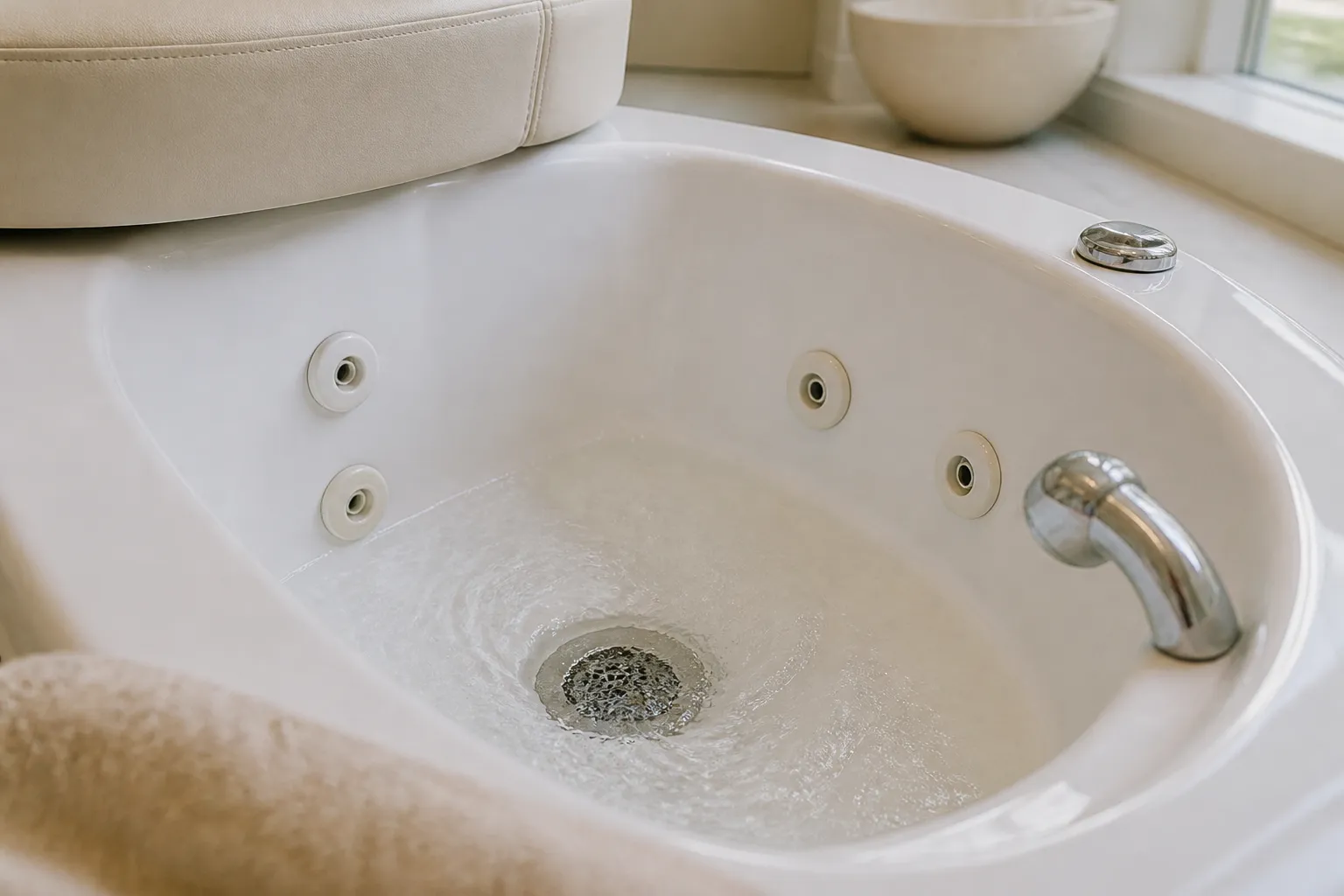
Skipping the cleaning step weakens the disinfectant. Contact time is the step most often rushed. It is commonly about 10 minutes, though some products list less, and the solution should not be drained early. For whirlpool, air-jet, and pipe-less circulating spas, the EPA advises filling the basin with clean water, adding the right amount of liquid disinfectant, and running the unit so it circulates for the whole contact time.
How to check a salon before you book
Start with a phone call. A well-run salon can describe its foot spa routine in order, including how often each step happens, without hunting for the answer. Hesitation is information.
Next, look at the products. The disinfectant should be EPA-registered, and its label should say it is approved for foot spa use and list a contact time. In California, the Board of Barbering and Cosmetology rules require an EPA-registered disinfectant with the registration shown on the manufacturer's label. Those rules apply only in California. Other states differ, so check with your own state board.
Tools matter too. California's rules describe autoclaves and dry heat sterilizers as devices that sterilize tools with high-pressure steam or hot air. That is a higher standard than wiping a tool down, and it is worth asking about for anything that touches skin.
Finally, notice the room. The EPA's guidance on nail salon worker health says a dust mask does not protect against toxic chemical vapors. It suggests ventilated tables with filters, or exhaust vents. Strong fumes in a stuffy room are a reason to ask more questions. The same guidance says workers should request Safety Data Sheets for every material and keep them on site.
Questions to ask at the front desk
Keep these short and friendly. You are not auditing anyone. You are listening for specific, confident answers.
- How often are the foot spas cleaned and disinfected? Is it between each client and at night?
- Which disinfectant do you use, and does its label approve it for foot spas?
- Is it EPA-registered, and do you follow the label contact time?
- Are tools sterilized in an autoclave or dry heat sterilizer, or only disinfected?
- Can I see the Safety Data Sheets for your products?
Staff who can pull out those sheets quickly are usually better prepared on safety overall. Also plan ahead. The EPA advises skipping shaving, hair removal creams, and waxing on your legs for 24 hours before a foot spa treatment, because those can leave tiny breaks in the skin.
Red flags that should stop you from booking
Some warning signs are clear enough to walk out over:
- The foot spa is not disinfected between clients or nightly.
- Disinfectant is drained before the label contact time is up.
- The disinfectant is not labeled for foot spa use.
- Clients with open sores, bug bites, bruises, scratches, cuts, scabs, or poison ivy are allowed in the spa.
- Staff rely on a dust mask as their only protection from fumes.
- Nobody mentions the 24-hour rule on shaving and waxing.
That last point is small, but it can show whether a salon gives clients full guidance. If you have any of the skin conditions above yourself, skip the foot spa that day.
What these guidelines do not tell you
The sources behind this guide give no US price ranges for manicures or pedicures. Costs vary by state, city, and service, so compare quotes from a few local salons. A low price is not proof of poor sanitation, and a high one does not guarantee good practice.
They also cover licensing and regulation only for California, and they do not explain how to look up a salon's inspection record elsewhere or where to file a complaint. Your state cosmetology or barbering board is the right place to ask. Finally, no full list of approved disinfectants was available, so read the product label or the EPA registration information instead of assuming. For a skin problem after a pedicure, see a licensed medical professional.
Sources
- Preventing Pedicure Foot Spa Infections | US EPA
- Learn the Issues | US EPA
- Recommended Cleaning and Disinfection Procedures for Foot Spa Basins in Salons | US EPA
- Protecting the Health of Nail Salon Workers | Safer Choice | US EPA
- Laws and Regulations - California Board of Barbering and Cosmetology
- Client Challenge
- https://vertexaisearch.cloud.google.com/grounding-api-redirect/AUZIYQGwBkFwjGol-jAbvGTGR7P1r3VLVyJCmJLL4ETxSjkfC_gz0uSIHVvQafvwQlvGS_FtZW3MDpn4r7uPLBigAzMlCwQiUz2awylNWXwMv7vL73h1Jl4936Dle1lrm3Jv7VGacV8yZFi5q5qcJ3OOms4lxv_Ywhd5INn-9WOemEwg1Iv0ikKTVwmxwbs=
- Manicure and pedicure safety
Still have a question?
Related guides
-

The Driveway Quote: How Moving Estimates Get Rewritten After the Truck Is Loaded
Binding, non-binding, and not-to-exceed estimates carry different risks, and knowing which one you're holding is the best defense against a price jump at delivery. By Gideon Aldaine
-

How to Tell Whether a Haircut and Color Quote Is Fair
National 2026 ranges, the factors that move prices, and the questions that make two salon quotes comparable.By Renata Okafor
-

How to Check a Stylist's License Before You Book
A few minutes on the state lookup can confirm whether your stylist is authorized to work, and it tells you what to ask before you sit in the chair. By Neil Ostrander