Why Catering Quotes Vary So Much, and How to Compare Them Fairly
Per-person prices hide food, labor, overhead and extra fees, so this guide shows how to compare caterers on equal terms, check food safety, and get the agreement in writing.
 By Neil Ostrander ·

Planning a party and wondering why one caterer quotes $25 a head and another quotes $70? You are not alone. Per-person pricing hides a lot of moving parts, and the cheapest number is rarely the one that tells you the most. This guide walks through what a quote usually contains, how to vet the business, which food-safety questions to ask, and what to get in writing. It is general information only, not personal financial, legal or medical advice, so check details with a licensed professional or your local authorities.
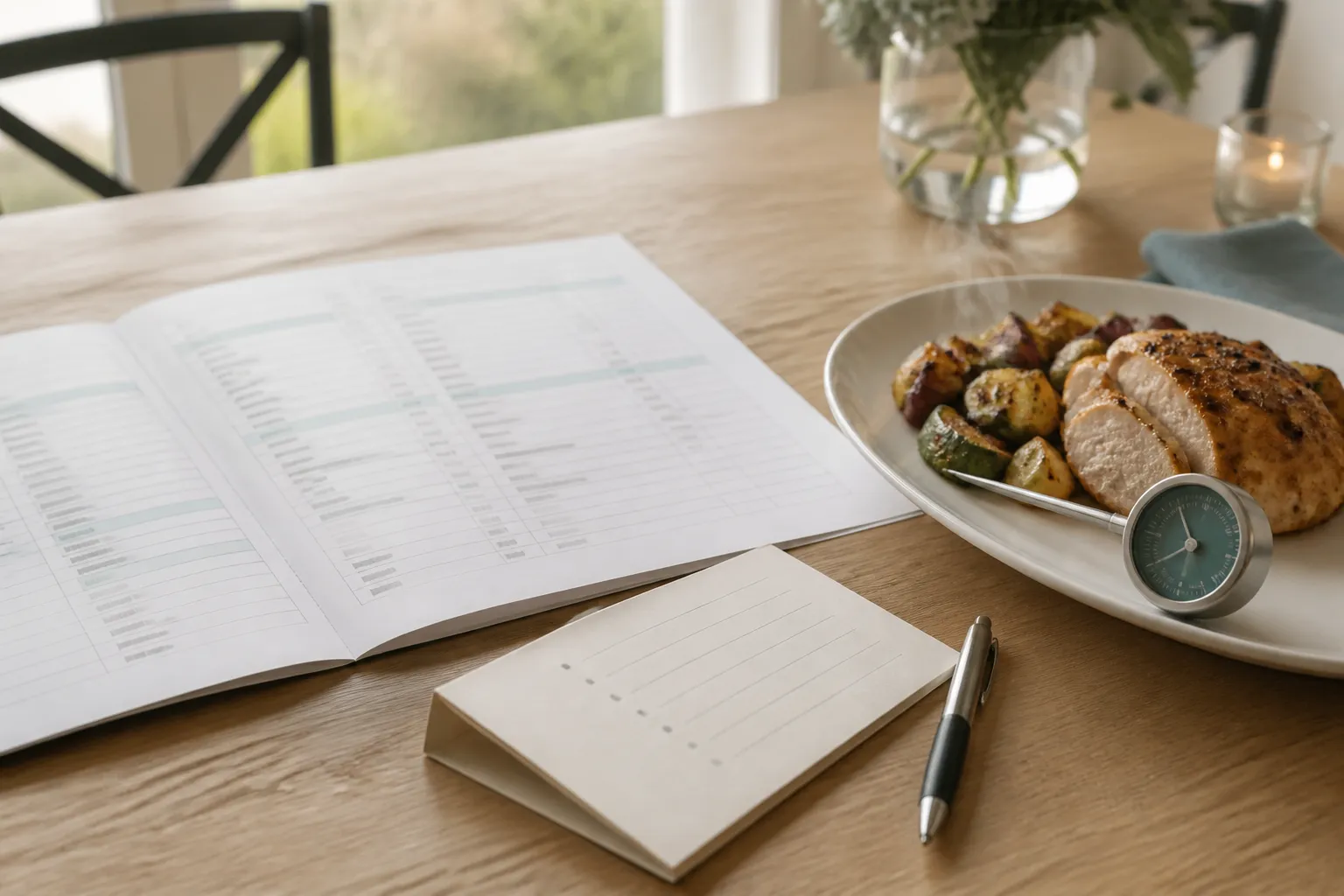
What a caterer's price usually includes
Most caterers quote per person. That one number bundles food, labor, and a share of the business's overhead, such as kitchen rent, insurance, vehicles, software and marketing. One industry pricing guide puts food and beverage at roughly 28 to 35 percent of a caterer's revenue, labor at 25 to 35 percent, and overhead at 15 to 25 percent, with a markup on top. [2] Its worked example: $16 of food, $10 of labor and $4 of overhead gives a $30 cost, which is then priced for a 45 percent margin. That shows how prices get built, not what you should pay.
Overhead is the part people forget. The same guide shows how it is spread out: $6,000 a month in fixed costs across 12 events of 75 guests works out to about $6.67 per person. [2] A small party can carry a higher share of that cost per head, which is one reason tiny guest counts sometimes cost more per plate.
For a sense of scale, WeddingWire reports an average wedding catering cost of about $4,000, with most couples spending between $1,800 and $7,000. Those are reported spending figures, not a formal survey, and they shift with the vendor's experience, guest count, date and region. [6] Your party may look quite different, and costs vary by state and situation, so treat any range as a starting point and collect local quotes.
Before you compare numbers, ask these:
- How many guests does the per-person price include?
- Does it cover food only, or also staff, rentals, linens and delivery?
- Are gratuities, service charges and taxes added on top?
The sources I reviewed do not spell out what per-person prices typically leave out, so ask for a line-item breakdown in writing.
Checking reliability and the business behind the quote
Start with the simplest question: is the caterer free on your date? Then read reviews and look up the business's profile with the Better Business Bureau. The BBB notes that complaints about wedding caterers and other wedding vendors often involve late delivery, businesses that are hard to reach, and vendors closing with little notice. [5] Those patterns apply well beyond weddings.
Ask how long the business has operated and how many current customers it serves. A newer company is not automatically a bad pick, but a short history and few active clients are reasons to look harder at references. Request contact details for recent clients who held events like yours, and actually call them.
Check your venue early, too. Many venues keep a preferred caterer list, and venue professionals say they weigh clear communication and operational reliability alongside food quality. [4] Ask whether there are restrictions or required vendors before you fall for a menu you cannot book.
Food safety: what to ask about temperatures and service
Good food that sits at the wrong temperature is a problem. The FDA's buffet guidance is simple: keep cold foods at 40 °F or colder, keep hot foods at 140 °F or warmer, and check with a food thermometer. [1] Ask every caterer how they will hit those numbers during your event. If they cannot explain it, that is a warning sign no matter how good the menu sounds.
Warming equipment deserves its own question. Some chafing dishes and warmers hold food only at 110 to 120 °F, which is too low. Ask for the make and model, or check the label, to confirm it reaches 140 °F or warmer. For hot dishes held in an oven before serving, the FDA suggests 200 to 250 °F. [1]
- Serving portions should stay small.
- Platters should be swapped for fresh ones during the party, not left out for hours.
- Cold back-up dishes should stay refrigerated until needed.
- Egg dishes can be refrigerated and served later, but should be reheated thoroughly to 165 °F.
The FDA text I had was cut off before its limit on how long food may sit out, so look that up directly. A written holding-temperature plan tells you more about competence than a tasting does.
Getting comparable bids and a written agreement
Bids are only comparable if every caterer prices the same event. A request for proposal, a formal document asking several caterers to bid, solves this. [7] Describe the date, start and end times, guest count, dietary needs, service style, rentals and venue constraints. Then line up the replies side by side.
Ask each caterer the same core questions, and get answers in writing: [5]
- Will you deliver on time, and what is your plan for it?
- What guarantees do you offer, and what exactly is covered?
- What is your payment schedule, and how much is due up front?
- How long have you been in business?
Public guidance on deposits, cancellation and refunds is thin, so read the contract closely instead of assuming standard terms. Be wary of pressure to pay the full fee up front, vague delivery times, and a business that is slow to answer you now. Slow before the sale rarely improves after it.
Credentials, licensing, and where to look for more help
Some caterers hold the Certified Professional Catering Executive (CPCE) credential from the National Association for Catering and Events. Applicants need three years of full-time catering or events work in the past four years and 30 hours of professional development in the past five, plus a $295 application fee. [3] It is a voluntary credential, not a legal license. Treat it as one signal, not proof of quality or compliance.
Licensing, permits and insurance rules vary by location, and my sources do not cover them. Ask which food-service licenses and permits the caterer holds for your area, and whether it carries liability insurance. Your local health department can confirm what applies where the party will be held.
If something goes wrong, document every agreement in writing, contact the business, then your local consumer protection office or the BBB. Many pricing sources are written for caterers or wedding marketplaces, not regulators, so check any figure against a local quote. For contract or insurance questions, a licensed professional can give advice that fits your situation.
Sources
- Serving Up Safe Buffets | FDA
- How to Price Catering: Complete Pricing Guide for 2026
- Apply to become a CPCE | National Association for Catering and Events
- How Venues Choose Their Caterers—and How to Stay at the Top
- BBB Tips: Planning a perfect wedding
- Wedding Catering Cost Guide | WeddingWire
- How to Craft a Request for Proposal (RFP) | A Free Template
Still have a question?
Related guides
-

The Driveway Quote: How Moving Estimates Get Rewritten After the Truck Is Loaded
Binding, non-binding, and not-to-exceed estimates carry different risks, and knowing which one you're holding is the best defense against a price jump at delivery. By Gideon Aldaine
-

How to Tell Whether a Haircut and Color Quote Is Fair
National 2026 ranges, the factors that move prices, and the questions that make two salon quotes comparable. By Renata Okafor
-

How to Check a Stylist's License Before You Book
A few minutes on the state lookup can confirm whether your stylist is authorized to work, and it tells you what to ask before you sit in the chair.By Neil Ostrander