Staying Put or Moving On: Weighing Home Changes Against Assisted Living
A calm, evidence-aware look at what home modifications cost, what the research can and cannot say, and how to decide with the person at the center.
 By Walter Pemberton ·

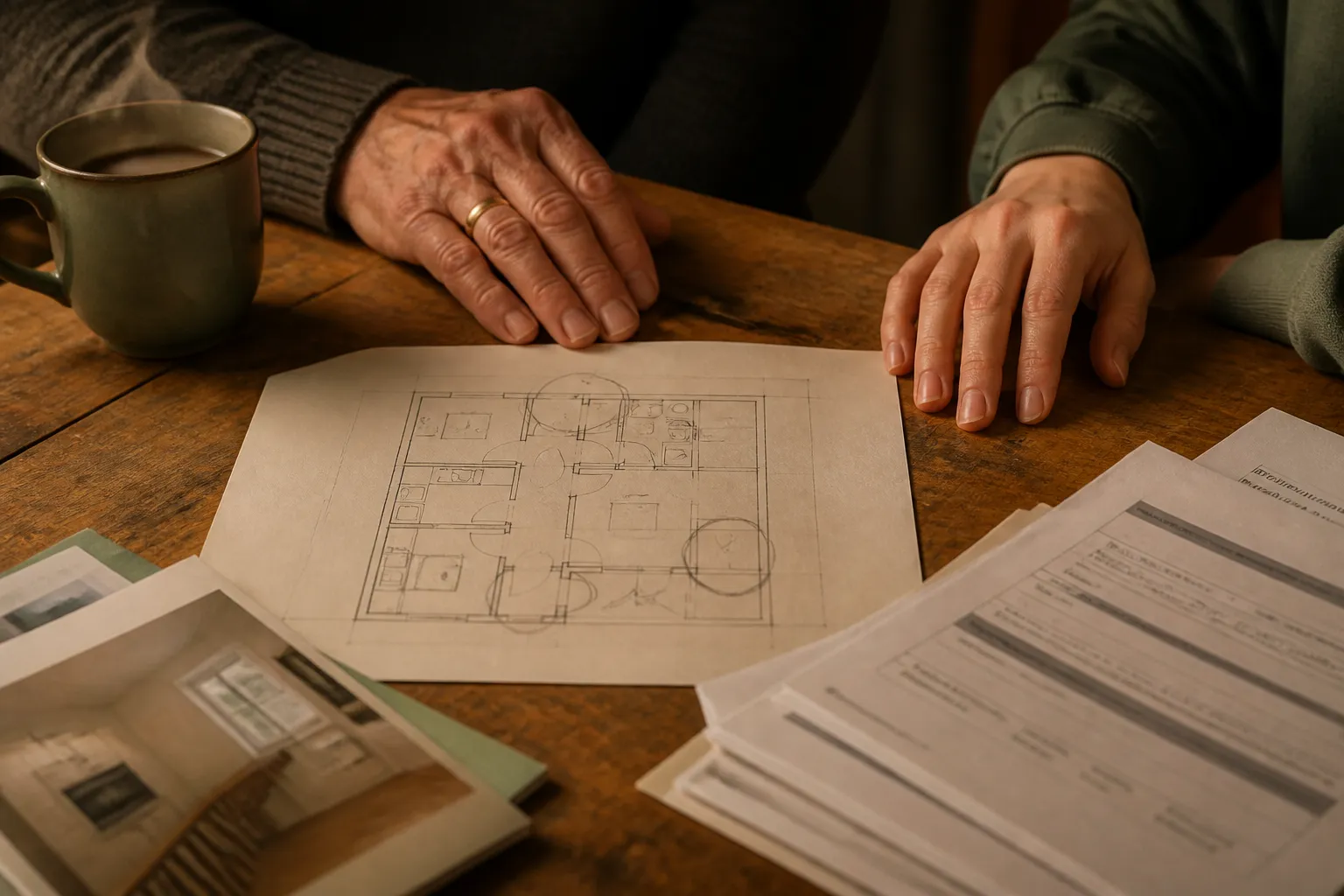
Picture a kitchen table on a quiet evening. A daughter and her father are going over a stack of brochures on one side and a handful of contractor quotes on the other. Neither wants to say the hard part out loud. Is the house still the right place for him, or is it time to think about a move? If you are in a spot like that, you are not alone, and there is no need to rush. What follows is a calm way to line the two paths up side by side.
Why the decision matters and what the evidence shows
Safety is usually what starts the conversation, and falls are the main reason. The CDC's STEADI initiative reports that more than one in four older adults falls each year, and about 43,000 people die from falls annually. Those numbers make the state of a person's bathroom, stairs and front steps feel like a real question rather than a chore list.
There is some encouraging research. A 2025 systematic review looked at 20 studies on home modifications for aging in place. Thirteen of them, or 65%, found that modifications helped with fall prevention, functional independence and cost savings. The other seven, 35%, were about housing accessibility and lifestyle factors.
It is worth being honest about what the review did not do. It found few studies on personalized interventions, smart home technology or how well changes hold up as needs grow. It also did not give a clear basis for comparing modifications with assisted living on long-term cost. So the research supports the idea that home changes can help. It does not hand you a winner.
Comparing the costs and how they are structured
Here are the figures one commercial source cites. A comprehensive set of home modifications runs about $5,000 to $30,000, paid once. Assisted living has a national median of about $6,200 per month. A comprehensive home assessment from a certified aging-in-place professional (the NAHB CAPS designation) is cited at $200 to $500.
Please treat these as rough national numbers. The source gives no state breakdown, and prices vary by state, by city and by the condition of the house. The assisted living figure is a median, so half of communities cost less and half cost more. Call a few local contractors and a few local communities before you trust any single number.
The shape of the costs differs too. Modifications are mostly a one-time expense. Assisted living is a bill that arrives every month. That means any comparison of totals depends heavily on how many years of support the person is likely to need, and nobody can know that for certain.
You may also run into a claim that families recoup modification costs within 6 to 12 months compared with facility care. That line comes from a company blog with no cited source. It may be true for some households, but I would treat it as unverified until someone shows you the math.
What modifications typically involve and how assessments work
Common changes include entryway ramps, bathroom grab bars, walk-in or roll-in showers, lever-style door handles, better lighting and night lighting, handrails, wider doorways and stairway chair lifts. A medical alert system often shows up on these lists as well.
Some steps cost very little. The CDC's free STEADI checklist, called "Check for Safety," walks room by room through floors, stairs, kitchen, bedroom and bathroom. It suggests things like securing loose rugs, adding nightlights, and placing grab bars by the toilet and in the tub or shower. Think of it as a good first walk-through. It is a starting point, not a full professional assessment.
For a deeper look, two kinds of people can help. A CAPS-certified contractor, designer or remodeler can assess the house from a building point of view. A licensed occupational therapist looks at how the person's physical and cognitive abilities fit with the home, and that assessment is clinical in nature. Which one suits you may depend on whether the worry is mostly the building or mostly the person's changing abilities.
Your local Area Agency on Aging can tell you about services nearby, such as transportation, home-delivered meals, adult day care and personal care help. The Eldercare Locator, at 1-800-677-1116, can point you to that office. The Administration for Community Living explains more on its staying in your home page.
How to choose between staying home and moving
Start with a professional home safety assessment, before you buy equipment or sign a contract. It lets you rank hazards by urgency, so the money goes to the stairs that worry everyone before it goes to anything nice but less pressing.
Next, ask whether this house can truly meet the needs you expect. A wheelchair changes the question. So does a bedroom that sits up a flight of stairs. The condition of the house and its layout matter as much as the budget.
Then look past the front door. Local services, transportation and how aging-friendly the neighborhood is all shape whether staying put is workable. A well-adapted house on a road with no rides and no nearby help can still leave someone isolated.
Finally, keep the person at the center. Their abilities and cognitive status matter, and an occupational therapist's assessment weighs them against the home. Plan around current and expected needs, not a general assumption about what older age looks like.
Questions to ask and red flags to watch for
Bring a short list to any assessor or provider:
- Is the home's layout and condition suited to ramps, wider doorways or a bathroom conversion?
- Which local services are available, and how do I reach the Area Agency on Aging?
- Would a CAPS-certified professional or a licensed occupational therapist be the better assessor for this situation?
- What tax and legal issues apply to changes to the home?
- Will these changes still work as needs change over time?
A few red flags deserve a gentle raised eyebrow. Be careful with blog posts from home-care companies that promote their own services while presenting cost comparisons without sources. Be careful with payback periods and claims like "up to 38%" fewer falls when no specific study is named. Ask where a number came from before leaning on it. And be wary of anyone who says modifications can replace professional assessment or care entirely. Even the CDC checklist is meant to be used alongside a professional evaluation.
Some questions this research could not answer, so plan to look into them yourself. These include state-by-state costs, whether Medicare, Medicaid or long-term care insurance pay for modifications or assisted living, grant programs, and how to vet and license-check contractors. The ACL's home modification toolkit and the AARP HomeFit Guide may help, though the pages I could review were mostly navigation.
This is general information, not medical, legal or financial advice. A licensed occupational therapist, an elder law attorney and a financial professional can help with the parts that are specific to your family.
Please seek a professional. This article is general information, not medical advice. Please seek a doctor or other qualified health professional about your own situation. In an emergency, call 911 or your local emergency number.
Sources
- Patient & Caregiver Resources | STEADI - Older Adult Fall Prevention | CDC
- A Systematic Review of Home Modifications for Aging in Place in Older Adults - PMC
- Home Modifications for Aging in Place: Checklist & Tips
- A Home Fall Prevention Checklist for Older Adults | Mi Caregiver Connection
- Staying in Your Home | ACL Administration for Community Living
- Essential Home Modifications for Aging in Place (With Costs)
- New Home Modification Toolkit from the Fall Prevention Center of Excellence | ACL Administration for Community Living
- AARP HomeFit Guide
Still have a question?
Related guides
-

Reading the Fine Print Before You Move Into a CCRC
How accreditation, audited financials and refund terms fit together, and where the available sources stay silent.By Walter Pemberton
-

The Waiting Game: How Long-Term Care Insurance Actually Pays
Benefit triggers, elimination periods, and benefit limits decide when a policy starts paying and how much it covers, so read those terms before you need them.By Walter Pemberton
-

Agency or Direct Hire: Comparing the Real Cost of Home Care
A lower hourly quote can hide taxes, insurance, and scheduling work, so it helps to put every option's full terms side by side before you choose. By Priya Ranganathan