The Keypad at the End of the Hallway
Assisted living and memory care can share a name and a roof, so families need to look closely at the door, the staff and the price before they choose.
 By Priya Ranganathan ·
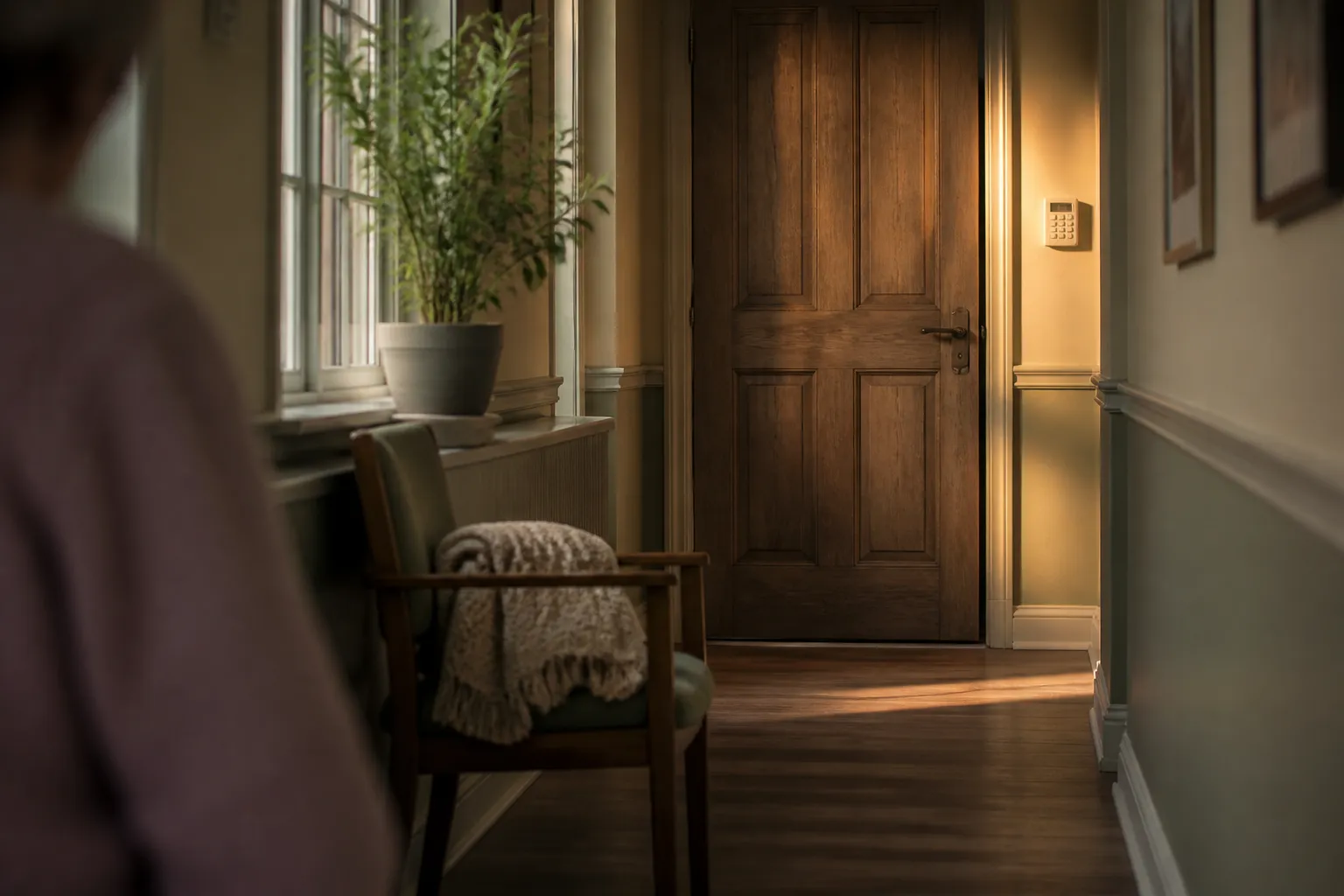
A neighbor of mine once toured two places in a single afternoon for her mother. Both were called assisted living. Both had pretty courtyards. Only one had a keypad on the door at the end of the hallway, and she did not notice it until the second visit. That small detail turned out to matter more than the courtyard.
What assisted living is, and where memory care fits
Assisted living is one kind of residential care community. Federal health statistics describe these communities as offering long-term support to people who cannot live entirely on their own but generally do not need the skilled nursing care of a nursing home. Residents usually keep a private apartment or room and get help with things like bathing, dressing, medication reminders and meals.
Memory care is usually not a separate building. More often it is a distinct, secured section inside a licensed assisted living community, built for residents whose main need comes from Alzheimer's disease or another dementia. So a family may see both options under one name and one roof. It helps to ask plainly what level of care a particular unit is licensed to provide.
Labels also shift from state to state. You may hear dementia special care unit, Alzheimer's special care unit or secured unit. They can describe similar places, but the rules behind them are not the same everywhere, so the name alone will not tell you what standards apply.
How the setting and the day differ
The most visible difference is security. Memory care units typically use keypad doors, delayed-egress hardware that slows an exit while staff respond, or wander-alert systems. The aim is to prevent unsupervised exits by someone who may not recognize danger or find the way back. Many states require features like these for dementia units.
The design often reflects how people with dementia see the world. You may notice lower-contrast flooring that does not look like a step or a hole, less glare, and hallways that loop instead of ending in a dead end. A resident can keep walking without getting stuck or upset. Standard assisted living rarely needs any of this, so seeing it is a useful clue.
The day is shaped differently too. Memory care tends to lean on routine, familiar cues and activities adapted to memory loss. When you visit, ask staff to walk you through a typical day. Then watch whether the pace and mealtimes would suit the person you have in mind.

Staffing and training: what rules expect and leave open
Across state frameworks, memory care is generally defined by three things: secured perimeters, modified programming and dementia-specific staff training. Expectations run higher than for ordinary assisted living, for both the building and the people working in it. In practice, staff should be trained in dementia behavior, communication and safety, not only general caregiving.
The exact numbers are harder to find. The public sources behind this guide do not give staffing ratios or required training hours by state, and those rules change. So ask the community for its staff-to-resident ratio on each shift, what training staff complete before working with residents, and which state rules apply. Your state licensing agency is the authority on current requirements.
Ask about turnover, too. A caregiver who has known a resident for years learns the habits and the triggers. That familiarity can make an ordinary Tuesday calmer. Ask how long typical direct-care staff have worked in the unit.
What it costs, and why the number moves
Start with a benchmark. CareScout reports a 2025 US national median of $6,200 a month for assisted living, up from $5,900 in 2024, about a 5 percent rise. For comparison, it lists $9,581 for a semi-private nursing home room and $10,798 for a private one. These are national medians. Prices vary by state, metro area and community, and a given provider may sit well above or below the median for its area.
The sources I reviewed do not give a separate median for memory care. It is usually priced above general assisted living because of the added security, staffing and programming, but how much more depends on the place and the region. Ask for the memory care rate by name rather than assuming the assisted living figure applies.
The base rate rarely tells the whole story. Ask what the monthly fee includes, what is billed separately, and how prices rise when care needs grow. Add-on charges for medication help, bathing or behavior support can change the total a great deal.
Questions to ask and warning signs
Begin with the structure. Is there a dedicated dementia unit, or are residents with dementia served in an integrated setting? Does the unit have the physical features your state requires, and has the staff had dementia-specific training? Is the community licensed for memory care, and does your state treat it as its own level of care?
Then ask about clinical support:
- Does the community screen for cognitive impairment and depression?
- What dementia programs does it offer?
- Does it provide therapy, mental health services or hospice coordination?
Federal research found that these offerings vary by size, with larger communities more likely to have dementia programs. A smaller place may be lovely, but do not assume it has the same supports.
Some warning signs deserve a pause. A unit marketed as memory care without secured perimeters or dementia-trained staff may not meet expected standards. Be careful if a community cannot explain its staffing, will not put terms in writing, or says ordinary assisted living rules are enough for someone with memory loss. Verify the license with your state agency before you sign.
Limits of the data, and what to check yourself
Some widely quoted national figures are old. The federal dementia data comes from 2010, and community size data from earlier surveys, so treat those numbers as background rather than today's fact.
Payment is a real gap. The sources I reviewed do not explain how Medicaid, long-term care insurance or other coverage pays for assisted living or memory care, and the rules differ by state and program. Your state Medicaid office, a licensed insurance professional or an elder law attorney can tell you what applies to your situation.
This is general information, not medical, legal or financial advice. Use it as a checklist. Confirm current costs, licensing and staffing directly with the community and your state licensing agency, and if you can, ask a clinician who knows your family member to help with the decision. For background on residential care communities, the CDC's FastStats page is a good place to start.
Please seek a professional. This article is general information, not medical advice. Please seek a doctor or other qualified health professional about your own situation. In an emergency, call 911 or your local emergency number.
Sources
- FastStats - Residential Care Community
- Products - Data Briefs - Number 454 - December 2022
- Products - Data Briefs - Number 134 - November 2013
- Products - Data Briefs - Number 170 - November 2014
- https://vertexaisearch.cloud.google.com/grounding-api-redirect/AUZIYQHe7u3Z3Q7mqIoXvmbJksCustScLTvWzRdKD4BAVpxcRHwjCS-lE21O4IUN4E4tVqb9yYM015GAROOQqmR-YzsR92sL-Qpb4c8TRBTTD0WdEPt2awAUSk9Fgy2ZkVv7-fFBTaFlcQyk9JSgeBhy_74bAfF-a_2EaABCGHtP2zTnsTIm8L1D9GoApGE9-0llc4aIoR7-wR-iYShOUsZF1DgyrPhycaFEscAXjz0=
- https://vertexaisearch.cloud.google.com/grounding-api-redirect/AUZIYQGzup2KNh8Kk4OFcmC3WAeBDZt92EIgZcVzPMPwsLUF_4nIZ6udcQd6Ggk7ZgjGQ_oKPtQ4skWnyGi2rSp7WGkkrX2i_pgtSdCVsp2XWh_LK_T9vNmTuj4fWVdd1nf0JutGteGKm0bq4DIfiVDXHEJCEURLZ7f89ibS5Kb_2LVWVO37pqcI11qfdhjWghpTYzpRkHukfBSNRtCmXBPQfx0zS4IphMHGl5nN0oSDUjmGPMX2FYtrBo2MHxLnR0Nl25u_Woq9KkWJ7_D3Kavz9g7SLDjV
- Memory Care Units Within Assisted Living Communities
- Cost of Long-Term Care: Senior Living, Assisted Living Cost & More | CareScout
Still have a question?
Related guides
-

Reading the Fine Print Before You Move Into a CCRC
How accreditation, audited financials and refund terms fit together, and where the available sources stay silent. By Walter Pemberton
-

The Waiting Game: How Long-Term Care Insurance Actually Pays
Benefit triggers, elimination periods, and benefit limits decide when a policy starts paying and how much it covers, so read those terms before you need them.By Walter Pemberton
-

Agency or Direct Hire: Comparing the Real Cost of Home Care
A lower hourly quote can hide taxes, insurance, and scheduling work, so it helps to put every option's full terms side by side before you choose.By Priya Ranganathan